
The Complete Guide to BPO: The Different Types of Business Process Outsourcing (and When to Use Each)
By Troy Van WillisLast modified: March 24, 2026
Voted Top Call Center for 2024 by Forbes
Virtual Receptionists
Save time and money with our virtual receptionists.
AI Receptionist
AI-powered receptionist that answers, routes, and qualifies calls 24/7.
Enterprise Solutions
Solutions designed to scale with your organization’s needs.
Legal Services
Our virtual legal receptionists are experts in legal intake.
Last modified: March 24, 2026
Business Process Outsourcing (BPO) can be a growth lever or a costly distraction, depending on what you outsource, how you govern it, and whether the provider can reliably operate at your volume and compliance bar. This guide is for enterprise and multi-location service businesses, intake-heavy legal teams, and healthcare practices that need consistent coverage, quality assurance, and scalable throughput.
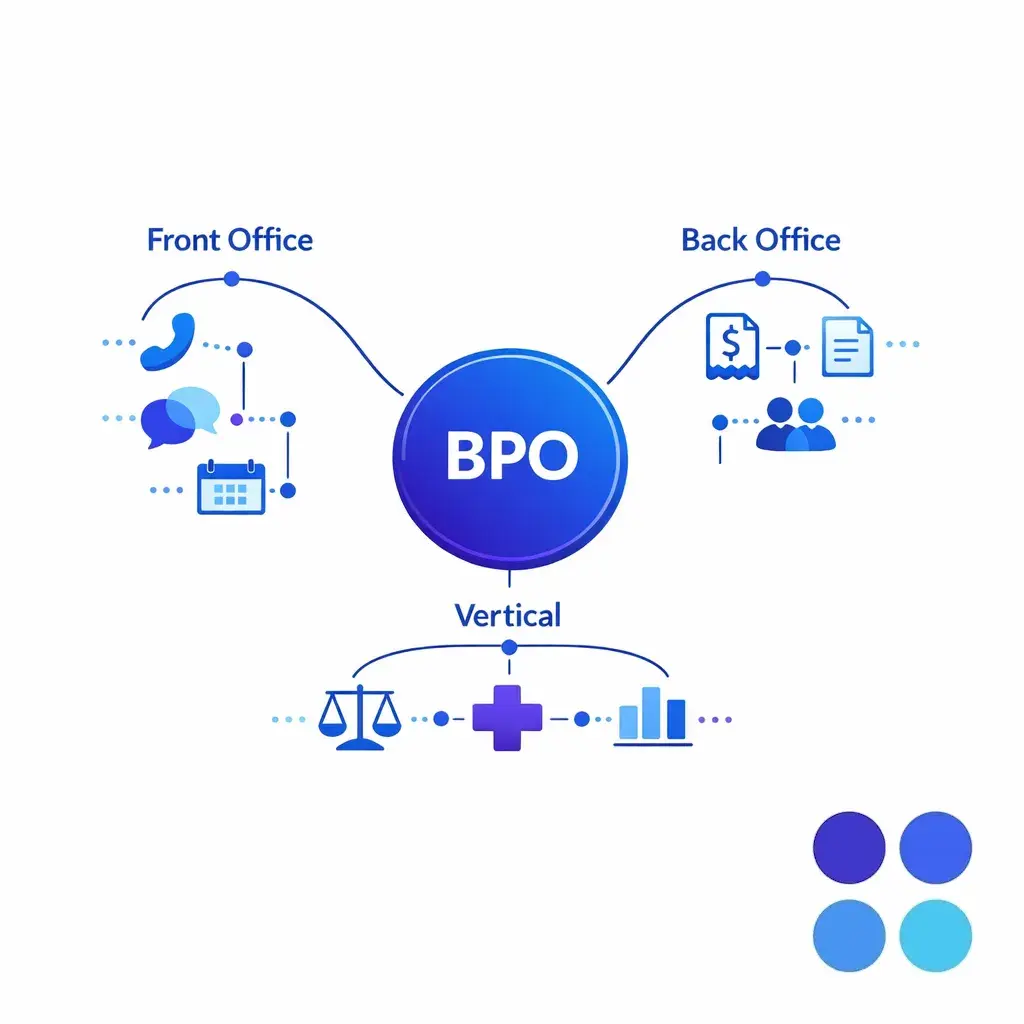
You’ll learn the practical types of BPO, how “front office vs back office outsourcing” really works, how onshore/offshore/nearshore models change outcomes, and how to select a BPO provider with the right controls. You’ll also get a scannable checklist to decide what to outsource next and how to implement it without losing customer experience or compliance posture.
BPO is the outsourcing of defined business processes to a specialist partner under measurable service levels. In practice, BPO succeeds when you can clearly define inputs, outputs, quality standards, escalation rules, and ownership of the customer experience.
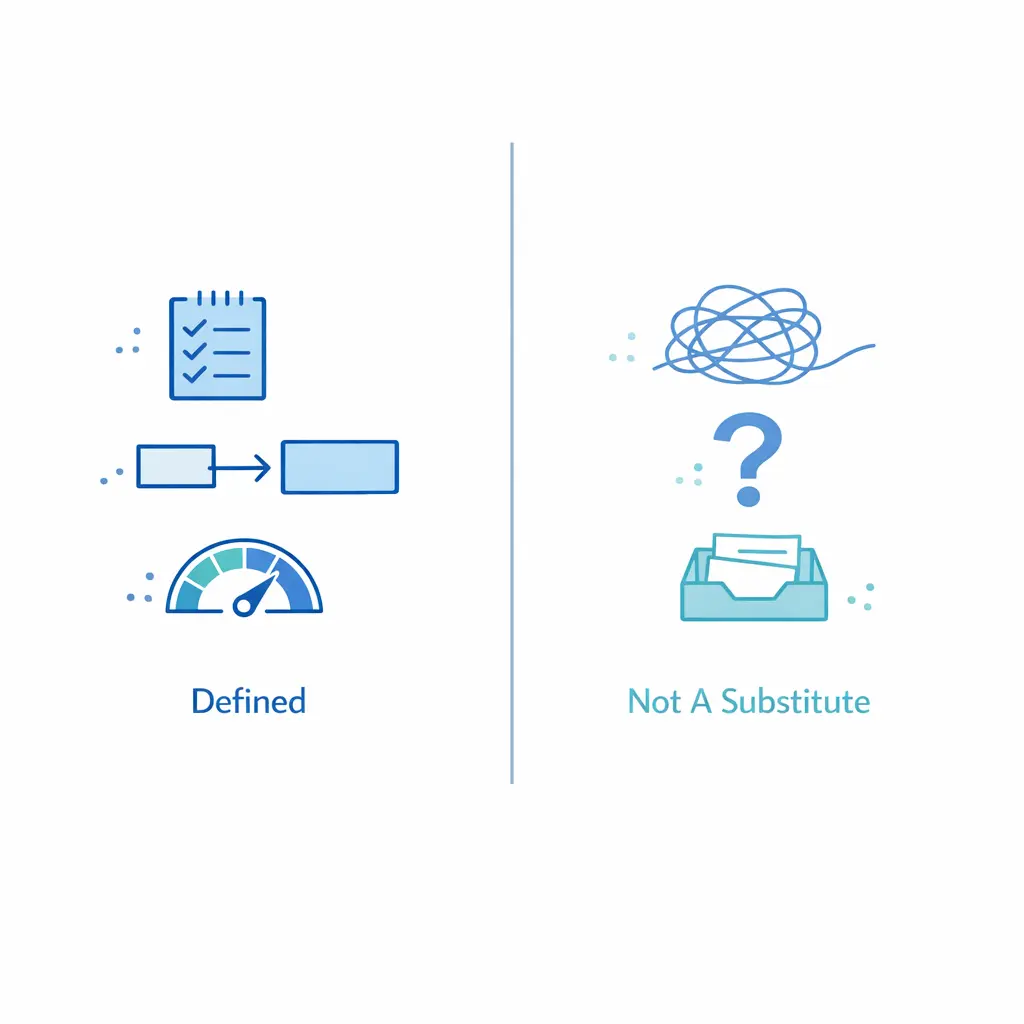
BPO is not a substitute for leadership, process design, or accountability. Even with a world-class provider, you still own the customer promise, regulatory obligations, and the internal decisions that determine whether outsourced work is “busywork” or a true operational advantage.
Across industries, third-party risk scrutiny continues to rise, pushing buyers to formalize vendor due diligence, ongoing monitoring, and contingency planning. This aligns with expectations described in the OCC’s third-party relationships guidance, which is widely used as a reference model even outside regulated banking.
Security evidence is also becoming more standardized in procurement, with many enterprise buyers asking for independent assurance. A common example is the AICPA SOC suite of reports for service organizations, often used to evaluate whether a provider’s controls and control testing are mature enough for production operations.
At the same time, “AI-assisted” workflows are becoming part of intake, customer service, and back office processing. That makes governance and risk management more important, and frameworks like the NIST AI Risk Management Framework are increasingly useful for buyer-side policies on transparency, human oversight, and operational safety.
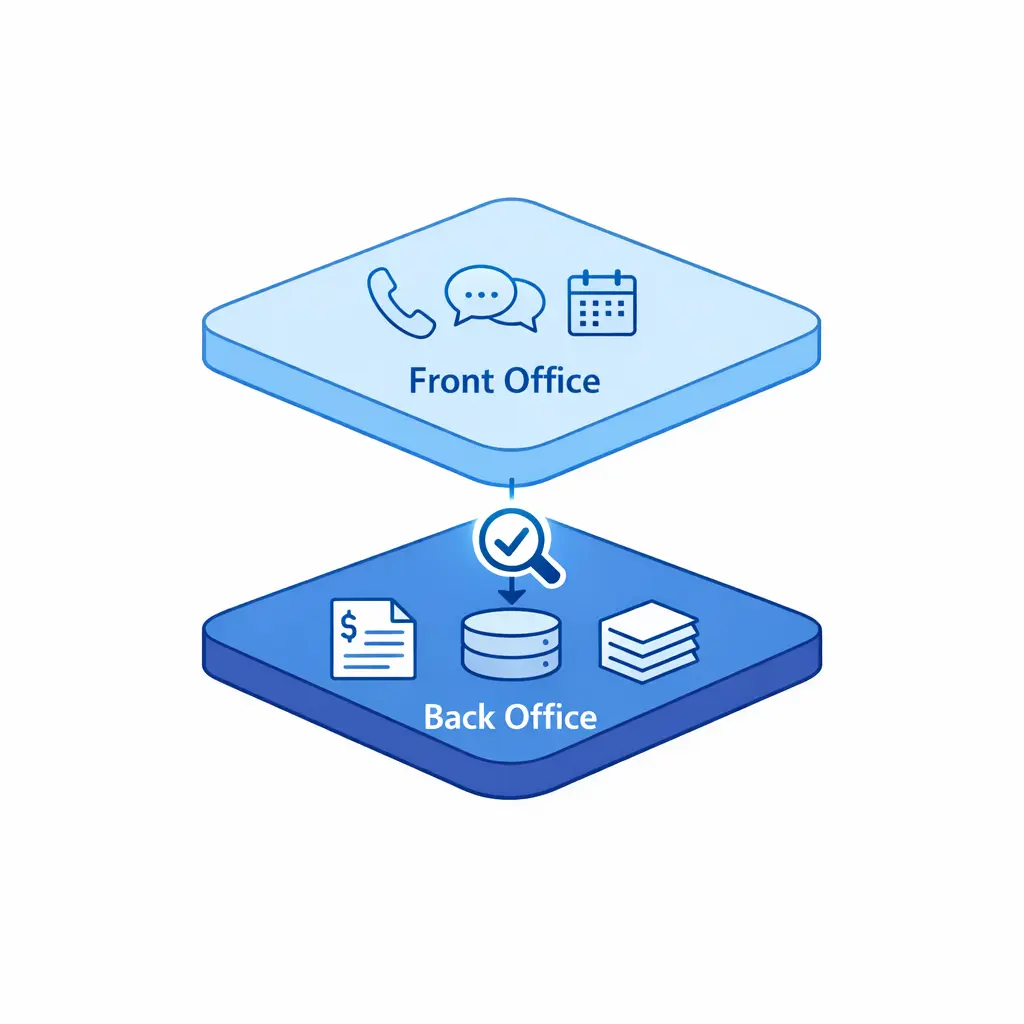
Front office outsourcing covers customer-facing work such as phone answering, scheduling, intake, and first-response support. The upside is immediate coverage and responsiveness; the risk is brand impact if scripts, training, and QA are weak.
Back office outsourcing covers internal workflows like billing support, document processing, finance operations, HR administration, and data maintenance. The upside is efficiency and consistency; the risk is downstream errors if definitions, exceptions, and handoffs are not engineered.
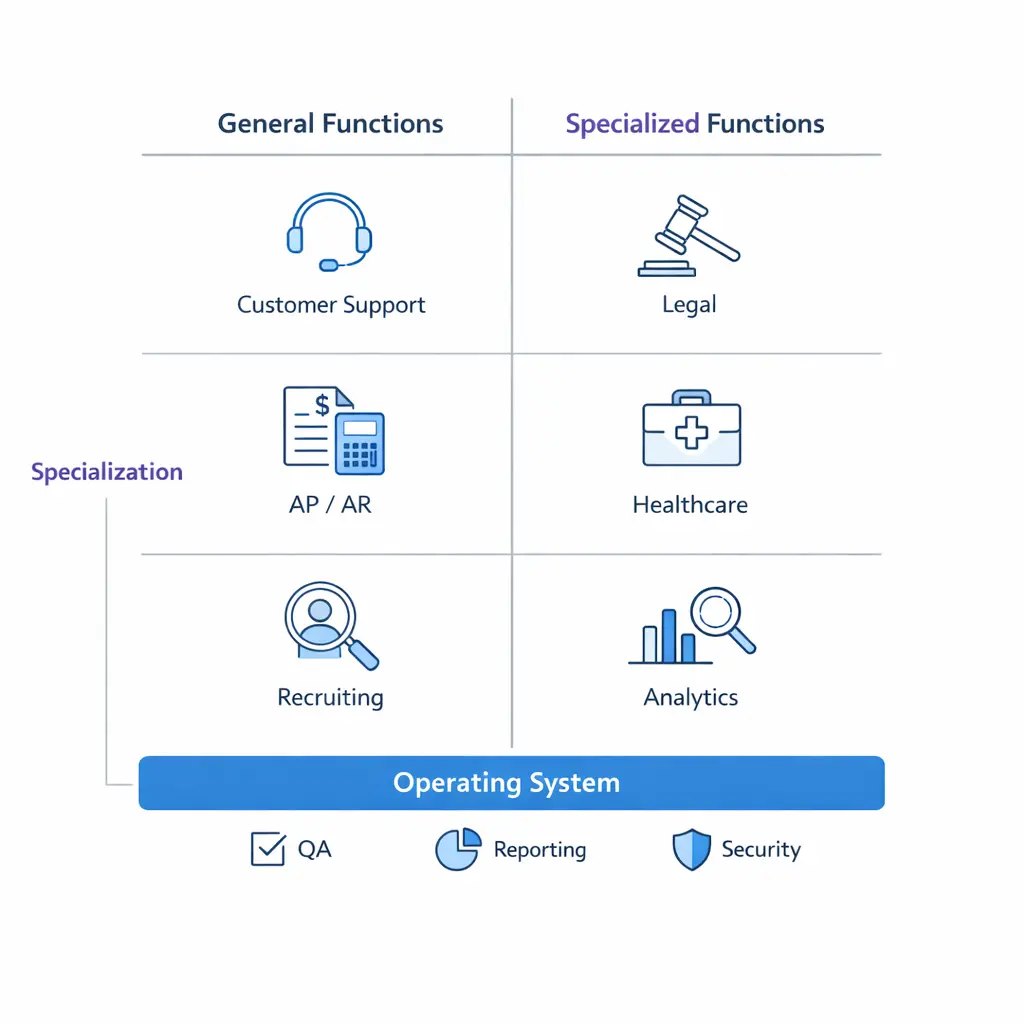
Horizontal BPO refers to common functions that apply across industries, such as customer service BPO, accounts payable processing, or recruitment process outsourcing. Vertical BPO is specialized for an industry, such as legal intake workflows or healthcare administrative processes, where domain knowledge and compliance behavior matter as much as speed.
For enterprise buyers, the best model is often “vertical playbooks on a horizontal operating system”: standardized training, QA, reporting, and security controls, combined with industry-specific scripting and escalation.
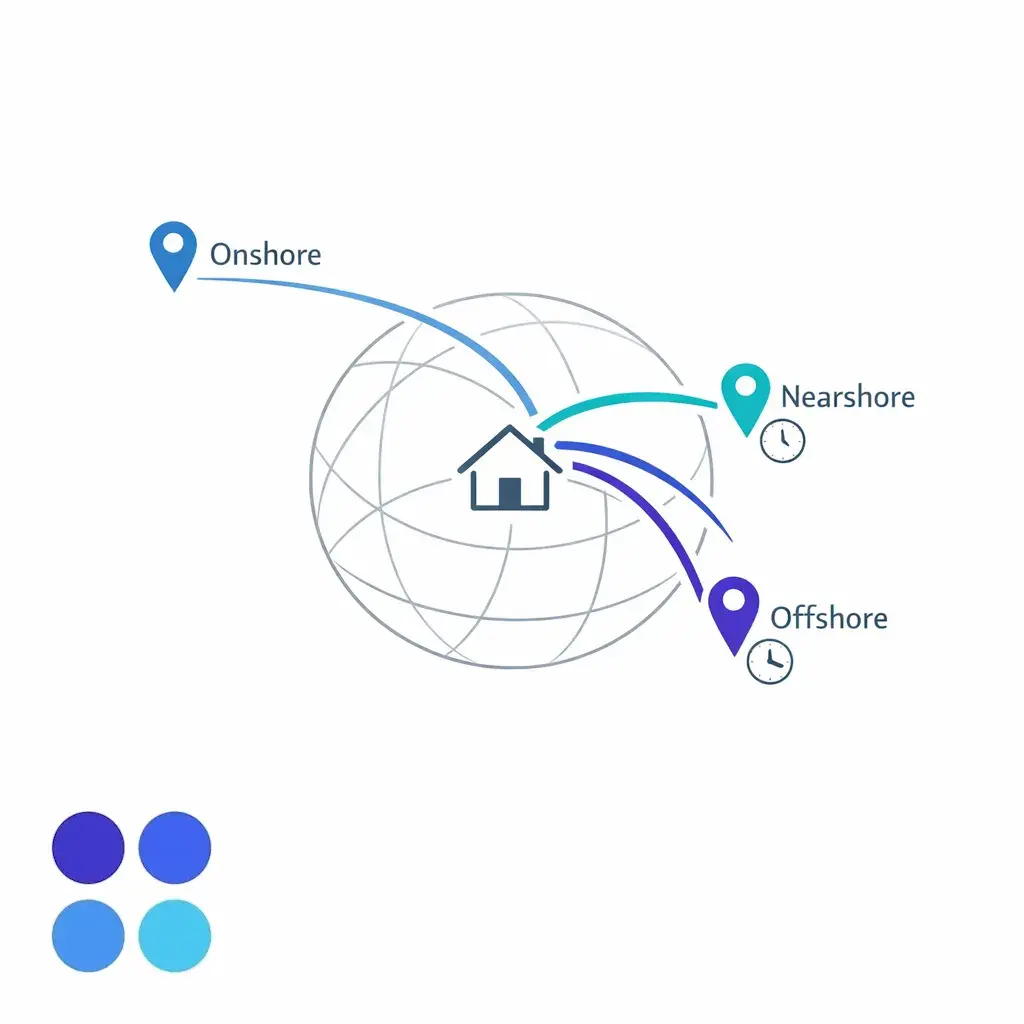
Onshore BPO keeps delivery in the same country as the buyer, typically optimizing for language nuance, regulatory comfort, and tighter feedback loops. Nearshore BPO uses a nearby country with closer time zones and often similar language patterns, sometimes improving coverage hours and staffing flexibility.
Offshore BPO can reduce unit cost and expand staffing options, but it increases governance demands around training, quality, privacy, and continuity planning. The right choice depends less on preference and more on your process sensitivity, tolerance for variance, and the cost of rework.
Customer service BPO handles inbound calls, chats, and messages for support, issue triage, and basic problem resolution. Use it when your call volume is high, response times matter, and you can define what “good” looks like through scripts, knowledge bases, and measurable outcomes.
Avoid it (or pilot carefully) when you have frequent exceptions, heavy policy interpretation, or unclear ownership across departments. The operational key is a closed-loop escalation process so frontline agents do not “ticket-and-forget.”
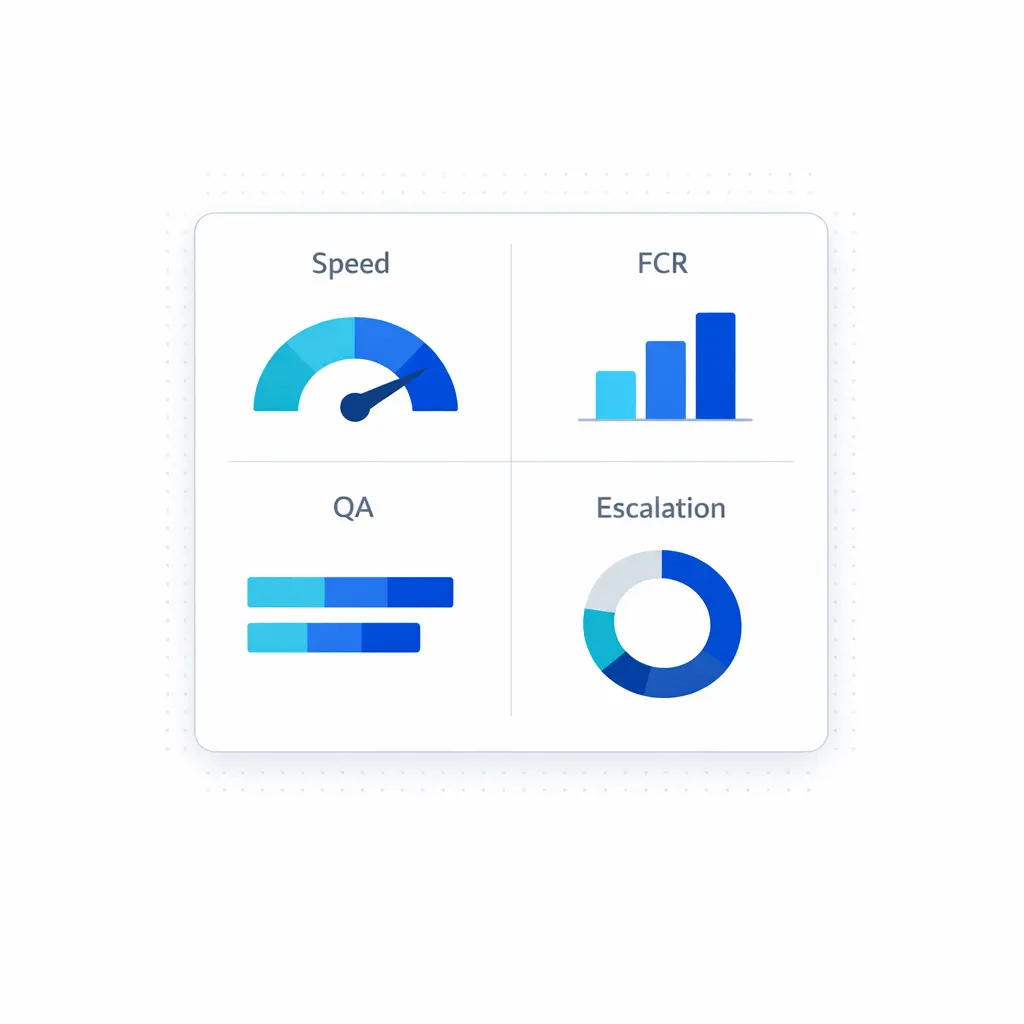
Typical KPIs to manage:
Speed to answer and abandonment rate
First-contact resolution (by issue type)
Quality scores from recorded QA reviews
Escalation accuracy and cycle time
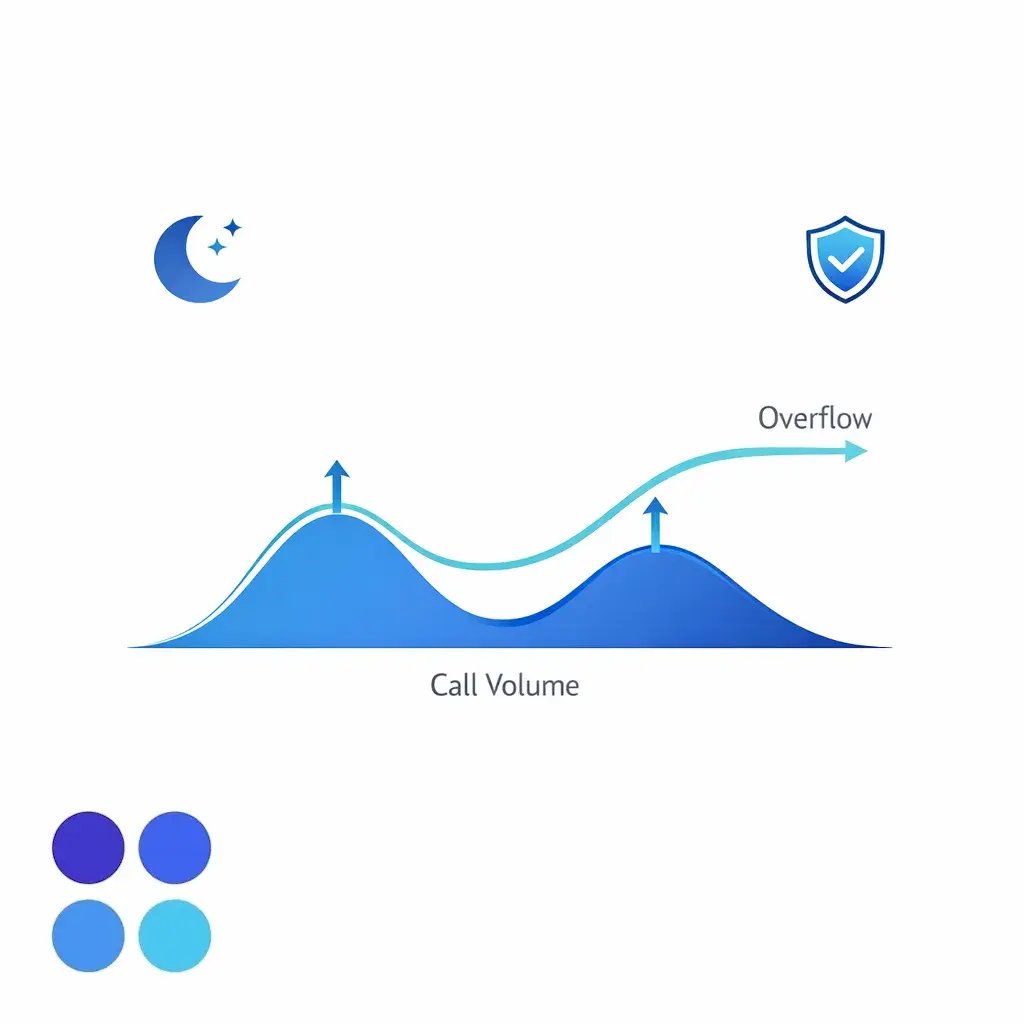
Overflow and after-hours BPO is a targeted form of contact center outsourcing designed to protect revenue and customer experience when internal teams are offline or saturated. Use it when you have predictable coverage gaps, seasonal spikes, or multi-location schedules that create uneven demand.
This model is especially effective for high-value inbound calls where “missed” equals “lost,” such as legal intake and appointment-based healthcare services. Providers like Go Answer typically win here when they can prove consistent QA, accurate intake capture, and clean handoffs back into your systems.
Implementation tip: treat overflow like a product. Define which calls route out, what qualifies as an “urgent escalation,” what gets scheduled vs messaged, and exactly how the outsourced team records outcomes so your internal staff can take over without rework.
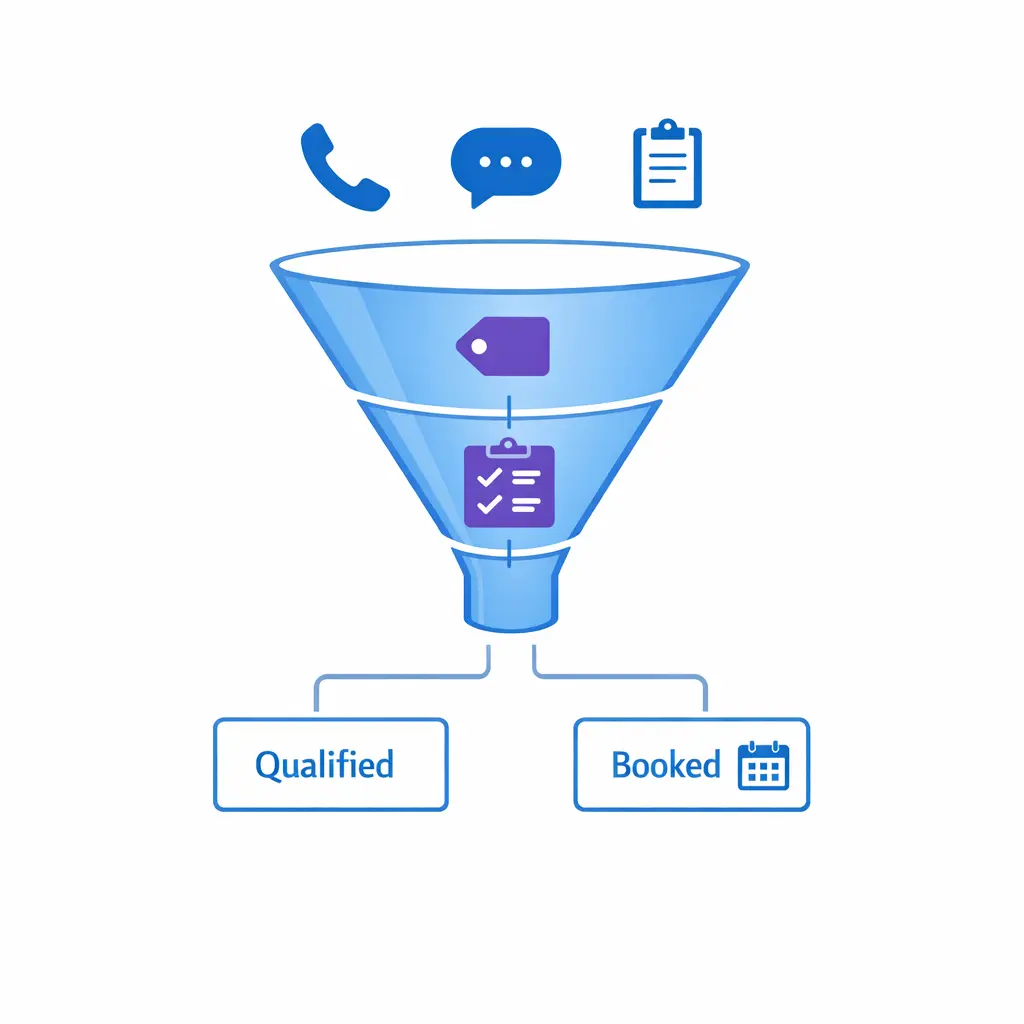
Sales-oriented front office BPO includes lead qualification, appointment setting, and outbound follow-up (where allowed and appropriate). Use it when your funnel is healthy but your internal team is constrained, and when you can define qualification criteria that are objective enough to audit.
Be cautious when your sales motion is consultative, highly technical, or dependent on tight integration with account executives. In those cases, partial outsourcing often works better: outsource initial routing and scheduling, while keeping discovery and proposal steps internal.
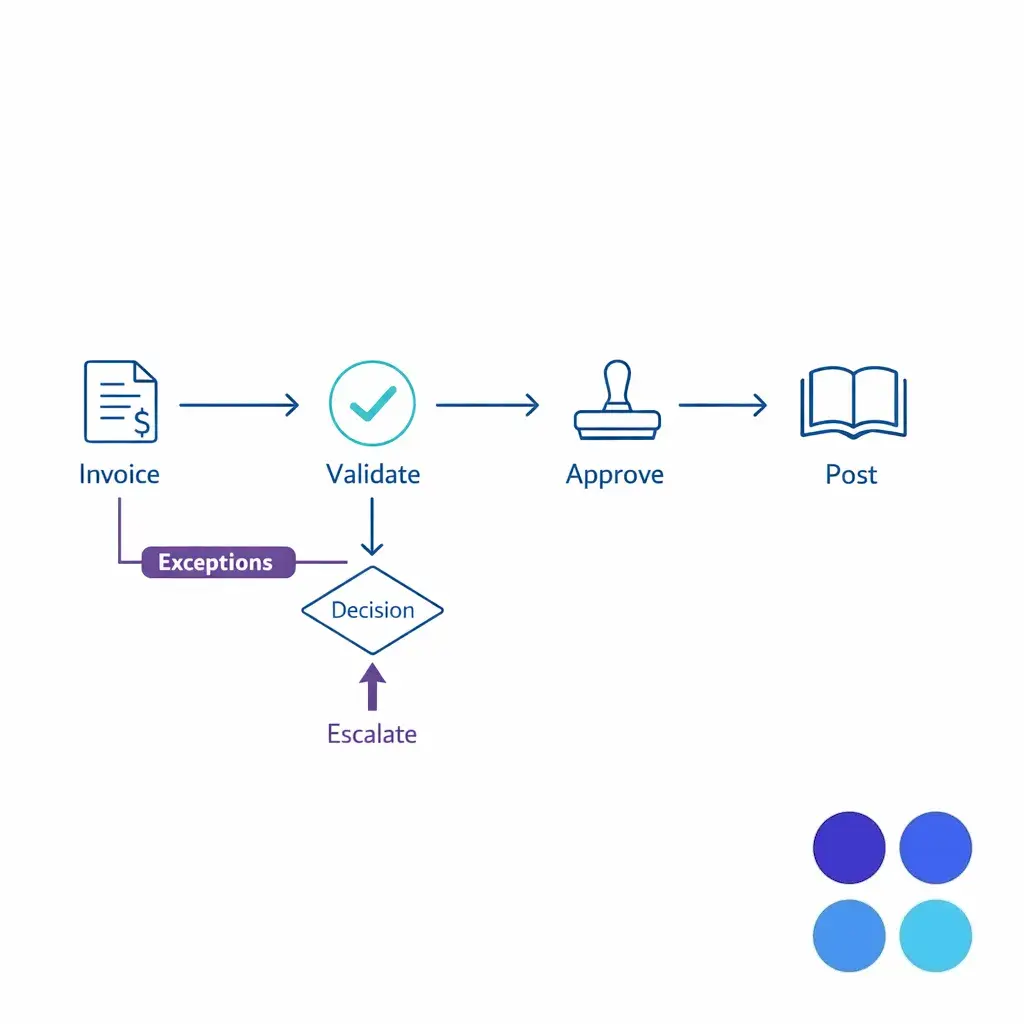
FAO includes accounts payable support, accounts receivable support, invoice processing, expense review workflows, and basic financial operations. Use it when you have repeatable transaction rules and can standardize exception handling (for example, defined approval thresholds and documentation requirements).
FAO tends to underperform when approvals and coding decisions live only in people’s heads. If you can’t explain how a transaction is processed in a simple SOP, the outsource team will either slow down or create inconsistent outcomes.
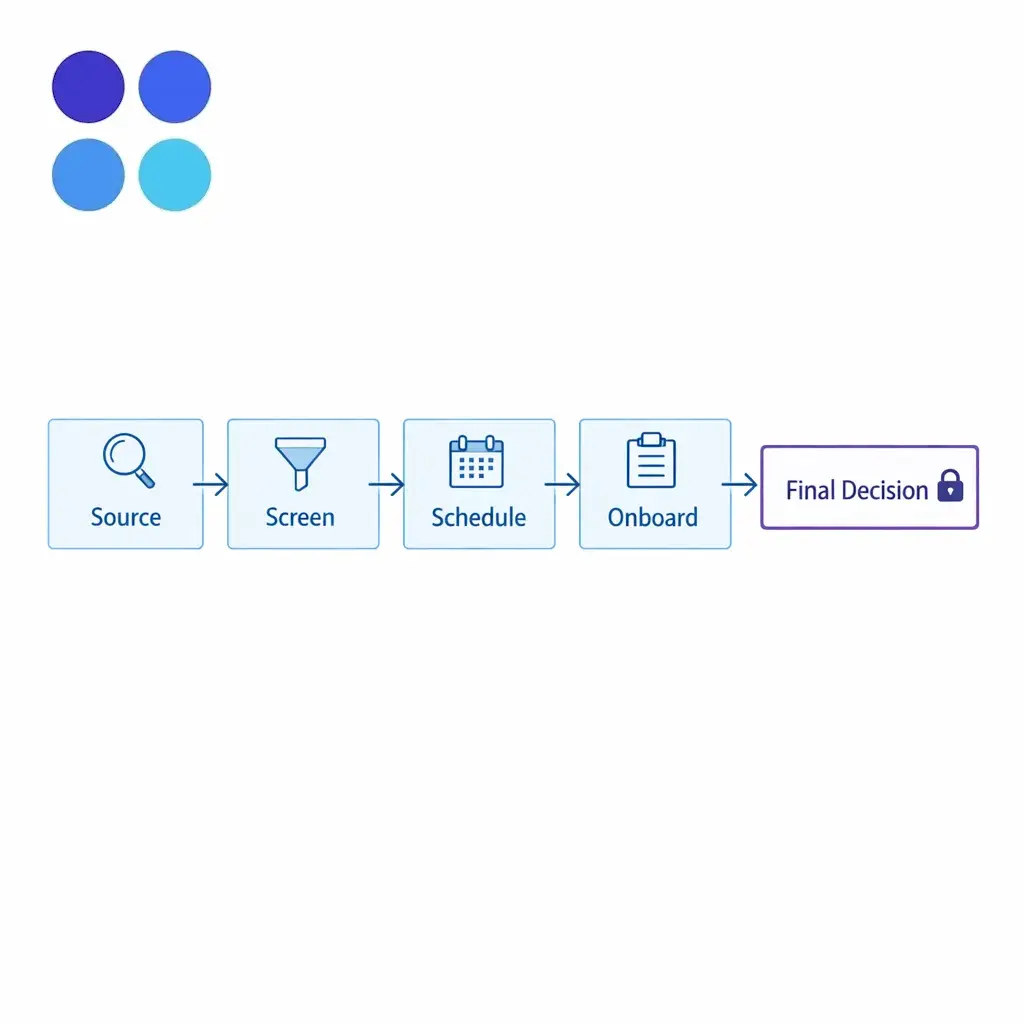
HRO covers administrative and process-heavy HR workflows like onboarding coordination, benefits administration support, and employee ticketing. RPO focuses on recruiting steps such as sourcing, screening, scheduling, and candidate communications.
Use HRO/RPO when you need faster throughput, a consistent candidate or employee experience, and better process discipline. Keep final hiring decisions, sensitive employee relations, and culture-critical conversations internal.
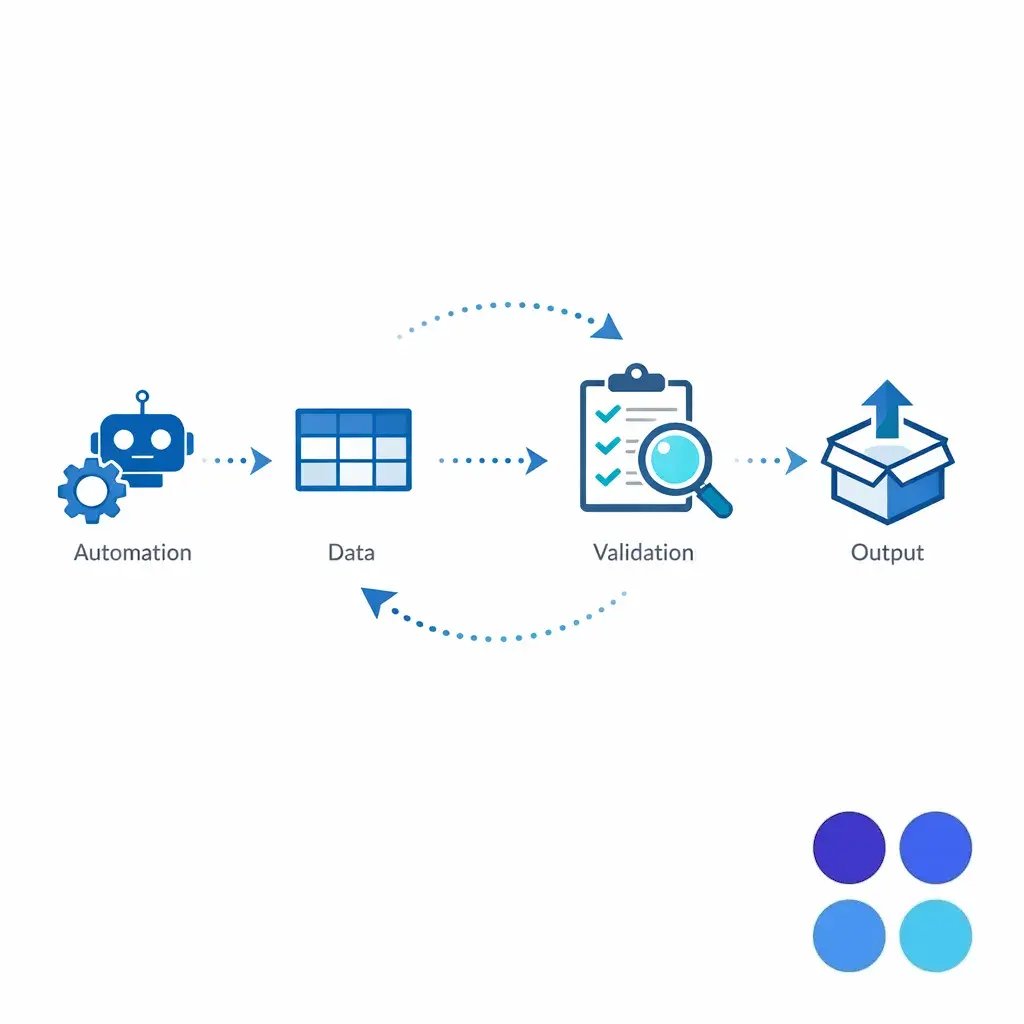
This category includes document indexing, data entry with validation, workflow coordination, and structured “human-in-the-loop” steps around automation. Use it when you need accuracy and consistency at volume, and when you can build validation rules to reduce downstream rework.
A common best practice is to start with a narrow, high-volume workflow and stabilize it before expanding. If you outsource ten processes at once, you won’t know which variable is breaking quality: training, definitions, systems access, or upstream data.
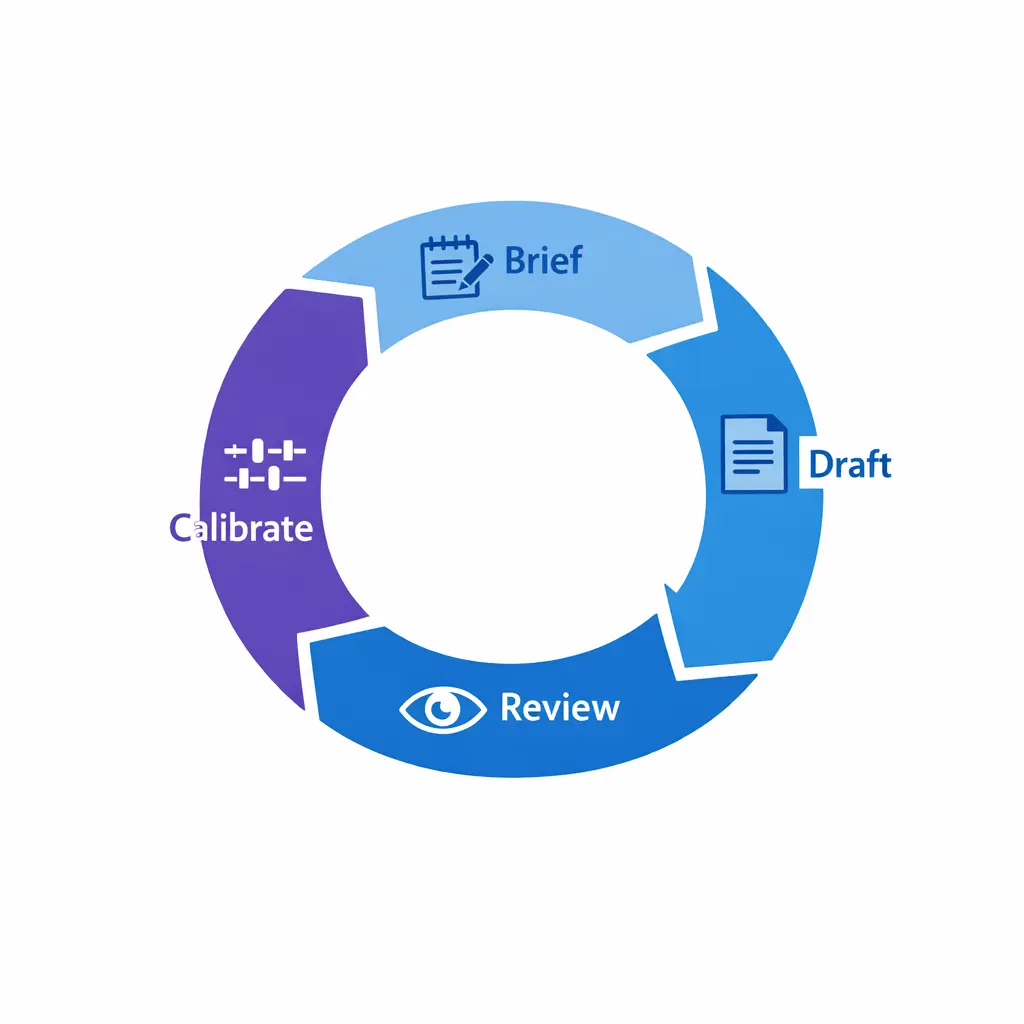
KPO covers research, analytics, reporting, and specialized processing that requires judgment, not just repetition. Use it when you can define a clear deliverable (for example, a standardized report, summary pack, or dataset) and you can review output quality with objective criteria.
KPO can create outsized value, but it fails when expectations are vague. The governance pattern that works is “brief, draft, review, calibrate”: early feedback cycles until the provider can consistently match your internal standards.
Legal-adjacent BPO often includes intake, matter triage, scheduling, document organization, and litigation support workflows that are process-driven. It is most valuable in plaintiff-side PI and mass tort environments where speed to contact and completeness of intake data are critical.
For law firms, confidentiality expectations are non-negotiable, and buyer-side governance should align with duties described in the ABA Model Rule 1.6 on confidentiality of information. In plain terms: limit access, document expectations, train for privacy behavior, and audit outcomes.
Operational note: outsourced teams should never “freestyle” on legal nuance. Your best results come from decision trees, scripted disclosures, and clear escalation to licensed staff when a situation crosses into legal judgment.
Healthcare-oriented BPO often includes appointment scheduling, patient communications, intake coordination, and administrative support that touches protected health information (PHI). If PHI is involved, the vendor relationship typically requires compliance steps consistent with HHS guidance on HIPAA business associates.
Security expectations are also higher in healthcare, and operational safeguards should reflect requirements under the HIPAA Security Rule. The practical takeaway is to verify access controls, audit logging, workforce training, incident response, and how the provider limits PHI exposure to the minimum needed for the task.
“We need to outsource something” is not a strategy. Start with the outcome: faster response times, expanded hours, reduced backlog, improved intake quality, or lower cost per transaction with fewer errors.
Then pick the BPO type that matches the constraint. If your constraint is coverage, front-office BPO is usually the fastest win. If your constraint is throughput and consistency, back office outsourcing solutions are often a better fit.
Before selecting a BPO partner, classify your workflow along two axes: volume variability and exception rate. High volume with low exceptions is ideal for outsourcing; low volume with high exceptions often needs internal expertise or a hybrid model.
If exceptions are the issue, don’t assume “more training” will fix it. Often the real fix is better definitions, smarter forms, clearer handoffs, or a smaller outsource scope with tighter escalation.
For enterprise buyers, provider selection should include evidence of operational controls, not just a nice pitch deck. Many organizations use the NIST Cybersecurity Framework as a practical way to structure security conversations around identify, protect, detect, respond, and recover.
For independent assurance, procurement teams frequently request third-party reporting such as the SOC reports for service organizations (when applicable to the engagement). The point is not the acronym; it is verifying that controls exist, are tested, and match the actual scope of services you plan to outsource.
If the provider uses AI for summaries, routing, or agent assistance, require governance that mirrors the risk themes in the NIST AI Risk Management Framework, including transparency, monitoring for failure modes, and a clear human override path.
BPO doesn’t usually fail loudly. It fails quietly through small quality drops, inconsistent documentation, and slow escalation that compounds over weeks. Your governance needs a recurring review with shared dashboards, calibrated QA, and a single owner on each side for decisions.
At minimum, define: the SLA set, how QA is scored, how coaching happens, how changes are requested, and what happens during outages or staffing disruptions. For high-volume inbound operations, also define who owns the customer experience when a call needs a second touch.
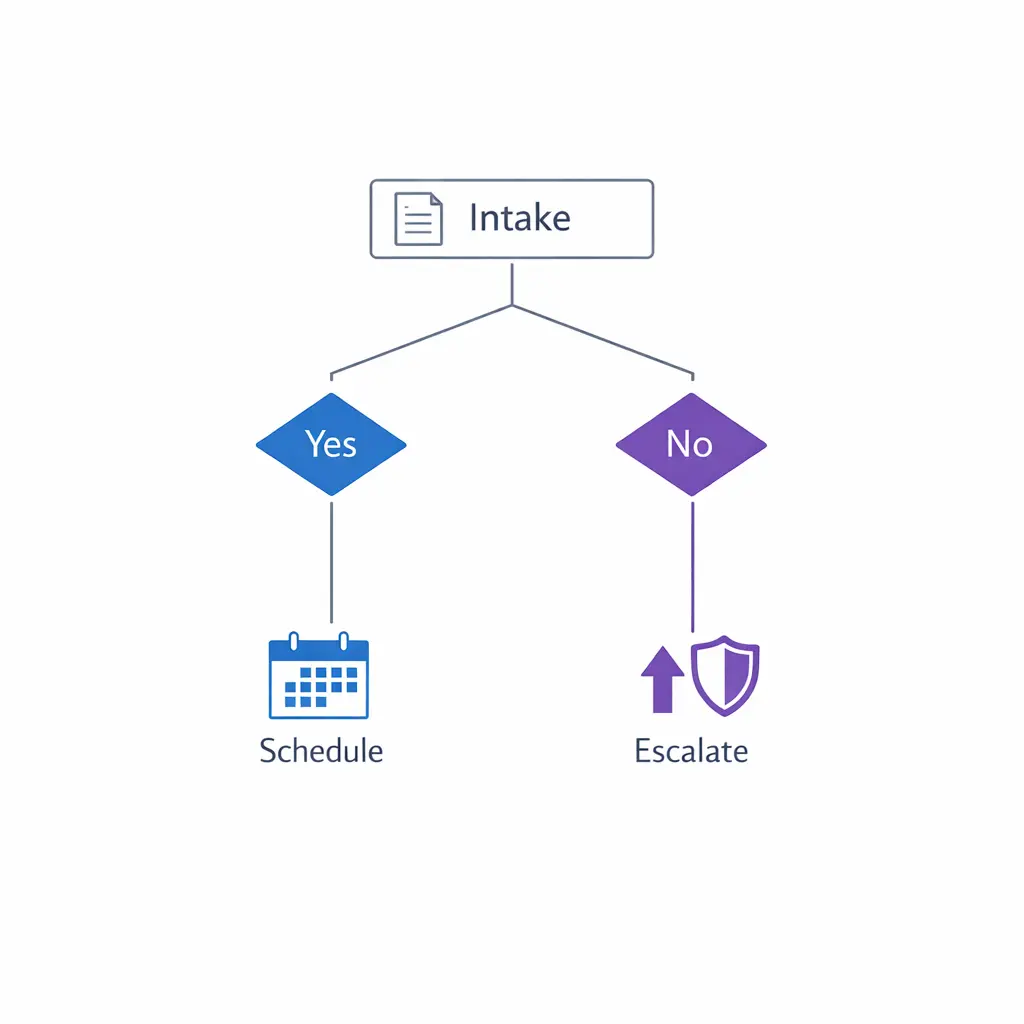
Customer service BPO is only one branch of the BPO industry. Many of the highest ROI use cases are back-office and knowledge workflows where improved accuracy and cycle time matter more than cost per hour.
If your team treats BPO as purely a cost play, you’ll likely underinvest in training, documentation, and QA. That often increases rework costs and damages customer experience.
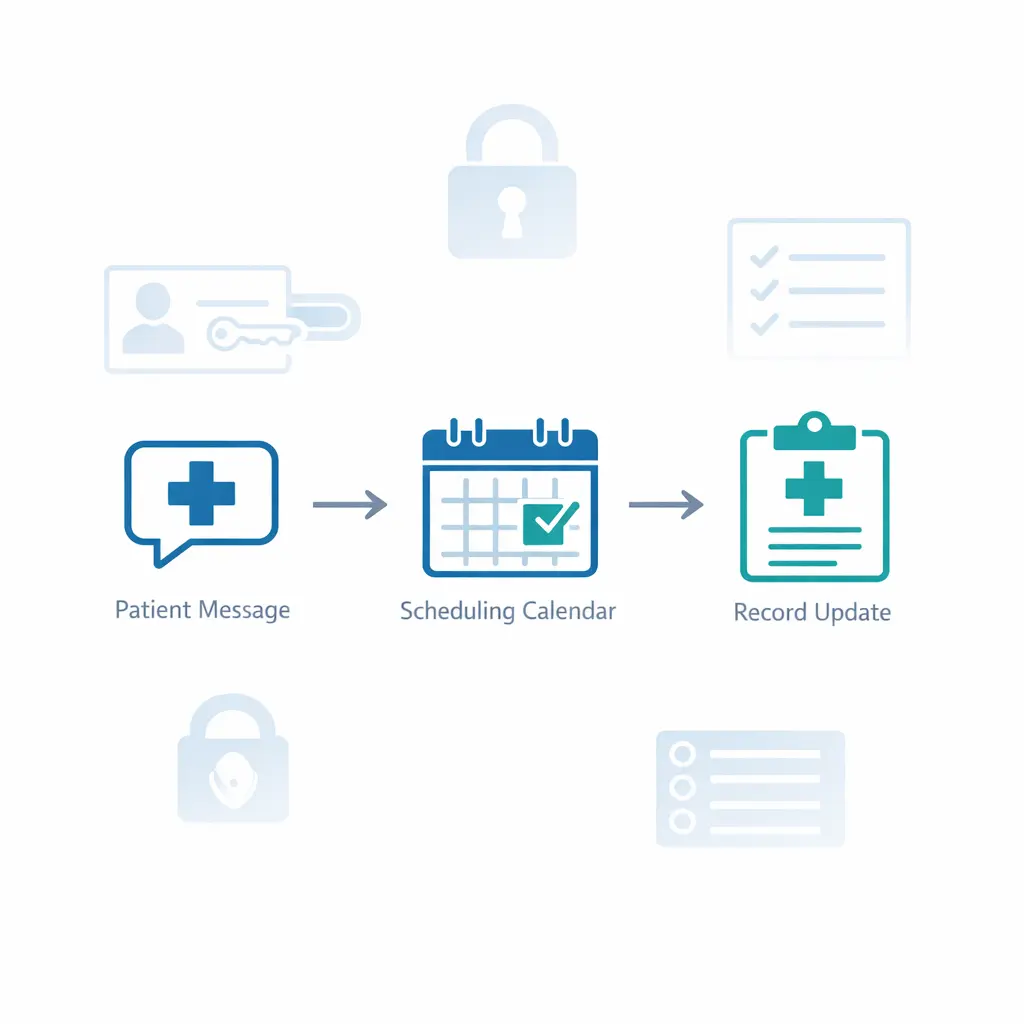
Outsourcing changes the operating model; it doesn’t remove responsibility. You still need process ownership, escalation decisions, and a way to measure outcomes. Without that, the provider will default to “meeting the letter” of the task while missing the business intent.
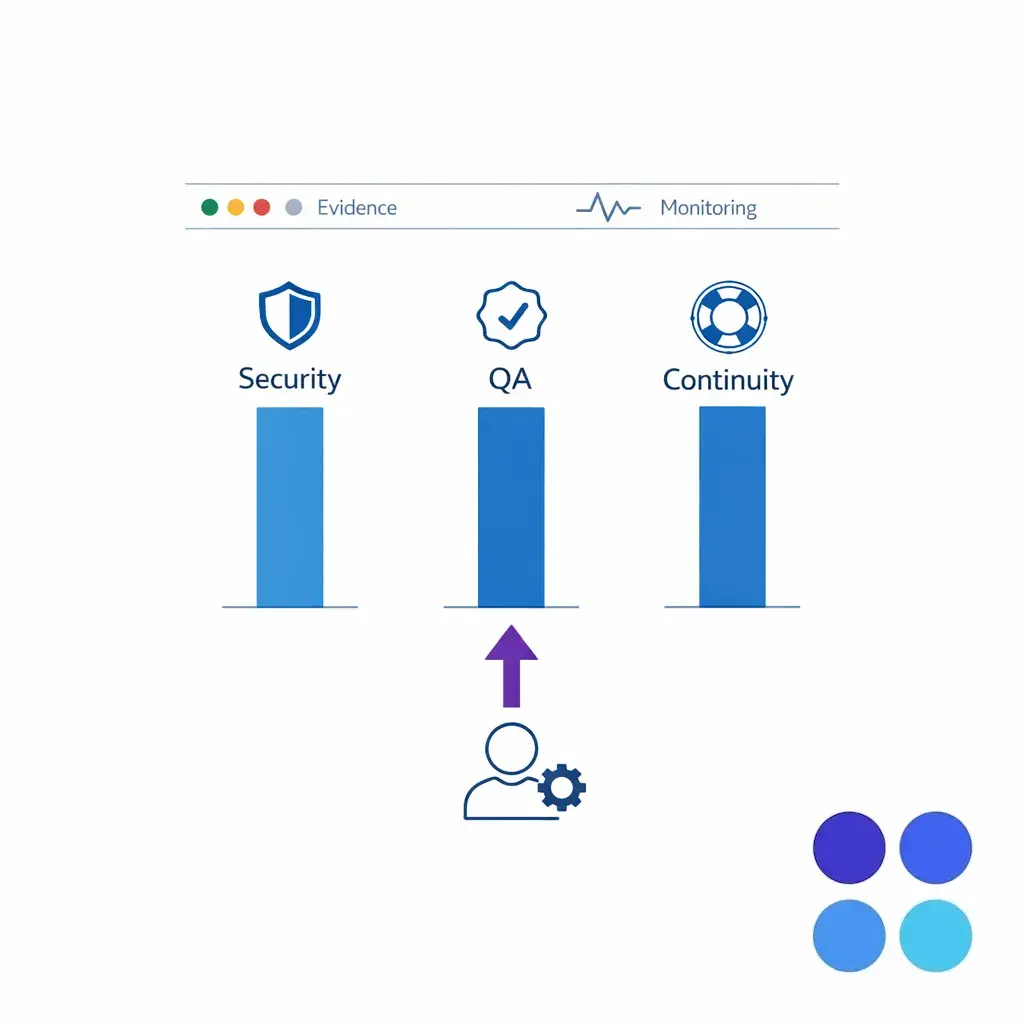
Offshore and nearshore models can be excellent when the process is stable and well-defined. But if the work is exception-heavy, brand-sensitive, or compliance-sensitive, the cost of rework and customer friction can outweigh labor savings.
A better question than “where are they located?” is “how do they maintain quality and continuity at our peak volume?” The right vendor proves it with staffing plans, QA programs, and clear governance.
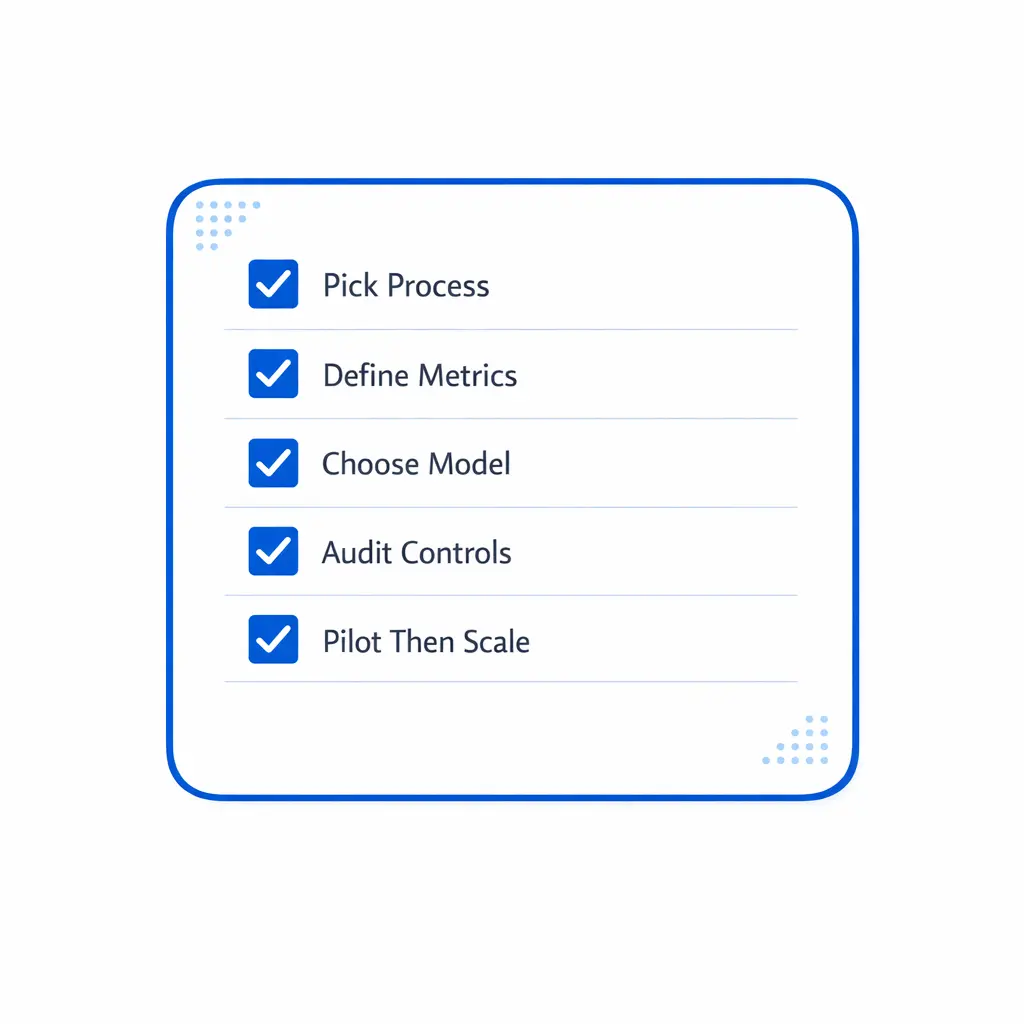
You don’t need perfect SOPs to start, but you do need minimum viable clarity. If your internal team can’t describe the workflow, edge cases, and desired outcomes, the outsource team will create its own version, and you’ll spend months unwinding it.
A practical approach is to pilot one workflow, document as you go, and lock the playbook only after the first few calibration cycles.
Pick one process with clear inputs/outputs (for example, overflow calls, scheduling, intake capture, or a single back-office queue).
Define success metrics that reflect outcomes, not activity (quality score, conversion rate, cycle time, error rate, escalation accuracy).
Decide the right model: front office vs back office, horizontal vs vertical, and onshore/offshore/nearshore based on sensitivity and variability.
Prepare a “handoff spec” that documents what gets captured, where it goes, and who follows up internally.
Audit controls early (security, access, QA, continuity) and confirm they match the exact scope you’re outsourcing.
Run a structured pilot with recorded QA, weekly calibration, and a short feedback loop on scripts and decision trees.
Scale only after stability by expanding volume first, then adding adjacent workflows once quality is consistent.
If you’re deciding between customer service BPO, overflow coverage, or back office outsourcing solutions, the fastest path to clarity is mapping your call flows and workflows to measurable service levels. If you want help designing an enterprise-grade model with strong QA and dependable coverage, Go Answer can walk through scope, ramp plan, and governance expectations.
Book a Discovery Call if you need help choosing the right type of BPO and defining the first pilot scope.

Learn why thousands of companies rely on Go Answer.
Try us risk-free for 14 days!
Enjoy our risk-free trial for 14 days or 200 minutes, whichever comes first.
Have more questions? Call us at 888-462-6793
Learn why thousands of companies rely on Go Answer.
Have more questions? Call us at 888-462-6793
If you would like to get in contact with a Go Answer representative please give us a call, chat or email.

Thanks for your interest!
A representative will be reaching out to you shortly.
Have more questions? call us on 888-462-6793
