
Customer Service Audit Checklist: How to Find Process Gaps Before They Hurt Response Time and CX
By Adom FrancisLast modified: August 18, 2026
Voted Top Call Center for 2024 by Forbes
Virtual Receptionists
Save time and money with our virtual receptionists.
AI Receptionist
AI-powered receptionist that answers, routes, and qualifies calls 24/7.
Enterprise Solutions
Solutions designed to scale with your organization’s needs.
Legal Services
Our virtual legal receptionists are experts in legal intake.
Last modified: August 18, 2026
In practice, a customer service audit is a structured review of how your team handles phone, chat, intake, follow-up, and escalations across people, process, and technology. It goes beyond routine quality assurance by testing whether the full workflow supports a consistent customer experience across locations, shifts, and channels.
This guide is for operations leaders who need a practical customer service audit checklist, not a theory lesson. You will learn how to spot service breakdowns early, run a six-step audit, score the right categories, and turn findings into a 30-day fix plan for phone, chat, intake, overflow, and after-hours coverage.
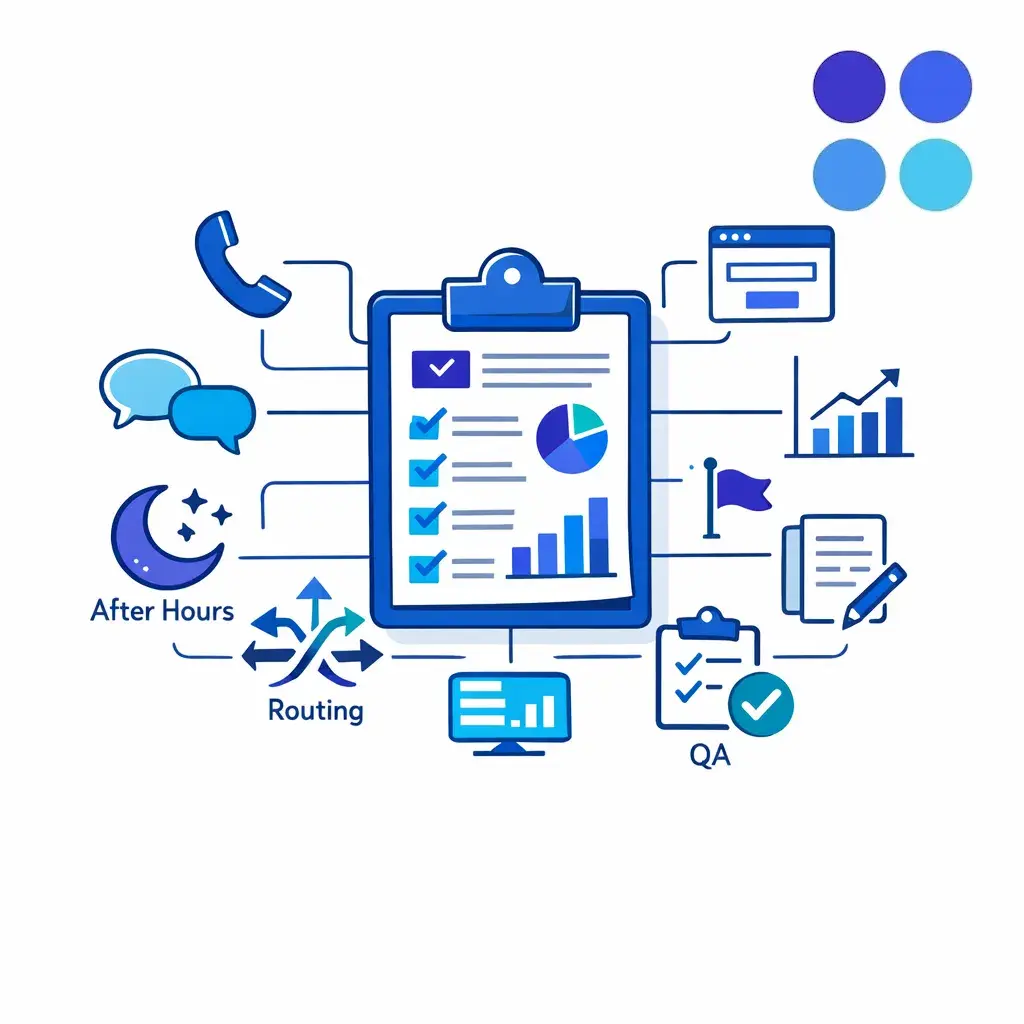
An audit reviews the whole operating system behind service: staffing, routing, scripts, documentation, escalation, reporting, and tools, not just individual interactions.
A customer service audit looks at the operating system behind service delivery. It tests whether staffing, routing, scripts, documentation, escalation rules, reporting, and tools work together well enough to produce a reliable result.
That matters most in complex environments. If you run multiple offices, multiple queues, or multiple service lines, small differences in process design can create big differences in response time, intake quality, and customer trust.
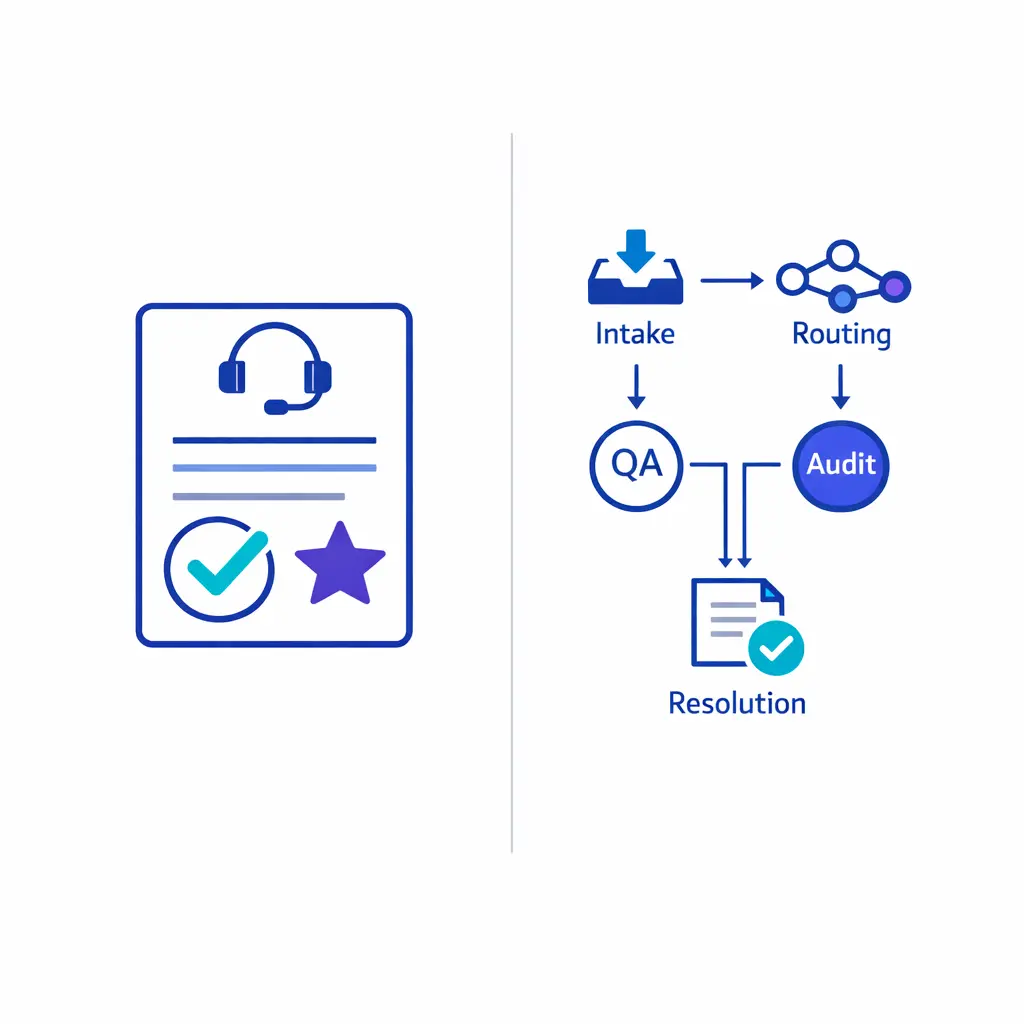
Day-to-day QA scores a single call or chat. An audit asks whether the workflow makes good performance repeatable across locations, shifts, and channels.
Day-to-day QA is usually interaction-level. It checks whether one call, one chat, or one intake was handled the right way.
A customer service audit goes one level higher. It asks whether the workflow itself makes good performance repeatable, or whether strong people are compensating for weak routing, unclear ownership, missing documentation standards, or outdated knowledge.
That is why a one-off score is not enough. One bad call can be a coaching issue. A repeating pattern across locations, shifts, or channels is usually a process issue.

Operations rarely fail all at once; they drift. Slipping response targets, inconsistent transfers, and incomplete after-hours notes are early signals to audit now.
Service operations rarely fail all at once. They drift. Response targets slip in one queue, a transfer rule becomes inconsistent, after-hours coverage collects incomplete details, or one team starts documenting differently than another.
If you wait until complaints spike, the repair work is harder. By then, the operation is already carrying backlog, repeat contacts, supervisor assists, and preventable rework.
How should you handle a customer audit? Treat it like an operating review, not a blame exercise. The goal is to find where the system creates variance, then remove that variance before it becomes a customer-facing problem.
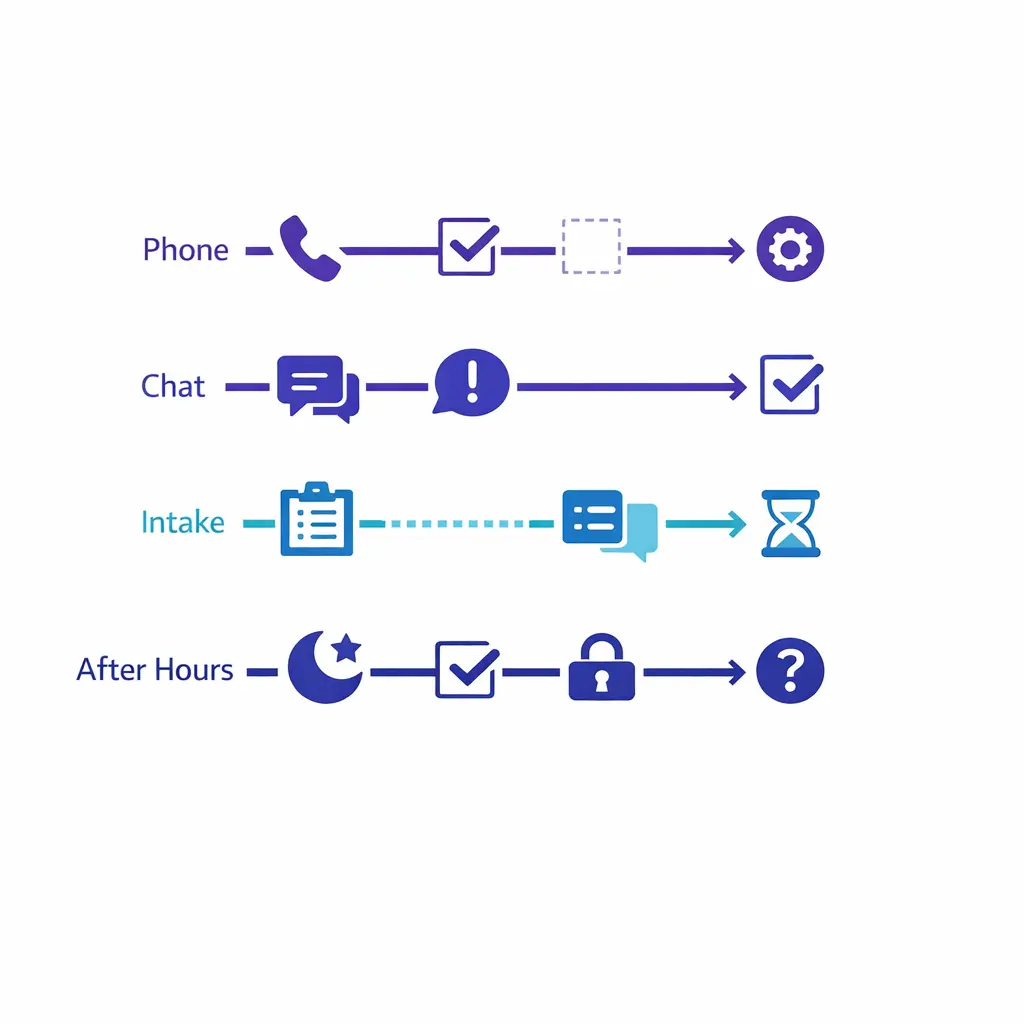
Daytime phone may be solid while chat, overflow, and after-hours intake follow a different playbook, creating inconsistent data and outcomes by channel.
If queues are longer, voicemails sit untouched, chats expire, or web leads wait too long for first follow-up, audit the full path from arrival to ownership. Slow response is often a symptom of process design, not just staffing pressure.
Look closely at time of day, day of week, and location. In multi-location environments, one site may be absorbing overflow or handling more complex work without a routing model that reflects that reality.
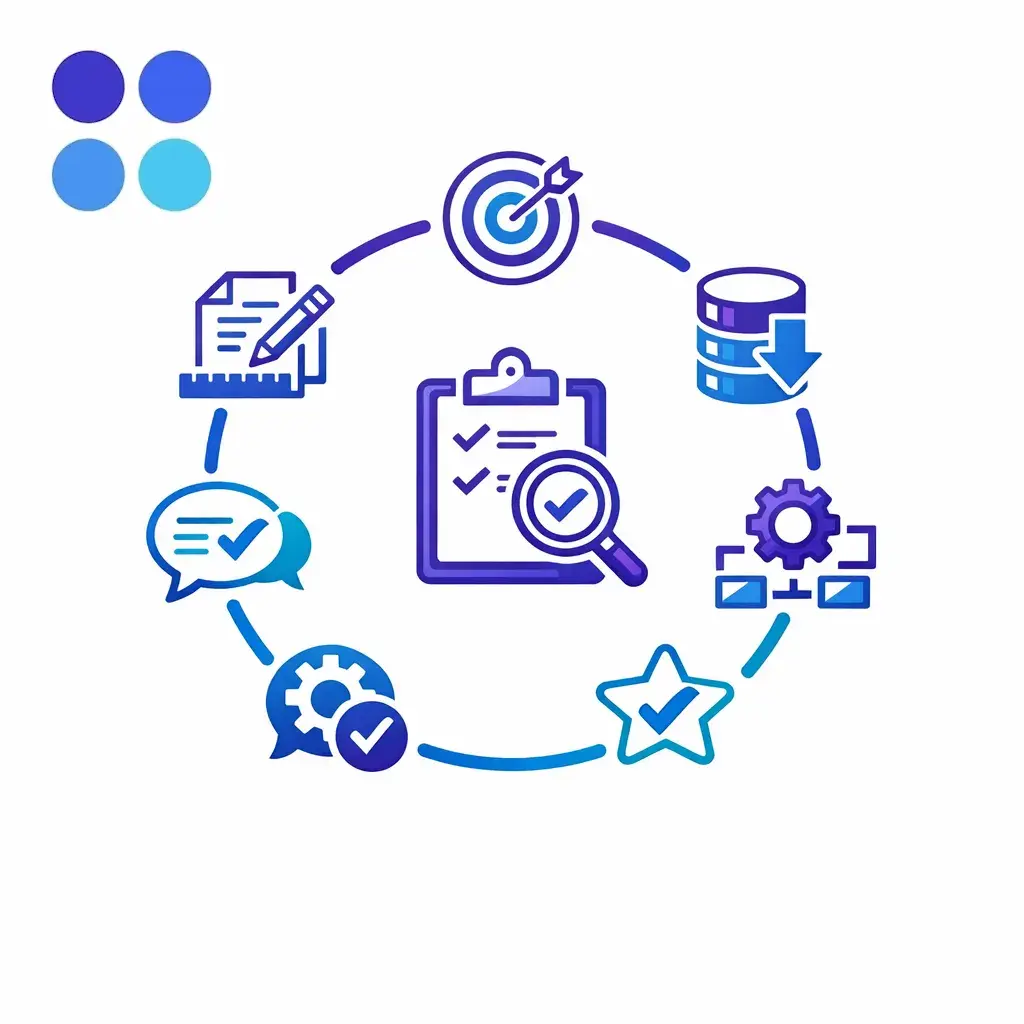
Scope it, pull baseline data, review workflows and routing, score interactions and documentation, analyze feedback trends, then prioritize fixes with clear owners.
When customers have to restate the same issue, the first interaction probably did not capture enough information or route it correctly. A strong customer service audit should test whether intake fields, scripts, and transfer criteria support first-pass success.
Frequent manager assists can also be a warning sign. Sometimes the problem is training. Just as often, the problem is that front-line staff do not have a clear decision tree or enough authority to resolve common cases.
Many teams discover that the daytime phone process is solid while chat, overflow, or after-hours intake follows a different playbook. That creates inconsistent data capture, different expectations, and different customer outcomes by channel.
This is especially common in legal intake-heavy firms, healthcare practices, and high-volume service businesses. The operation feels stable until a surge hits or a lead arrives after hours and falls into the gap between systems or teams.
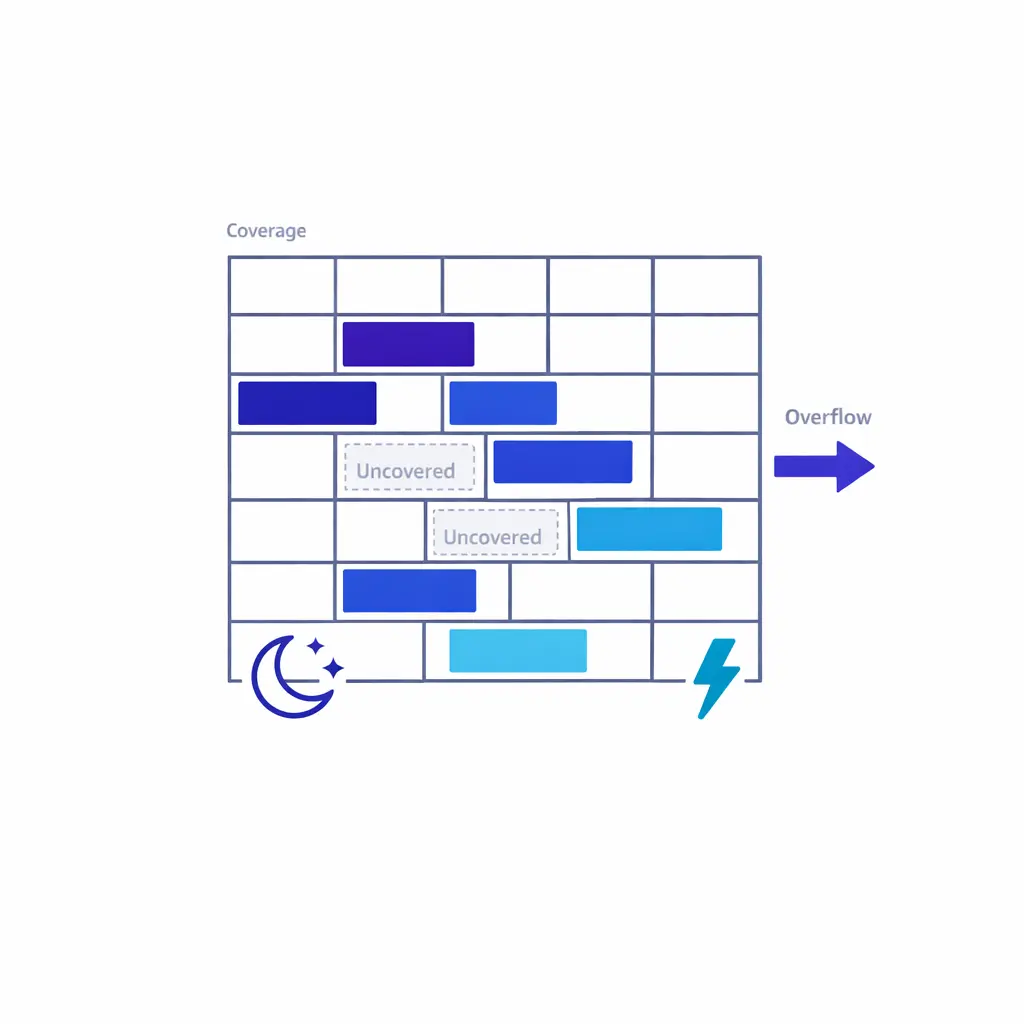
Check coverage for nights, weekends, lunches, and surges. Weak spots in the schedule show up fast as missed SLAs and abandoned contacts.
If you hear the term customer experience audit, think of the same review widened to the whole service journey. The six steps below help you move from isolated interaction scoring to a real support process audit.
Keep the review cross-functional. Operations should lead it, but supervisors, QA, training, intake owners, and system admins should all validate findings so the audit does not become a narrow call review when the real issue lives in staffing, routing, or documentation design.
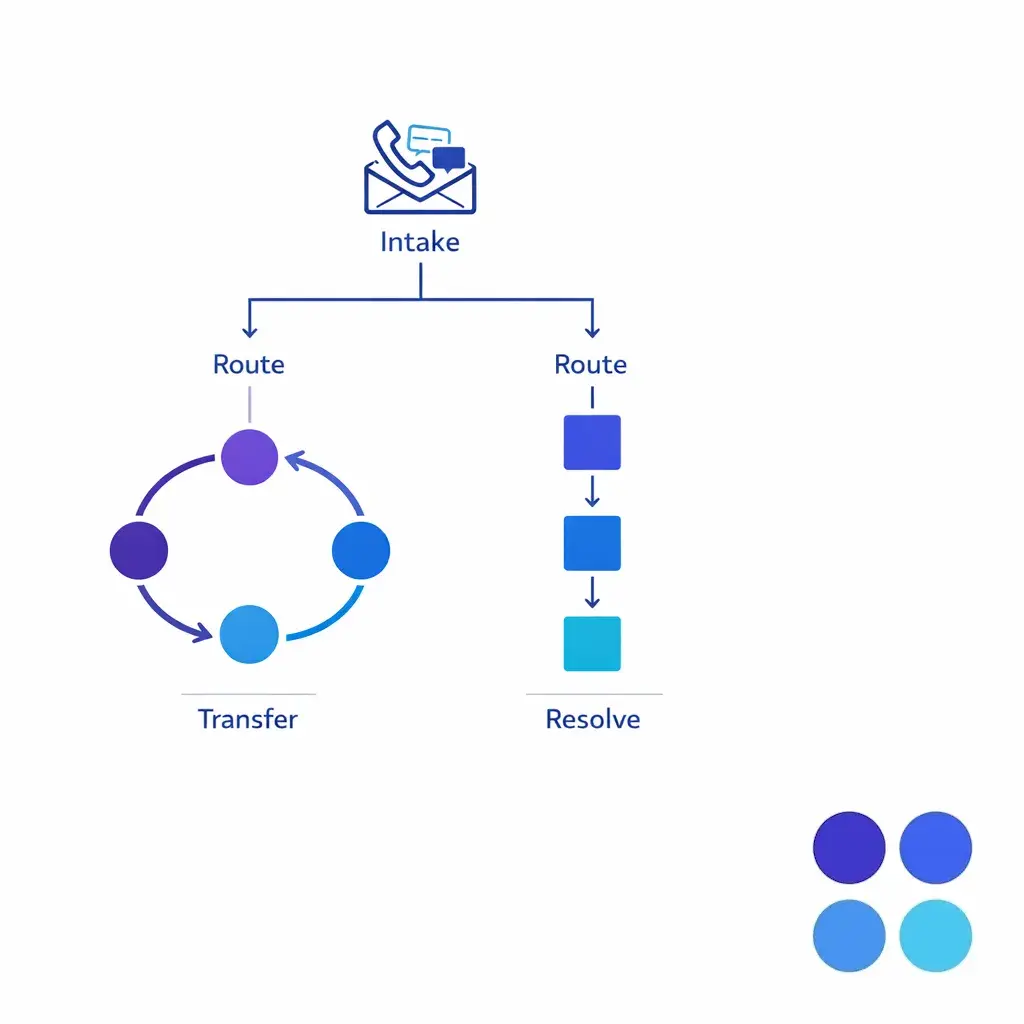
Each contact type needs a defined destination, priority, and fallback so the first touch captures enough to resolve or hand off cleanly.
Use a simple 0 to 2 score for each item. Score 0 if the control is absent, 1 if it exists but is inconsistent, and 2 if it is documented, monitored, and used the same way across teams.
This format gives you a usable customer service audit template inside your working document. It also makes it easier to compare one location, vendor team, or after-hours workflow against another.
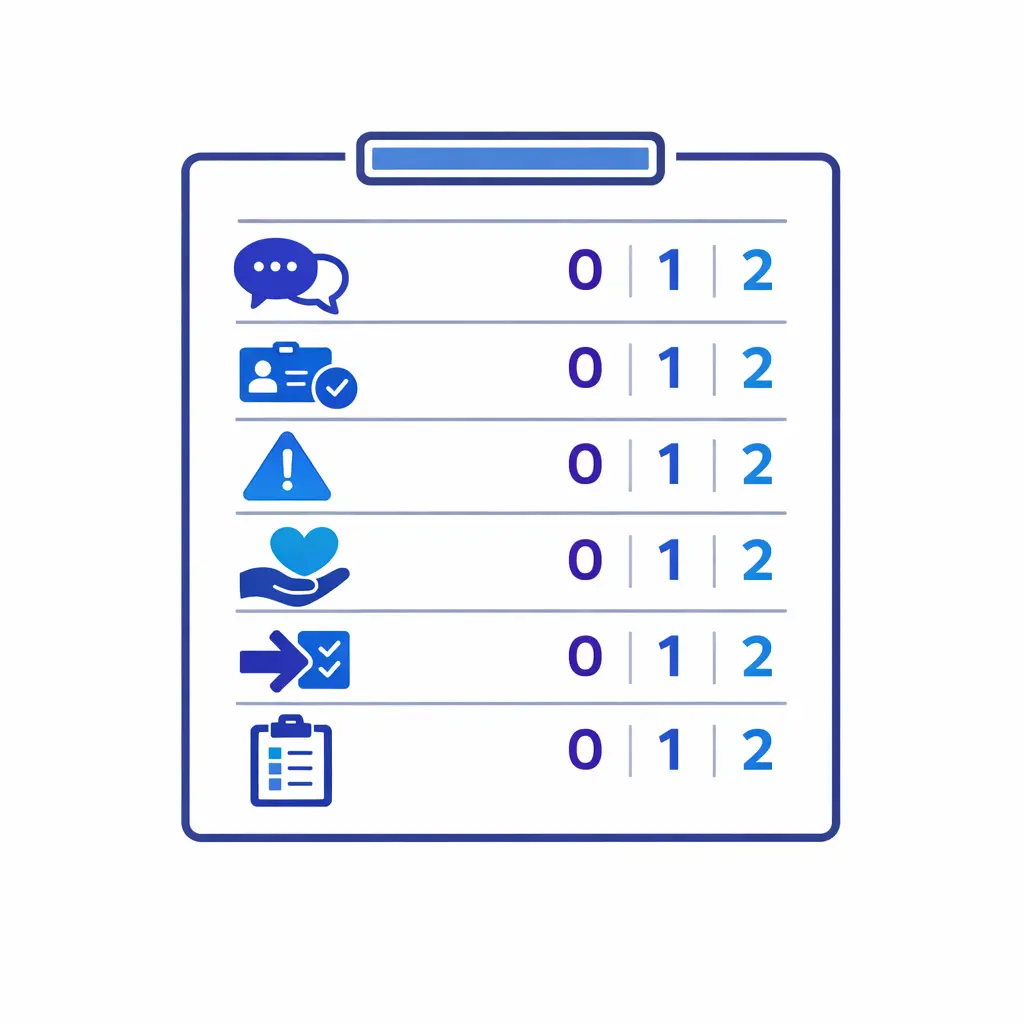
Use the same rubric across sites: greeting, verification, issue capture, empathy, next-step clarity, disposition, and note quality.
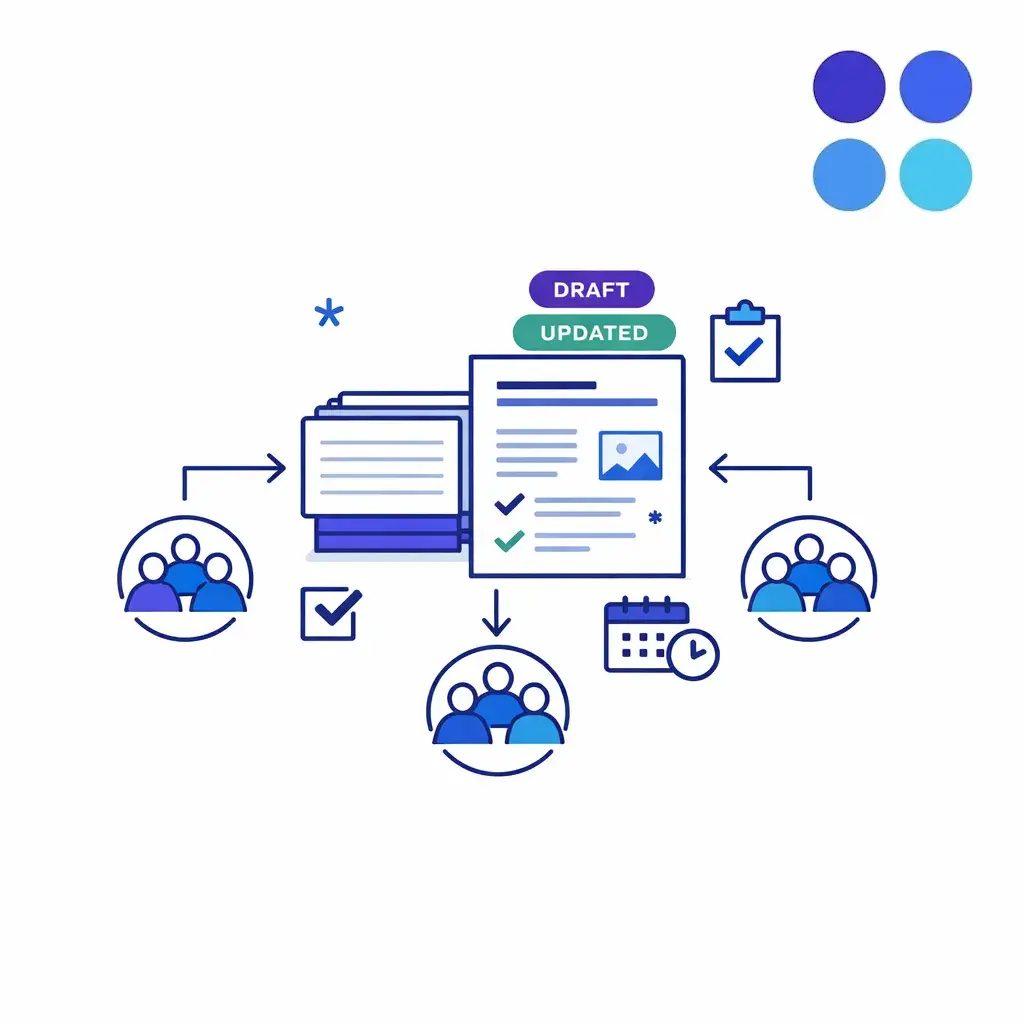
Required notes, dispositions, and status codes should mean the same thing everywhere, with owned, version-controlled knowledge articles.
What does QA do in a call center? For this audit, treat it as the part of the review that tests whether work met your standard, and whether that standard is being applied consistently enough to support reliable outcomes.
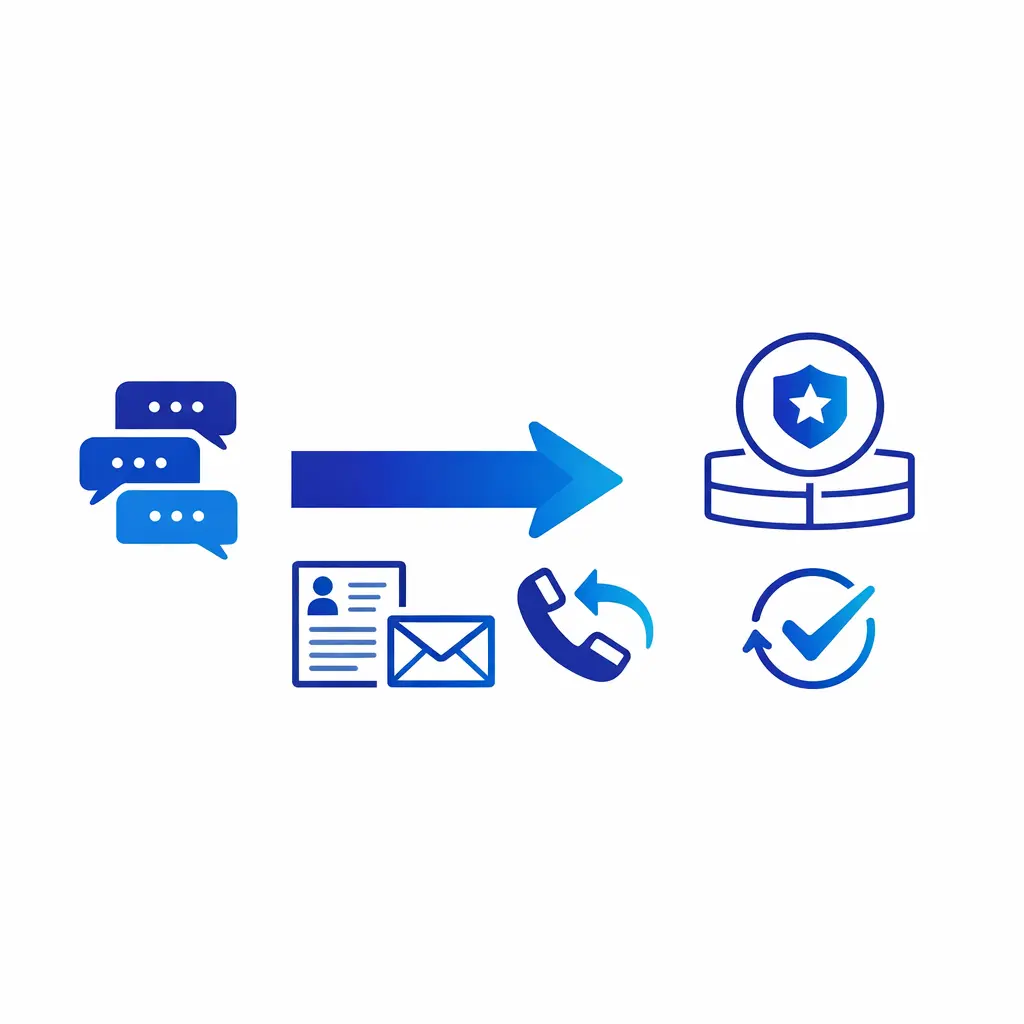
Critical details should move with the customer: warm transfers, callbacks, and closed-loop follow-up that confirms the issue was resolved.
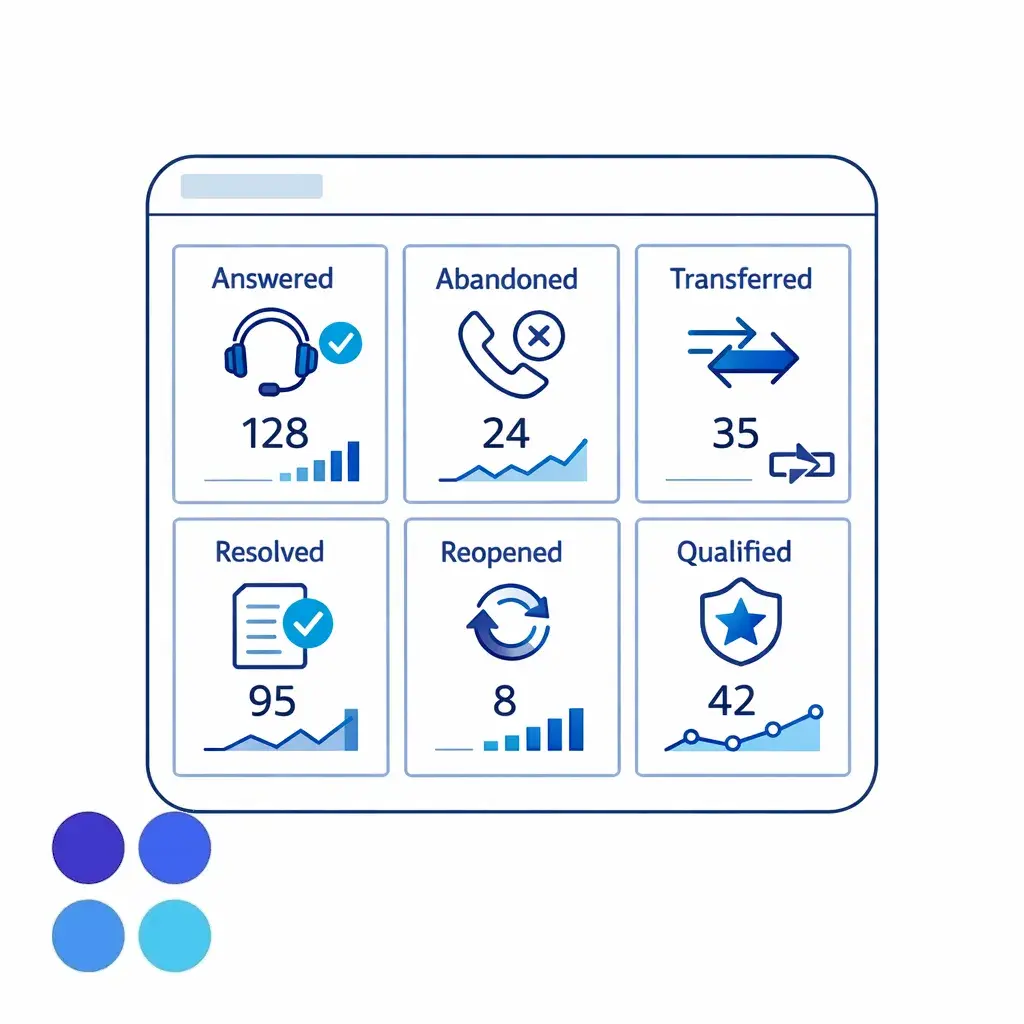
Define handled, answered, abandoned, transferred, resolved, reopened, and qualified the same way across every report and location.
If escalations depend on transfers or handoffs, use a documented method similar to TeamSTEPPS communication and handoff practices so critical details move with the customer instead of getting reconstructed later.
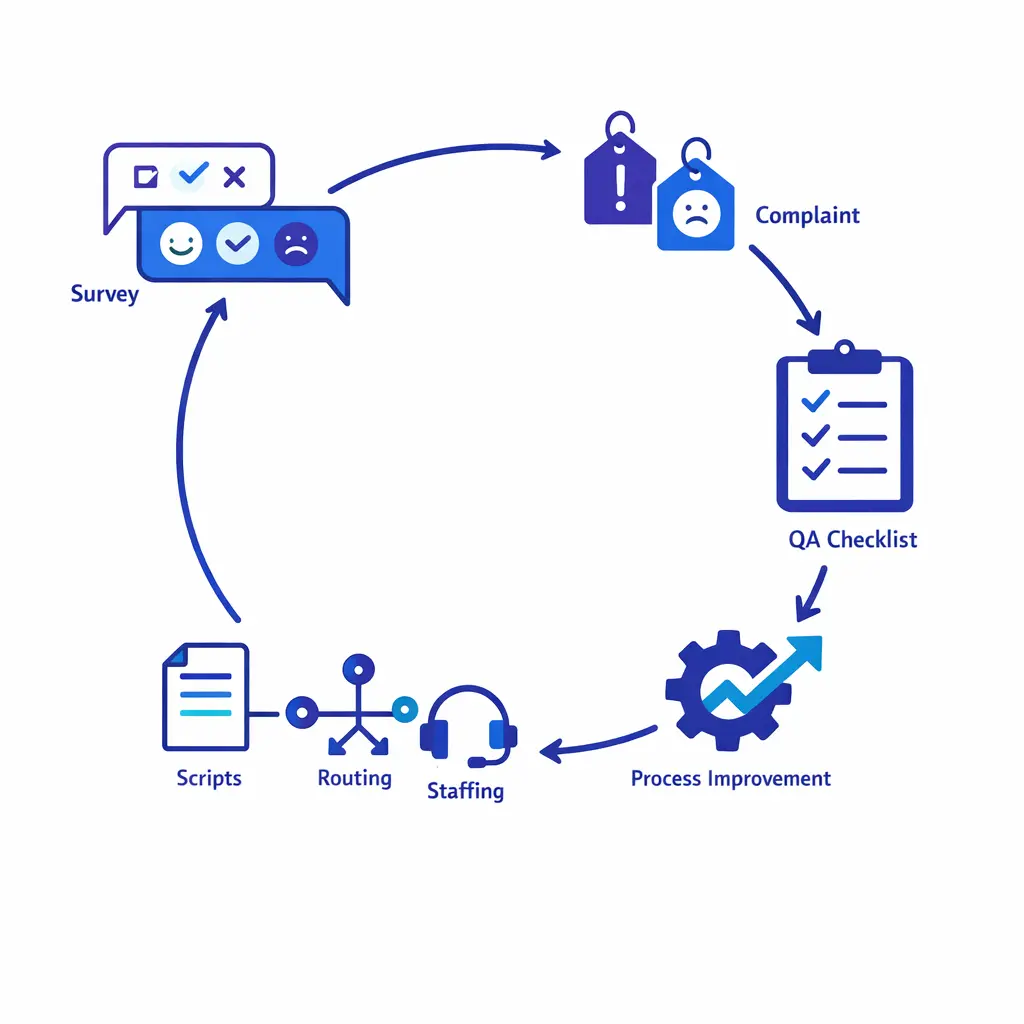
Categorize survey comments, complaints, and callbacks consistently so recurring themes feed back into scripts, routing, staffing, and training.
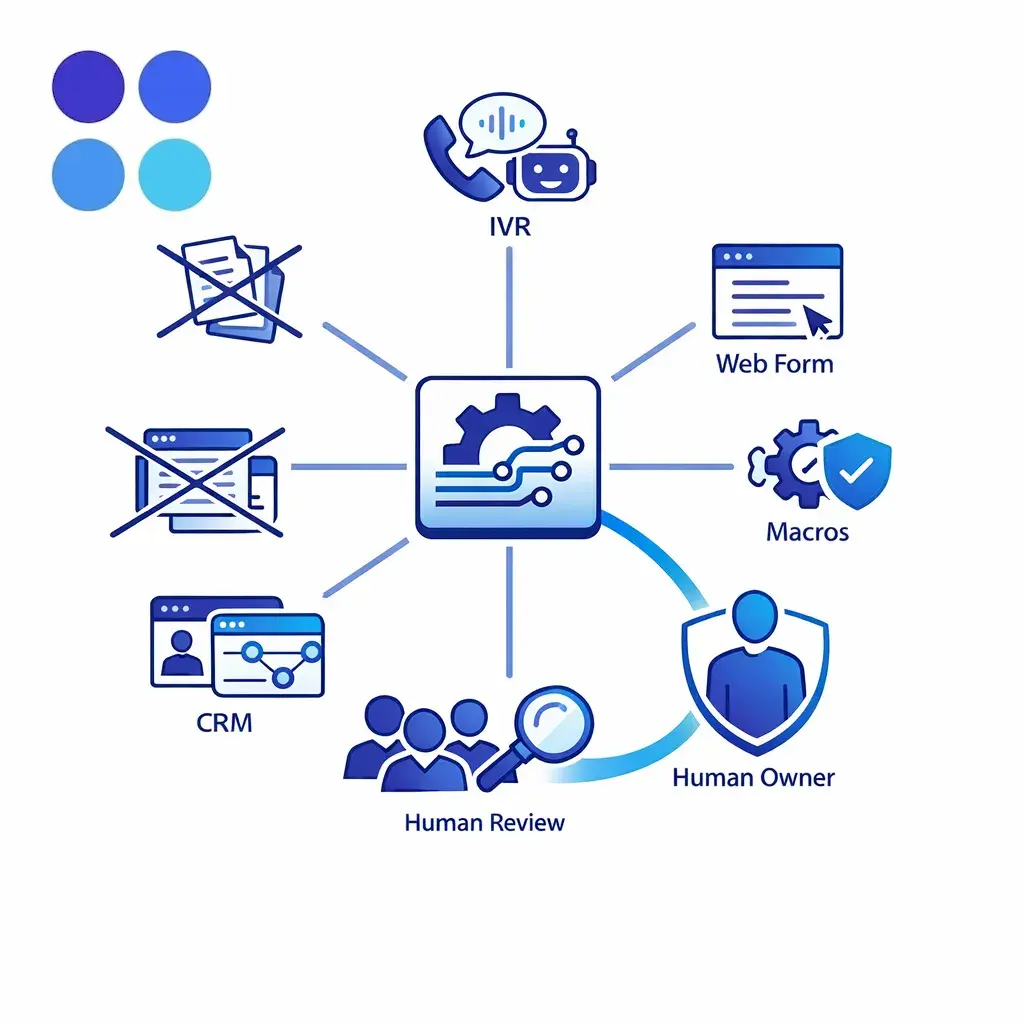
IVR, chatbots, forms, and integrations should reduce effort and fail safely, sending ambiguous cases to a human owner.
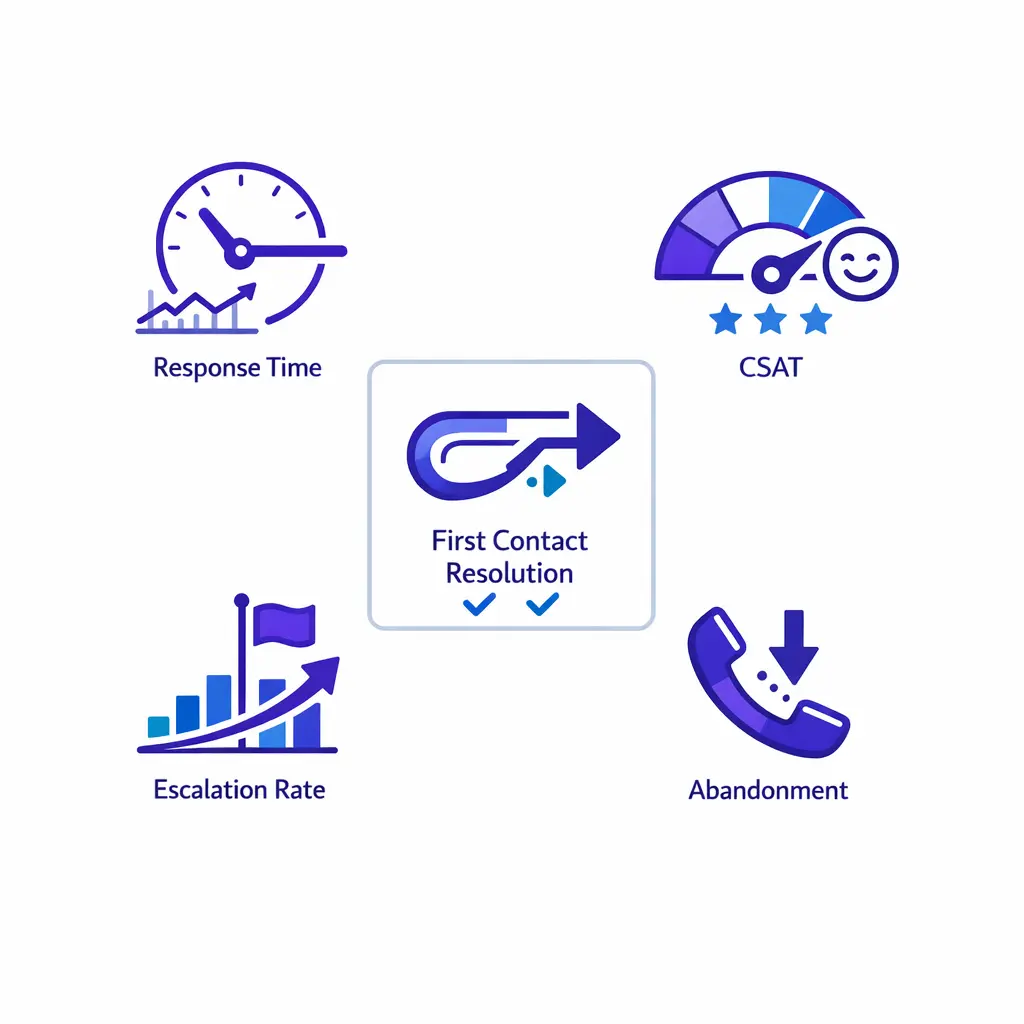
Review response time, CSAT, first-contact resolution, escalation rate, and abandonment by channel, location, and shift, not as one blended average.
Start with response time, first contact resolution, and abandonment rate because they tell you whether the operation is reachable and whether the first touch is doing enough useful work. Review these by channel, location, shift, and contact reason rather than relying on one blended average.
If phone looks healthy but chat does not, or weekdays look fine but weekends do not, you have already found where to audit deeper. That is why channel-level and shift-level segmentation matters.
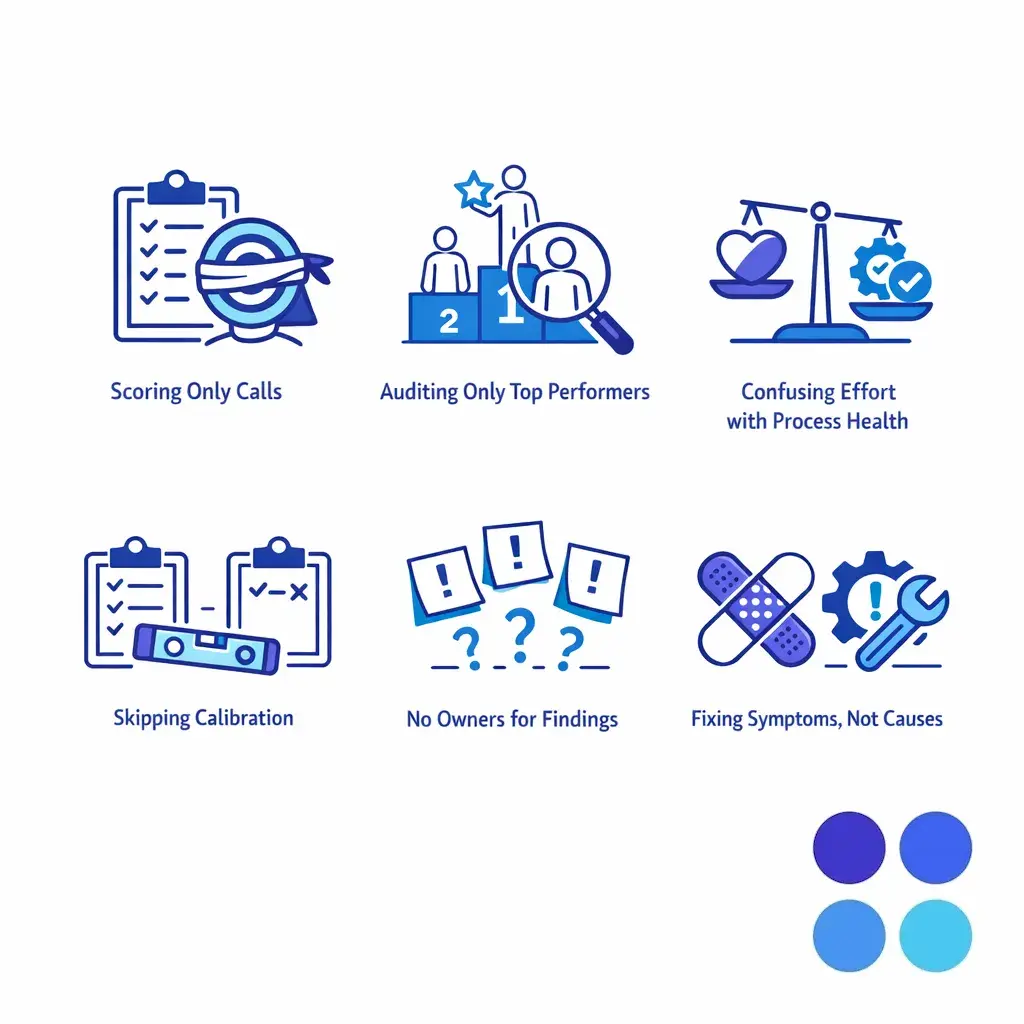
Scoring only calls, auditing only top performers, skipping calibration, and writing findings without owners all undermine the audit.
Customer satisfaction score shows how customers felt about the interaction, but it should not be read in isolation. Pair it with comments, repeat contacts, and QA notes so you can tell the difference between a pleasant interaction and a fully resolved one.
Low first-pass resolution usually points to one of four root causes: weak intake, unclear ownership, missing knowledge, or avoidable transfers. In multi-location environments, compare the same contact types across sites to see whether the problem is workflow design or execution drift.
Track the share of contacts that move to a supervisor, specialist, attorney, clinician, or second team. If escalation spikes in only one scenario, fix the decision tree. If it stays high across scenarios, revisit training, authority limits, staffing mix, or the completeness of front-line intake.
Unanswered calls, expired chats, and untouched web leads belong in the same audit view. If demand is arriving but not being owned, the problem is bigger than courtesy. It is a coverage, routing, or process design problem.
A useful 5 C's lens for the audit is clarity, consistency, competence, convenience, and care. Use it when you review scripts, notes, transfers, and follow-up commitments.
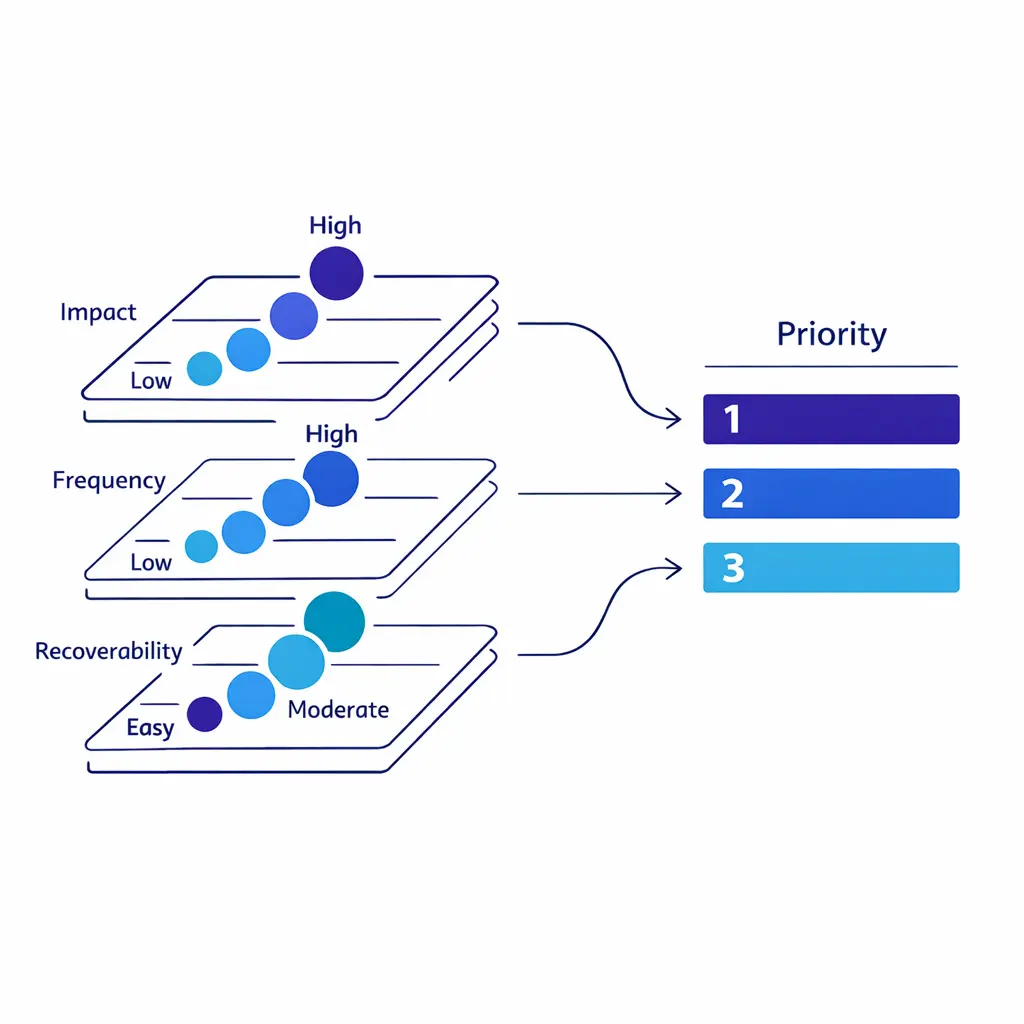
Rank each finding by impact, frequency, and recoverability so prioritization is obvious: routing errors outrank easy-to-coach script issues.
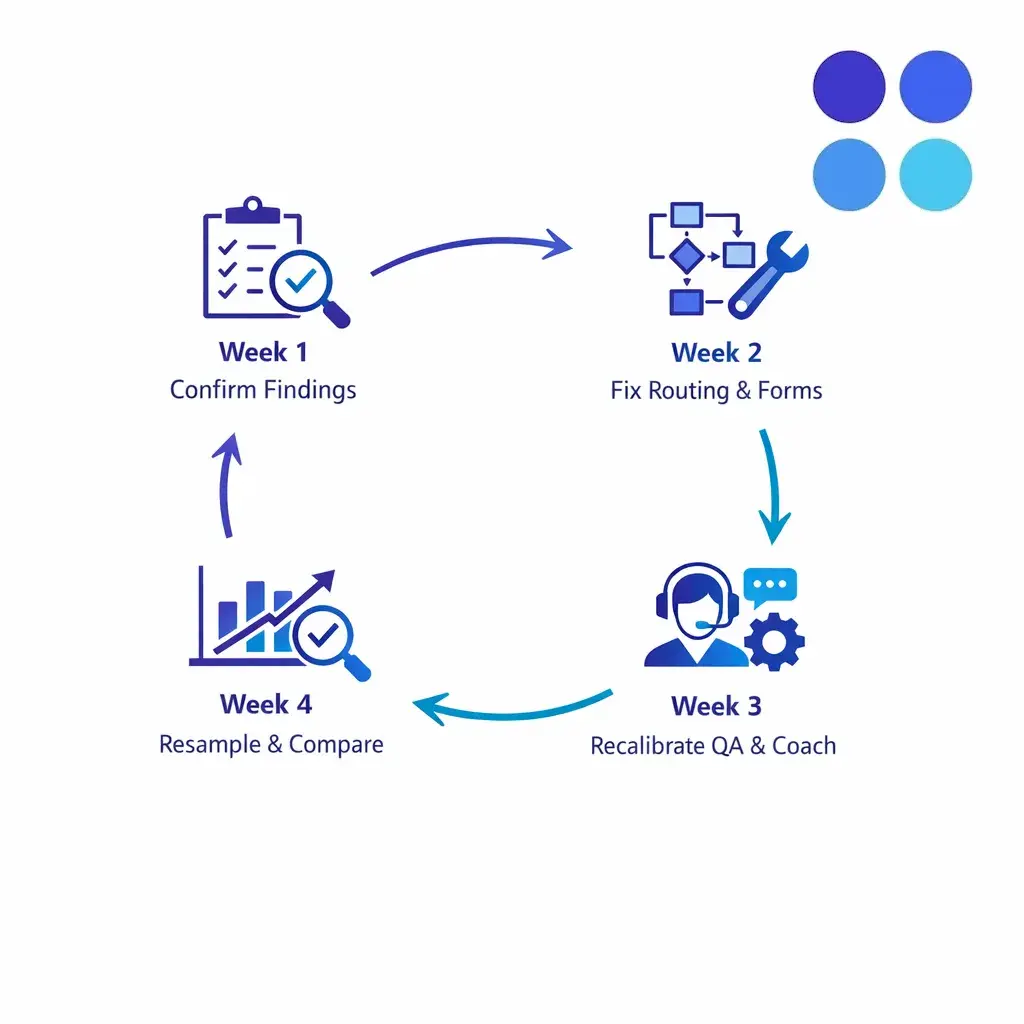
Week 1 confirm and assign; Week 2 fix routing, scripts, and forms; Week 3 recalibrate QA and coach; Week 4 re-sample and compare.
Keep issue ranking simple. Score each finding on impact, frequency, and recoverability, then use the total to decide what gets fixed first.
A routing error that affects every location and blocks first response should rank above a script issue that is easy to coach and easy to recover from. The scoring model does not need to be sophisticated. It needs to make prioritization obvious.
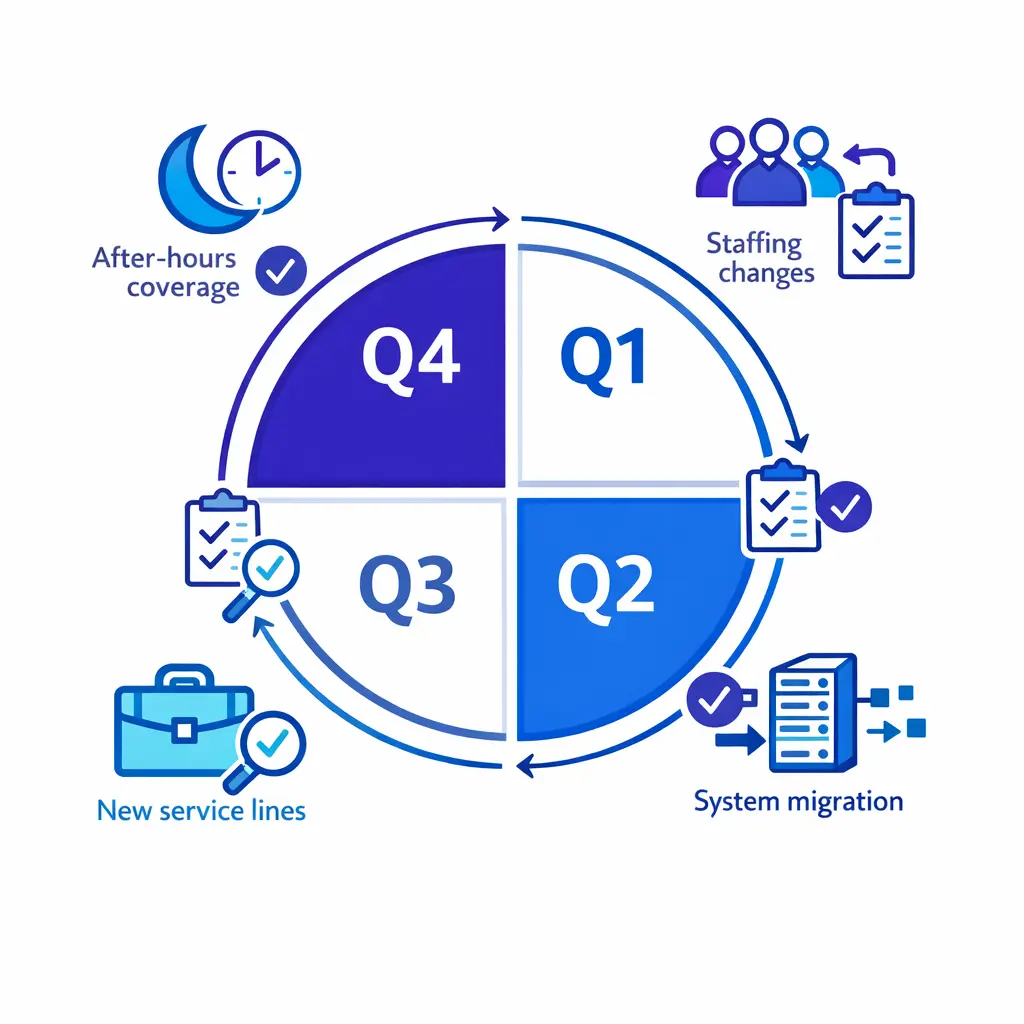
Quarterly works for steady state, with faster follow-up after staffing changes, new service lines, migrations, or coverage changes.
Use the first month to reduce variance quickly. The best early fixes usually sit in queue logic, required fields, escalation ownership, documentation rules, and after-hours playbooks.
Use this simple customer service audit template in your report:
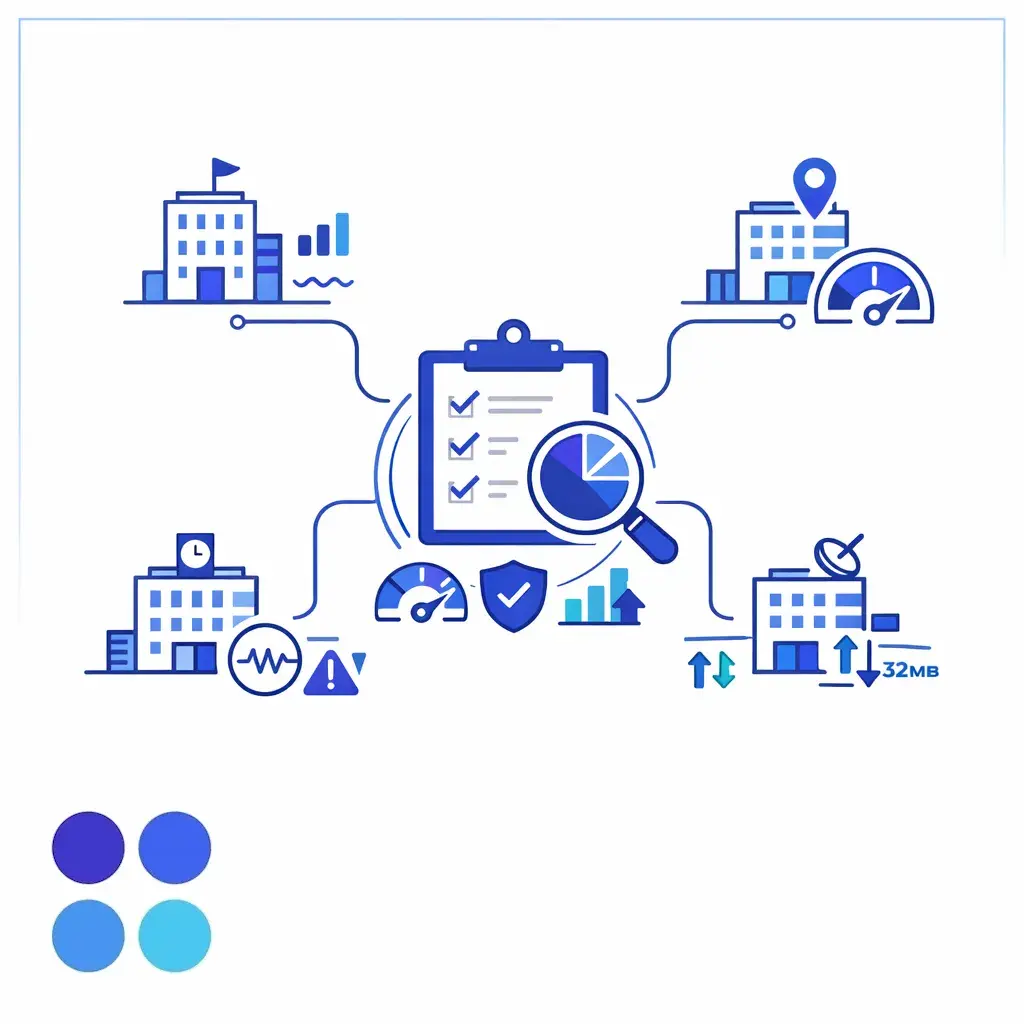
Compare the same contact types across sites to tell workflow-design problems from execution drift before they spread.
A practical cadence is quarterly for steady-state operations, with faster follow-up after major staffing changes, new service lines, mergers, system migrations, or a change in overflow or after-hours coverage.
If your team handles protected health information, audit access, note standards, and disclosure workflows against the HIPAA Privacy Rule. If your intake includes sensitive legal or incident details, apply the same discipline to permissions, note accuracy, and escalation ownership.

Review scripts, notes, transfers, and follow-ups for clarity, consistency, competence, convenience, and care.
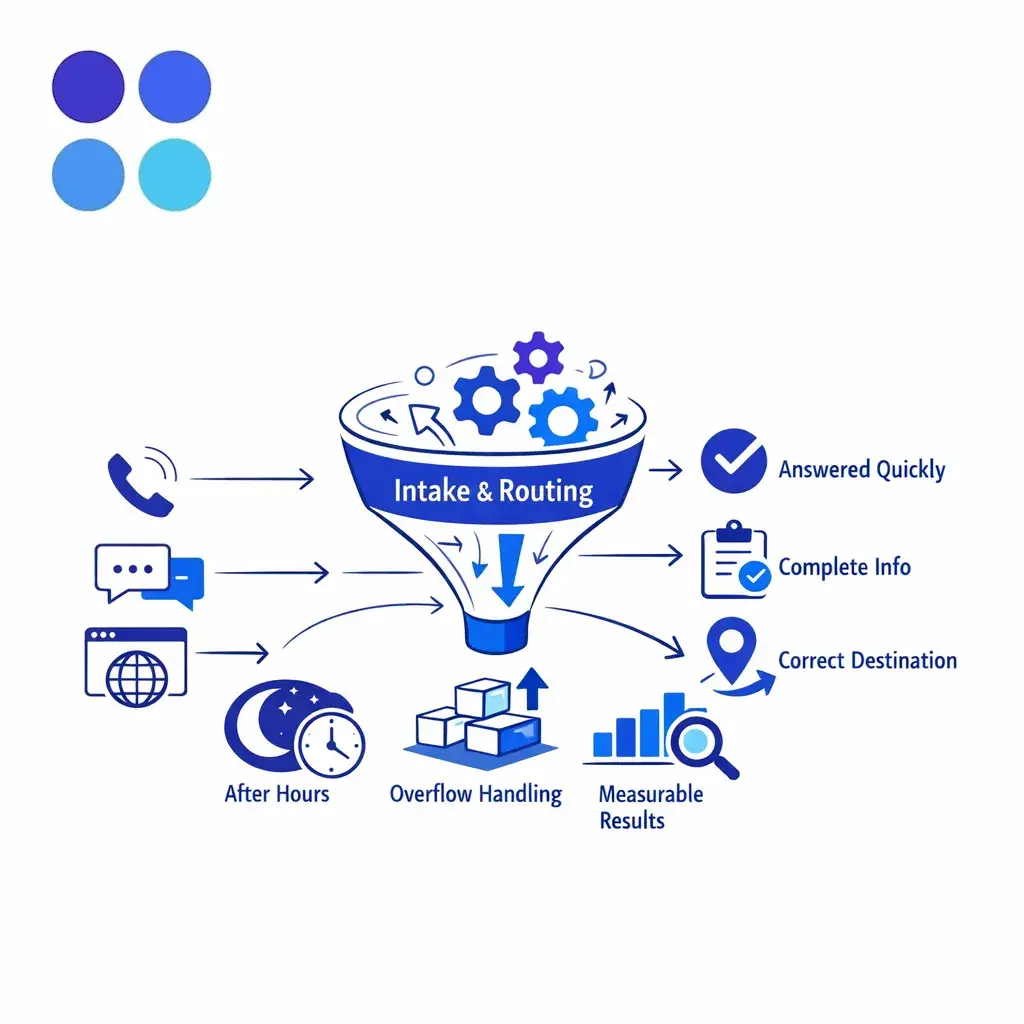
The goal is simple but hard at scale: answer quickly, capture complete information, route correctly, and keep quality consistent across every shift and channel.
If your audit shows gaps in overflow handling, after-hours coverage, intake consistency, or location-to-location variance, Go Answer can help you tighten the operating model without adding more internal complexity. That is especially useful when the job to be done is simple but hard to execute at scale: answer quickly, capture complete information, route correctly, and keep quality consistent across every shift.
Request Pricing if you want to map the right support model, or Book a Discovery Call to talk through response-time targets, intake requirements, and rollout across teams or locations. You can also talk to a specialist, explore enterprise BPO, see how it works, and view use cases relevant to legal intake, healthcare, or high-volume inbound coverage.

Learn why thousands of companies rely on Go Answer.
Try us risk-free for 14 days!
Enjoy our risk-free trial for 14 days or 200 minutes, whichever comes first.
Have more questions? Call us at 888-462-6793
Learn why thousands of companies rely on Go Answer.
Have more questions? Call us at 888-462-6793
If you would like to get in contact with a Go Answer representative please give us a call, chat or email.

Thanks for your interest!
A representative will be reaching out to you shortly.
Have more questions? call us on 888-462-6793
