
Back Office Outsourcing Services for Intake-Heavy Teams: Which Tasks to Outsource First
By Matt O'HaverLast modified: July 14, 2026
Voted Top Call Center for 2024 by Forbes
Virtual Receptionists
Save time and money with our virtual receptionists.
AI Receptionist
AI-powered receptionist that answers, routes, and qualifies calls 24/7.
Enterprise Solutions
Solutions designed to scale with your organization’s needs.
Legal Services
Our virtual legal receptionists are experts in legal intake.
Last modified: July 14, 2026
Intake-heavy teams rarely have a true staffing problem alone. More often, they have a workflow problem: the calls, forms, referrals, and messages keep coming in, but the document work, data updates, follow-up tasks, and reporting lag behind. That is where back office outsourcing services can create leverage.
This guide is for enterprise and multi-location service businesses, legal intake teams, healthcare organizations, and any high-volume operation evaluating business process outsourcing for intake operations. You will learn which tasks usually belong in the first outsourcing wave, how to decide what stays in-house, and how to set up back office support without weakening quality, compliance, or visibility.
In this article, back office outsourcing services means the work that supports intake after the inquiry arrives. Think document handling, CRM data entry outsourcing, appointment confirmation support, QA administration, lead follow-up support, and reporting support services. The goal is not to outsource everything. The goal is to move the repetitive work that slows response times and muddies handoffs.
The best first-wave workflows usually share the same shape. They happen frequently, follow a clear playbook, and can be checked for accuracy without a long debate. They also pull time away from higher-value work if they stay on the desks of intake specialists, managers, coordinators, or location staff.
A simple way to rank tasks is to score them against five filters. If a workflow checks most of these boxes, it is usually a good candidate for administrative outsourcing.
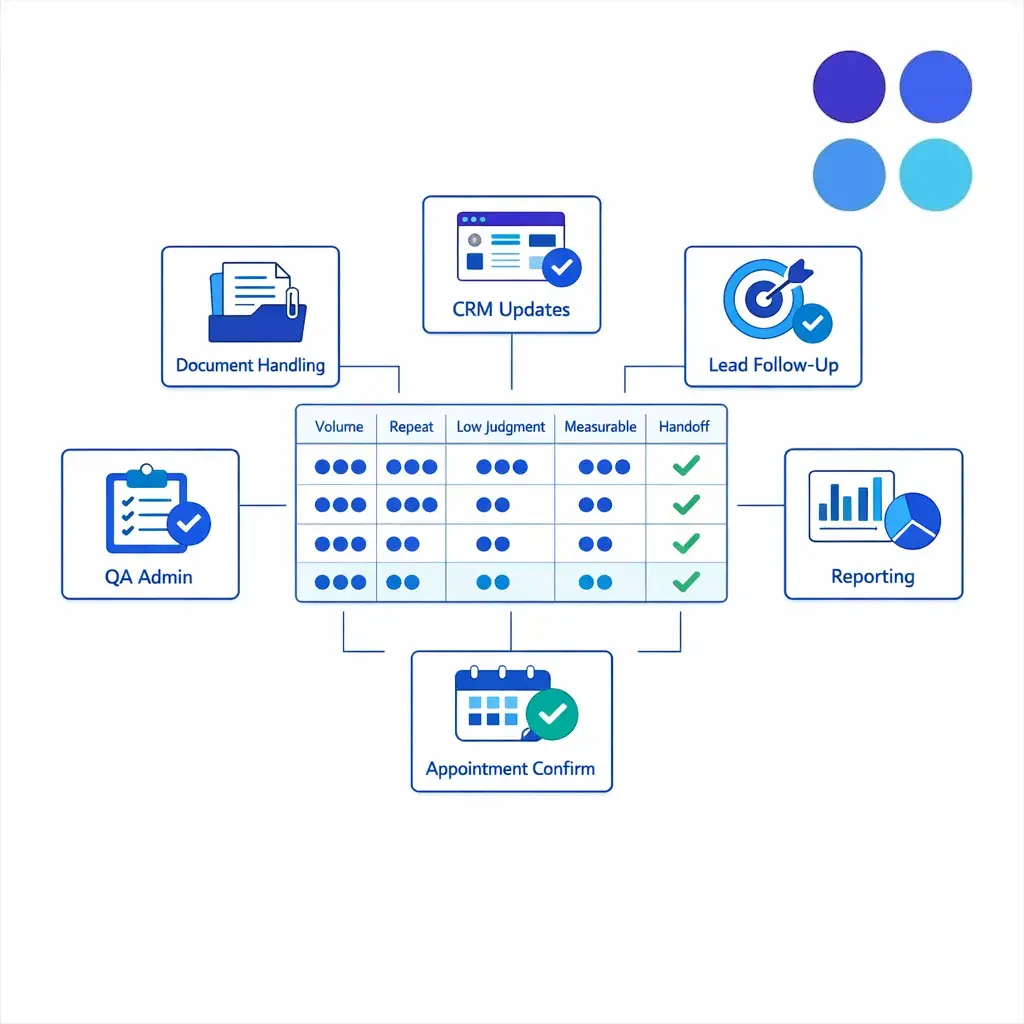
If a task is emotionally charged, heavily exception-based, or dependent on a senior person making nuanced decisions, it usually should not be first. Workflow outsourcing works best when phase one reduces friction without creating new risk.
Document work is one of the safest and highest-impact places to start. Teams often lose time to downloading attachments, renaming files, combining PDFs, indexing documents, attaching records to the right account or matter, and flagging missing pages or signatures. None of that work is trivial, but much of it is structured.
This is especially useful when intake volume spikes by campaign, location, referral source, or time of day. A dedicated back office support team can keep files moving so front-line staff stay focused on live conversations, priority escalations, and conversion-critical next steps.
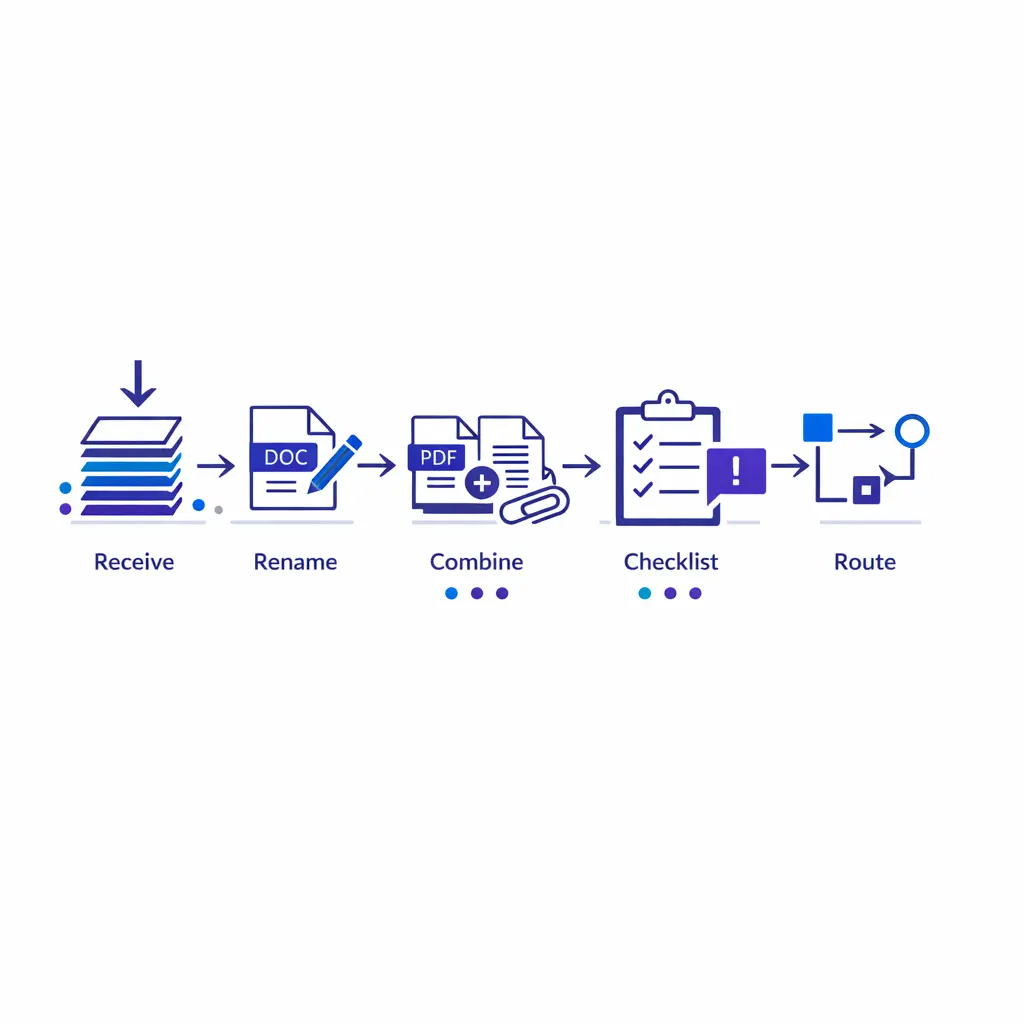
Strong first-wave document tasks: naming conventions, folder placement, checklist completion, form quality review, packet follow-up, and routing to the next queue, keeping front-line staff on live conversations.
CRM updates are another strong first move because the work is frequent, visible, and easy to audit. Intake-heavy teams often need records created, statuses updated, dispositions logged, custom fields completed, duplicate records reviewed, notes normalized, and follow-up dates assigned. When those updates fall behind, every downstream report becomes less trustworthy.
CRM data entry outsourcing also helps standardize how teams use the system. Instead of every rep or coordinator entering data a little differently, a centralized back office process can enforce naming rules, source tracking, required fields, and stage movement. That improves both operational discipline and reporting quality.
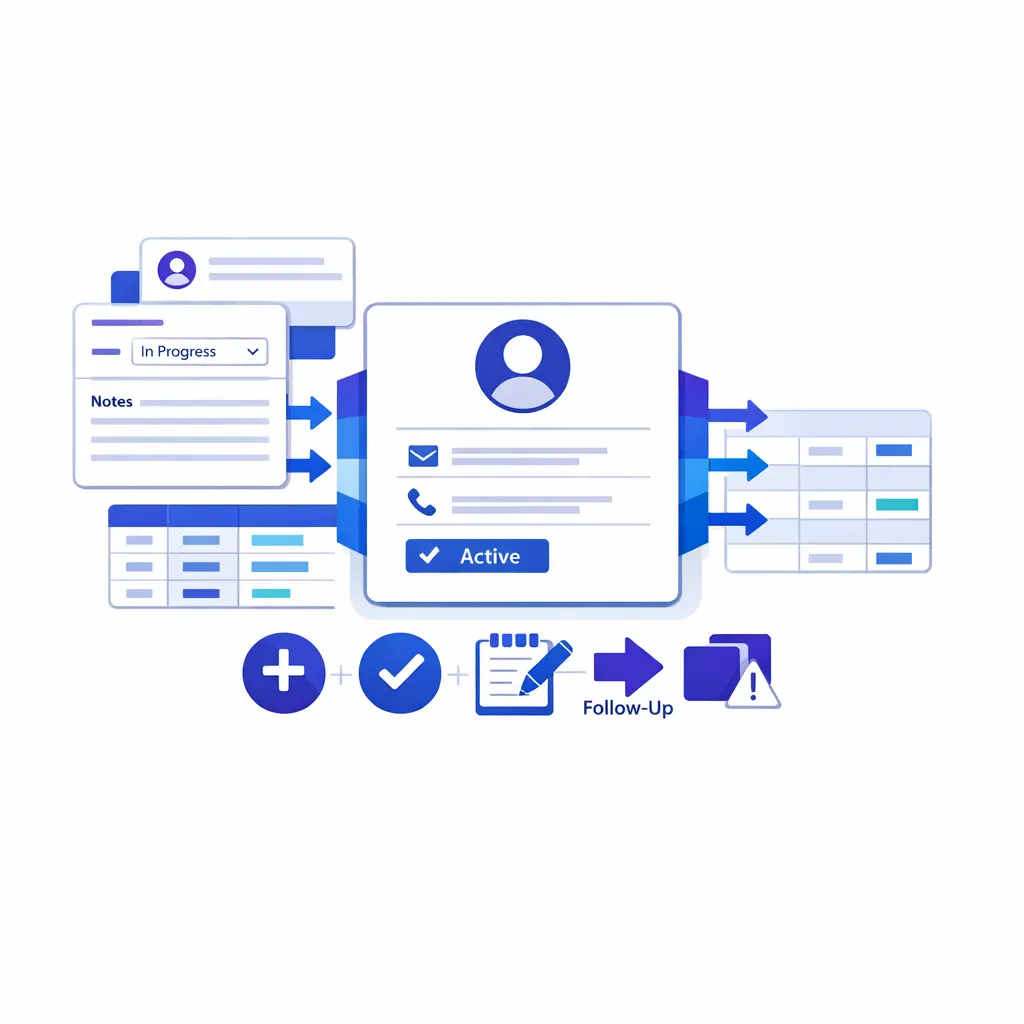
Separate data capture from decision authority. A partner can update records, queue the next task, and flag exceptions while internal owners keep authority over acceptance, strategy, and high-risk escalations.
Lead follow-up support is often misunderstood. It does not need to mean outsourced selling or high-pressure closing. For many intake operations, it simply means making sure interested prospects, referred contacts, former callers, or incomplete submissions do not disappear because no one had time to re-engage them.
Early follow-up tasks that work well include missing-information outreach, form completion reminders, referral packet chase, consult readiness checks, inbound callback scheduling, and "still interested" confirmation. These are structured, time-sensitive, and important, but they do not always require a senior intake closer to handle every touch.
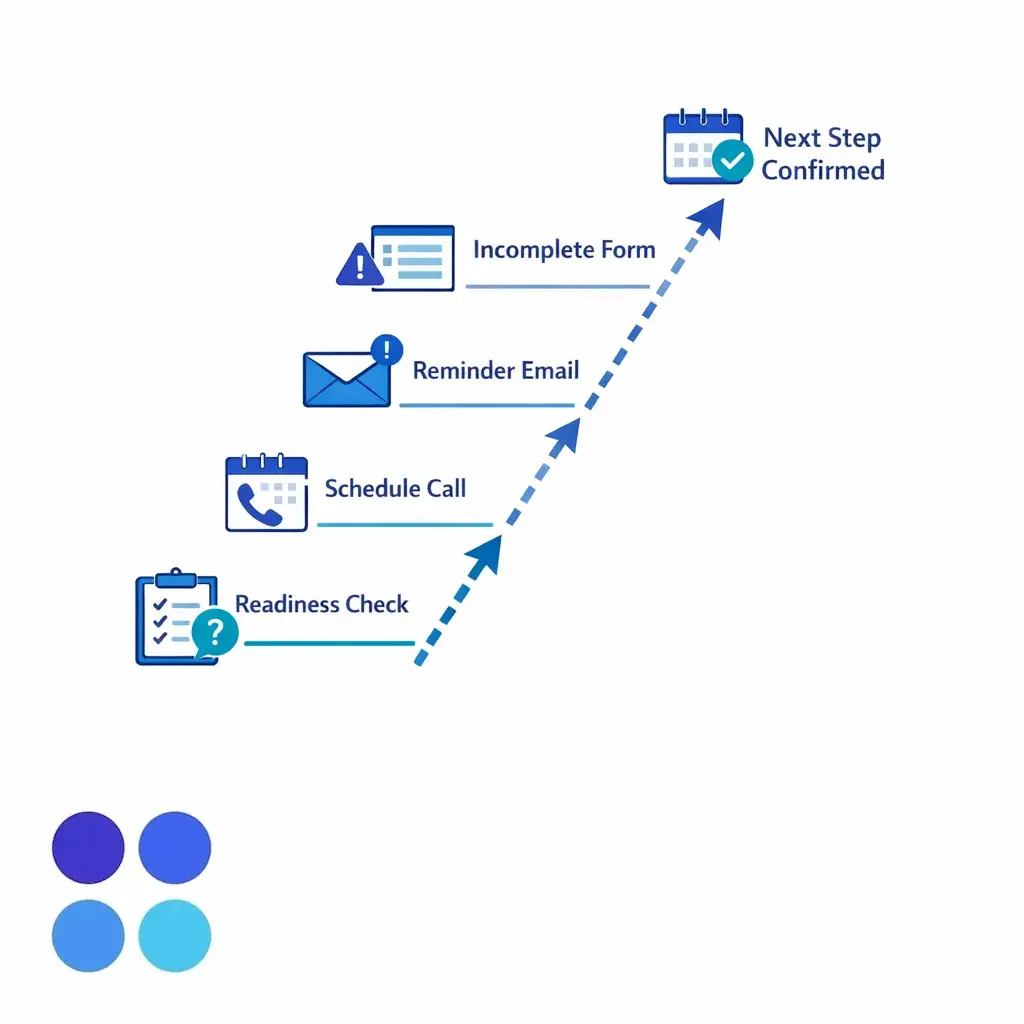
Keep the script narrow: missing-information outreach, form-completion reminders, referral chase, and "still interested" confirmation, with anything substantive or negotiable routed back to an internal specialist.
Appointment confirmation support is one of the fastest ways to clean up intake operations for clinics, legal consult teams, and multi-location service businesses. Schedules break down when confirmations are inconsistent, reschedule requests sit too long, or no-show recovery has no clear owner. A structured back office team can own the daily discipline that keeps the calendar usable.
This work usually includes reminder workflows, attendance confirmation, cancellation capture, waitlist fills, reschedule coordination, and next-day schedule cleanup. In enterprise environments, it can also include location-level calendar balancing and escalation to local staff when a slot needs special handling.
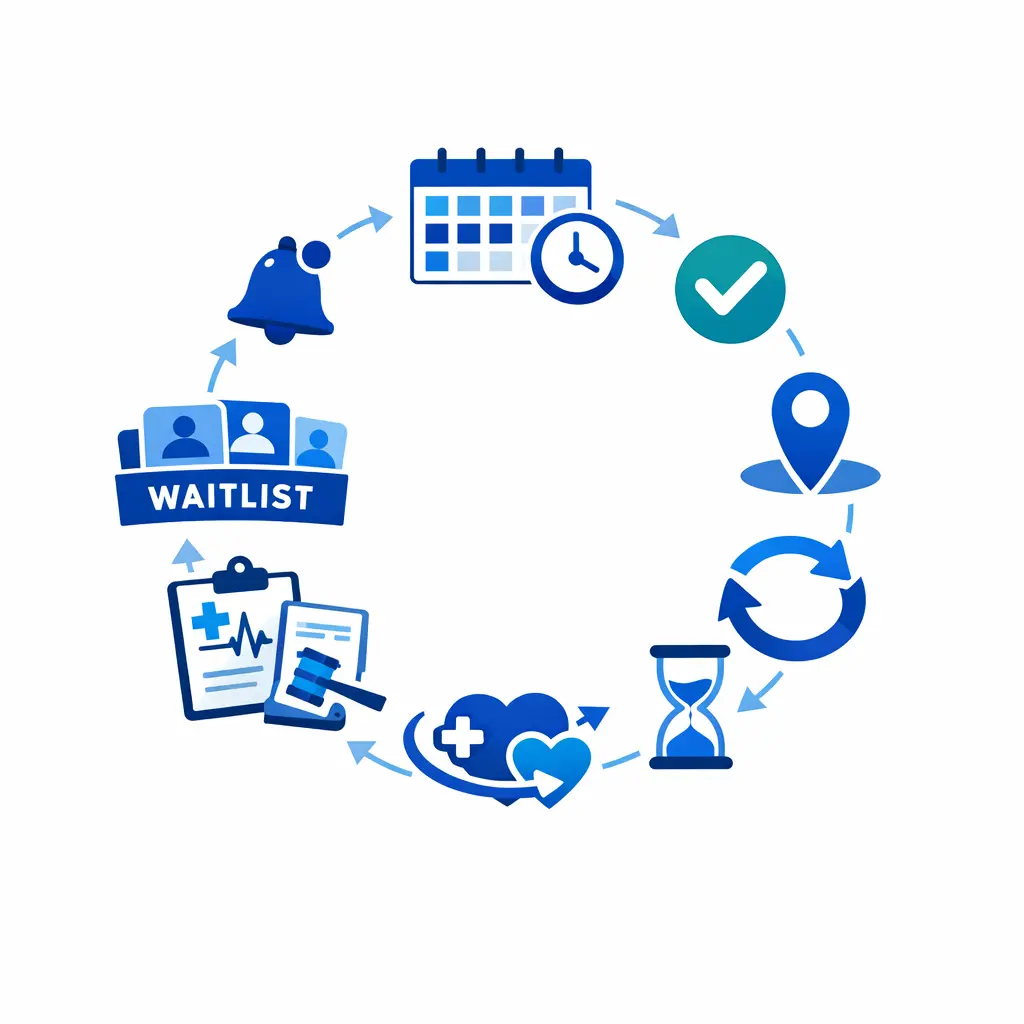
What makes scheduling a strong candidate is the feedback loop. Show rates, reschedule patterns, unworked queues, and location performance surface quickly, so the process improves without redesigning intake.
Many organizations think about outsourcing only in terms of live coverage, but QA administration is often the hidden bottleneck. Someone has to pull interactions for review, tag calls or records, check required fields, monitor script adherence, prepare scorecards, maintain coaching queues, and track whether fixes actually stick. Those tasks are important, but they can crowd out supervisor time.
QA admin is a smart first-wave workflow because it is structured and measurable. It supports intake quality without asking an external team to make the final judgment on customer experience, legal merit, or clinical appropriateness. Internal leaders still own the quality standard. The outsourced team helps operationalize it.
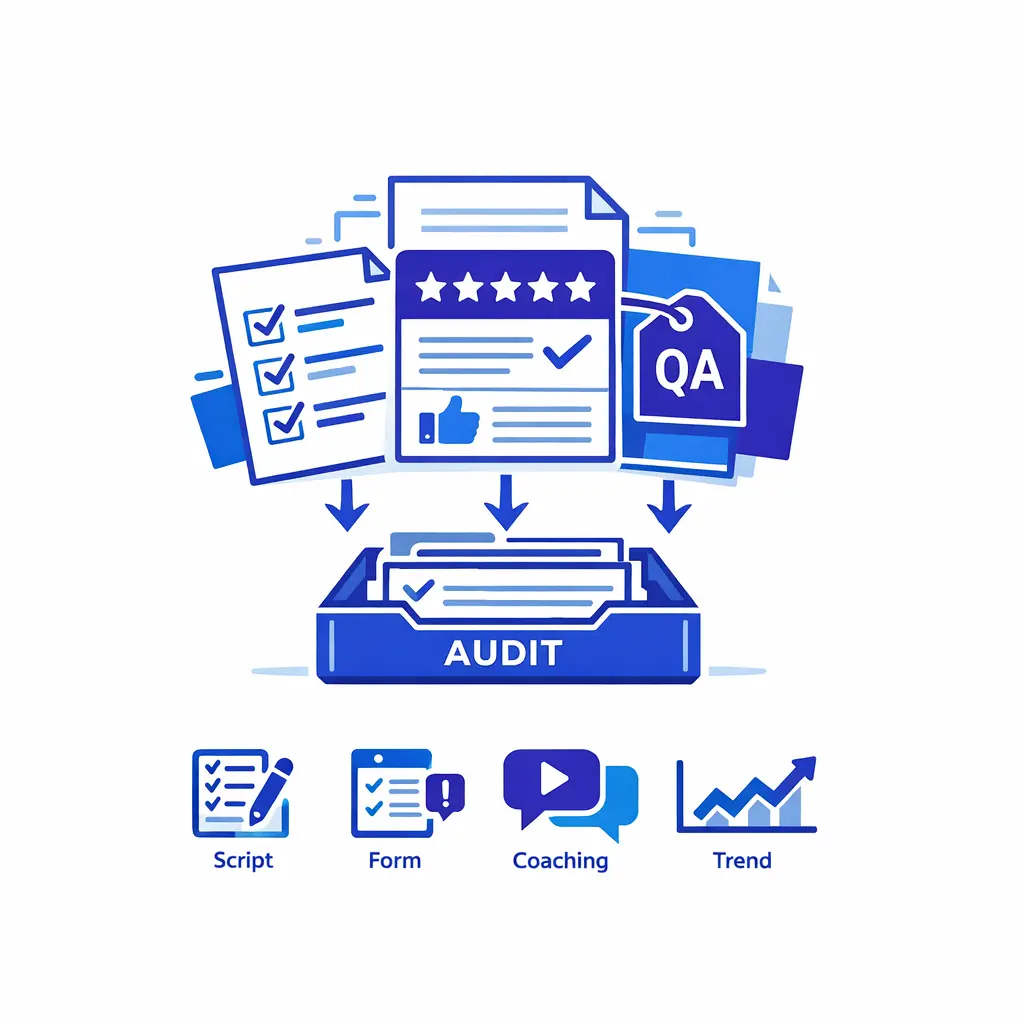
Handled as a defined process, QA admin gives leadership cleaner trend data, faster issue visibility, and less dependence on one manager remembering to update a spreadsheet.
Reporting support services are a practical outsourcing candidate when the reporting logic is already defined. Daily production reports, backlog aging, source tracking reconciliation, location scorecards, and SLA monitoring often follow a repeatable rhythm. The work is valuable, but it does not always need to live with the same people handling front-line intake.
This is especially helpful for multi-location or multi-team organizations. A back office reporting function can gather the numbers, validate the fields, prepare standardized views, and push out the reports on time, while internal leaders focus on decisions and accountability.
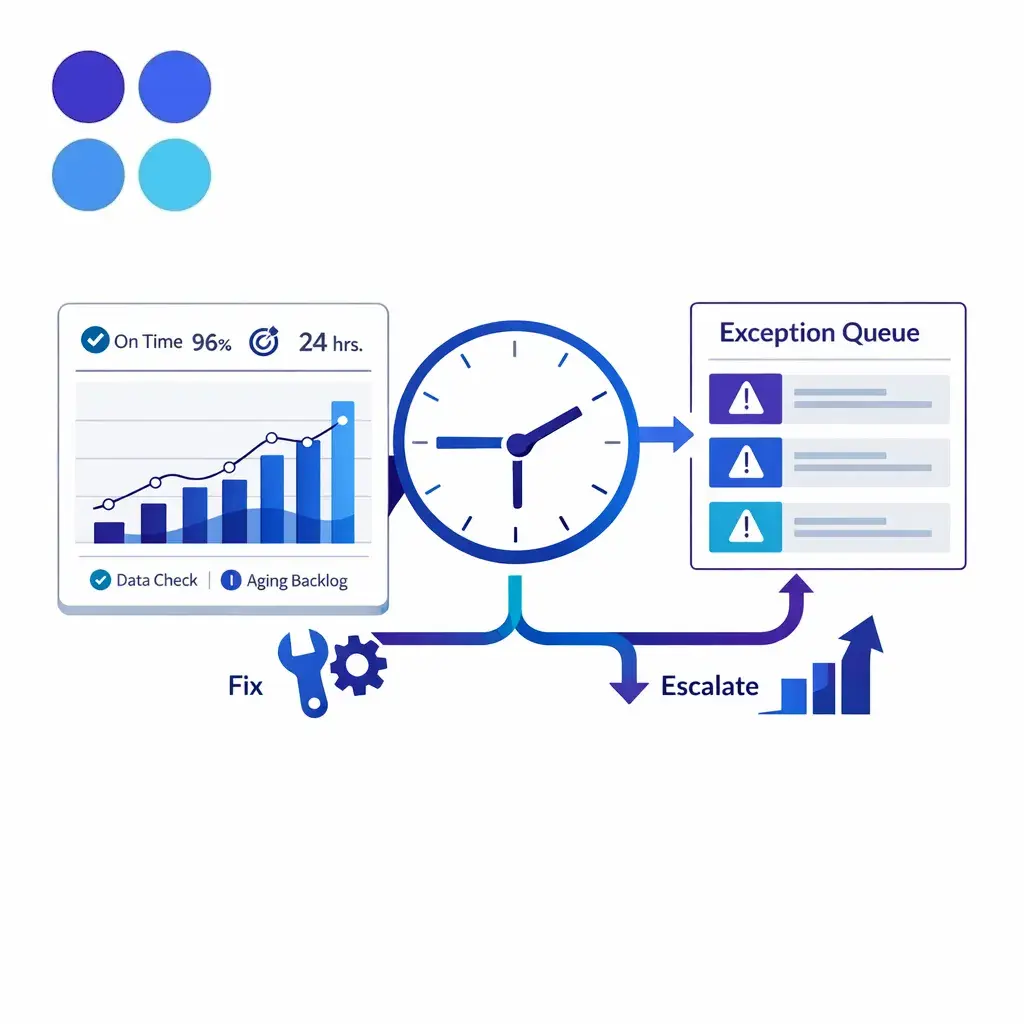
Exception queues fit here too. When a record is missing a field or a referral lacks an attachment, the outsourced team can work the queue and either fix the issue or route it to the right owner.
Not every workflow should be outsourced in the opening phase. Some tasks look administrative on the surface but carry a higher judgment burden than buyers expect. Those tasks often belong in phase two, after the team has already proven it can follow SOPs, hit service levels, and escalate correctly.
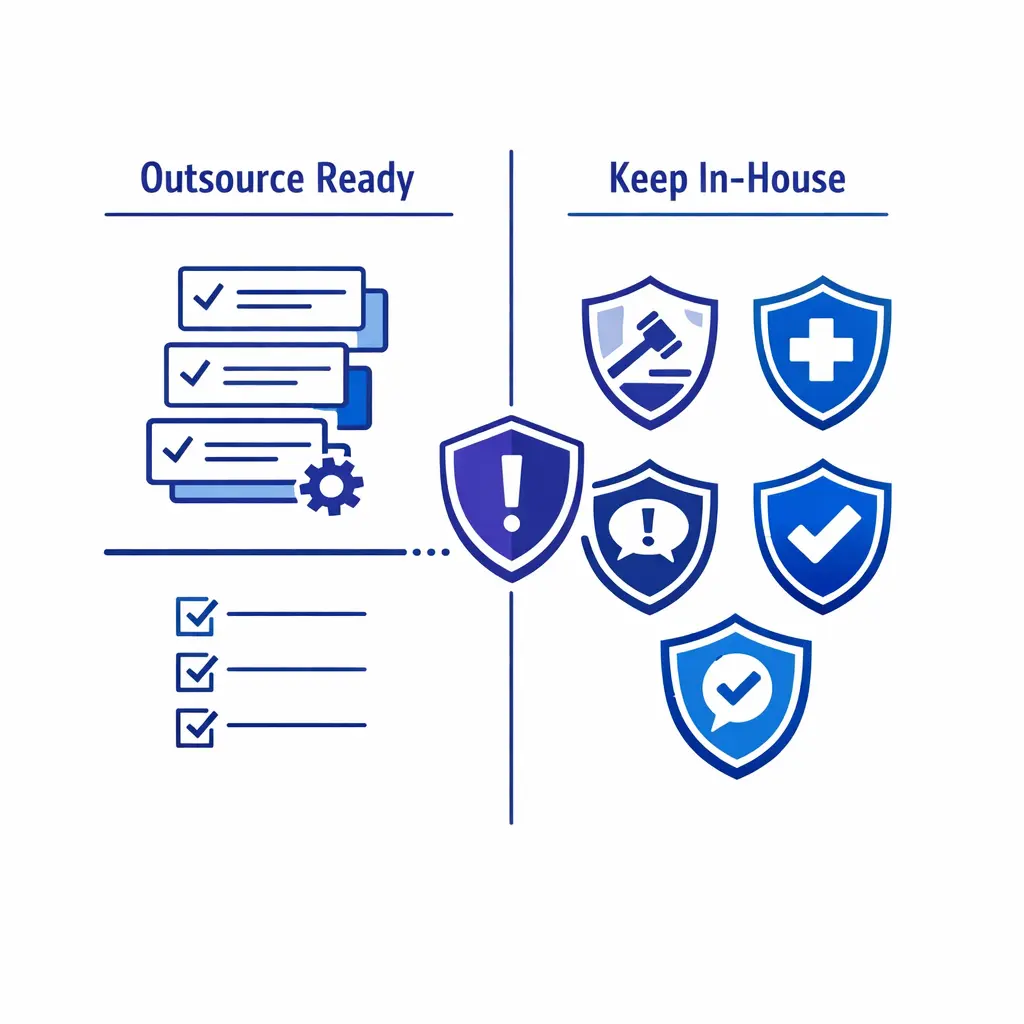
A useful principle: outsource the parts of the workflow that benefit from consistency first, then consider the parts that depend on nuanced judgment later.
For law firms, the best first-wave back office tasks are usually matter creation support, signed-document chase, document organization, CRM updates, appointment confirmations, intake QA admin, and status-based follow-up. These are important to conversion and service, but they can be standardized with scripts, checklists, and clear escalation points.
What should stay in-house longer is anything tied to legal advice, privilege analysis, conflict resolution, case valuation, or final acceptance. If an outsourced team handles client information, the firm still has duties around confidentiality and supervision under ABA Model Rule 1.6 and ABA Model Rule 5.3.
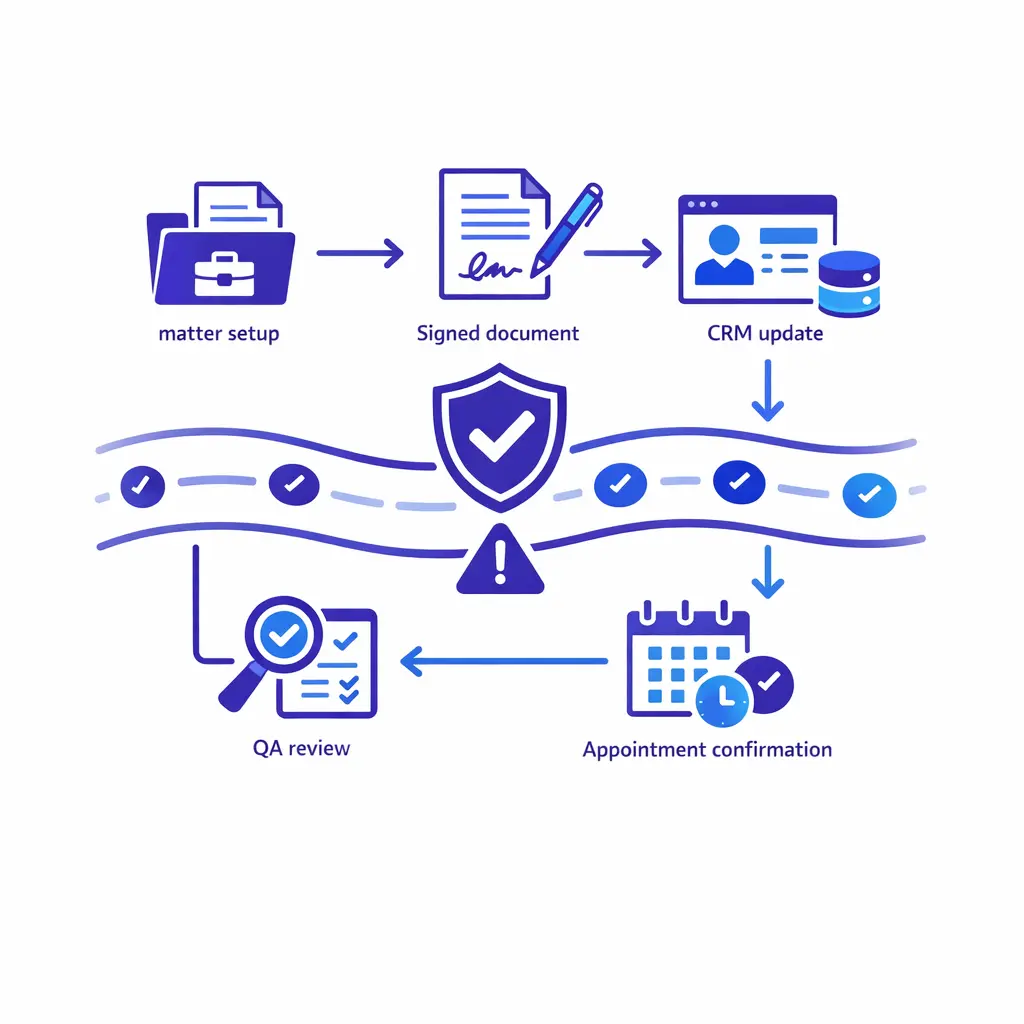
Legal first-wave tasks standardize with scripts and checklists: matter creation support, signed-document chase, document organization, CRM updates, confirmations, intake QA admin, and status-based follow-up.
For healthcare organizations, strong first-wave candidates usually include referral follow-up, registration cleanup, document intake, appointment confirmations, non-clinical reminder workflows, and reporting support tied to scheduling and intake. These tasks can absorb enormous staff time while still fitting within a controlled process design.
Clinical triage, medical advice, and nuanced coding or billing judgment should be handled more cautiously. For any workflow touching protected health information, design the process around the HIPAA Privacy Rule and the HIPAA Security Rule. Vendors that create, receive, maintain, or transmit PHI may qualify as business associates, so contracting, access controls, and workflow design should be reviewed early.
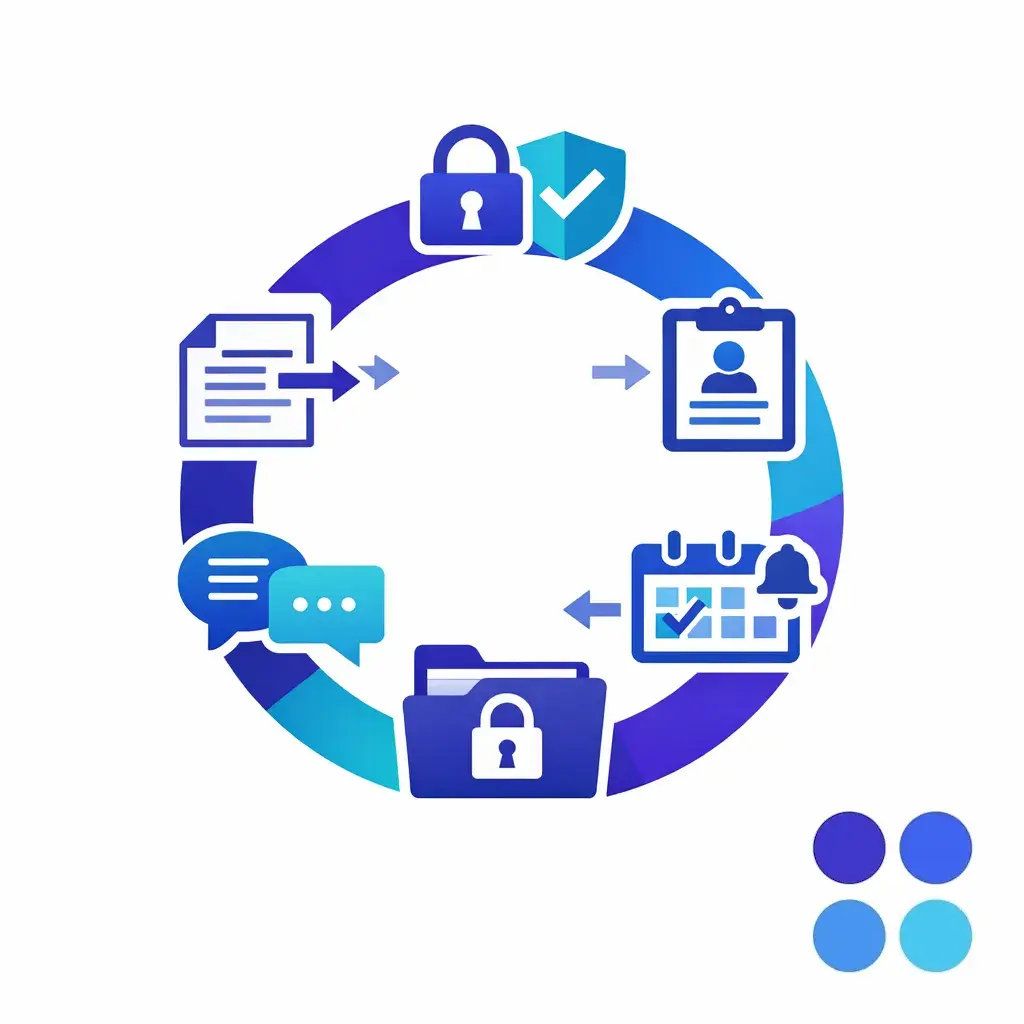
Healthcare first-wave candidates include referral follow-up, registration cleanup, document intake, appointment confirmations, non-clinical reminders, and reporting, all within a controlled, PHI-aware process design.
For multi-location operators, the biggest wins often come from removing repetitive admin from location managers and front-desk teams. Lead routing, appointment confirmation support, CRM normalization, inbox or form-queue cleanup, and daily reporting are common starting points because they can be centralized without taking local judgment away entirely.
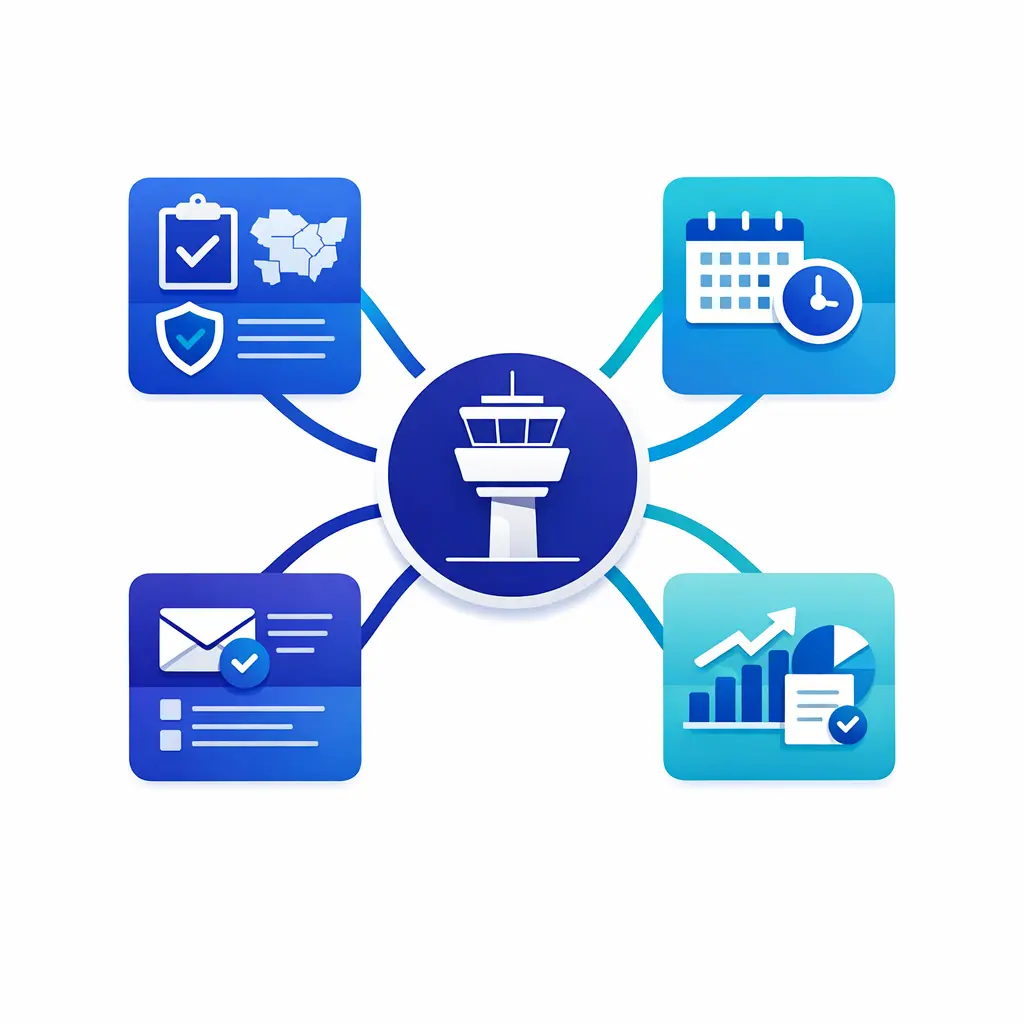
In multi-location operations, location logic is everything: clear rules for territory, service type, schedule availability, escalation ownership, and reporting rollups. Weak rules signal a workflow problem, not a staffing one.
This sounds efficient, but it usually backfires. The first outsourcing wave should prove discipline, visibility, and consistency. If you start with the messiest queue, you can confuse a process problem with a partner problem.
Generic administrative support is not the same as intake operations support. Intake-heavy environments need time sensitivity, tight QA, accurate system updates, and reliable escalation rules. The work may be repetitive, but it is not casual.
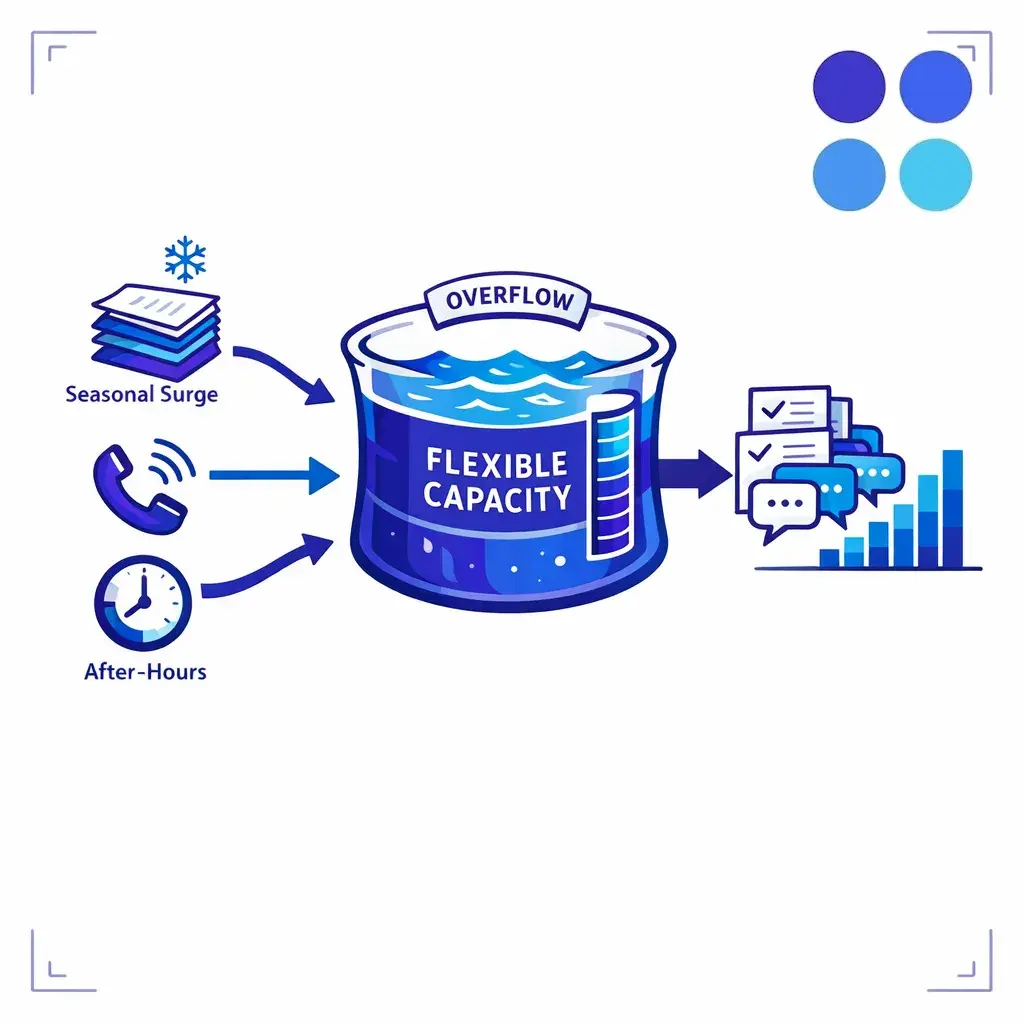
Structured back office capacity absorbs intake spikes by campaign, season, or location, so surges become managed queues instead of backlog that quietly erodes turnaround and data quality.
Fast completion is useful only if the records, routing, and next steps are right. In practice, good outsourcing programs balance turnaround time with completion standards, audit rates, and exception handling. A short SLA with poor data hygiene simply creates a cleaner-looking backlog.
Reporting should be part of the initial scope, not an afterthought. If you do not define the statuses, outcomes, queue ownership, and QA checkpoints at launch, it becomes much harder to tell whether the program is actually helping. Reporting is part of control, not just part of management visibility.
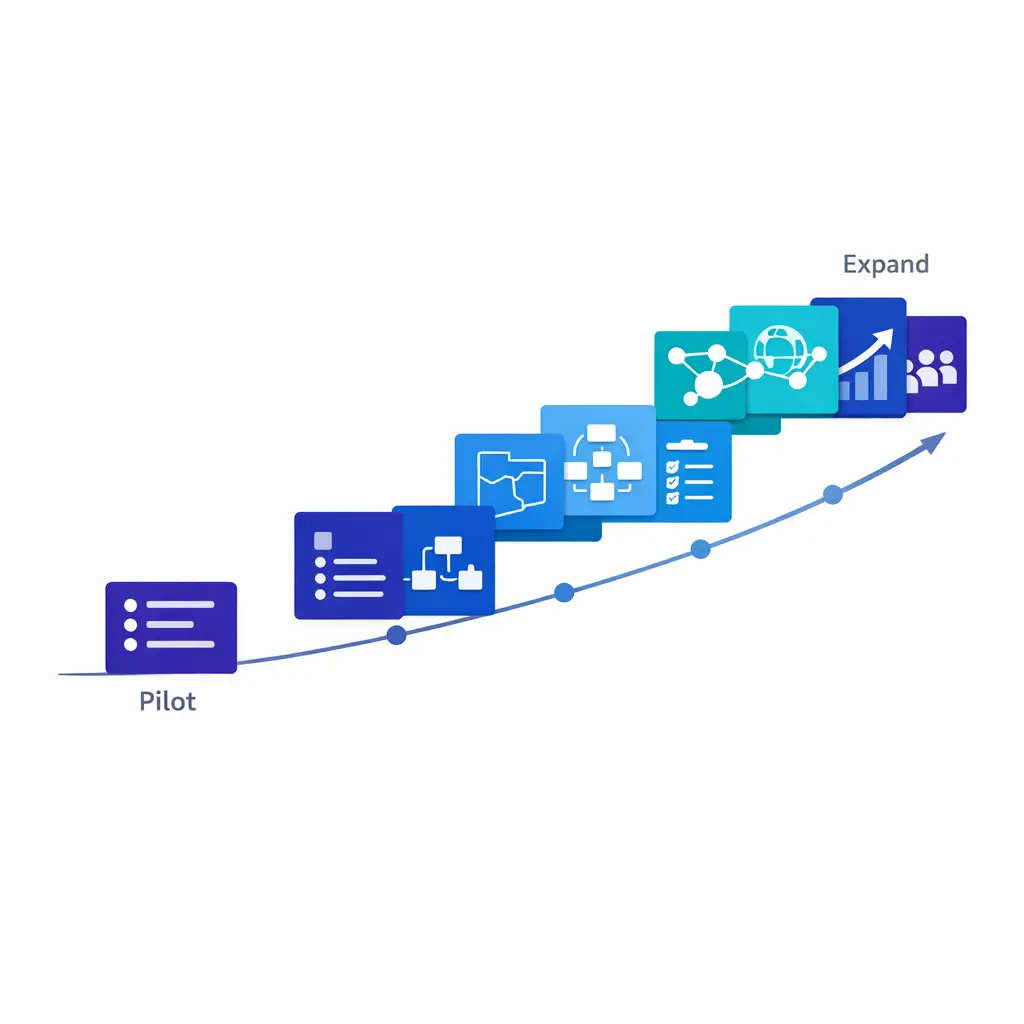
Pilot before you expand. Start with one queue, one line of business, or one region, prove discipline and visibility, then widen scope, rather than starting with the messiest queue.
You do not need a massive transformation project to evaluate back office outsourcing services well. You need a narrow initial scope, clean process definitions, and a short list of success measures that matter to operations. That is what turns business process outsourcing into an operating model instead of a labor patch.
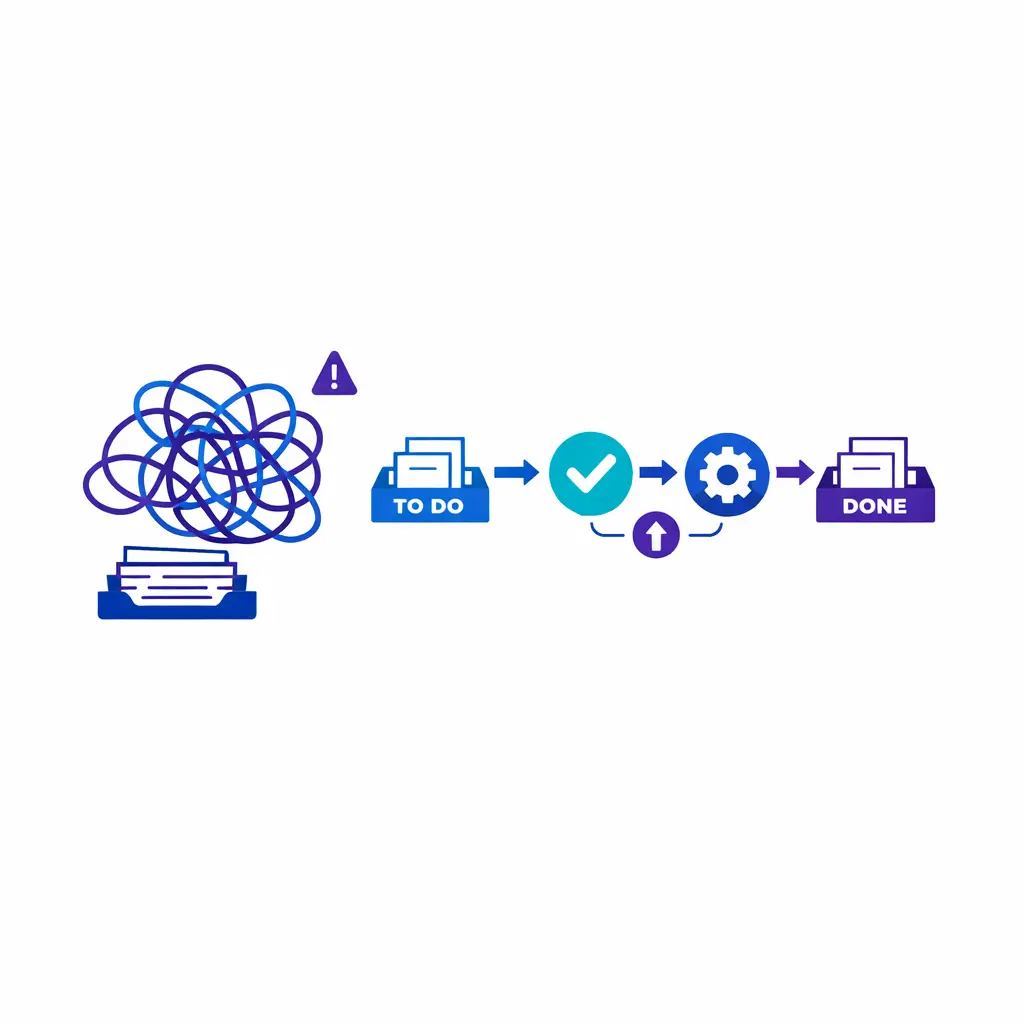
Define stop points: what the outsourced team can complete, what it can queue, and what it must escalate. Clean handoffs turn a messy backlog into a defined intake workflow.
For many buyers, the real decision is not whether to outsource. It is whether to keep burning front-line capacity on work that could be standardized. If your team is strong on calls but weak on follow-through, back office support is often the missing layer.
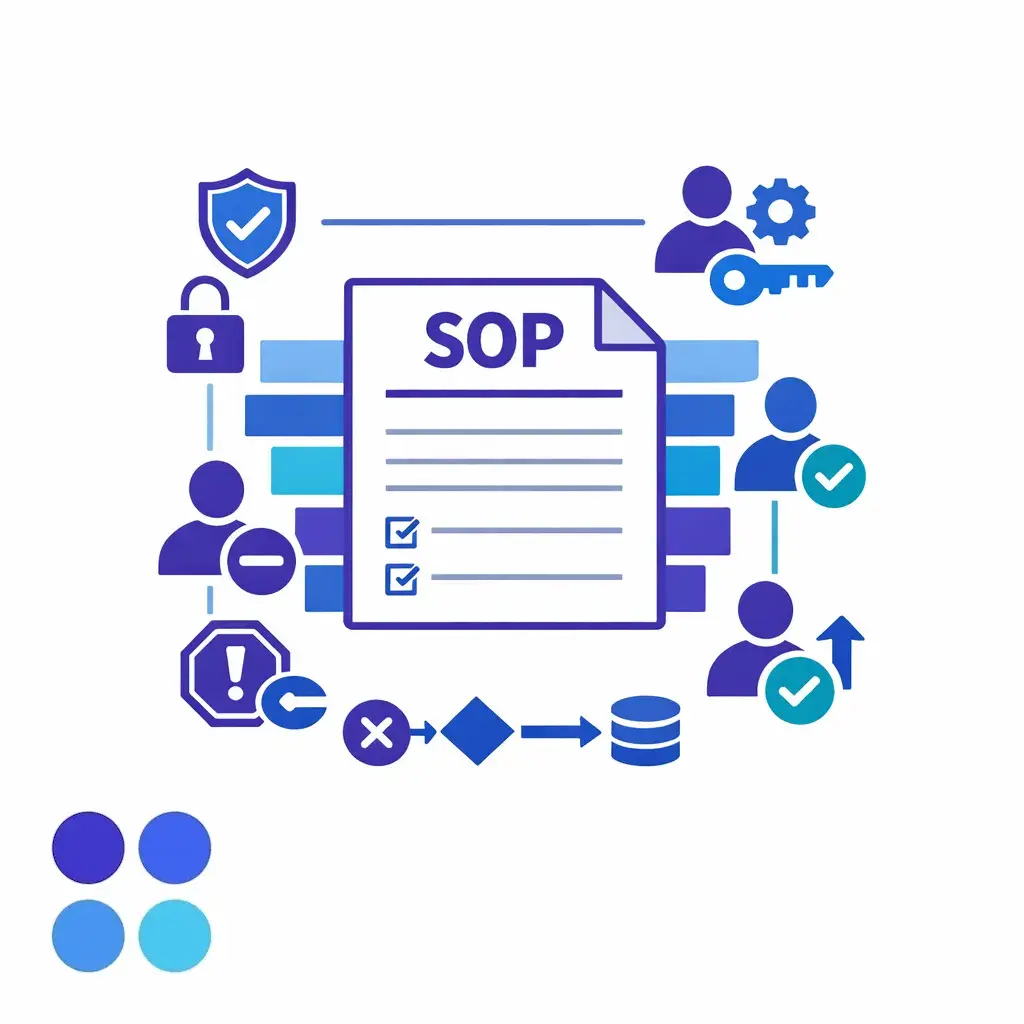
Reduce risk with narrow SOPs and least-privilege access. Give only the permissions a specific workflow requires, and decide how accuracy is scored and who reviews exceptions before launch.
If you are evaluating vendors or building the case internally, use this checklist to pressure-test the opportunity:
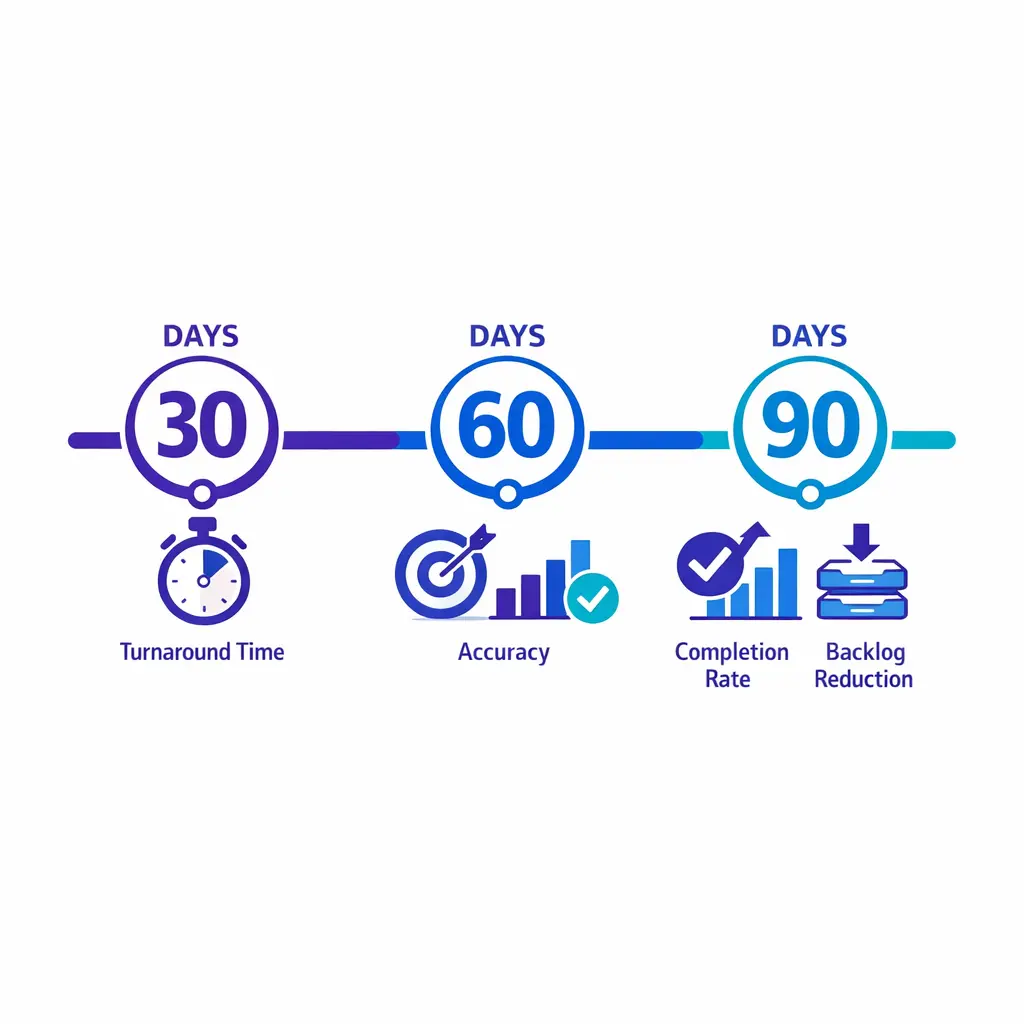
Define success in 30, 60, and 90 days: turnaround time, accuracy, completion rate, and backlog reduction, so you can tell whether the program is actually helping.
If that exercise leaves you with document handling, CRM updates, lead follow-up support, appointment confirmation, QA admin, or reporting workflows, you likely have a solid first-wave outsourcing candidate set.
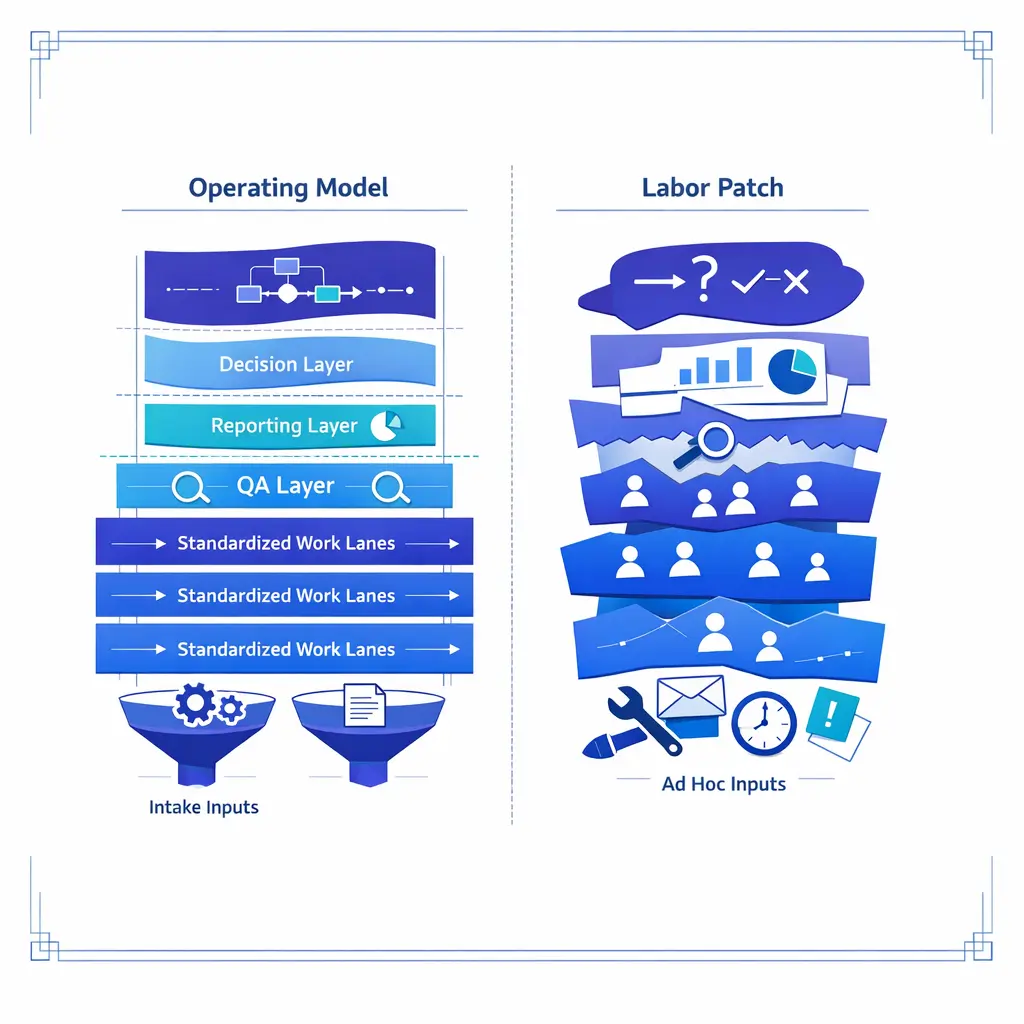
A narrow initial scope, clean process definitions, and a short list of operational success measures turn business process outsourcing into an operating model instead of a labor patch.
The strongest programs treat back office outsourcing as a designed operating model, not a temporary staffing fix. Consistency, visibility, and clear escalation paths are what let the model scale across queues, locations, and lines of business.
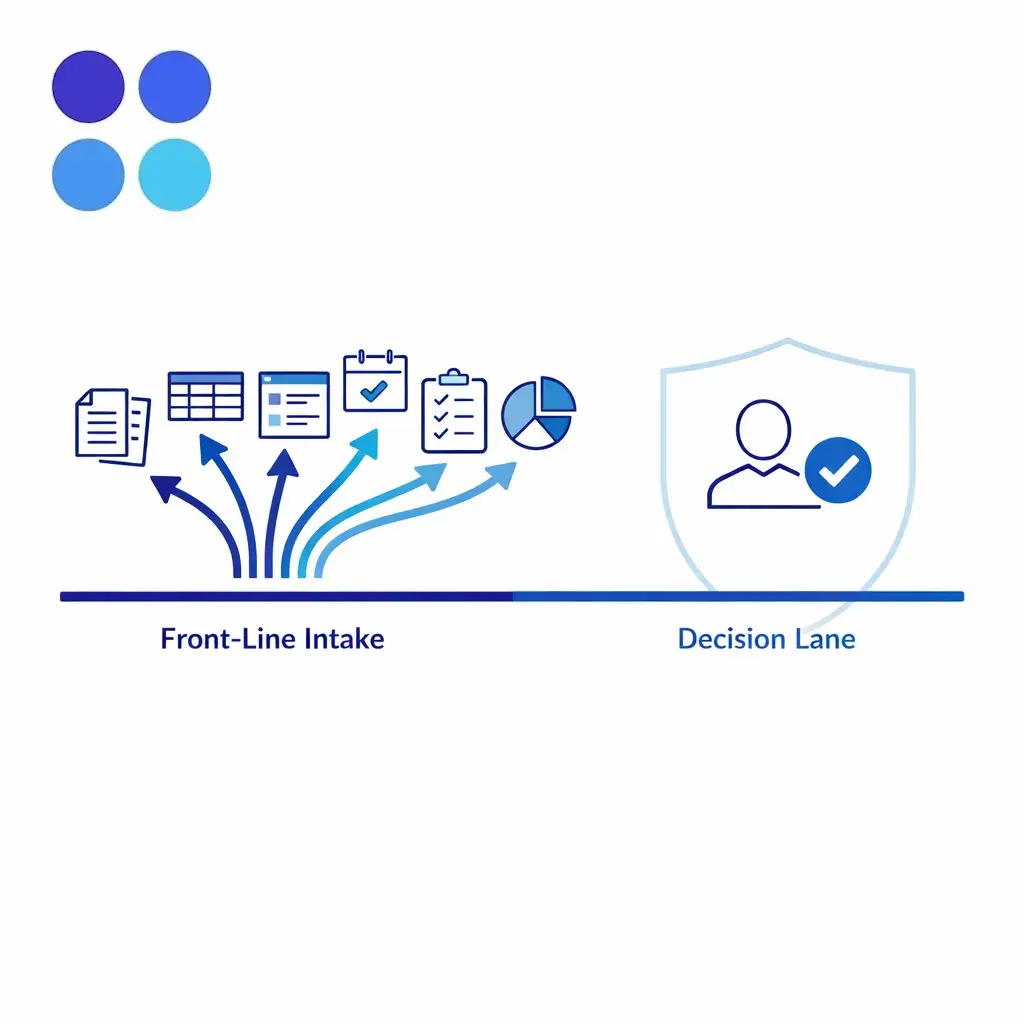
Move the repetitive admin off the frontline first, while sensitive decisions stay protected. If your team is strong on calls but weak on follow-through, back office support is the missing layer.
When the workflow is defined clearly, it becomes much easier to protect intake quality while scaling capacity, and far easier to tell, with real numbers, whether the program is delivering.
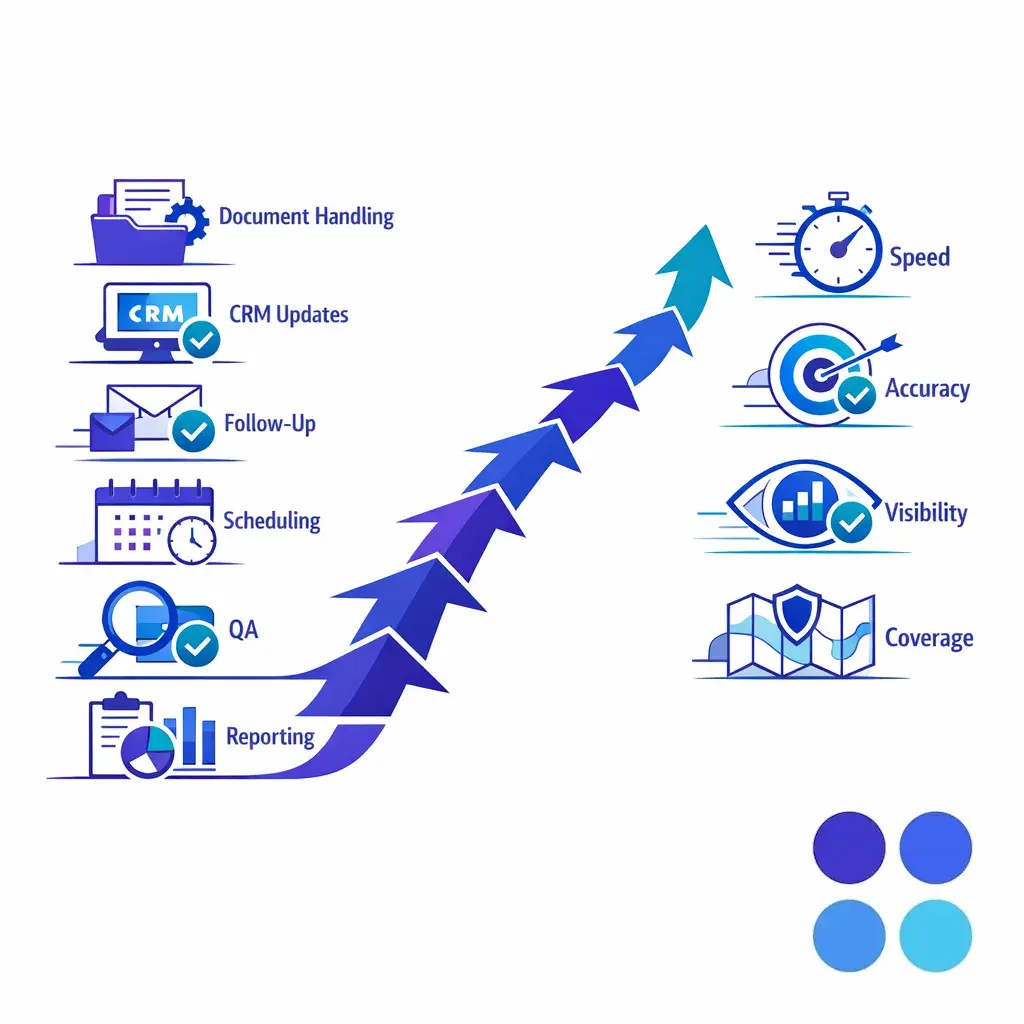
A clear first-wave roadmap pairs the right tasks with the right controls and measurable outcomes, making it far easier to protect intake quality while scaling capacity.
If you want a practical way to compare tasks, staffing coverage, QA controls, and intake reporting, Go Answer can help you scope a first-wave model built for high-volume operations. When the workflow is defined clearly, it becomes much easier to protect intake quality while scaling capacity. If you already know which workflows to move first, Request Pricing. If you want to compare options before committing, See How It Works.

Learn why thousands of companies rely on Go Answer.
Try us risk-free for 14 days!
Enjoy our risk-free trial for 14 days or 200 minutes, whichever comes first.
Have more questions? Call us at 888-462-6793
Learn why thousands of companies rely on Go Answer.
Have more questions? Call us at 888-462-6793
If you would like to get in contact with a Go Answer representative please give us a call, chat or email.

Thanks for your interest!
A representative will be reaching out to you shortly.
Have more questions? call us on 888-462-6793
