
The Impact of Poor Customer Service on Revenue, Retention, and Brand Trust
By Rob ReynoldsLast modified: August 4, 2026
Voted Top Call Center for 2024 by Forbes
Virtual Receptionists
Save time and money with our virtual receptionists.
AI Receptionist
AI-powered receptionist that answers, routes, and qualifies calls 24/7.
Enterprise Solutions
Solutions designed to scale with your organization’s needs.
Legal Services
Our virtual legal receptionists are experts in legal intake.
Last modified: August 4, 2026
For operations leaders, revenue leaders, practice managers, and intake teams, poor customer service is rarely one dramatic failure. It is usually a chain of smaller misses: unanswered calls, slow callbacks, repeated explanations, incomplete intake, and weak follow-through. Over time, those failures reduce conversion, increase rework, weaken retention, and make the brand look less reliable than it actually is.
Poor customer service is any experience where a customer cannot get timely, accurate, consistent, or empathetic help. When speed, convenience, knowledgeable help, and friendly service are core drivers of a good experience and customers expect consistent interactions across departments and channels, service becomes poor the moment response, ownership, or information quality breaks down.
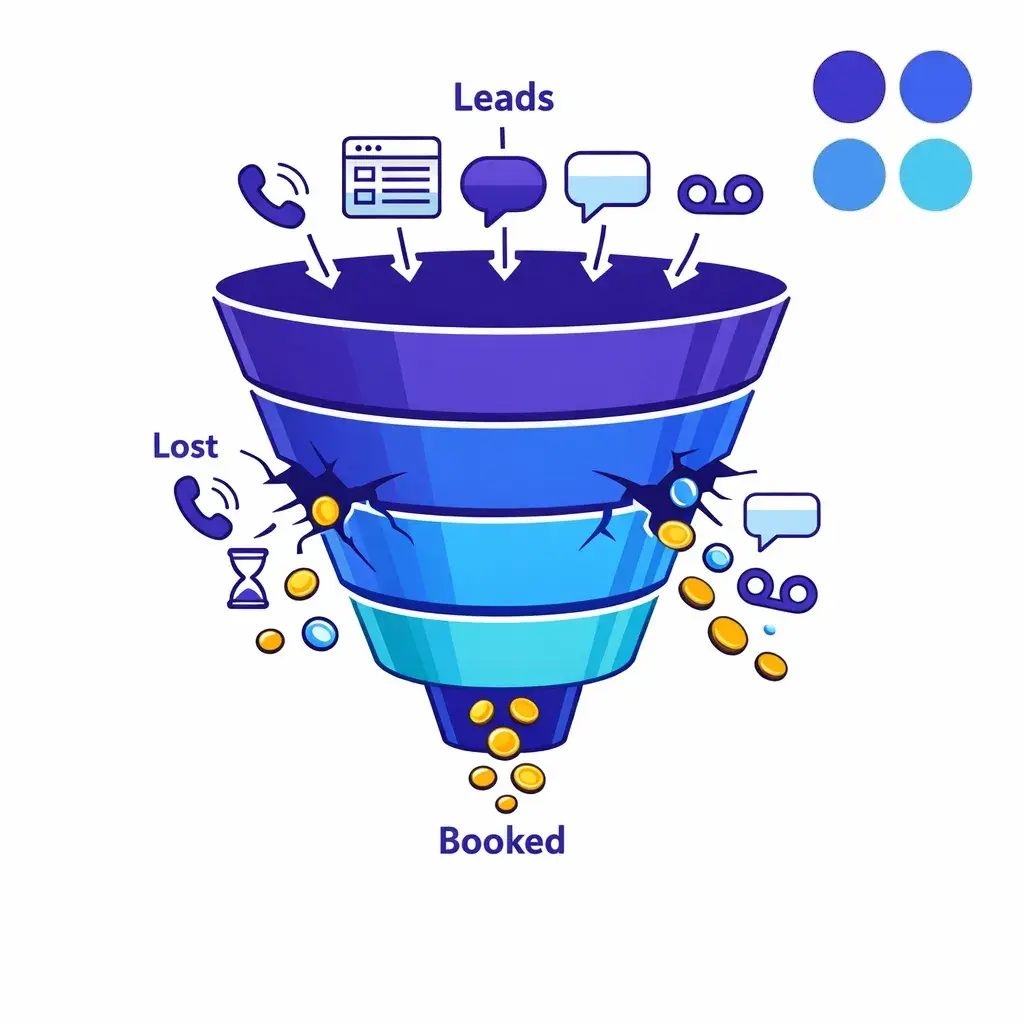
This guide is for growing, phone-heavy organizations such as multi-location service businesses, legal intake teams, and healthcare practices that need dependable front-end coverage and want to stop losing high-intent demand to preventable service gaps.
Here is what you will learn, and why each point matters for revenue, retention, and trust:
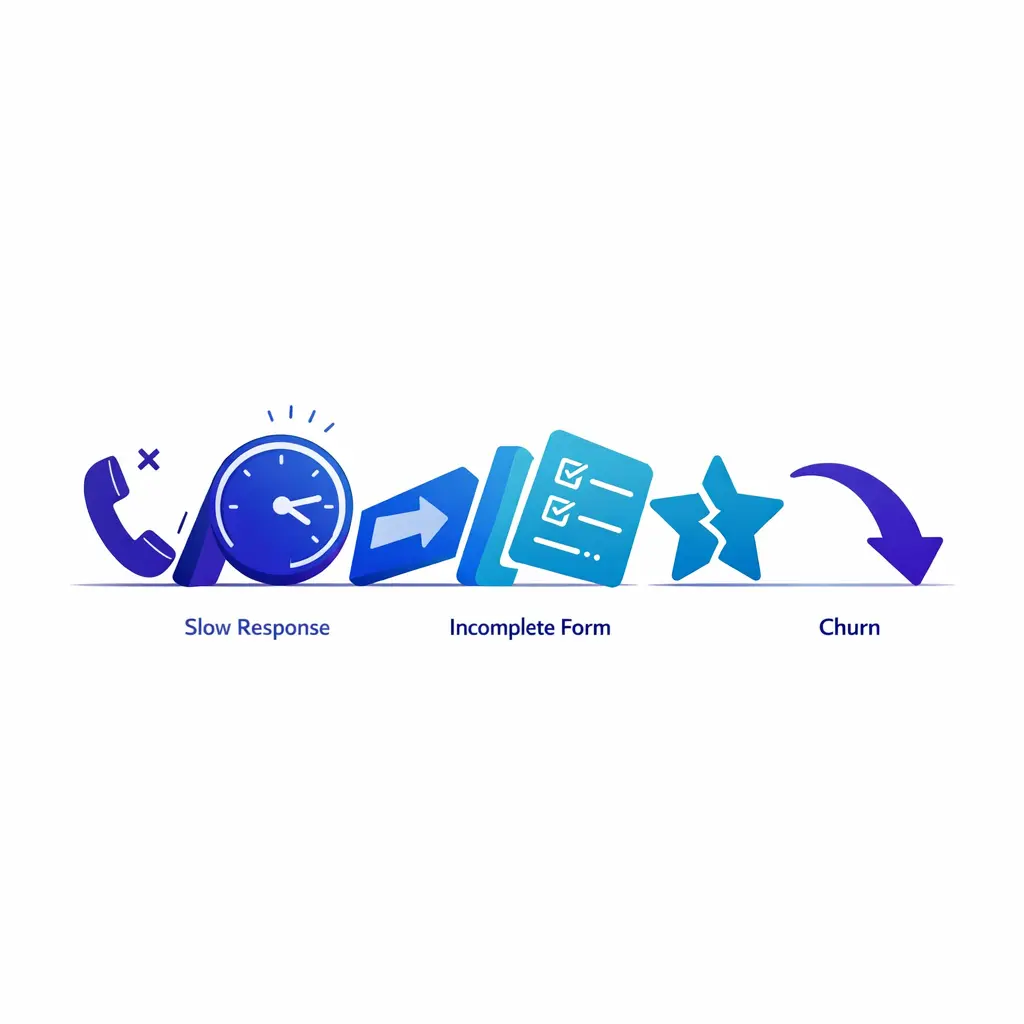
One missed call leads to a delayed callback, a rushed handoff, and a lost booking. Individually minor, these defects compound across shifts and locations into a measurable drag on growth.
Customers now experience businesses as one brand, not as a collection of separate departments, shifts, or locations. If sales, intake, scheduling, billing, and support do not share context, the customer does not see specialization. They see fragmentation.
That raises the operational bar. A delay that once felt like a minor inconvenience now feels like silence. A transfer that once seemed normal now feels like a sign the business is disorganized. For high-volume teams, that shift matters because small service defects are more visible and less forgivable than they used to be.
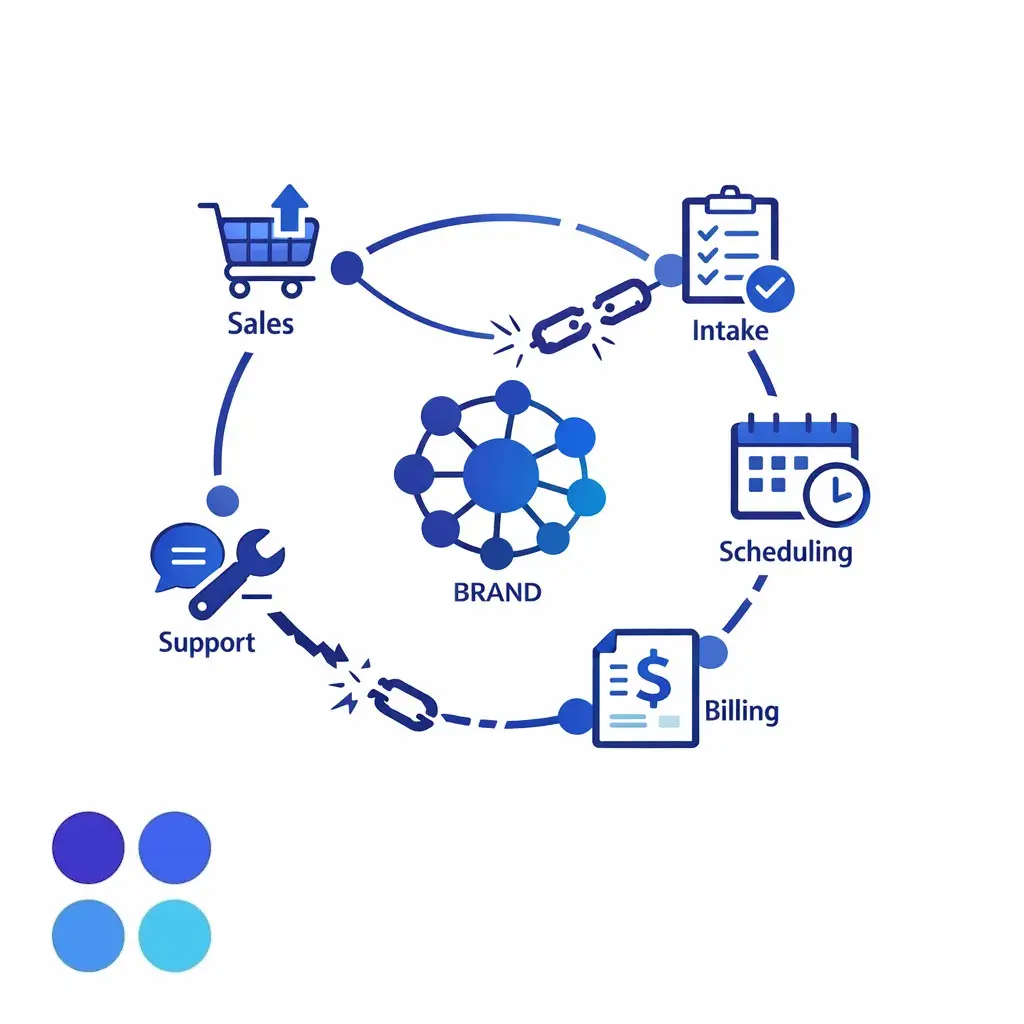
When departments and locations do not share context, customers feel fragmentation instead of specialization. Consistency across every touchpoint is now the baseline expectation.
Companies that contact web leads within an hour are nearly seven times more likely to qualify them than teams that wait even one more hour. For inbound-heavy organizations, slow response is not just a service problem. It is a conversion leak at the exact moment buyer intent is highest.
The same logic applies to phone calls, contact forms, text messages, and voicemail follow-up. If the customer is ready to act now, a delayed response does more than frustrate them. It gives the next provider, firm, or practice a cleaner shot at the opportunity.
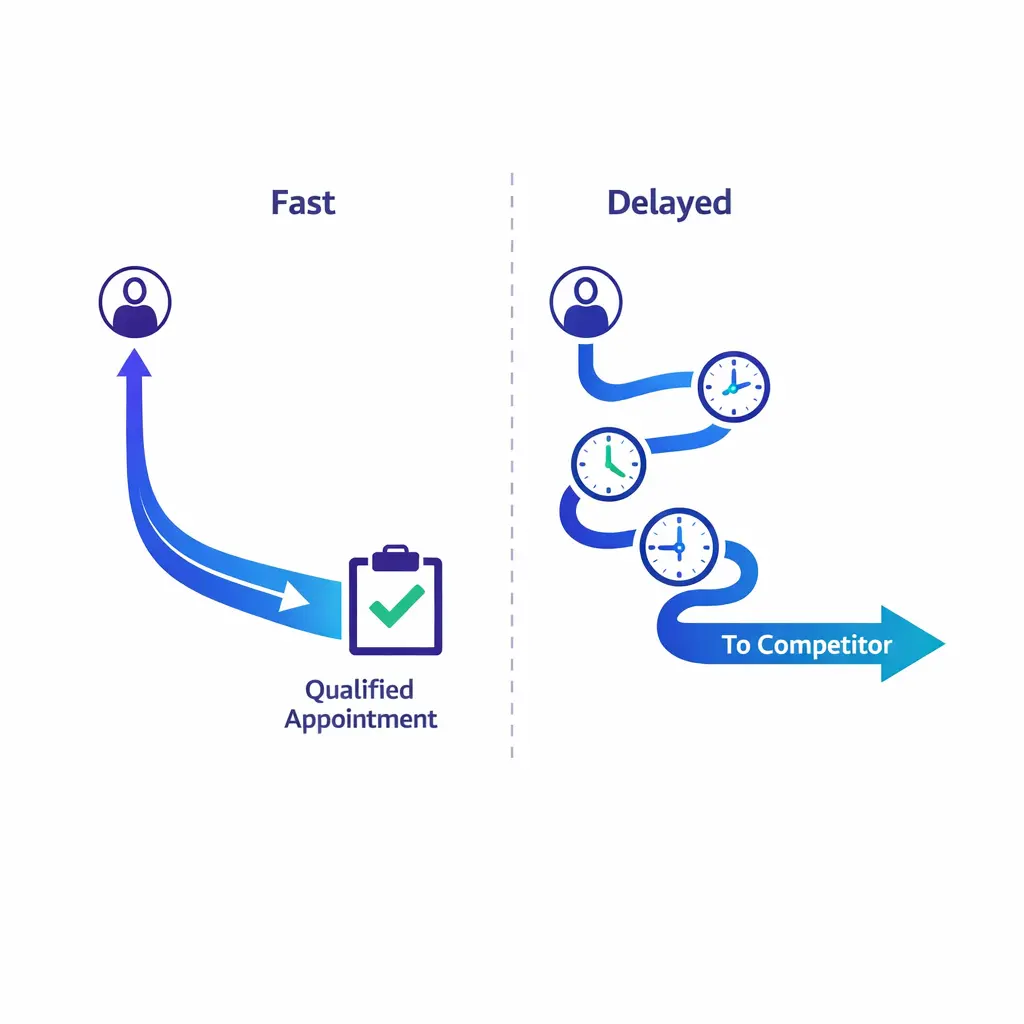
Responding within the first hour dramatically raises qualification and booking odds. Speed at peak intent is one of the cheapest ways to protect revenue.
Many growing businesses assume they have a lead-quality problem when they actually have a coverage problem. Demand arrives at lunch, after hours, on weekends, during campaigns, during weather or service events, and during local spikes that do not match standard office schedules.
When no one answers during those windows, the business does not just miss a call. It misses the highest-intent part of the interaction. In legal intake, healthcare scheduling, home services, and other urgency-driven workflows, that can be the moment the prospect moves to the next option.
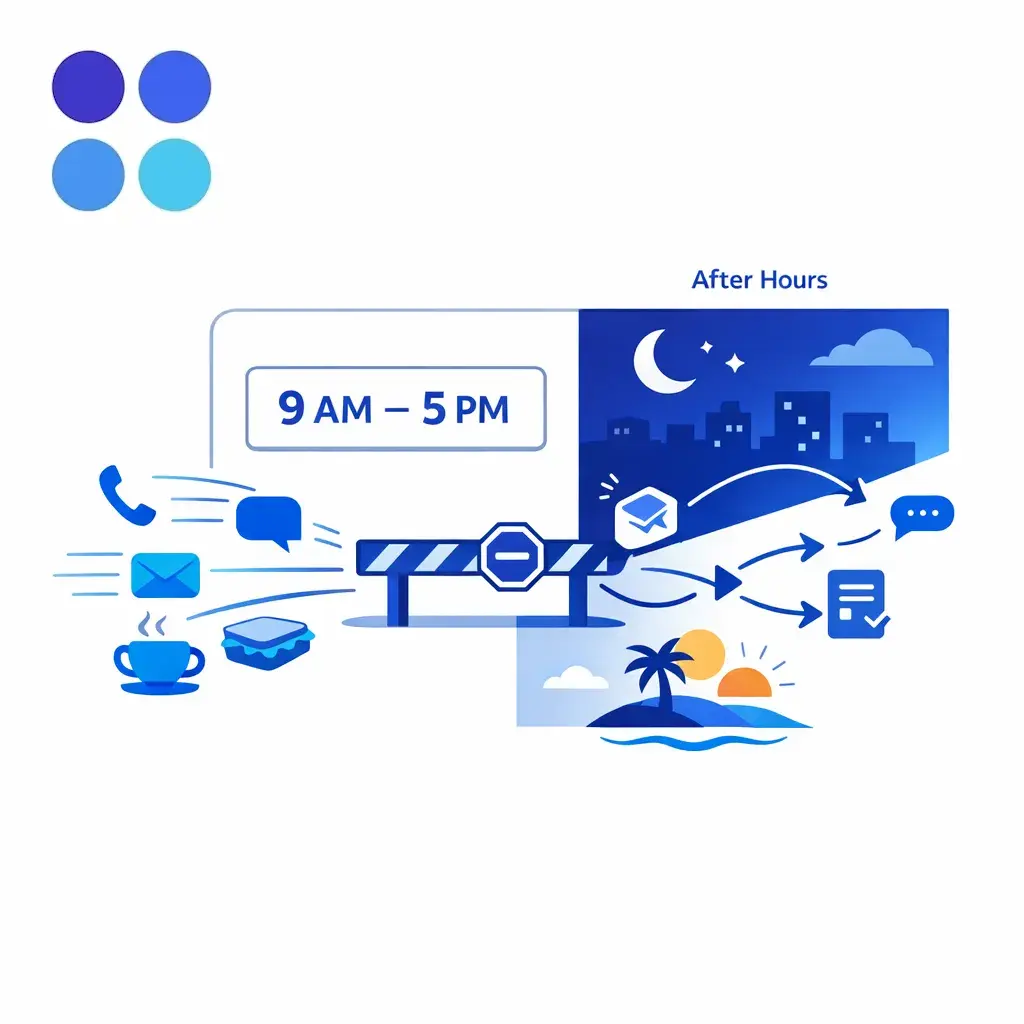
High-intent calls arrive nights, weekends, and during spikes. Without coverage in those windows, paid demand turns into unanswered, unconverted demand.
Bad customer service often sounds like this: the customer explains the issue, gets transferred, repeats the issue, and still leaves without a clear answer or next step. That sequence creates friction immediately because the burden of continuity shifts from the business to the customer.
Operationally, poor handoffs are expensive. They extend handle time, increase the odds of missed details, and create more follow-up work for downstream teams. Even when the issue is eventually resolved, the path to resolution feels harder than it should.
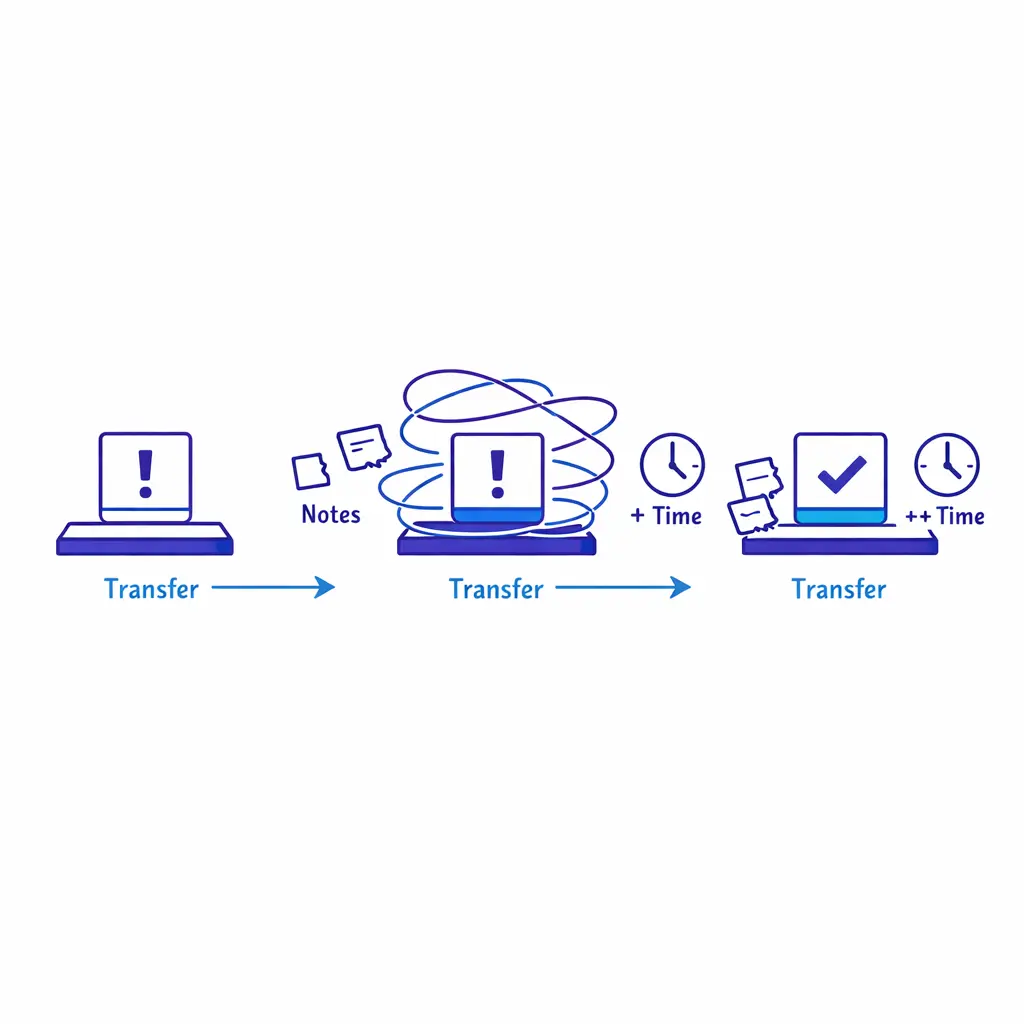
Every transfer without shared notes forces customers to repeat themselves, extends handle time, and multiplies downstream follow-up work.
Not every service failure is rude or dramatic. Some of the most expensive failures look ordinary: the wrong callback number, an incomplete case summary, a vague note, a missing insurance detail, a wrong appointment type, or no documented next step.
These issues matter because they scale quietly. One small intake mistake may look harmless. The same mistake repeated across locations, shifts, or team members becomes a systemic drag on scheduling, follow-up speed, close rates, and quality assurance.
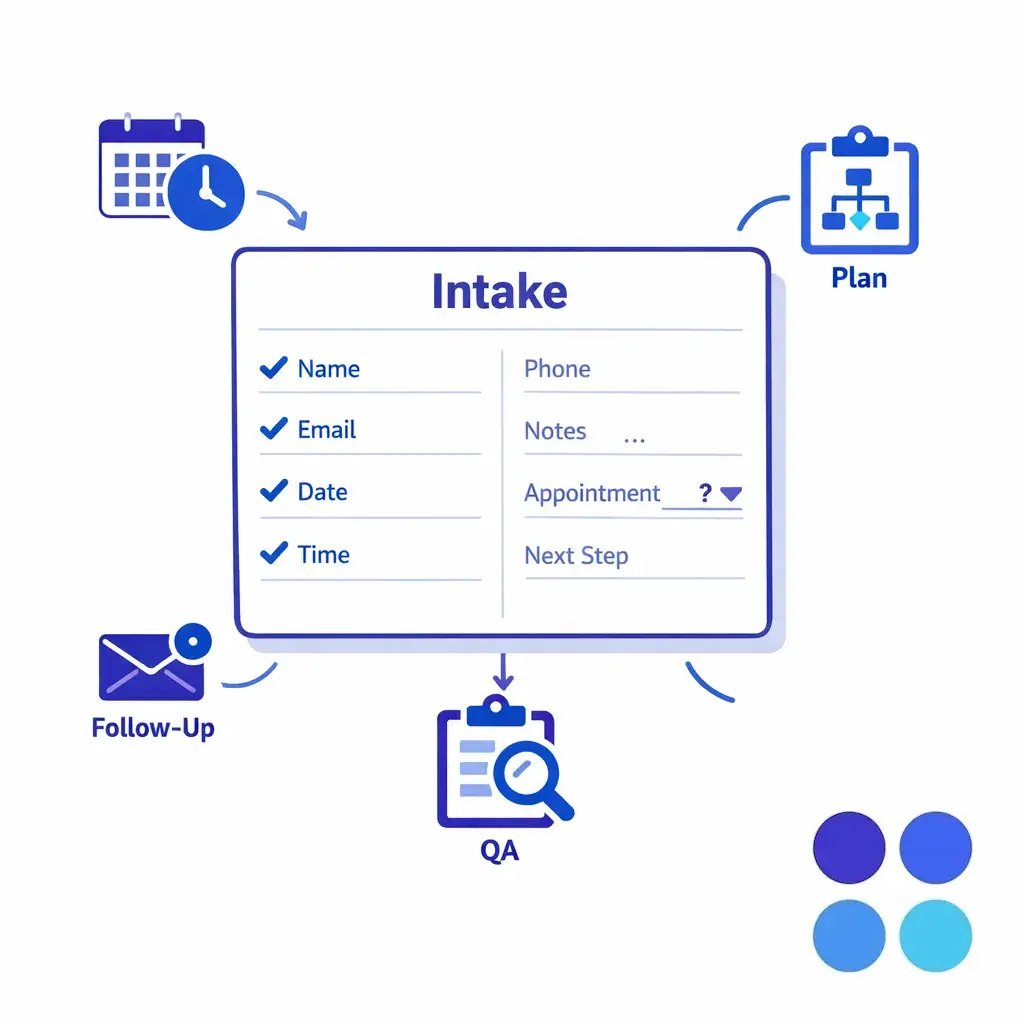
Complete, structured intake protects scheduling and follow-up. Missing fields and wrong details quietly erode close rates across every shift.
Customers do not expect perfection. They do expect clarity, ownership, and the sense that someone is actually helping. When the response sounds rushed, defensive, overly scripted, or detached, the customer leaves with the impression that the business cares more about ending the interaction than resolving it.
That impression is especially damaging in sensitive, high-stakes workflows. If the first conversation feels careless, the customer often assumes the rest of the experience will feel the same.
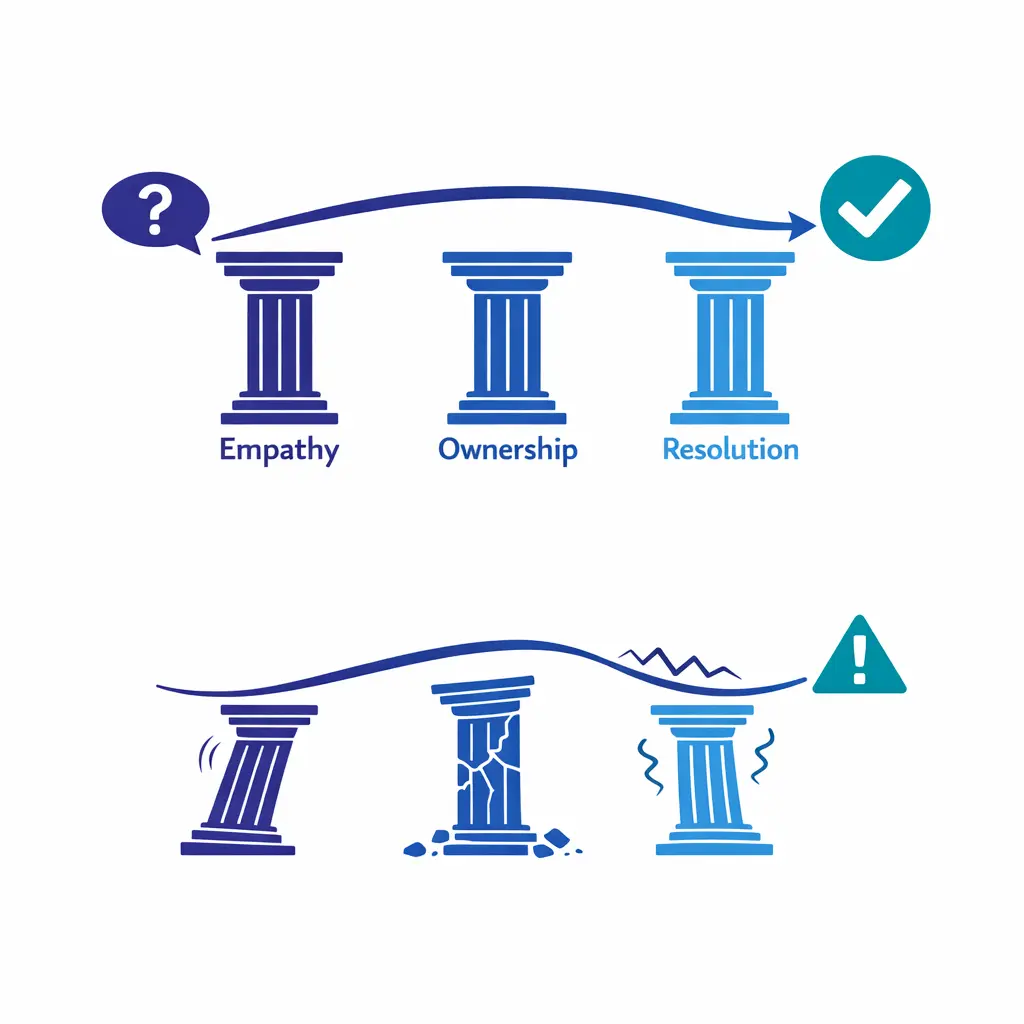
Customers want clarity and ownership, not scripts. Rushed or detached handling signals that the business cares more about ending the call than solving the problem.
The impact of poor customer service is easiest to see when you map service failures to funnel math. Every unanswered call, delayed callback, incomplete intake record, or failed handoff sits upstream from an outcome the business cares about: consults booked, appointments scheduled, estimates delivered, cases signed, payments collected, or renewals saved.
Poor customer service typically damages revenue in five ways:
For multi-location teams, these losses are often hard to spot because they do not always show up as a single line item. They appear as lower conversion at certain locations, weaker booking rates by hour, more abandoned follow-up, more no-shows after poor initial handling, or more marketing spend needed to replace preventable losses.
This is why customer service cannot be treated as a purely downstream support function. In many service businesses, the front-end service experience is part of sales. When that first interaction fails, the business has not just delayed support. It has weakened revenue production.
The most common consequences are lower conversion, higher churn, weaker reviews, more escalations, more rework, and more staff stress. The common thread is that bad customer service creates both external loss and internal friction at the same time.
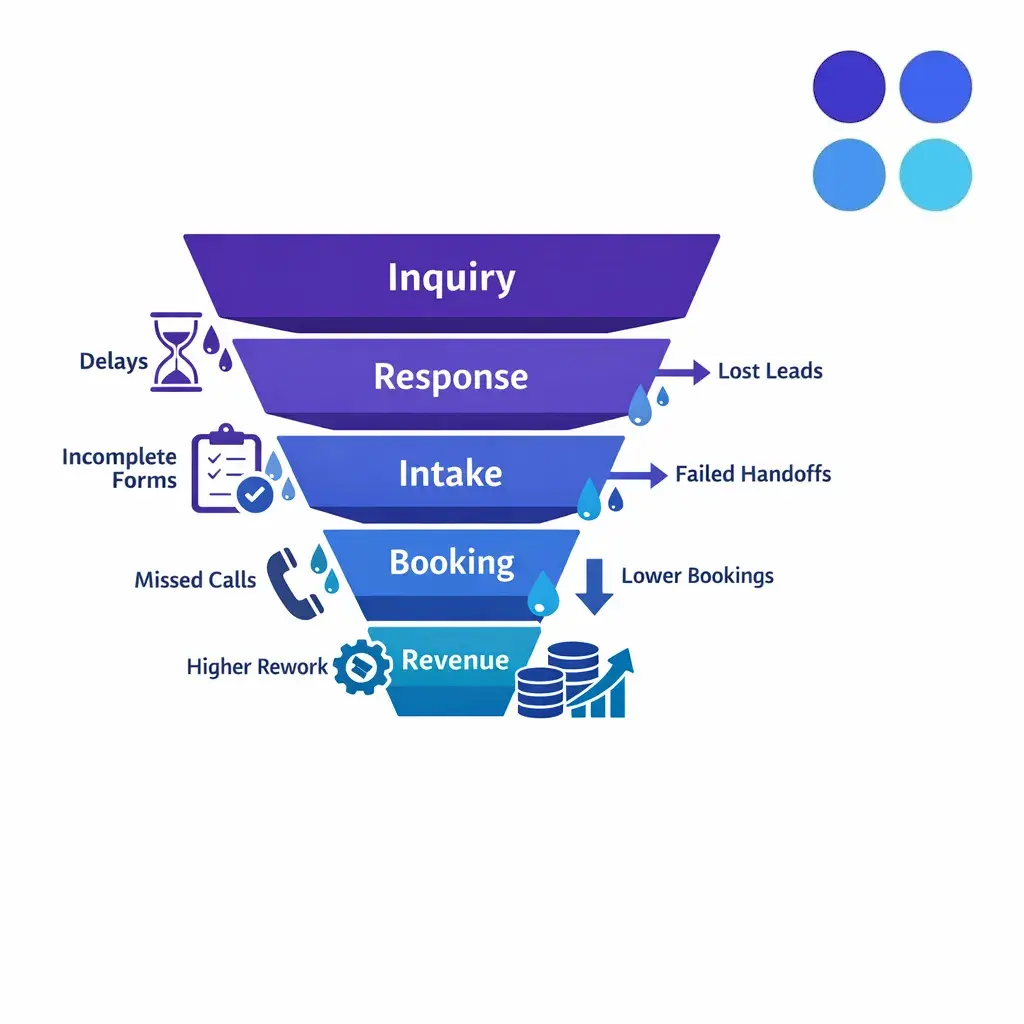
Every missed call or incomplete record sits upstream of bookings, signed cases, and renewals, so service defects show up directly as lost revenue.
Retention often erodes quietly because many consumers say they will walk away from a brand they love after just one bad experience. For businesses that depend on repeat visits, recurring relationships, referrals, or long sales cycles, that means one preventable failure can reduce lifetime value long before it shows up as obvious churn.
This is one of the most underestimated poor customer service effects. Leaders may look at monthly revenue and assume service is acceptable, while customers are already becoming less likely to return, less likely to refer, and less likely to trust the business with higher-value work.
Retention damage is usually worst at high-stakes moments: first contact, appointment changes, billing questions, urgent follow-up, service recovery, and issue escalation. These are the points where the customer is deciding whether the business is dependable enough to use again.
A common misconception is that loyalty is mostly a price issue. Price matters, but when service is hard to reach or hard to navigate, customers often start valuing certainty over marginal savings. Reliability becomes the differentiator.
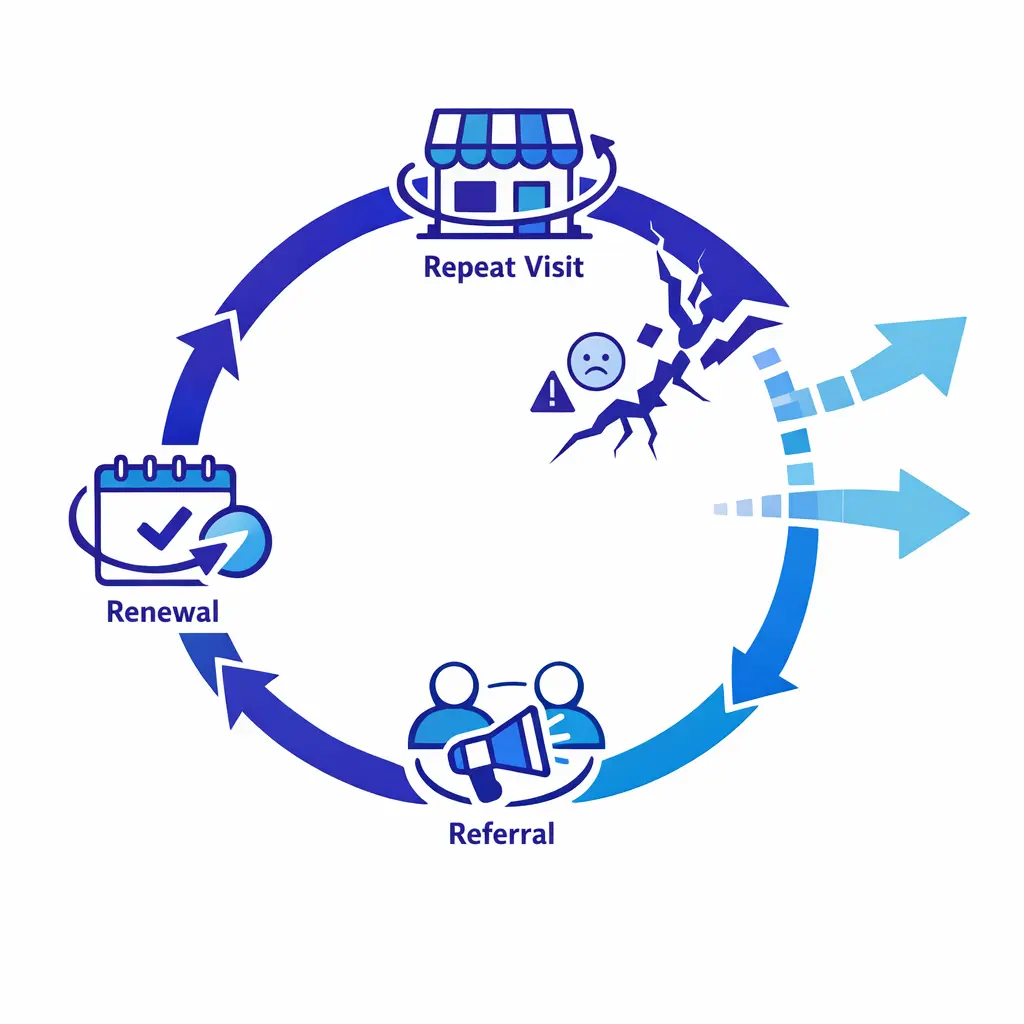
One bad experience can end a relationship long before churn appears in the numbers. Repeat visits, referrals, and trusted upsell quietly fade away.
Brand trust falls when service problems become visible outside the interaction itself. A frustrated customer does not always just leave. They may post a review, describe the experience in a community forum, mention it to colleagues, or share it when someone asks for a recommendation.
BrightLocal's Local Consumer Review Survey shows that online reviews remain a major factor in how consumers evaluate local businesses. For multi-location organizations, that means inconsistent service at one office can weaken perceived reliability well beyond that single interaction.
Bad reviews rarely focus on abstract strategy. They focus on operational misses customers can describe in one sentence: nobody answered, nobody called back, I had to repeat myself, they lost my information, they sounded rushed, they never resolved it. Those are service design problems disguised as reputation problems.
Once trust is weakened, recovery becomes more expensive. Marketing has to work harder, frontline teams spend more time reassuring hesitant buyers, and managers end up reacting to public dissatisfaction instead of improving throughput and quality.
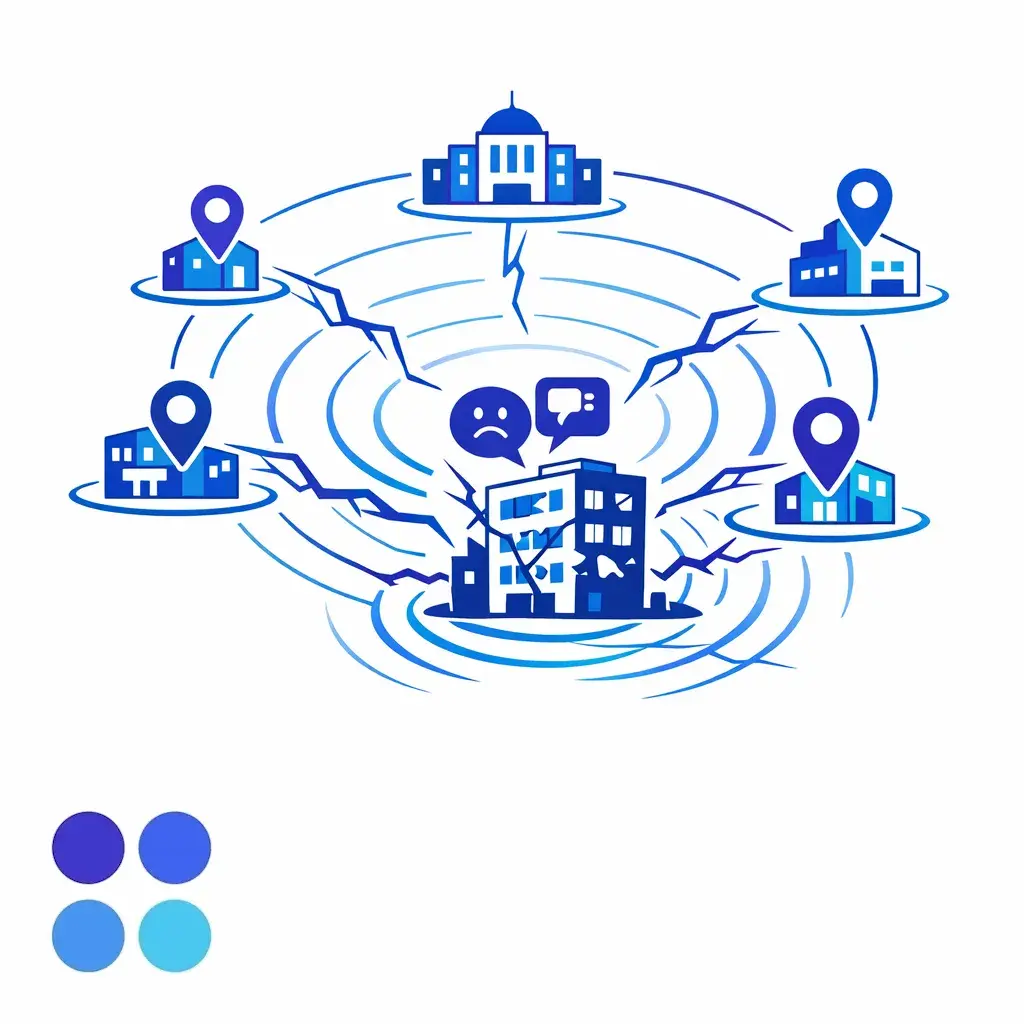
Inconsistent service at one location sends negative review signals across the whole network, weakening trust far beyond a single interaction.
Most bad customer service is produced by systems, not intent. Teams struggle when staffing is misaligned to demand, routing sends inquiries to the wrong place, scripts prioritize speed over listening, or handoffs happen without shared notes or clear ownership.
Growing businesses are especially vulnerable because volume can outgrow process maturity. A workflow that feels manageable at one location or with one small team can break quickly when it expands across more shifts, more channels, and more handoff points.
Common operational causes include:
The result is predictable. The organization appears inconsistent because it is operating inconsistently. What customers call poor service is often the external symptom of an internal workflow problem.
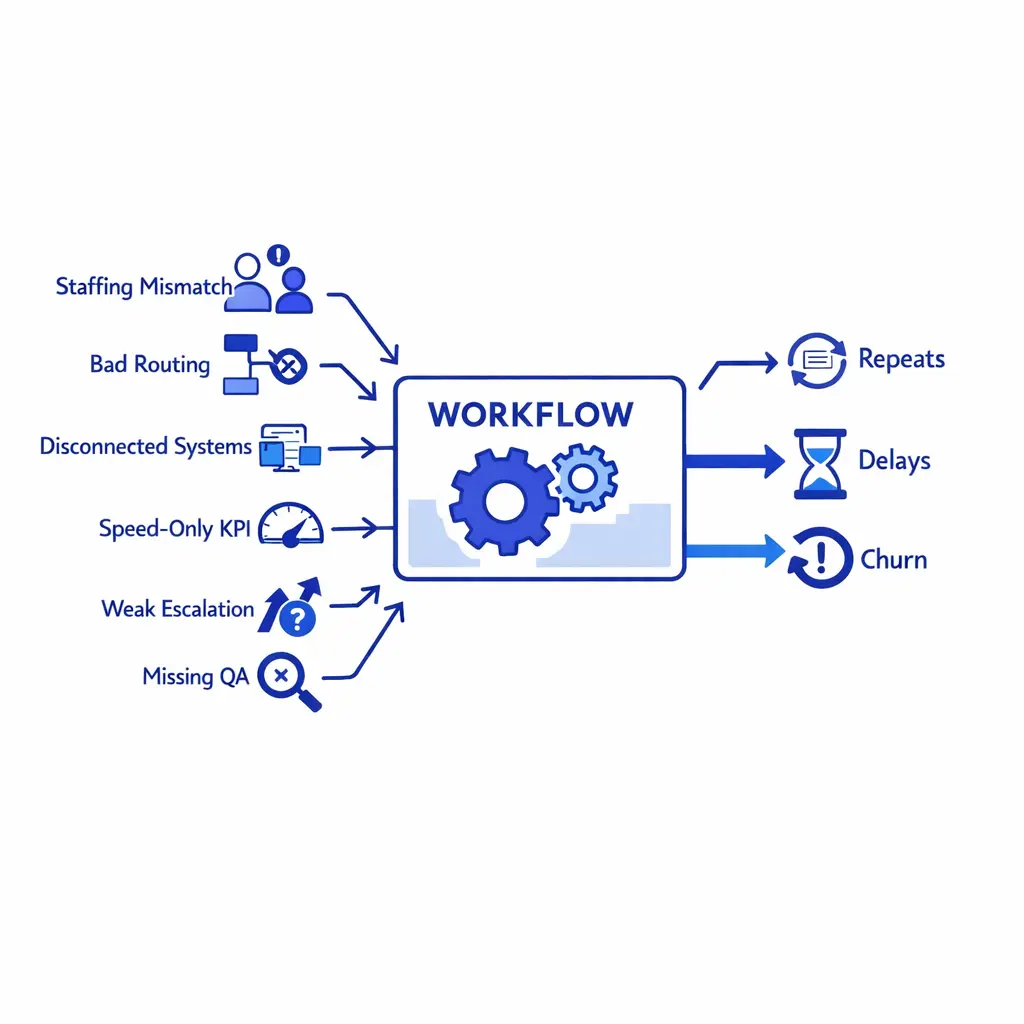
Broken routing, weak scripts, and disconnected tools cause most poor service. Fix the workflow and the experience improves.
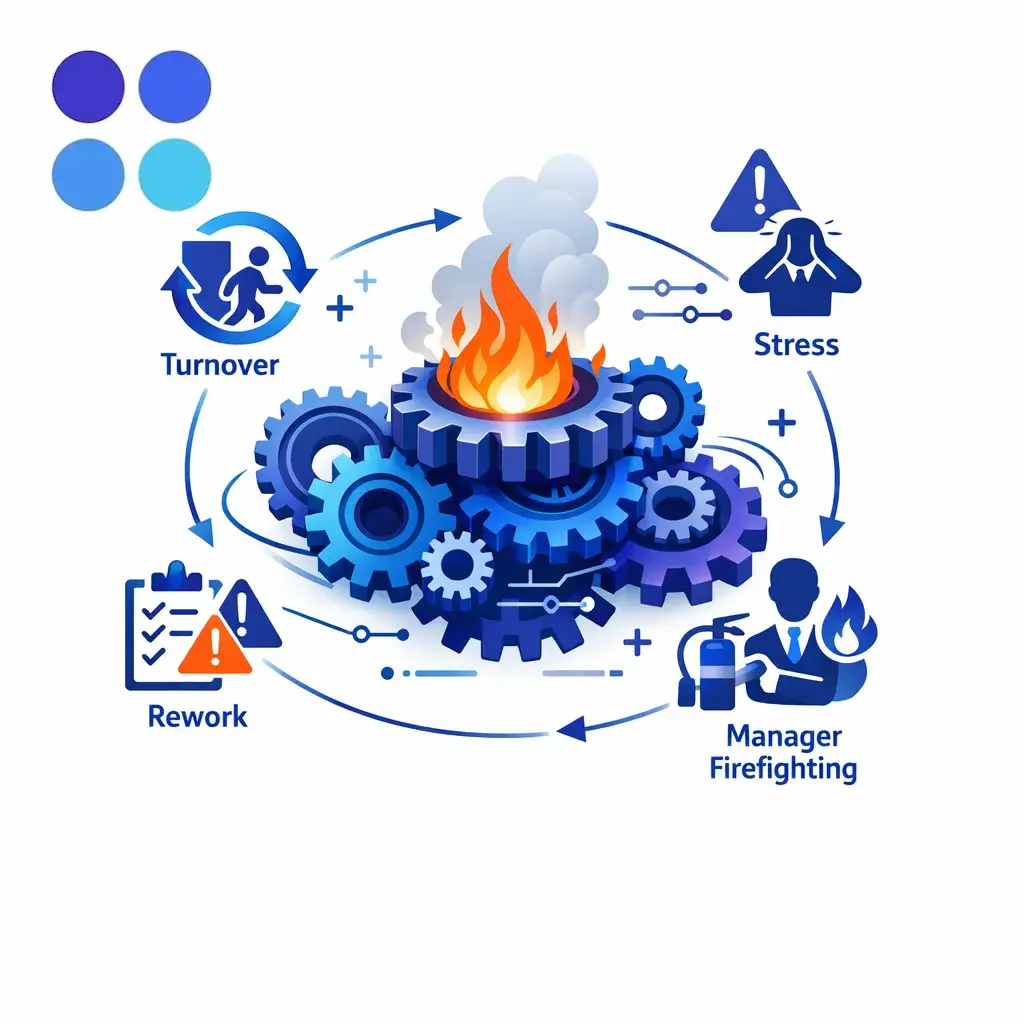
Broken systems create stressed teams, more mistakes, and rising turnover, an internal cost that compounds alongside the external one.
Poor customer service affects staff as much as customers. When agents inherit angry callers, unclear processes, missing notes, and inconsistent expectations, the work becomes harder to do well and more stressful to sustain.
Gallup identifies unfair treatment, unmanageable workload, lack of role clarity, and poor communication as major drivers of employee burnout. Those same conditions often show up in service environments with chronic understaffing, broken handoffs, unclear escalation paths, and inconsistent procedures.
The internal costs compound quickly. Managers spend more time firefighting. High performers become the safety net for weak processes. New hires take longer to ramp because the workflow is not stable. Over time, turnover rises and service quality becomes even harder to standardize.
This is one reason poor service becomes self-reinforcing. Bad systems create bad experiences. Bad experiences create stressed teams. Stressed teams make more mistakes. Without intervention, the operating model starts treating preventable failure as normal.
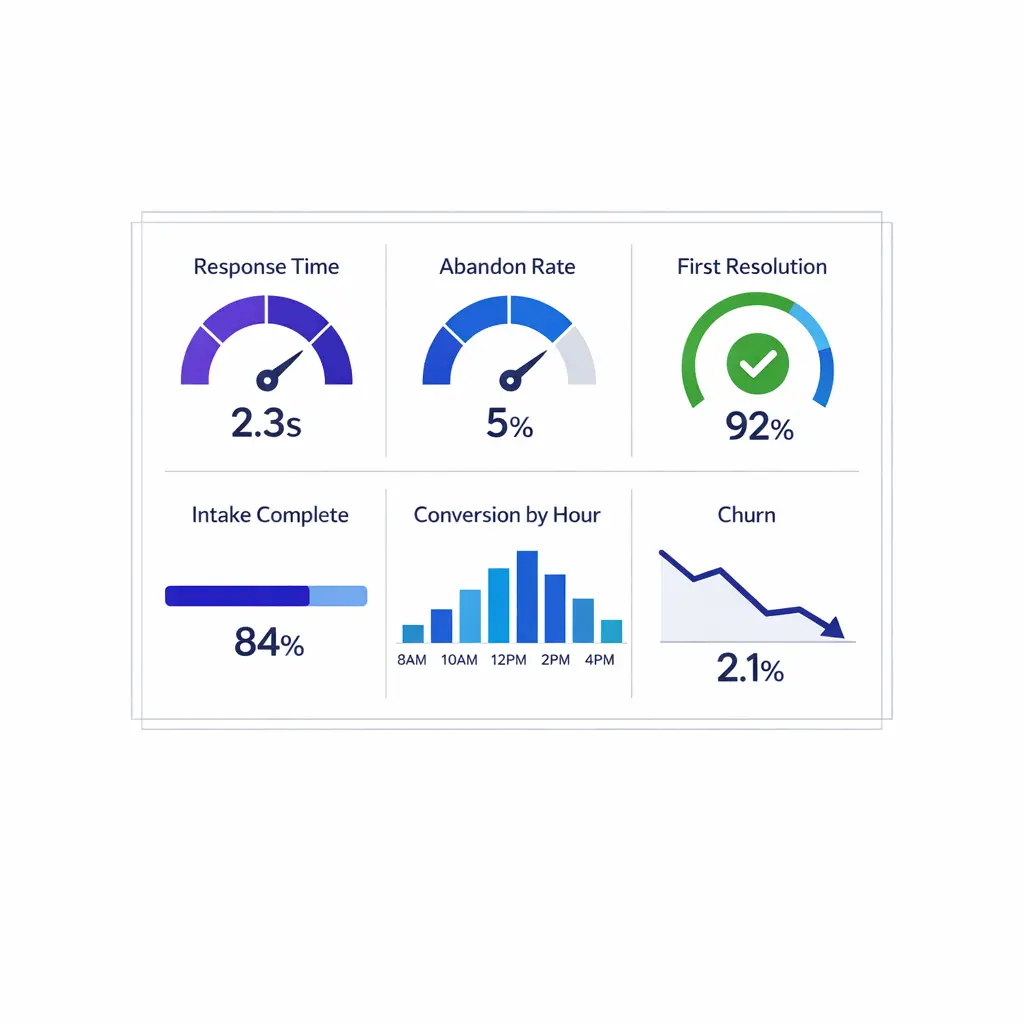
Track response time, abandonment, first-contact resolution, and churn so you know exactly where service is weak and what it costs.
If leaders want to reduce bad customer service, they need to translate experience problems into operating numbers. The goal is not just to know that service is weak. The goal is to know exactly where it is weak, when it is weak, and what it is costing.
Then calculate the cost of failure in practical terms:
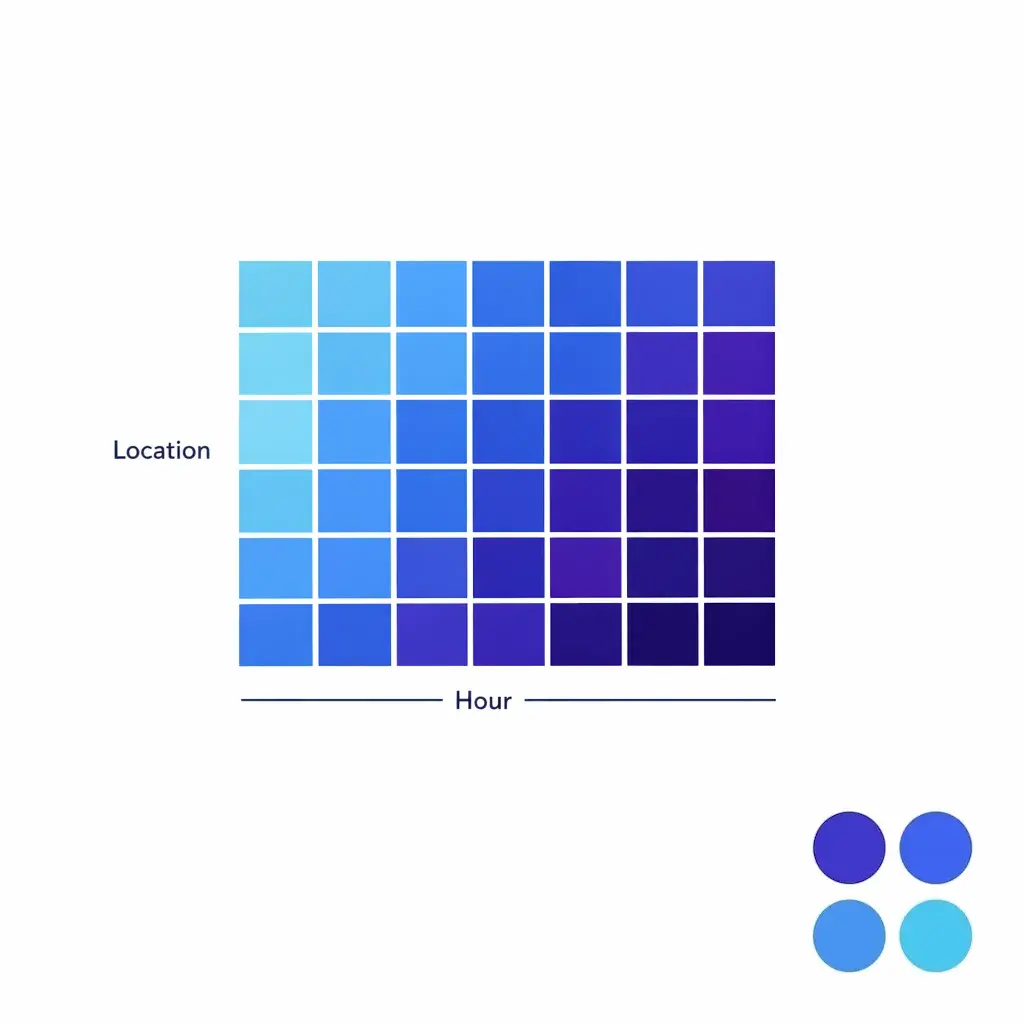
Aggregate averages hide the problem. Break metrics down by location, shift, and channel to expose where high-intent inquiries are slipping away.
For multi-location teams, segment these metrics by location, shift, channel, and issue type. Aggregate averages can hide the real problem. A business may look healthy overall while losing high-intent inquiries every evening, every weekend, or every time one team hands off to another.
Map inbound volume by hour, day, campaign, and season. If high-intent demand consistently arrives outside normal staffing windows, the right move is not to hope customers wait. It is to build coverage, overflow, or after-hours response around real demand patterns.
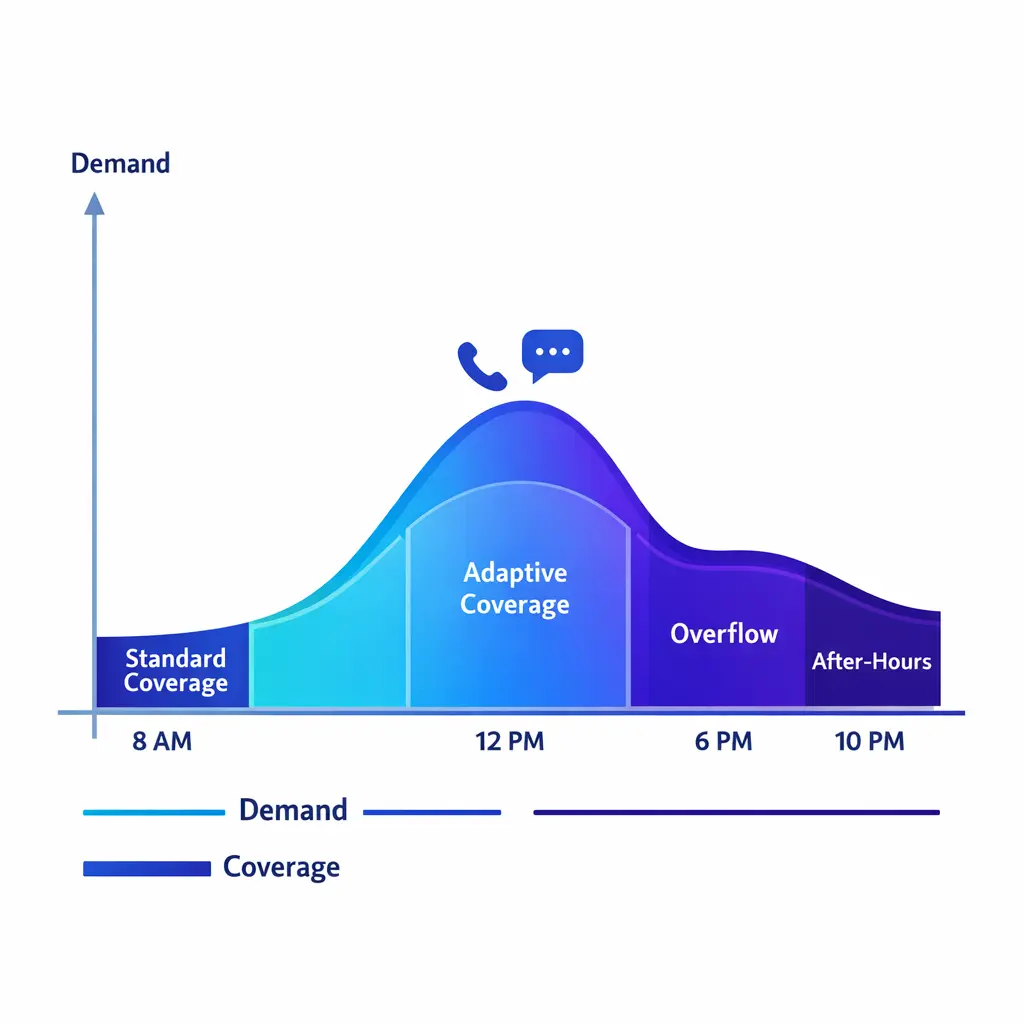
Staff to when customers actually call (nights, weekends, and spikes) rather than to office hours. Overflow and after-hours coverage close the gap.
Define the required questions, fields, call outcomes, and next-step rules for each interaction type. Consistent intake improves follow-up quality, reduces rework, and makes performance more comparable across locations and teams.
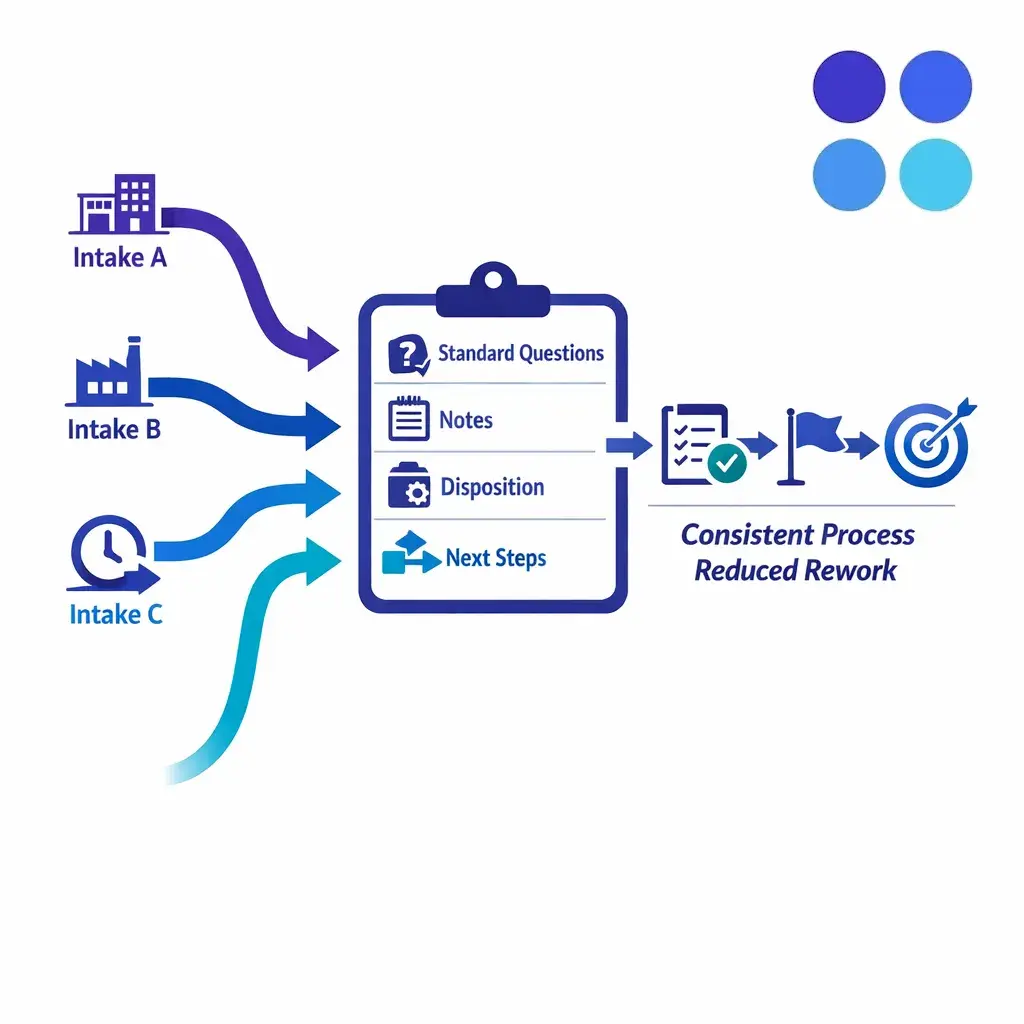
Shared required fields, outcomes, and next-step rules make follow-up reliable and performance comparable across locations and teams.
Route more accurately on the first touch. When handoffs are necessary, transfer notes, reason codes, and customer context with the interaction so the next person can continue instead of restart.
Review calls, forms, and transcripts for accuracy, empathy, completeness, and next-step clarity. QA is not only for coaching. It is how leadership finds recurring process defects before customers experience them at scale.

Reviewing calls, forms, and transcripts surfaces recurring defects before customers feel them at scale, turning isolated errors into fixed processes.
When a failure happens, recover in a clear sequence: acknowledge the issue, take ownership, restate the need, resolve or escalate with a deadline, and close the loop. A disciplined recovery process can preserve trust even when the original interaction was weak.
The biggest mistake in service recovery is defensiveness. Customers want evidence that the business understood the issue and changed the next step. An apology matters, but accountability and follow-through matter more.
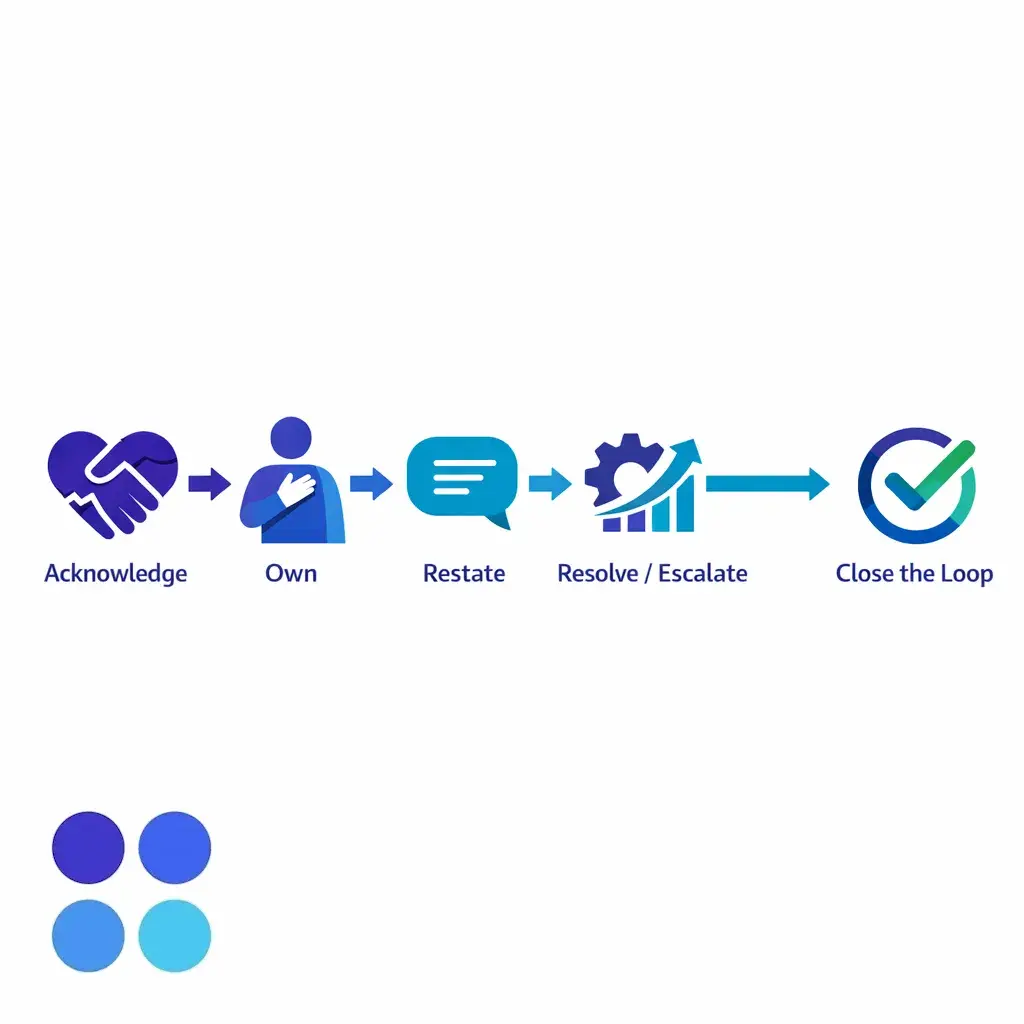
Acknowledge, own, resolve or escalate with a deadline, and close the loop. Accountability and follow-through restore trust better than an apology alone.
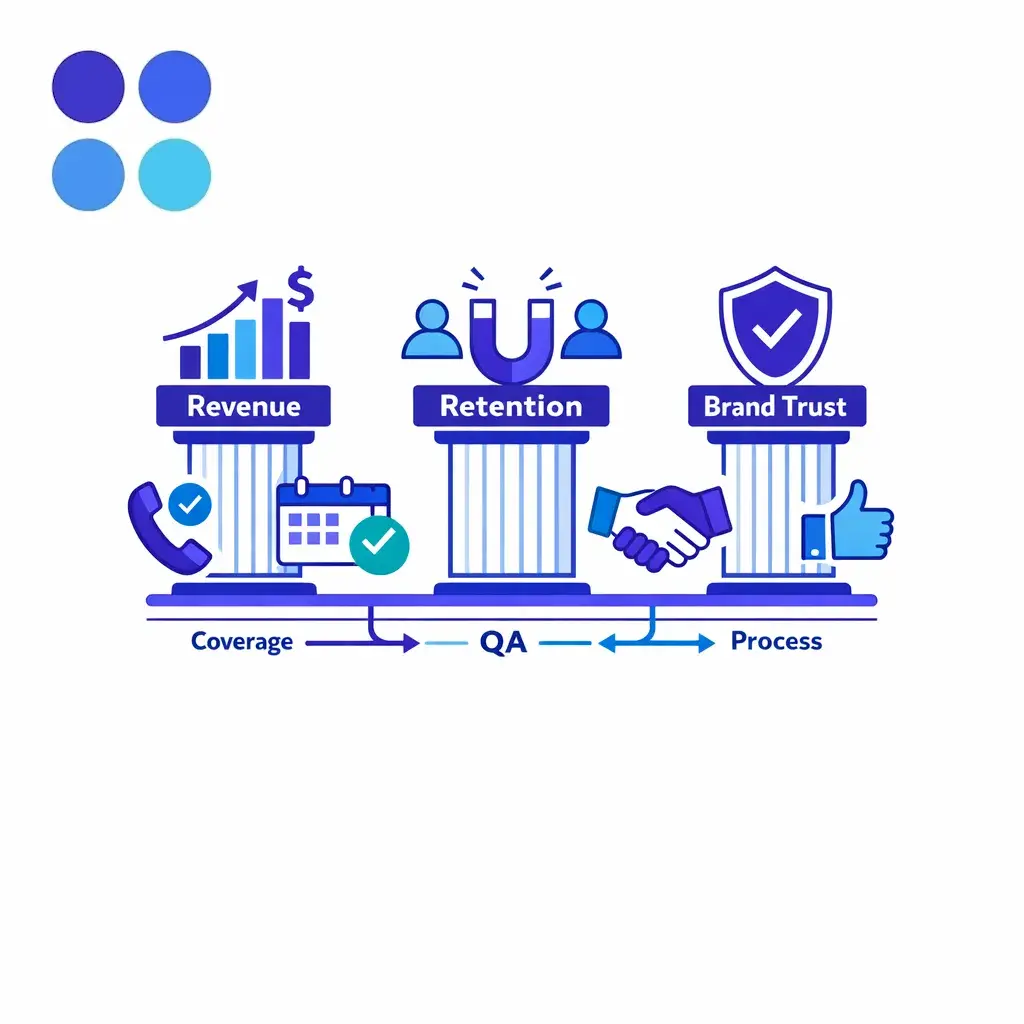
Stronger coverage, standardized intake, and consistent QA turn customer demand into reliable growth and keep preventable failures from compounding.
If your team is losing opportunities to missed calls, slow response times, bad handoffs, or inconsistent intake, Go Answer can help you stabilize coverage and improve first-contact quality without adding operational chaos. For enterprise and high-volume teams, the job-to-be-done is not just answering more calls. It is answering them reliably, documenting them consistently, and turning more interactions into usable outcomes.
Request Pricing or Book a Discovery Call if you want to review after-hours coverage, overflow support, or intake reliability. If you want a broader view of the operating model, See How It Works and evaluate where stronger coverage, QA, and process consistency can protect revenue, retention, and brand trust.

Learn why thousands of companies rely on Go Answer.
Try us risk-free for 14 days!
Enjoy our risk-free trial for 14 days or 200 minutes, whichever comes first.
Have more questions? Call us at 888-462-6793
Learn why thousands of companies rely on Go Answer.
Have more questions? Call us at 888-462-6793
If you would like to get in contact with a Go Answer representative please give us a call, chat or email.

Thanks for your interest!
A representative will be reaching out to you shortly.
Have more questions? call us on 888-462-6793
