
BPO Companies: How Mid-Market and Enterprise Teams Shortlist the Right Outsourcing Partner
By Adom FrancisLast modified: December 29, 2026
Voted Top Call Center for 2024 by Forbes
Virtual Receptionists
Save time and money with our virtual receptionists.
AI Receptionist
AI-powered receptionist that answers, routes, and qualifies calls 24/7.
Enterprise Solutions
Solutions designed to scale with your organization’s needs.
Legal Services
Our virtual legal receptionists are experts in legal intake.
Last modified: December 29, 2026
Business process outsourcing means handing defined business workflows to a specialized external provider under a managed service model. For buyers, that can include customer support, answering services, intake, scheduling, claims support, back-office processing, and other repeatable operations that need measurable coverage, quality, and accountability.
This guide is for mid-market and enterprise teams that are comparing bpo companies for high-volume, business-critical work. If you are responsible for customer communications, legal intake, healthcare access, overflow coverage, or multi-location support operations, the goal is not to find the most recognizable vendor name. It is to find the right operating fit.
Searches for top bpo companies and best bpo companies usually lead to ranked lists. Those lists can be a starting point, but they rarely help with the decisions that matter most: delivery model, security evidence, reporting depth, implementation discipline, and whether the provider can actually run your process without creating new risk.
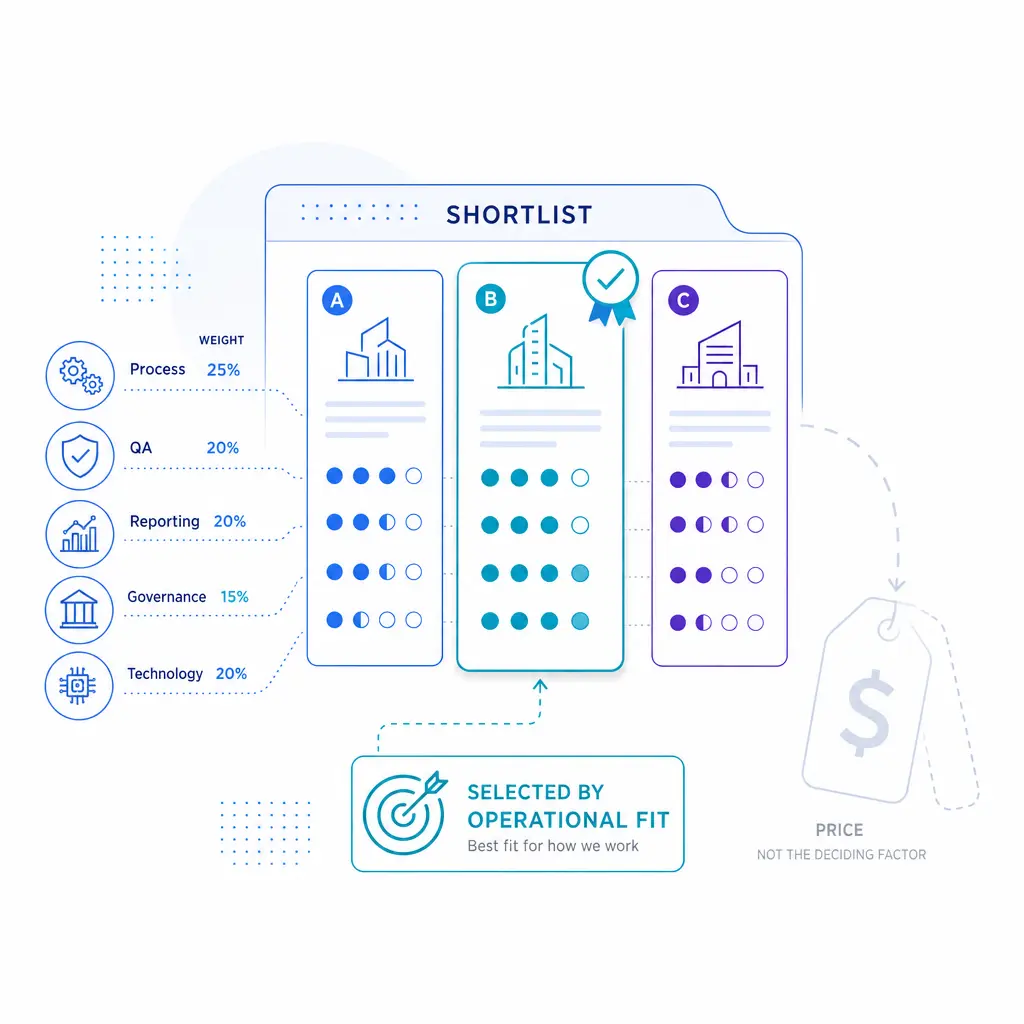
Mid-market and enterprise teams get better results when they shortlist providers by operational fit rather than brand recognition. Compare process, controls, reporting, and fit before price, because the goal is the right operating partner, not the most recognizable name.
BPO companies take responsibility for recurring processes that a client chooses not to run entirely in-house. In practice, buyers usually sort providers into four buckets: customer-experience outsourcing, back-office outsourcing, IT-enabled BPO, and specialized vertical providers for more regulated or higher-touch workflows.
That distinction matters because the right partner for after-hours intake is not automatically the right partner for claims operations, revenue cycle support, or broad multilingual customer service outsourcing. A shortlist should match the work you need done, the control environment around that work, and the customer experience you need to protect.
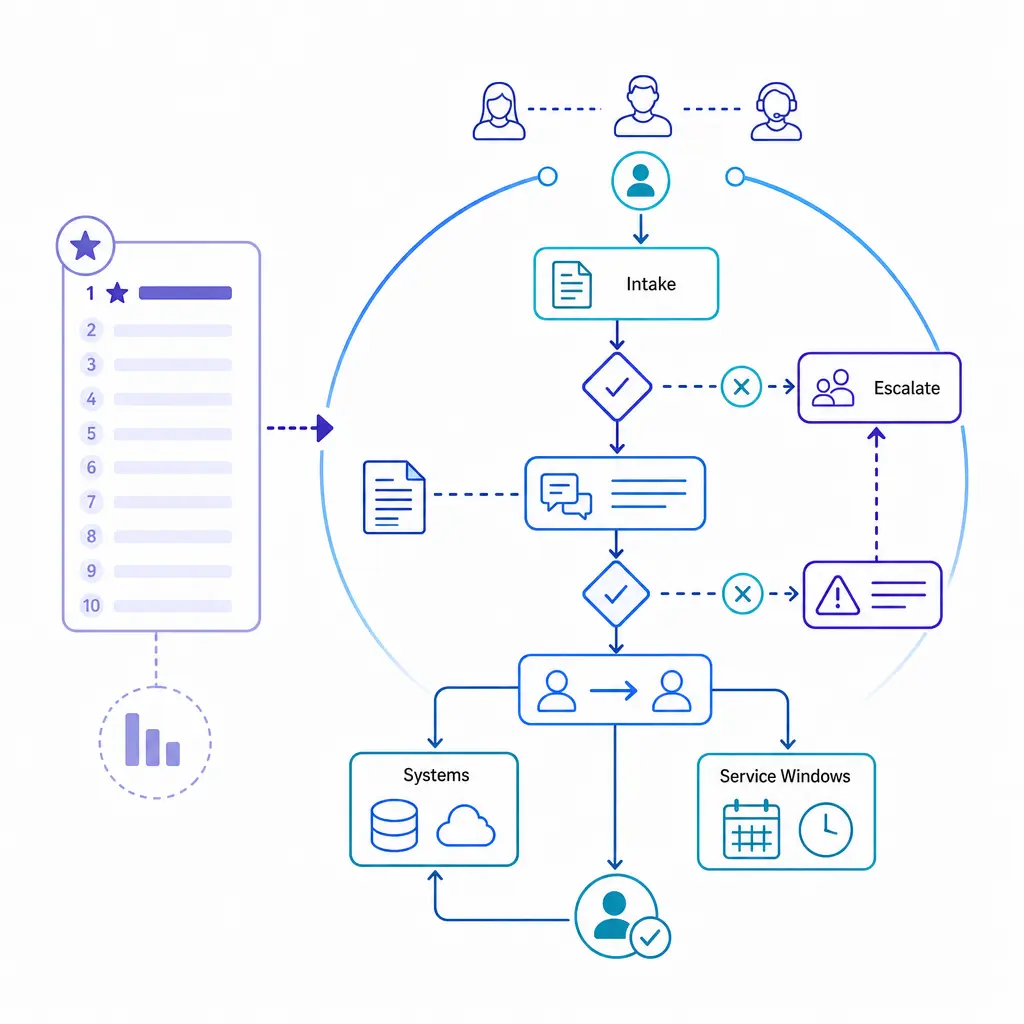
Ranked lists of top BPO companies can help build a long list, but they rarely address delivery model, security evidence, reporting depth, or implementation discipline. A real shortlist matches the work you need done and the controls around it.
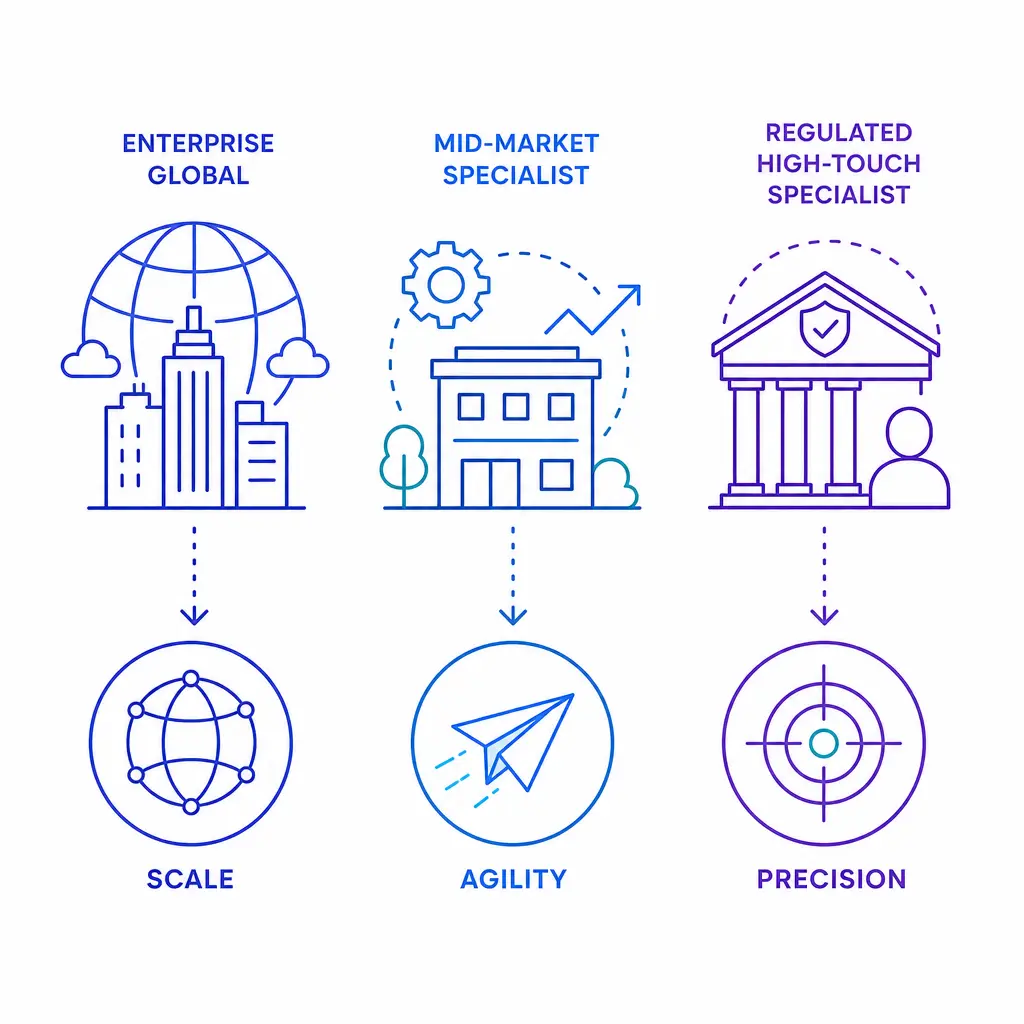
Enterprise global providers are usually best when scale, multilingual coverage, and broad regional footprint matter most. They often bring procurement maturity and large delivery estates, but they can feel rigid for narrow workflows or smaller launches.
Mid-market providers are often easier to implement, easier to govern directly, and more willing to shape staffing, scripts, and reporting around a specific workflow. They can be a strong fit when you need responsiveness and operational access, not just a large labor pool.
Specialist providers tend to be the best fit when the process is high-touch, brand-sensitive, or operationally complex. That includes legal intake, urgent call handling, healthcare appointment flows, overflow routing, and situations where a small error at the front end can damage revenue or compliance downstream.
Security reviews are more governance-led than they were a few years ago. NIST Cybersecurity Framework 2.0 places clearer emphasis on governance, which gives buying teams a practical lens for testing ownership, decision rights, third-party risk management, and executive accountability at a provider.
AI is also part of the vendor conversation now, even when a provider presents it as simple automation or agent assist. The NIST AI Risk Management Framework is a useful reference point for asking how AI is used, how outputs are reviewed, how errors are caught, and where a human takes over when confidence is low or stakes are high.
For regulated workflows, the baseline rules still matter more than product language. If a provider handles electronic protected health information, the HIPAA Security Rule should shape access, logging, device, and transmission controls. If a provider supports covered financial workflows, the FTC Safeguards Rule belongs in the diligence packet as well.
Do not begin with a vendor list. Begin with the process you want the provider to own, the point in the customer journey where that process sits, and the business result you need it to improve.
For one team, that may be fewer abandoned calls after hours. For another, it may be higher legal-intake conversion, better appointment capture, cleaner message quality, or more consistent overflow handling across many locations. When the desired outcome is clear, the shortlist gets sharper very quickly.
Map the workflow at the level a provider will actually operate it. That means triggers, scripts, exceptions, escalation points, systems touched, hours of coverage, language needs, and what a “successful handoff” looks like.
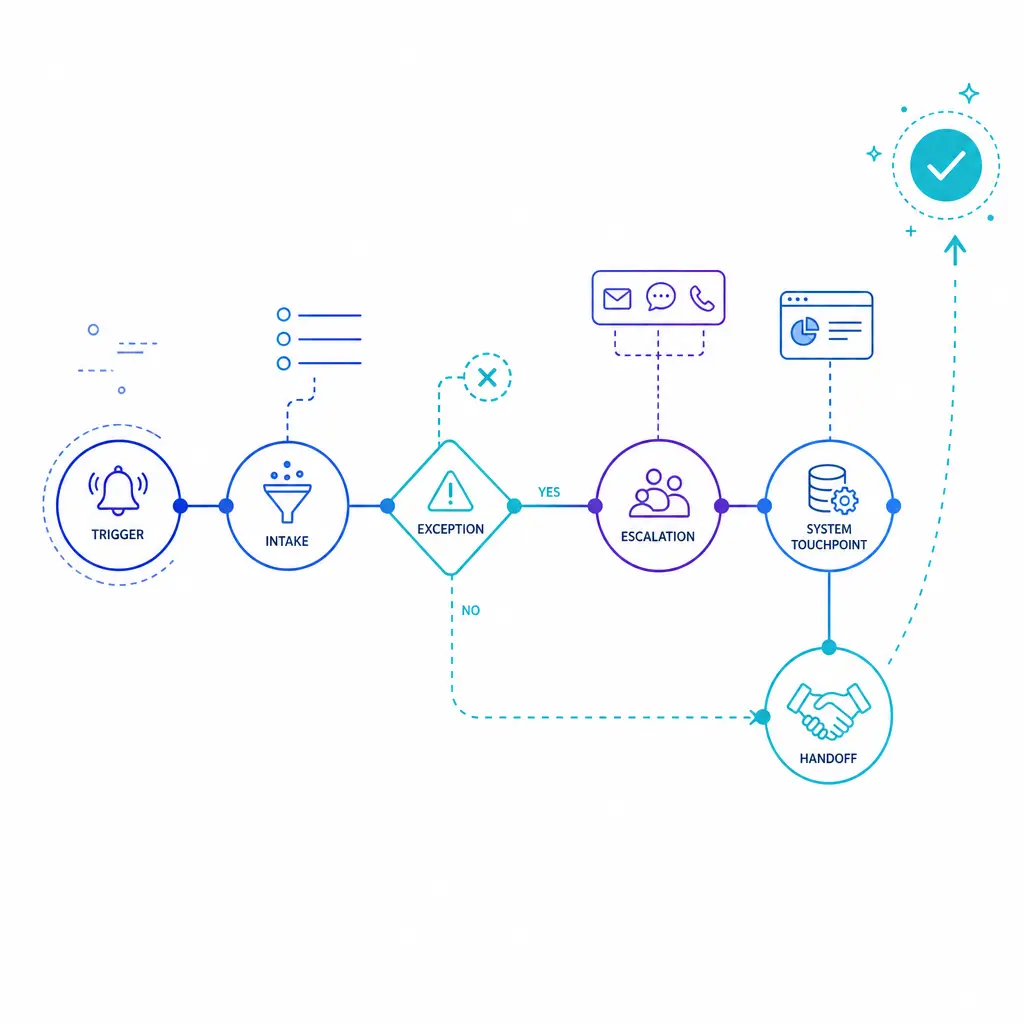
Map the workflow at the level a provider will actually operate it. That means triggers, scripts, exceptions, escalation points, systems touched, hours of coverage, language needs, and what a successful handoff looks like, before any vendor comparison begins.
A BPO provider may look strong on paper and still be a poor fit if your real operating needs are not explicit. Document expected daily and peak volumes, seasonality, service windows, language expectations, channels, and any location-based routing rules before you ask for pricing.
This is especially important for teams comparing bpo companies in usa against nearshore, offshore, or hybrid options. Geography is only one variable. Time-zone overlap, supervision model, script complexity, and escalation speed usually matter more than a simple location label.
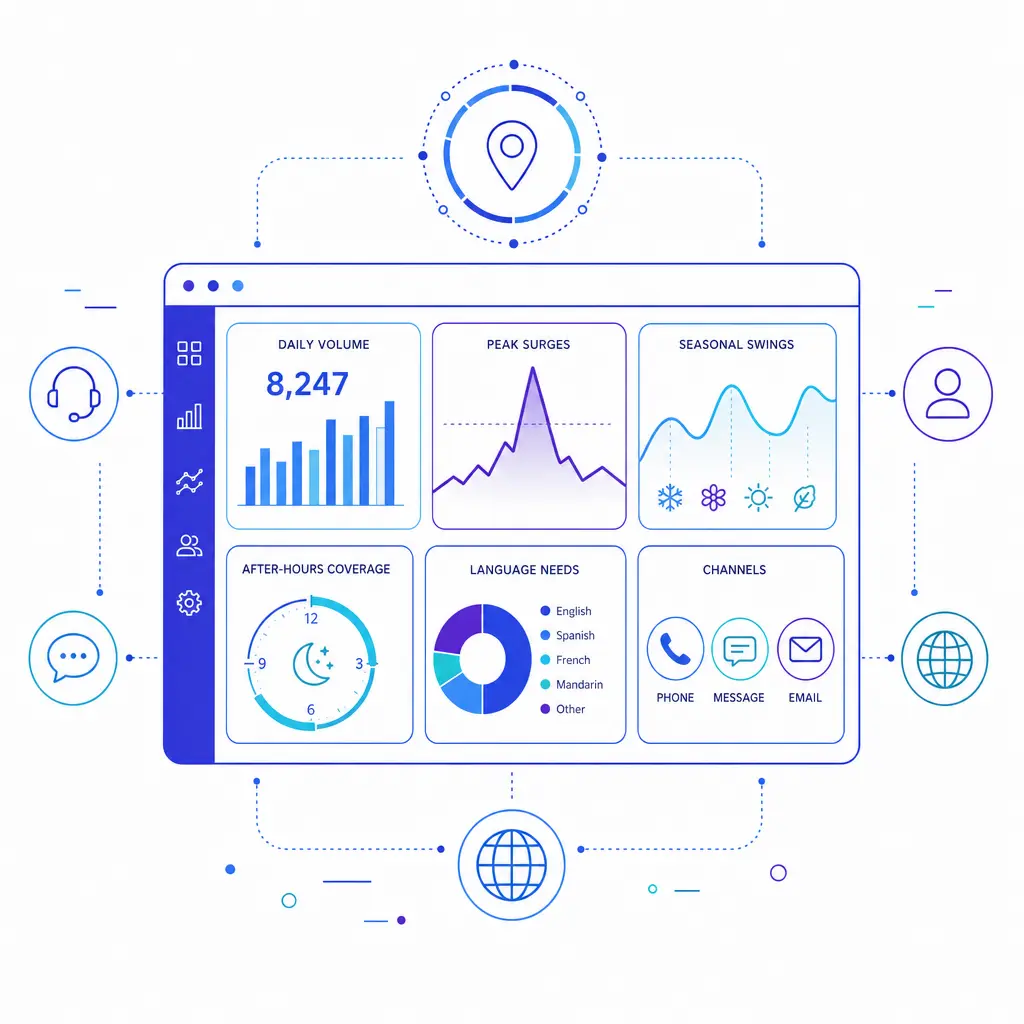
Document expected daily and peak volumes, seasonality, service windows, language expectations, channels, and location-based routing rules before asking for pricing. Time-zone overlap, supervision model, and escalation speed often matter more than a simple location label.
Shortlists get messy when every feature is treated as equally important. Split the requirements into three groups: non-negotiables, strong preferences, and future-state enhancements.
For example, a legal or healthcare intake workflow may require named supervision, controlled script changes, secure message handling, and defined escalation paths on day one. AI summaries, extra channels, or multilingual expansion may still be valuable, but they should not outweigh must-have operating controls.
Use this simple buying filter before you score any provider:
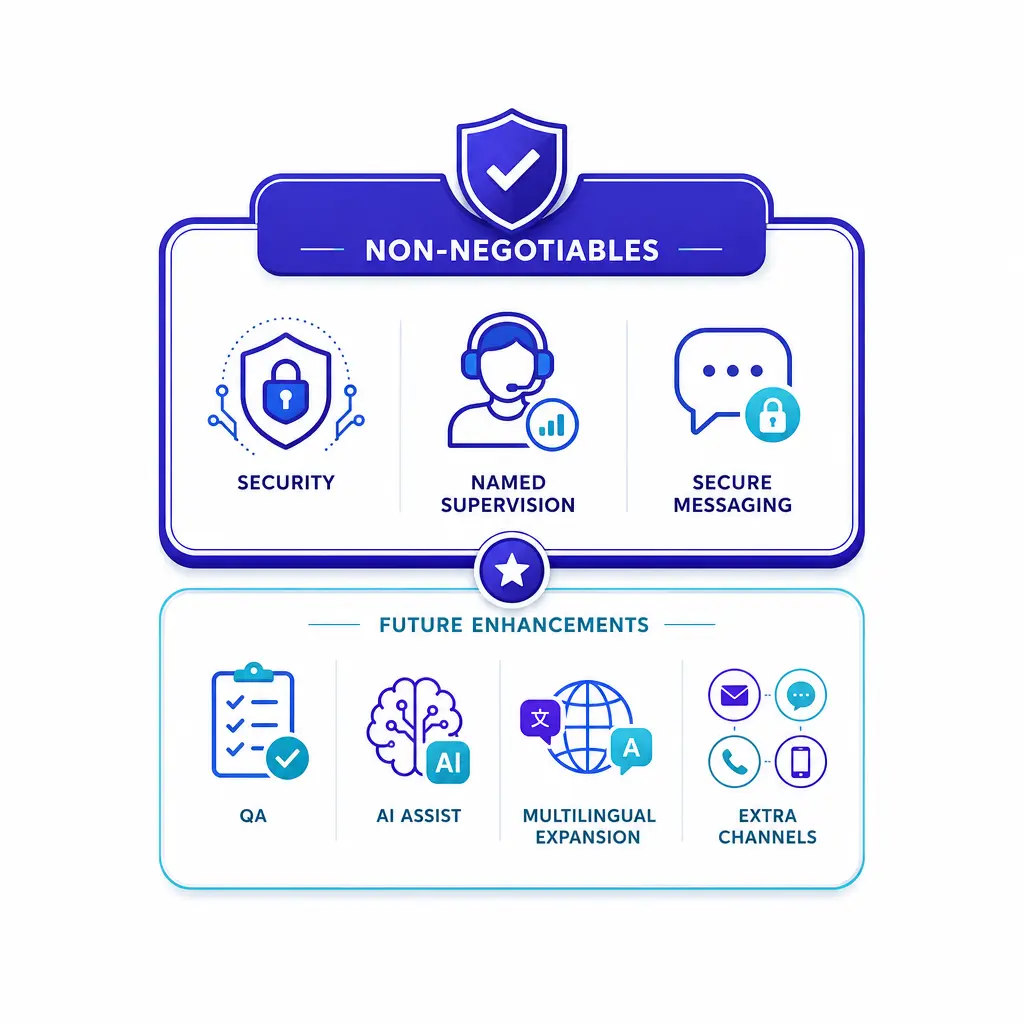
Split requirements into three groups: non-negotiables, strong preferences, and future-state enhancements. Controls such as named supervision, secure message handling, and defined escalation paths come first, while AI summaries or extra channels should not outweigh them.
Buying teams often start by asking which geography is cheapest. The better question is which delivery mix can protect service levels, brand quality, and escalation speed at the cost structure you can support.
Onshore models can be attractive when language nuance, local knowledge, or tighter client oversight matters most. Nearshore can improve coverage and cost while preserving collaboration and time-zone alignment. Offshore can work well for stable, repeatable processes with strong documentation and robust supervision. Hybrid models are often the best answer when you need resilience, layered staffing, or different service tiers across one program.
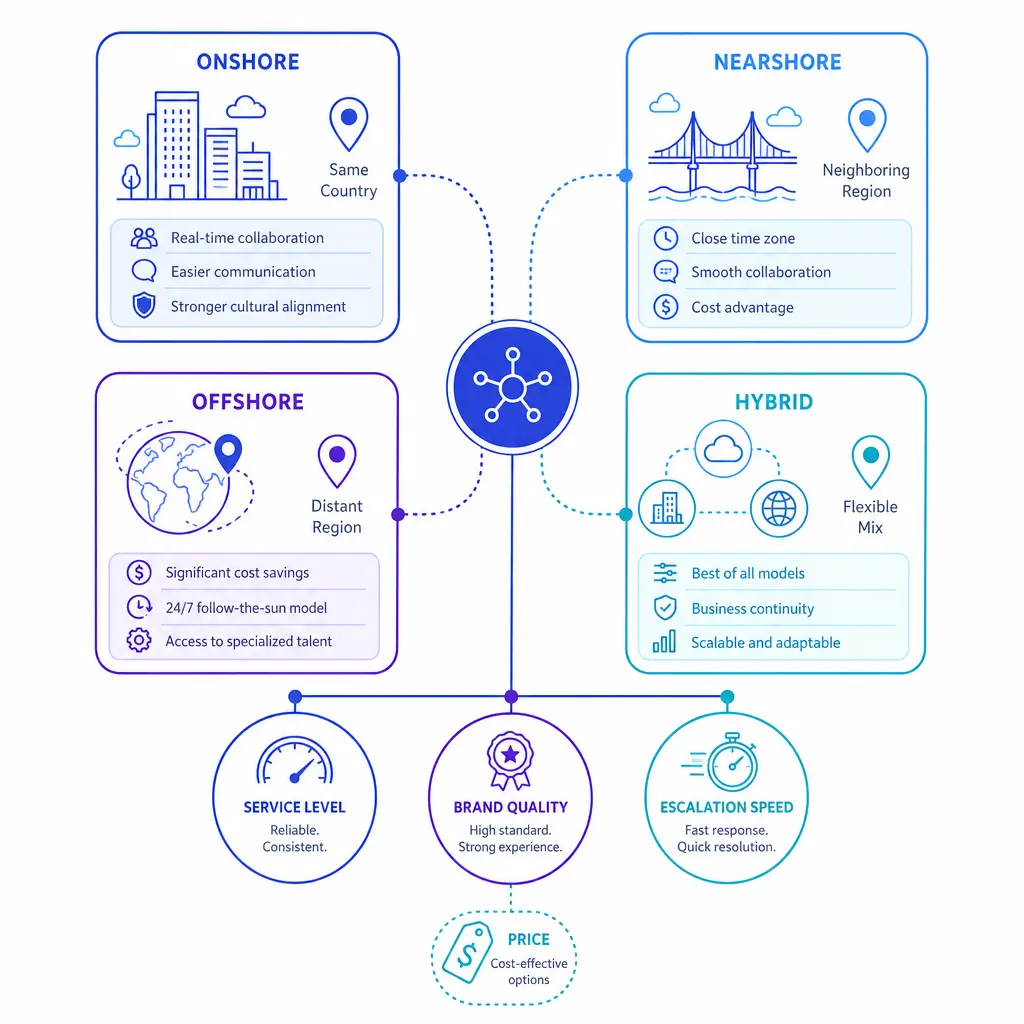
The better question is not which geography is cheapest, but which delivery mix protects service levels, brand quality, and escalation speed. Onshore, nearshore, offshore, and hybrid models each fit different needs, and hybrid often adds resilience and layered staffing.
Dedicated teams are usually the cleanest fit for complex scripts, sensitive workflows, or programs that need deeper brand training. Shared teams can be efficient for simpler coverage needs, lower volumes, or overflow use cases. Elastic models matter when volumes move sharply by hour, campaign, or season.
The right question is not which model sounds premium. It is which model gives you acceptable performance at expected and peak demand without overpaying for idle capacity or underinvesting in control.
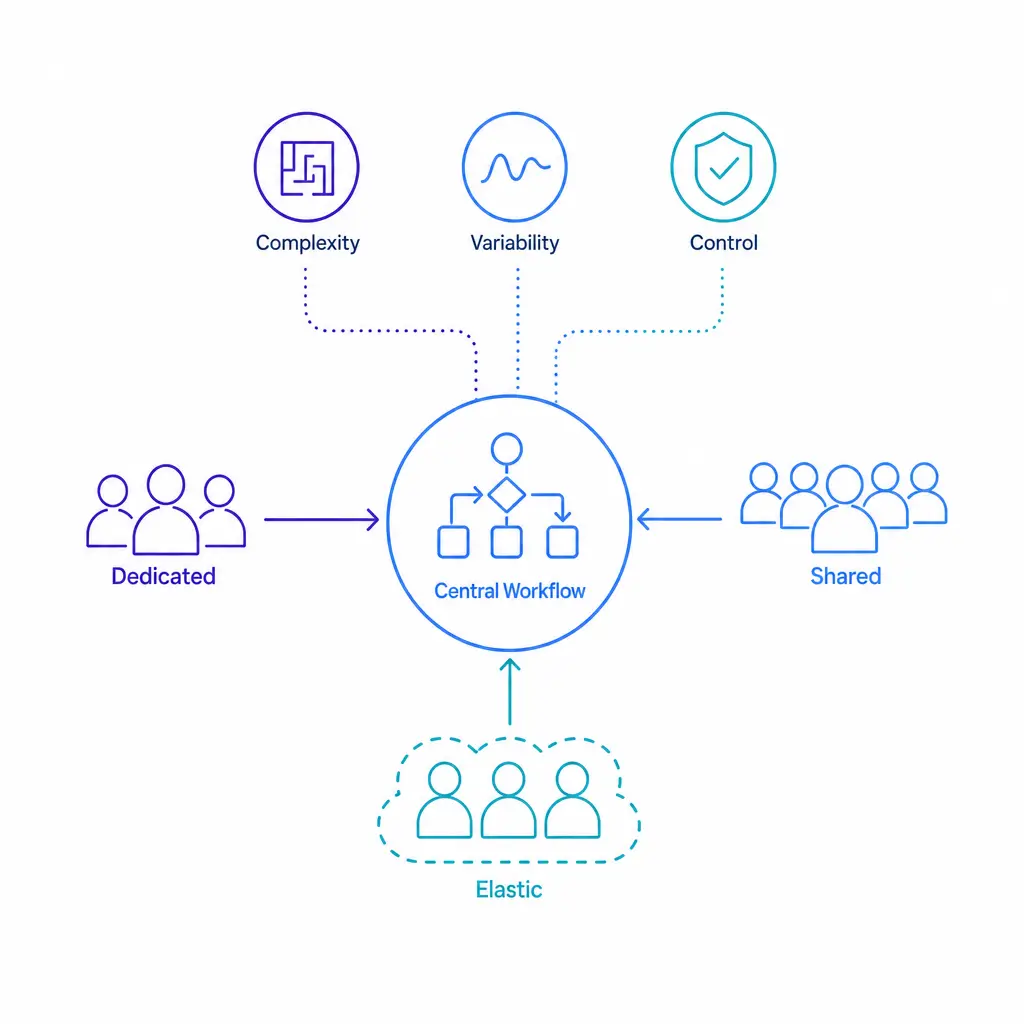
Dedicated teams suit complex scripts and sensitive workflows, shared teams can be efficient for simpler coverage or overflow, and elastic models help when volume moves sharply by hour, campaign, or season. Choose the model that performs at expected and peak demand without overpaying for idle capacity.
If your workflow is narrow but important, a specialist provider may outperform a much larger bpo service provider. That is often true when the work requires tighter script adherence, more structured QA, more frequent client communication, or faster adjustments to intake logic and routing.
For example, a provider built around managed customer communications may be better for overflow answering, lead capture, appointment handling, or legal intake than a broad outsourcing firm optimized for very large, multi-process accounts. Fit should beat size when the process is business-critical and highly specific.
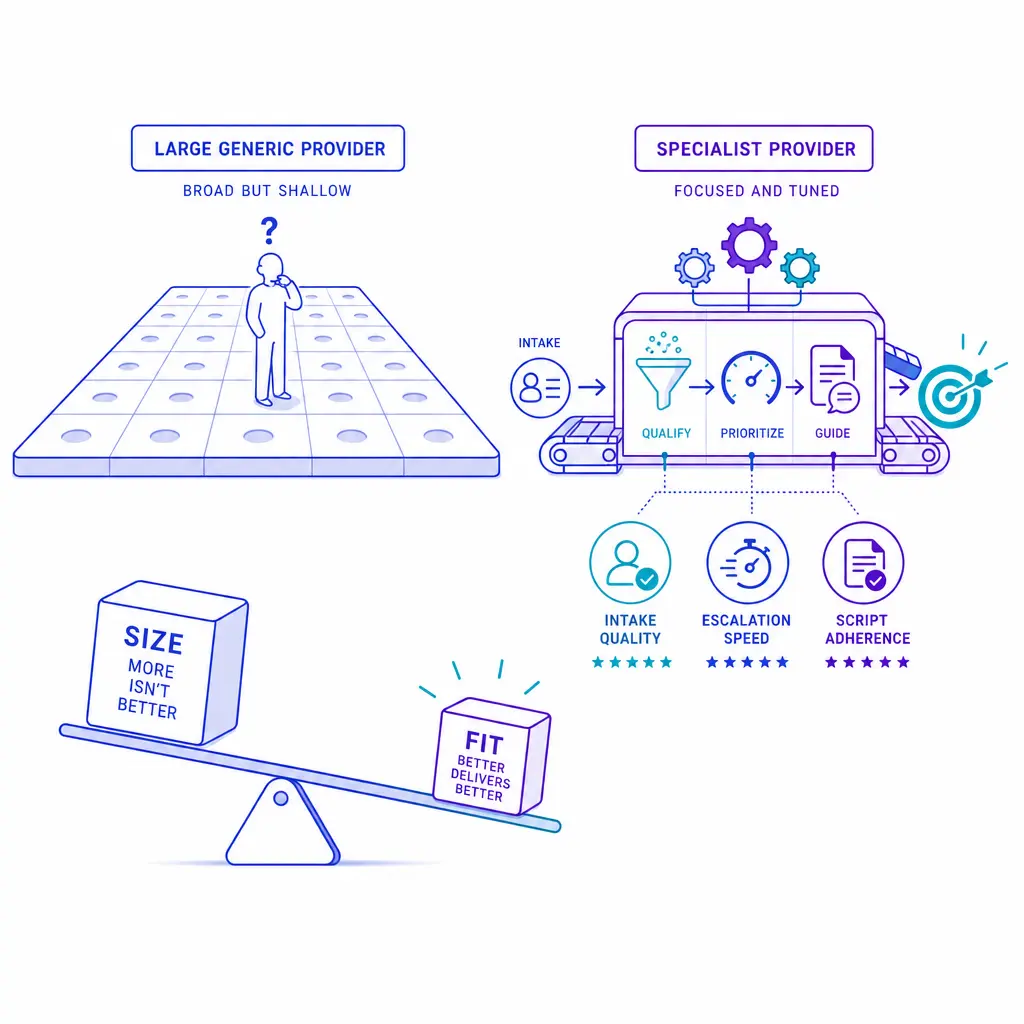
When a workflow is narrow but important, a specialist provider can outperform a much larger one. Tighter script adherence, structured QA, frequent client communication, and faster adjustments to intake logic often matter more than size.
Most failed selections do not fail because buyers forgot to compare hourly rates. They fail because the team did not weight delivery, governance, reporting, and fit heavily enough. Use a weighted scorecard and make security and operational governance mandatory pass items, not soft preferences.
Test whether the provider has handled your kind of workflow before. Ask about comparable use cases, but focus on process similarity rather than logo slides. A strong answer sounds operational: queue type, volumes, staffing model, escalation rules, and how performance was managed.
Ask what controls are built into the operating model, not just what policies exist in a folder. You want to understand access control, workstation standards, recording practices, incident handling, continuity planning, backup telephony, and who signs off on exceptions.
For regulated workflows, ask the provider to explain exactly how those controls map to your environment. Security maturity is easier to trust when the provider can show evidence, name owners, and speak clearly about limitations.
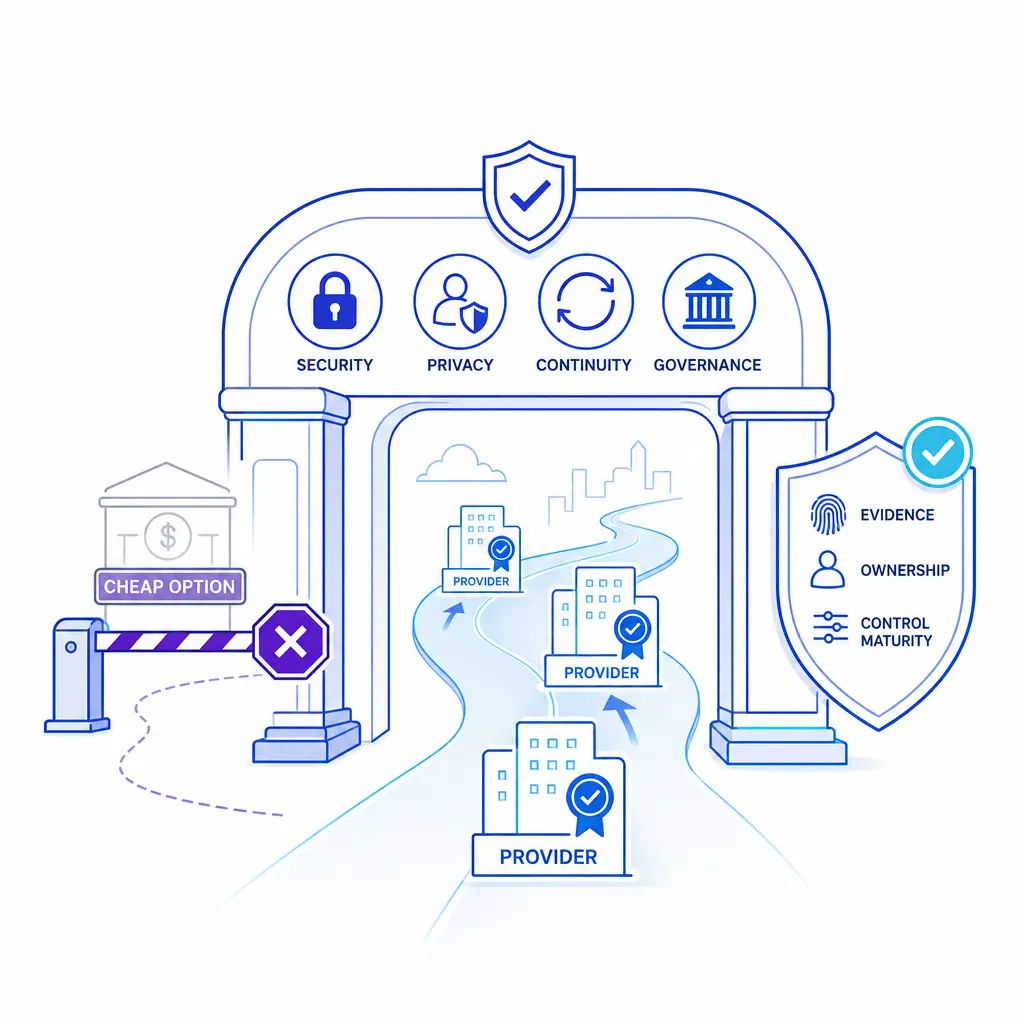
Make security and operational governance mandatory pass items, not soft preferences. Set minimum thresholds so a low-price provider cannot win the overall score while failing on access control, incident handling, continuity planning, and the other controls you actually need.
Find out who hires, how quickly they can hire, how agents are screened, how initial training works, and how ongoing coaching is delivered. Then look at how scripts, knowledge-base updates, and client-approved language are governed.
Quality assurance should not be a vague promise. You want scoring logic, calibration rhythm, re-training triggers, and a clear method for finding and fixing repeat failures.
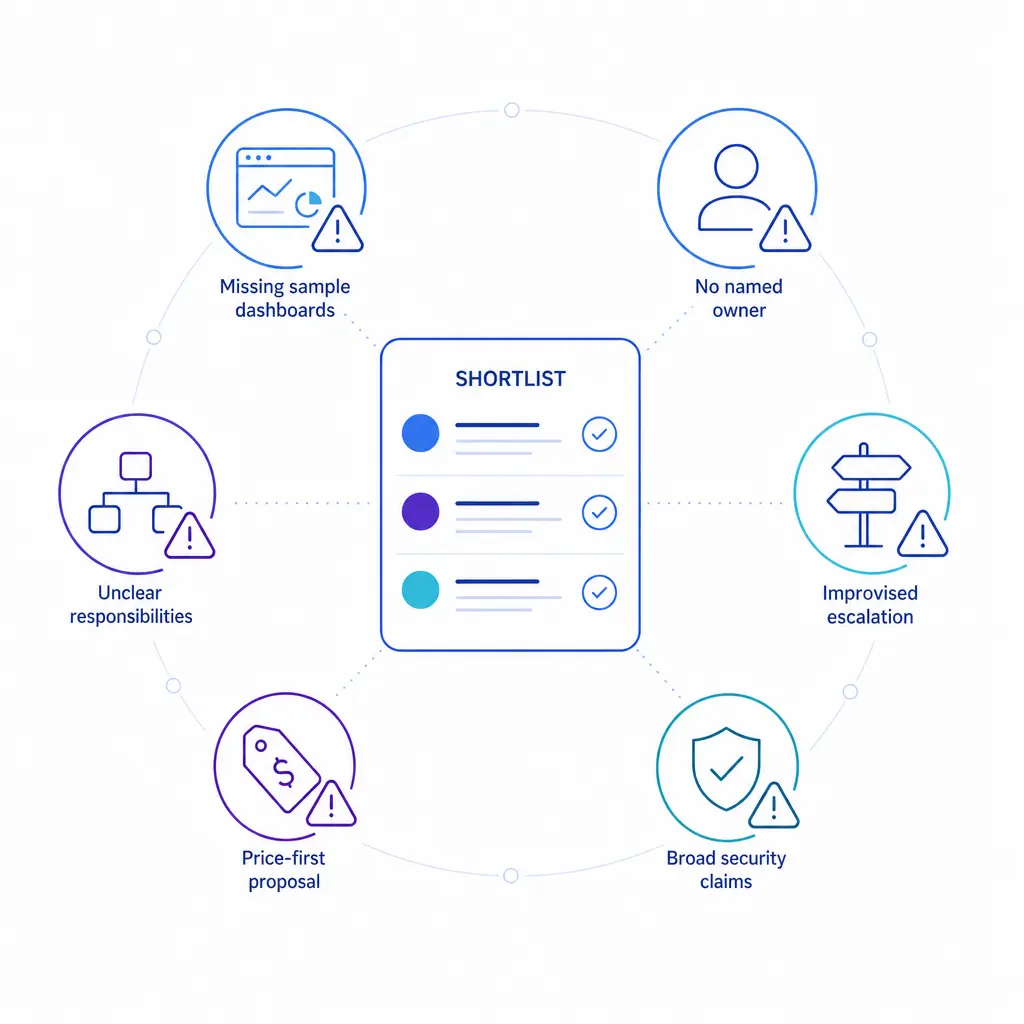
Reporting should help you run the service, not just review it. Ask for sample dashboards and examples of weekly and monthly operating reviews. The best reporting packs show volume trends, service performance, QA results, exception types, and corrective actions in one place.
SLAs should define response expectations, but KPIs should show whether the process is producing the right business result. That distinction matters in legal intake, healthcare access, and multi-location support, where speed alone does not equal quality.
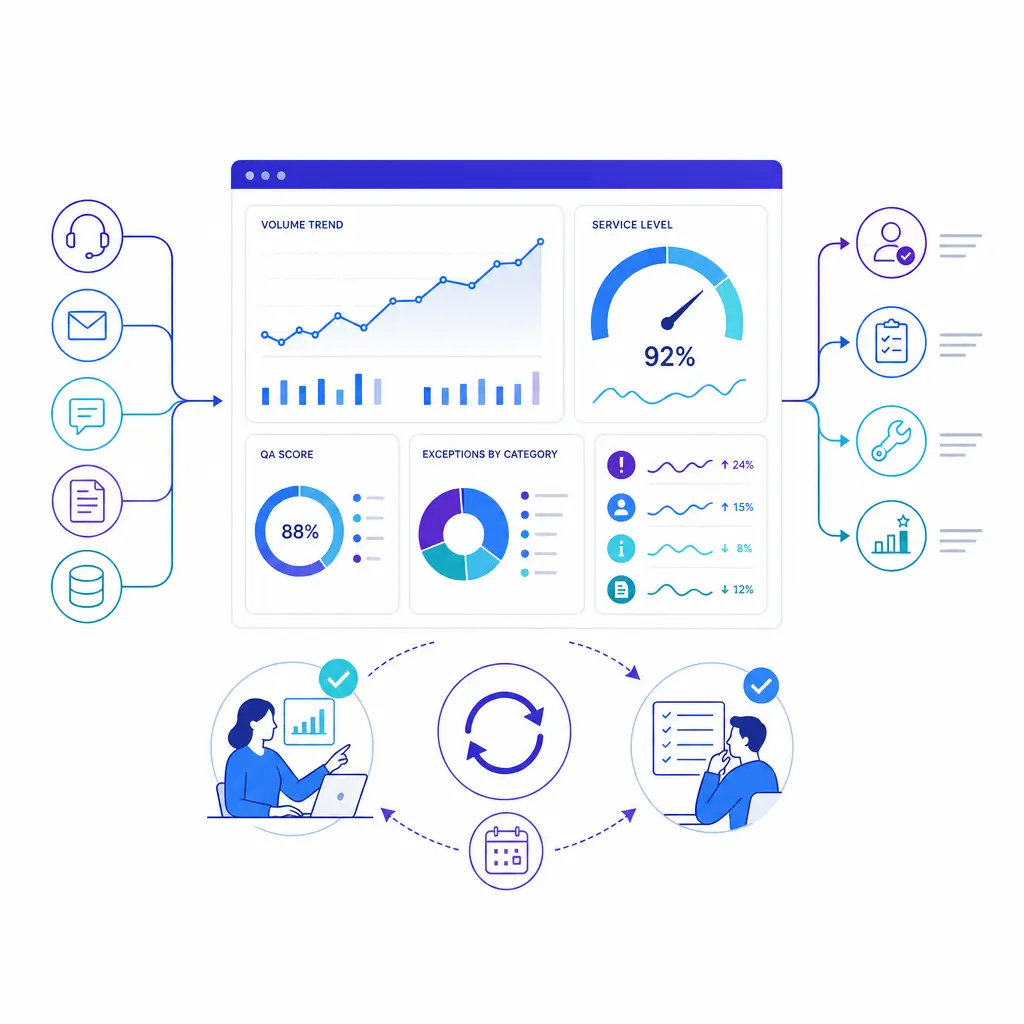
Reporting should help you run the service, not just review it. The best packs combine volume trends, service performance, QA results, exception types, and corrective actions in one view, supported by weekly and monthly operating reviews.
Do not assume “integration-ready” means production-ready. Ask which systems the provider can work in, how data moves, who owns testing, how changes are approved, and what happens when a system fails.
If AI is used for summarization, routing, agent assist, or self-service, require a plain-language explanation of where AI is in the workflow and where a human must review or take over. High-quality providers can explain the boundaries without turning the answer into marketing.
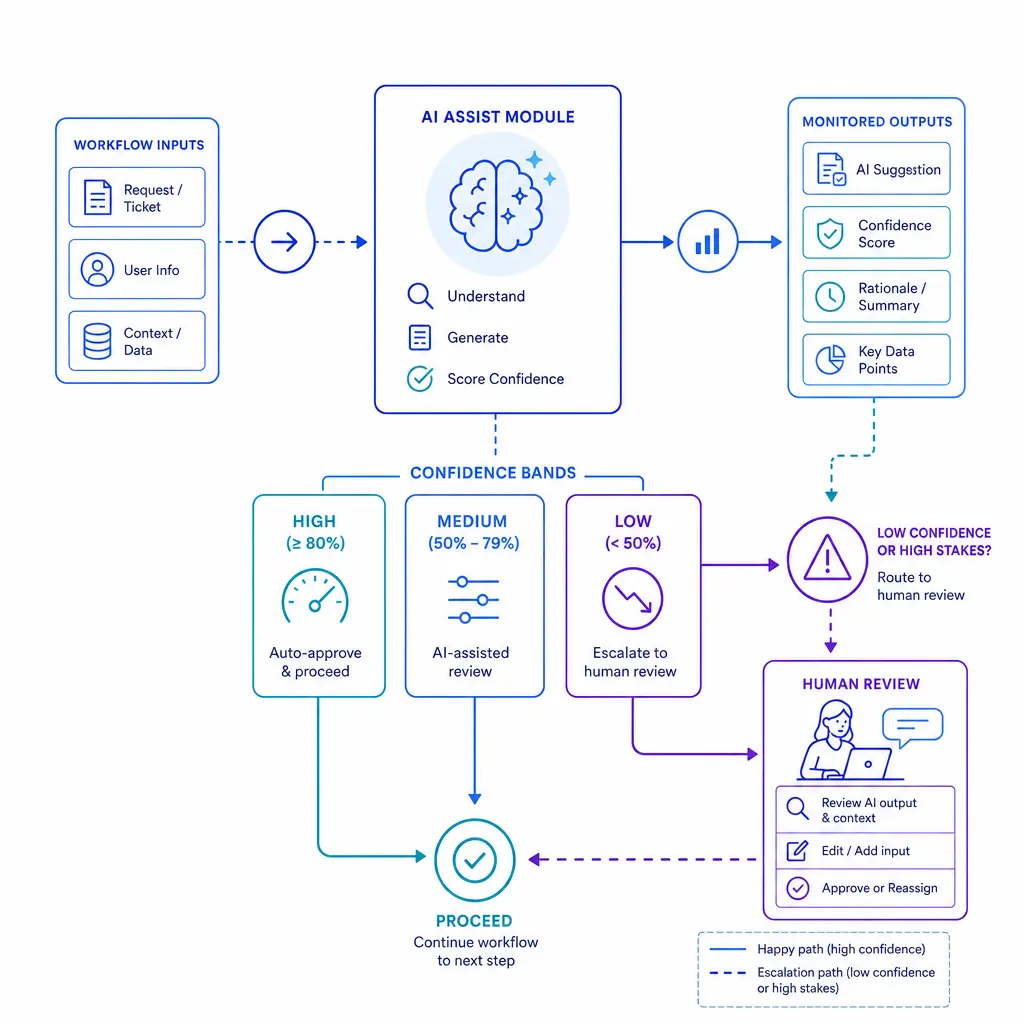
If AI is used for summarization, routing, agent assist, or self-service, require a plain-language explanation of where it sits in the workflow and where a human must review or take over when confidence is low or stakes are high.
Implementation quality is often the hidden differentiator between strong and weak providers. Ask for ramp assumptions, decision gates, staffing timeline, dependency list, risk log, and who owns launch readiness on both sides.
Then test governance. You should know the day-to-day owner, the client success lead, the operations leader, and the executive sponsor before you sign. If those roles are unclear, future escalation will be unclear too.
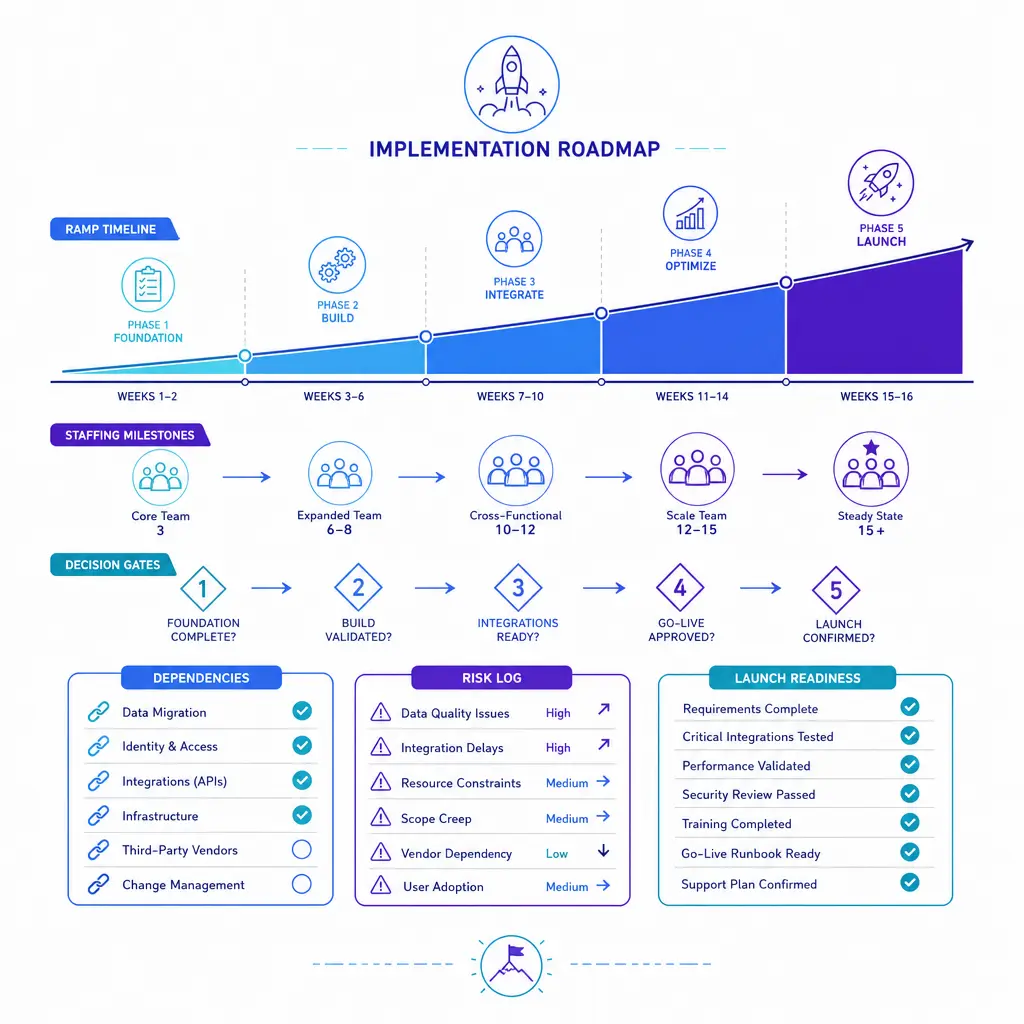
Implementation quality is often the hidden differentiator. Ask for ramp assumptions, decision gates, staffing timeline, dependency list, risk log, and who owns launch readiness on both sides, and confirm the day-to-day owner and executive sponsor before you sign.
Compare pricing models only after the operating model is understood. The headline rate may exclude transition effort, management overhead, QA load, technology fees, schedule premiums, or the cost of rework when the wrong tasks are handed to the wrong team.
Copyable weighted scorecard for shortlisting bpo companies:
Score each category on a 1-to-5 scale. Then set minimum pass thresholds for security and governance so a low-price provider cannot win the overall score while failing on the controls you actually need.
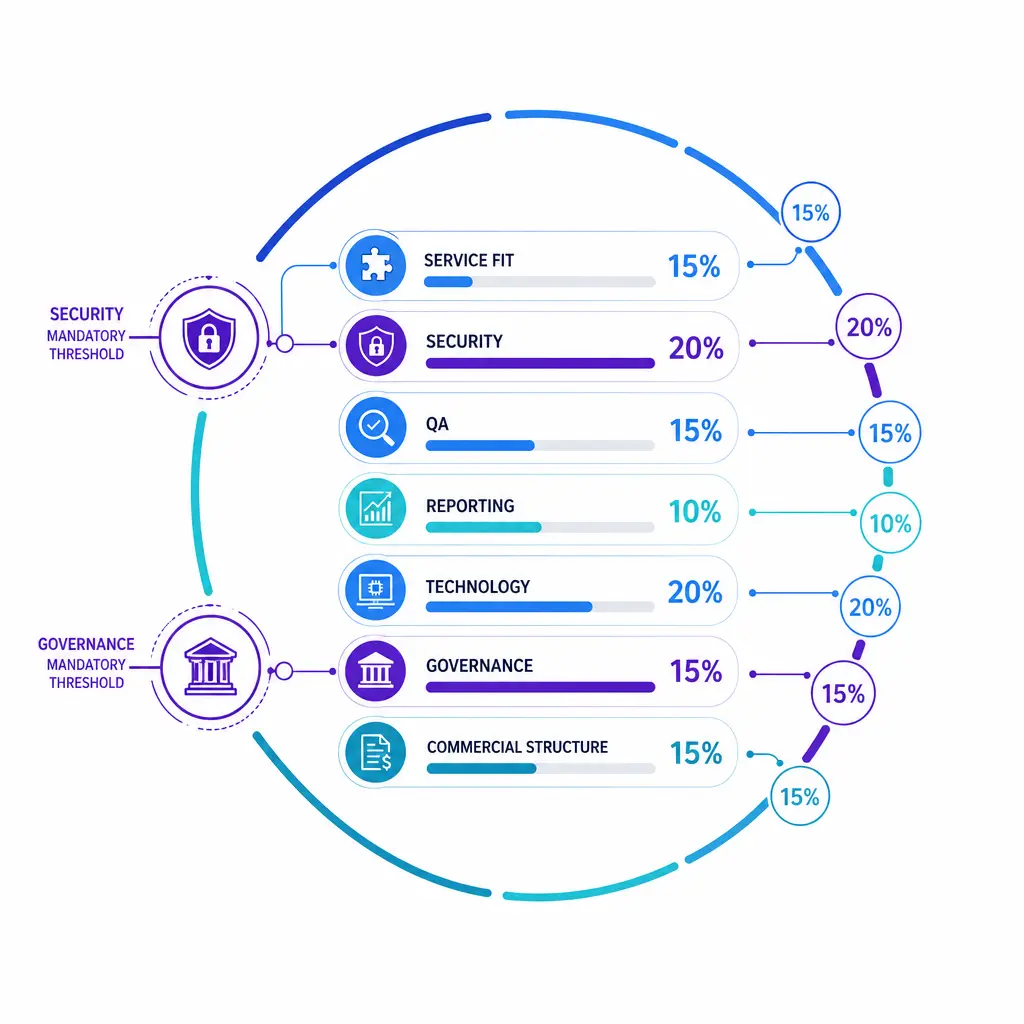
Use a weighted scorecard across service fit, security and compliance, hiring and QA, reporting, technology and AI controls, implementation and governance, and commercial structure. Score each category from one to five, then apply pass thresholds for security and governance.
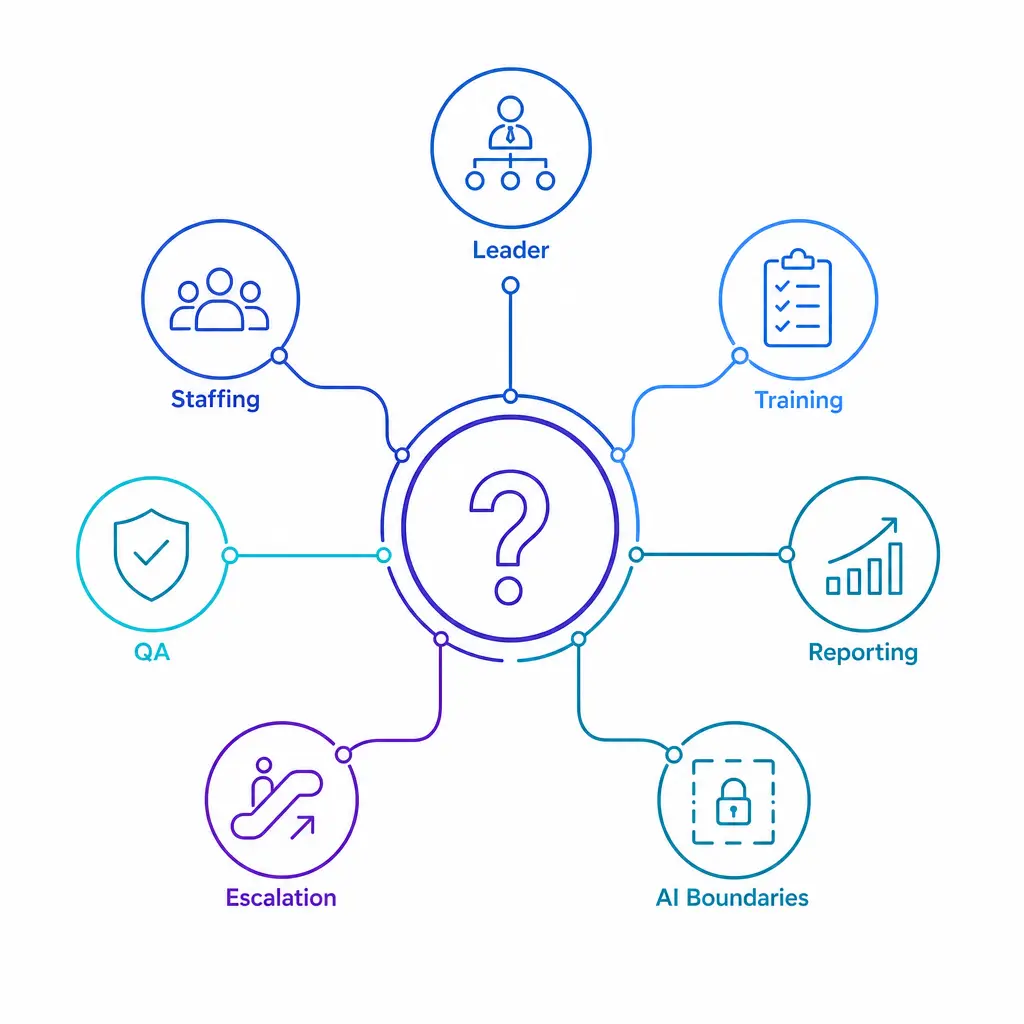
Ask every provider the same structured questions: what processes they would own, how they staff steady, peak, and launch states, how they train and measure quality, how escalation works, what reporting you receive, and where AI or human review is involved.
Ask for sample reports, QA rubrics, training outlines, implementation plans, incident-response summaries, continuity documentation, and client references that match your use case. Strong providers are rarely perfect, but they can usually show how the service is actually run.
References matter most when they confirm operational behavior. Ask not only whether the client is happy, but whether staffing, reporting, change management, and escalation worked the way the provider promised during the sale.

Request proof, not just claims: sample reports, QA rubrics, training outlines, implementation plans, incident-response summaries, continuity documentation, and references that match your use case and confirm staffing, reporting, and escalation worked as promised.
A weak pilot can eliminate a good provider for the wrong reasons. Do not test with an unrepresentative queue, incomplete scripts, or unstable routing and then treat the result as proof of long-term performance.
Instead, choose a bounded but realistic workflow, define success criteria in advance, stabilize inputs, and review the pilot jointly. A good pilot should test service design, communication rhythm, QA feedback loops, and launch discipline, not just first-week speed.
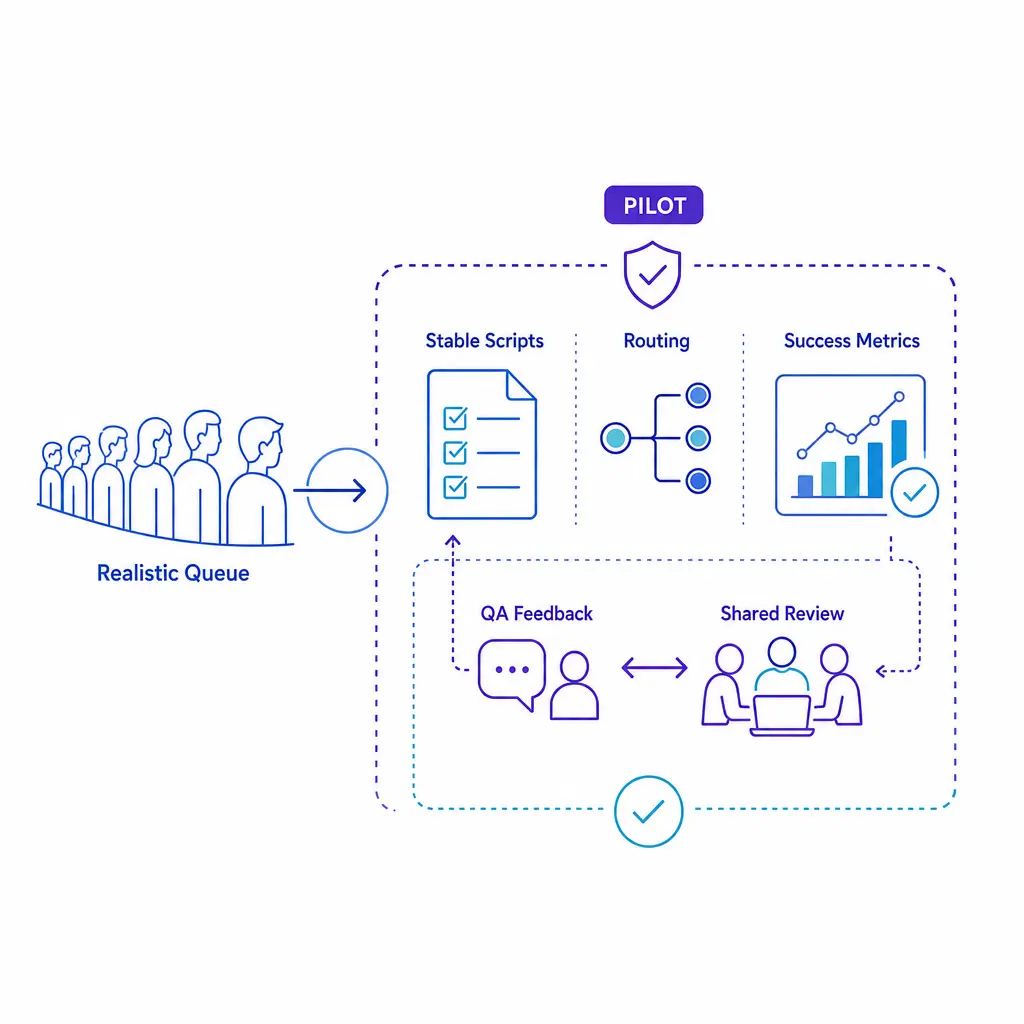
A good pilot is a bounded but realistic workflow with stable inputs, success criteria defined in advance, and a joint review. It should test service design, communication rhythm, QA feedback loops, and launch discipline, not just first-week speed.
Best fit when you need broad geographic coverage, many languages, large seat counts, or multiple outsourced functions under one commercial umbrella. These providers can be strong for complex procurement environments and very large programs.
Best fit when speed, direct access to leadership, and a more tailored operating model matter more than having the largest footprint. These providers often work well for customer service outsourcing, overflow support, and programs that need closer operational collaboration.
Best fit when intake quality, sensitivity, brand control, and escalation precision matter more than scale optics. That includes legal intake-heavy firms, healthcare practices, urgent messaging environments, and multi-location businesses where a missed or mishandled interaction has outsized cost.
This is where Go Answer is most relevant. It is not trying to be every kind of business process outsourcing company. It is most useful for teams that need responsive, managed customer communications, answering-service expertise, overflow and after-hours coverage, and stronger intake discipline than a generic outsource call center model usually provides.
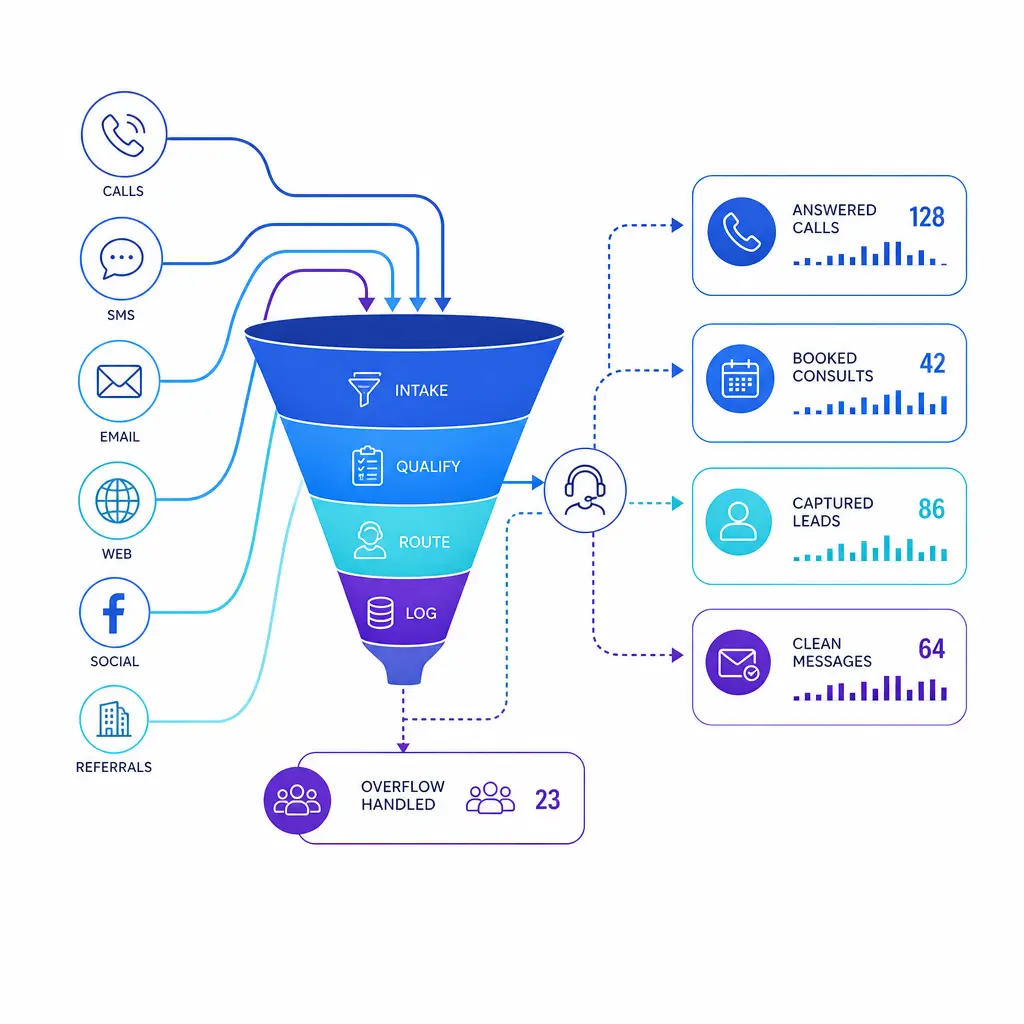
For high-volume workflows, the outcomes to look for are answered calls, booked appointments, and captured leads moving through a disciplined intake process, backed by overflow and after-hours coverage and stronger intake discipline than a generic call center model.
In buying terms, they are outsourced operators for defined business processes. The practical issue is less the label and more whether the provider can run your workflow with the right coverage, controls, and reporting.
A bpo service provider is the company that staffs, supervises, measures, and manages the outsourced process. Some are broad platforms. Others are specialists focused on a narrow set of workflows.
Start with process fit, then compare delivery model, staffing model, controls, reporting, implementation discipline, and total cost of ownership. A recognizable name is useful only if it matches the way your operation actually works.
AI will change how many BPO programs are delivered, especially in summarization, routing, and agent assist. It is more useful to ask where automation helps and where human judgment, empathy, or exception handling still needs to stay in the loop.
Common examples include customer support, answering services, appointment scheduling, back-office processing, and intake or lead qualification. The right provider depends on how complex and how risk-sensitive those tasks are in your business.
The main risks are poor process fit, weak governance, shallow reporting, hidden operating costs, and quality drift after launch. Most of those issues can be reduced during selection if you evaluate evidence, not just slides and pricing.
Those searches are common, but they are usually less useful for a buyer-led decision. Ranked lists can help you build a long list. They are not a substitute for evaluating fit, governance, and delivery risk. Questions about which company is best for beginners or pays the most belong to a job-seeker workflow, not a procurement one.
If your team is comparing bpo companies for overflow coverage, after-hours support, legal intake, healthcare communications, or high-volume inbound workflows, Go Answer can help you pressure-test the shortlist against real operating requirements. The conversation is most useful when you already know the workflow you need covered and the reporting you need back.
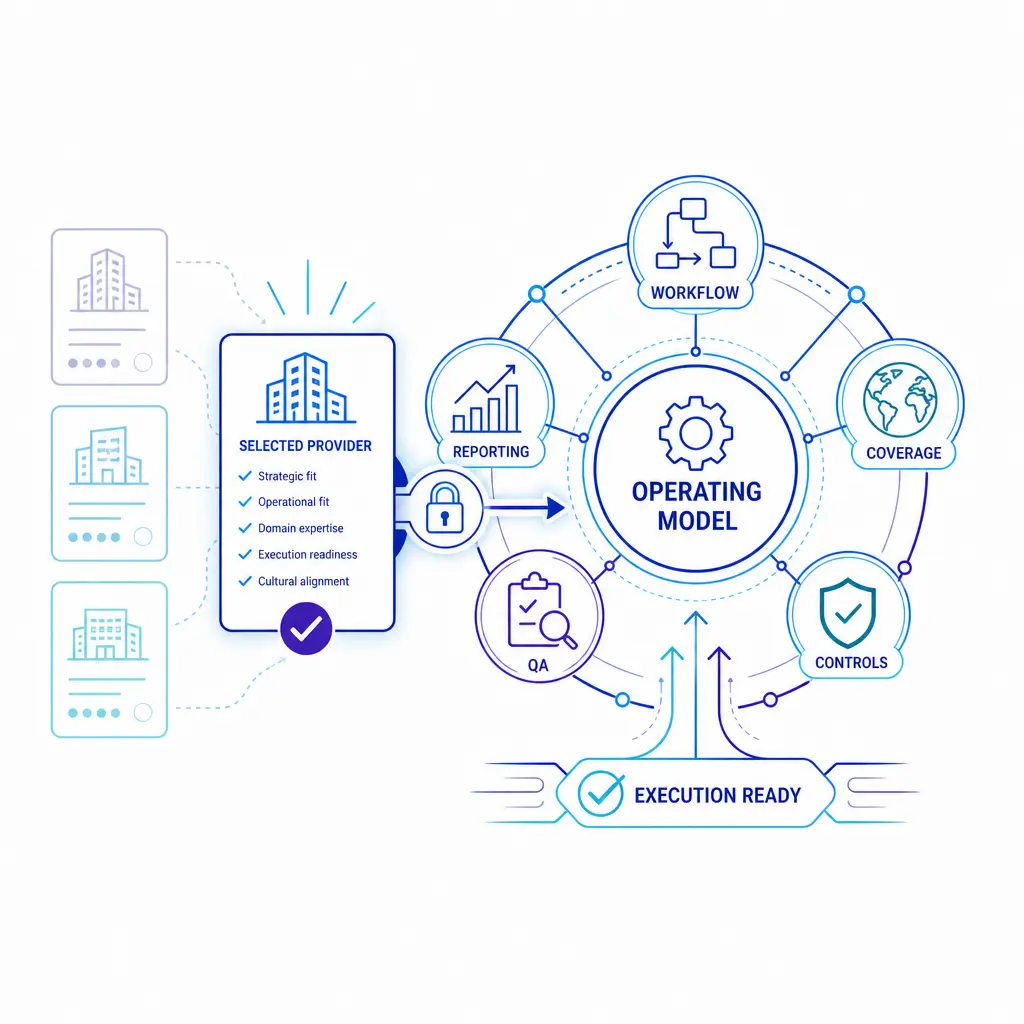
The right partner is the one that can actually run your process, with workflow fit, controls, coverage, and reporting aligned. Pressure-test your shortlist against real operating requirements, and know the workflow you need covered and the reporting you need back.
If you are earlier in the process, you can also explore enterprise BPO, see how it works, and view use cases to narrow the right model before you issue an RFP.

Learn why thousands of companies rely on Go Answer.
Try us risk-free for 14 days!
Enjoy our risk-free trial for 14 days or 200 minutes, whichever comes first.
Have more questions? Call us at 888-462-6793
Learn why thousands of companies rely on Go Answer.
Have more questions? Call us at 888-462-6793
If you would like to get in contact with a Go Answer representative please give us a call, chat or email.

Thanks for your interest!
A representative will be reaching out to you shortly.
Have more questions? call us on 888-462-6793
