
Call Center Workforce Management: Forecasting, Scheduling, and Adherence for Reliable Coverage
By Rob ReynoldsLast modified: December 15, 2026
Voted Top Call Center for 2024 by Forbes
Virtual Receptionists
Save time and money with our virtual receptionists.
AI Receptionist
AI-powered receptionist that answers, routes, and qualifies calls 24/7.
Enterprise Solutions
Solutions designed to scale with your organization’s needs.
Legal Services
Our virtual legal receptionists are experts in legal intake.
Last modified: December 15, 2026
Reliable coverage is hard when demand changes by interval, channel, and skill. For operations leaders in multi-location service businesses, legal intake-heavy firms, healthcare practices, and high-volume inbound teams, poor workforce planning shows up as missed calls, long holds, uneven intake quality, and preventable overtime.
This guide explains how call center workforce management works, how forecasting, scheduling, and adherence fit together, which metrics matter most, when software helps, and when outsourced coverage can take pressure off your internal team. The goal is simple: make coverage more dependable without overbuilding headcount.
Call center workforce management is the discipline of matching expected contact demand with the right number of appropriately skilled agents at the right time. It includes forecasting workload, converting demand into staffing requirements, building workable schedules, and adjusting in real time when actual conditions move away from plan.
That definition matters because WFM is not only a software category. It is an operating discipline that connects demand planning, staffing, schedule design, supervisor execution, and service performance.
In practical terms, strong WFM protects coverage across business hours, lunch peaks, after-hours windows, weekends, holidays, and unexpected surges. For intake-driven teams, it also helps protect the quality of what happens when a caller is finally answered.
The four-step coverage cycle:
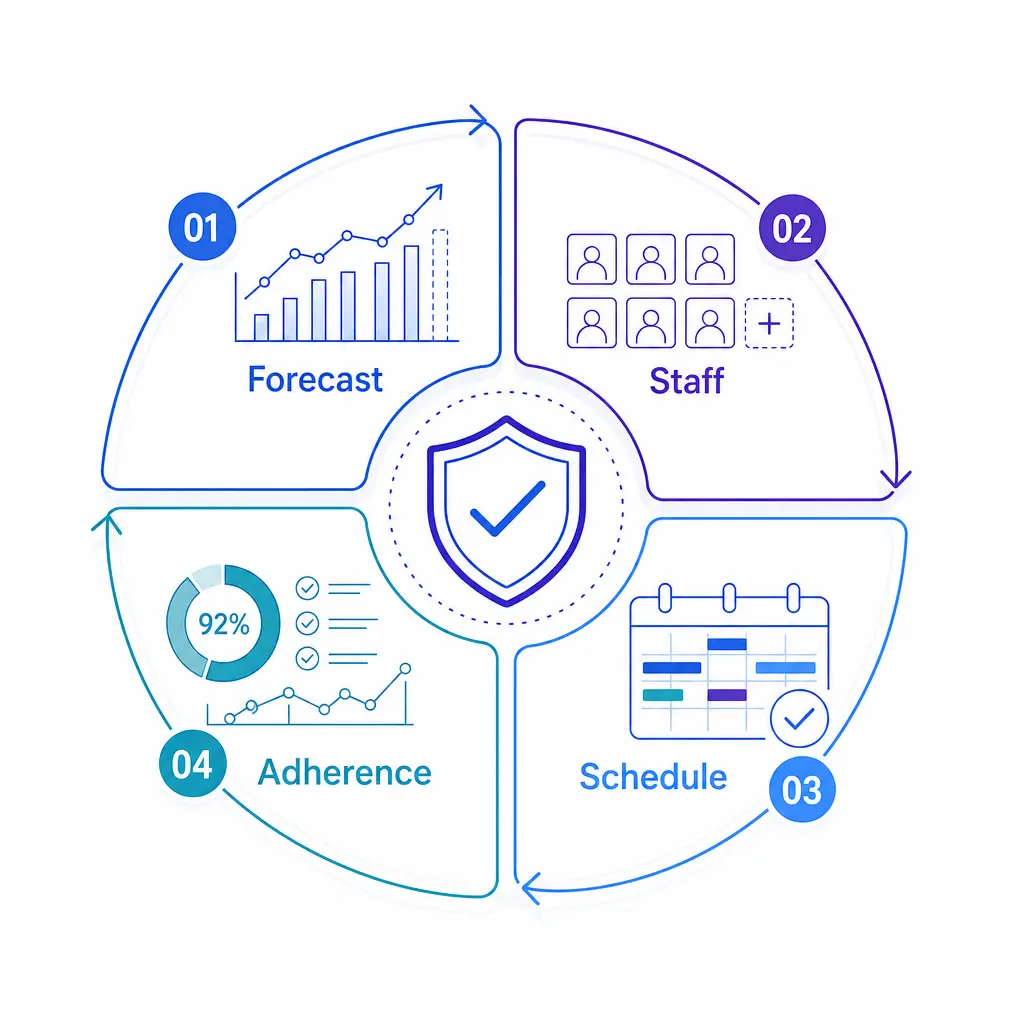
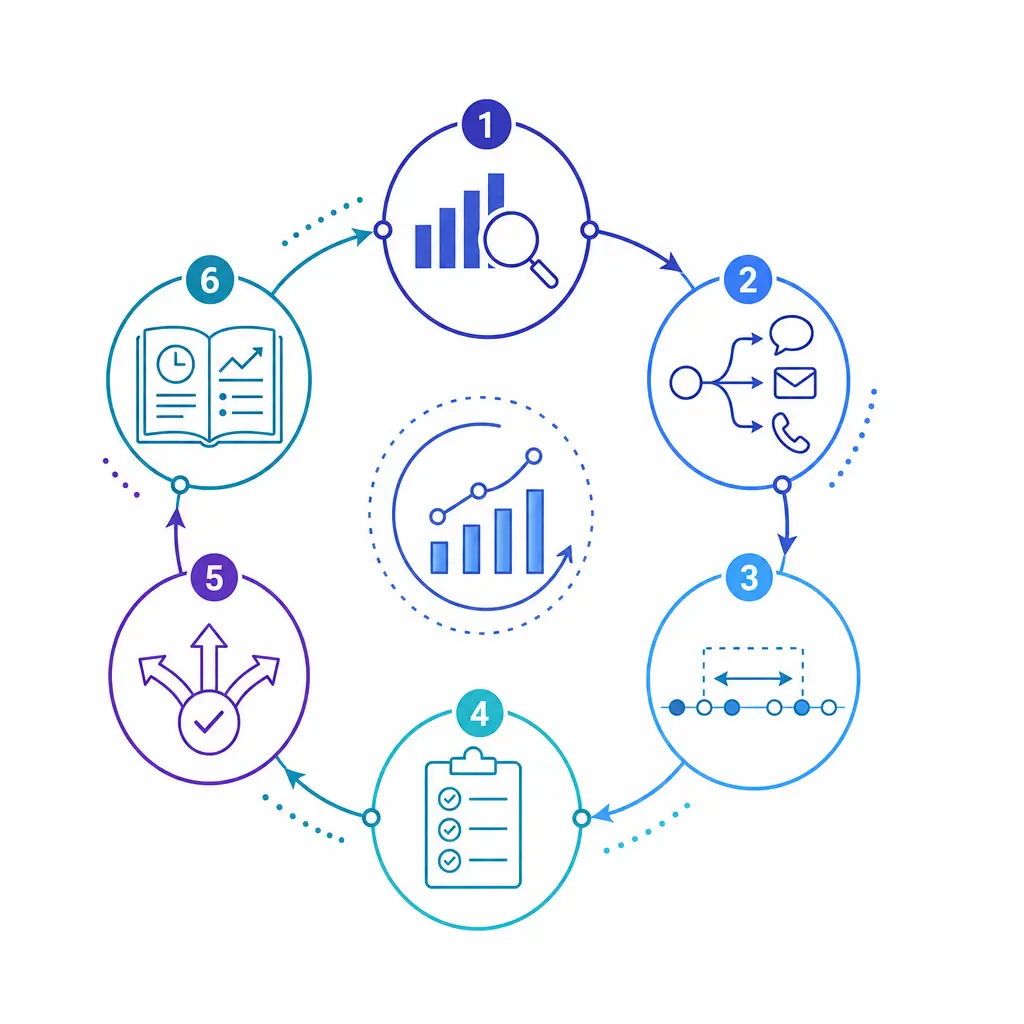
Workforce management connects four steps into one coverage cycle: forecast contact demand, convert it into interval-level staffing needs, build schedules agents can realistically follow, and manage adherence and intraday changes as actual conditions shift.
Start with recent history by 15-minute or 30-minute interval. Then layer in average handle time, seasonality, holidays, marketing campaigns, appointment reminders, outages, backlog cleanup, and any operational changes that can alter contact volume or handling time.
The goal is not a perfect forecast. It is a forecast accurate enough to protect service levels and intake quality without staffing every hour like a worst-case scenario.
Separate normal demand from special events. A legal intake campaign, a billing notice, a weather event, or a provider absence can distort the baseline if you treat it as ordinary traffic.
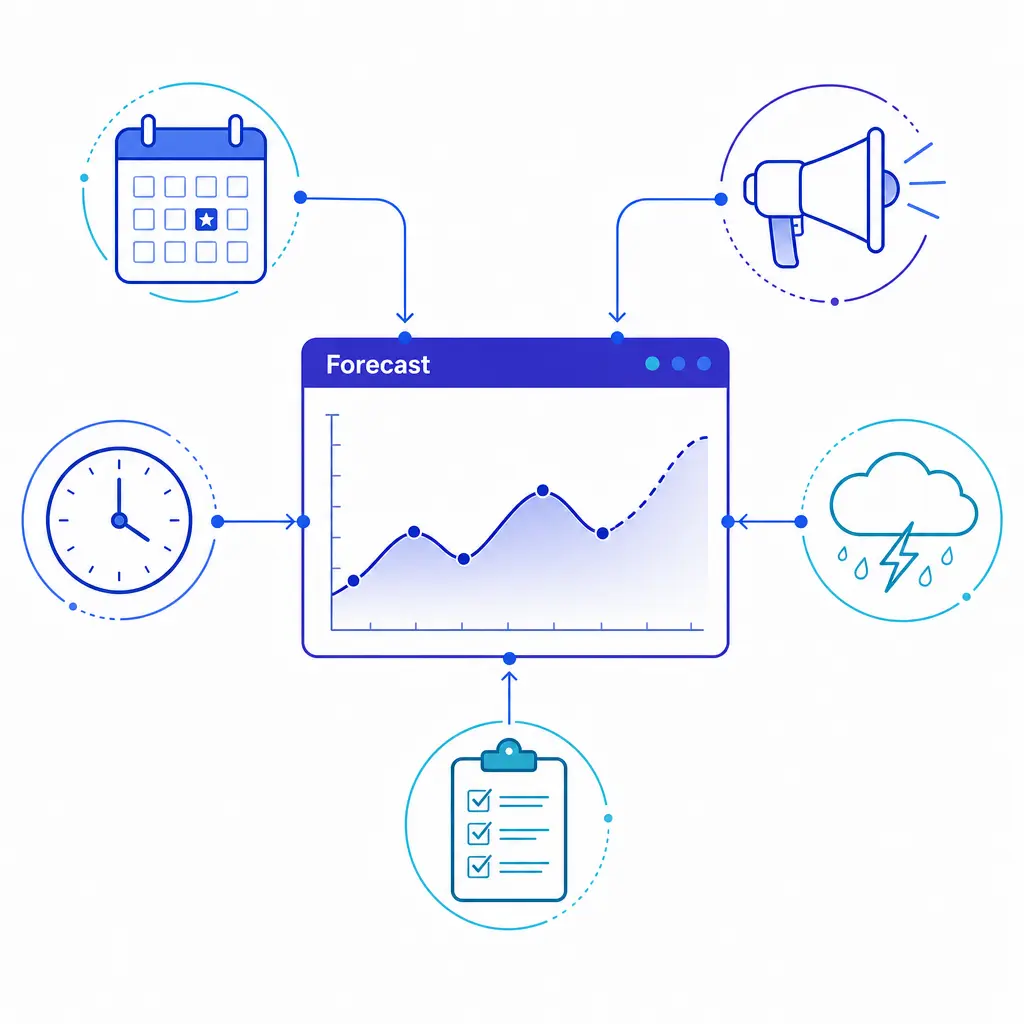
A forecast starts with recent interval history, then layers in average handle time, seasonality, holidays, marketing campaigns, appointment reminders, outages, and backlog cleanup. The goal is a forecast accurate enough to protect service levels, not a perfect one.
Once workload is forecasted, convert it into staffing requirements by interval, queue, and skill group. Teams often use queueing models such as Erlang C to estimate how many staffed agents are needed to hit an answer target while accounting for wait time and workload intensity.
This is where daily averages can mislead operators. A day can look fully staffed overall while two critical morning intervals are badly understaffed, which is why interval planning matters more than simple daily headcount.
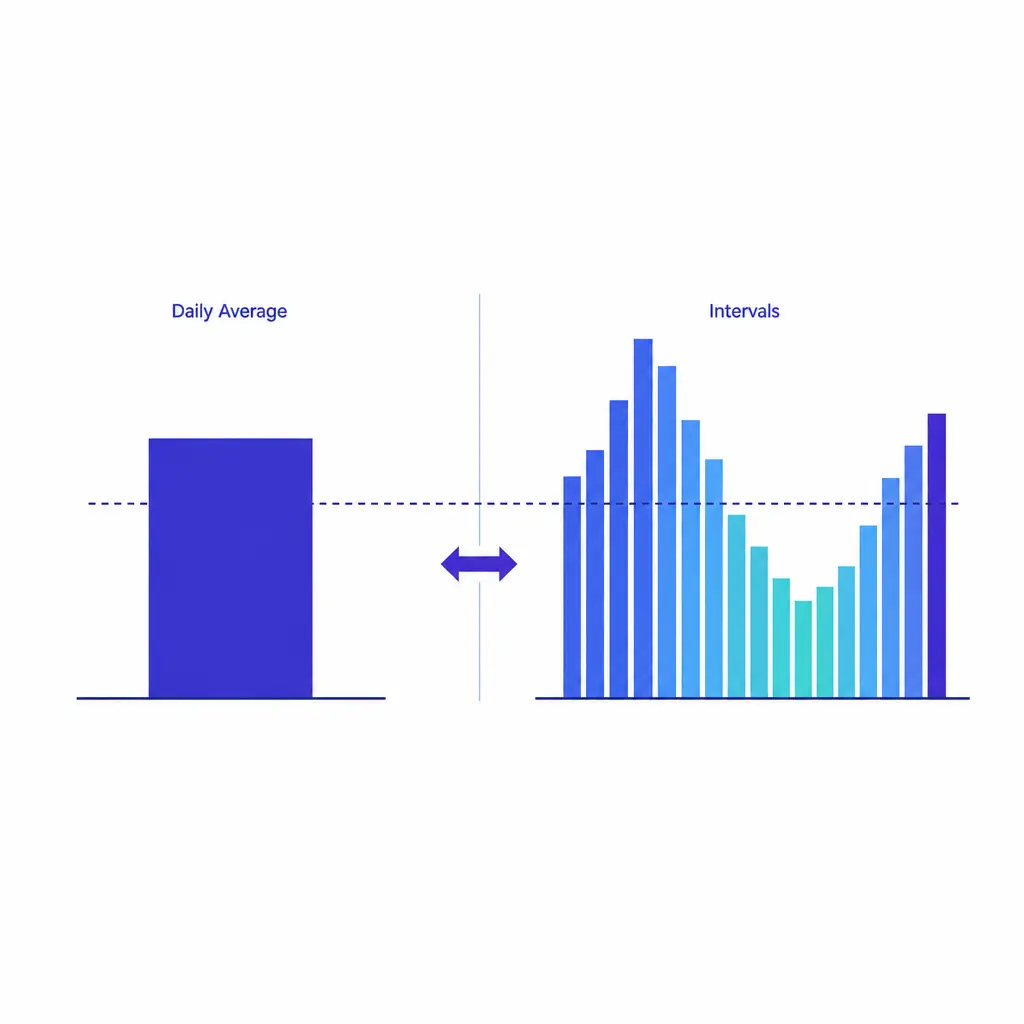
Daily averages can hide the problem. A day can look fully staffed overall while two critical morning intervals are badly understaffed, which is why interval-level planning matters more than simple daily headcount.
Skill complexity also matters. If only a subset of agents can handle bilingual intake, complex scheduling, or regulated workflows, staffing must be calculated for those skills directly, not assumed from total seat count.
Good call center scheduling balances demand, skills, and human reality. Schedules need to account for breaks, lunches, PTO, meetings, coaching, training, and other time away from the queue, while also respecting wage-and-hour requirements under the Fair Labor Standards Act.
That is why a schedule should not be treated as a simple roster. It is a coverage plan shaped by skill-based demand, availability, internal policies, and real operating constraints.
The best schedules also give agents some predictability and controlled flexibility. Shift bids, approved swaps, and earlier notice can reduce avoidable absenteeism and make schedule adherence easier to sustain.
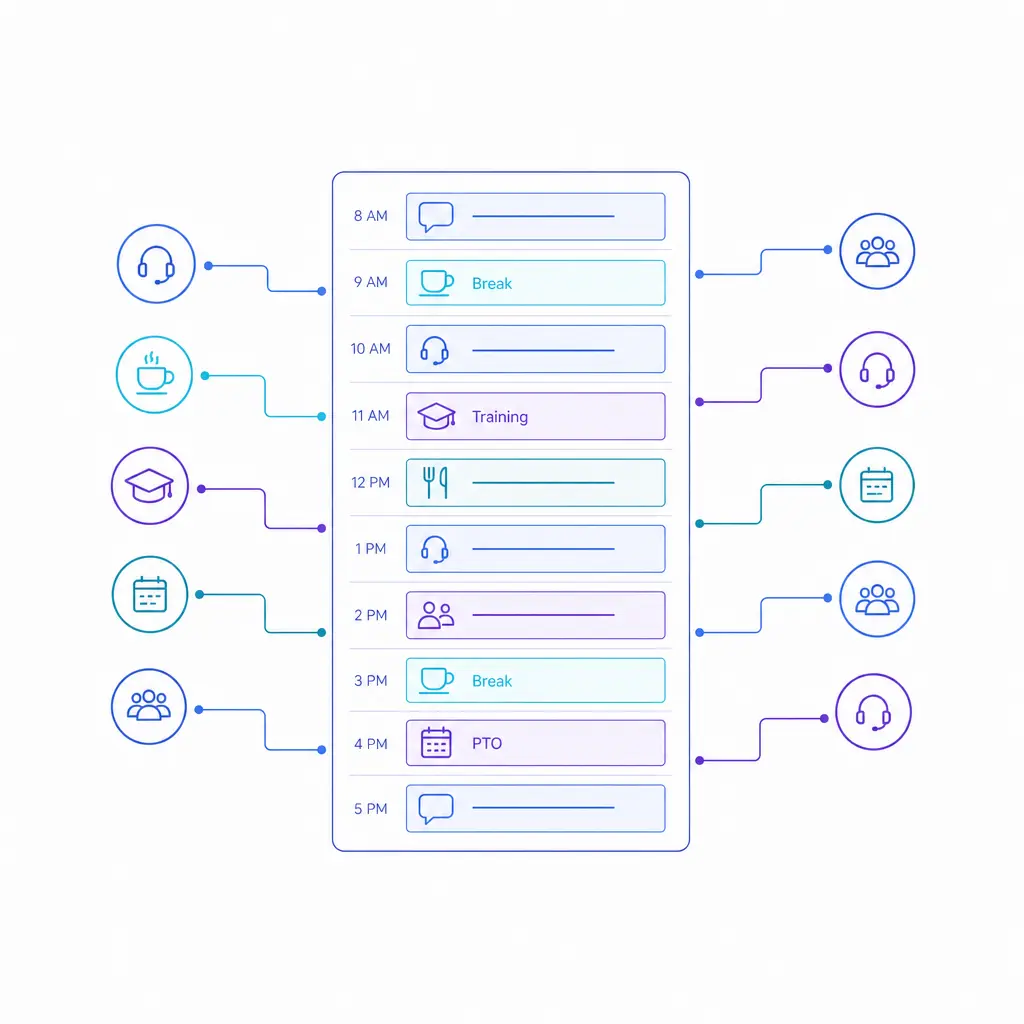
Good schedules balance demand, skills, and human reality, with room for breaks, lunches, PTO, meetings, coaching, and training. Shift bids, approved swaps, and earlier notice add predictability and make adherence easier to sustain.
Adherence is whether an agent is in the activity they were scheduled to perform at the scheduled time. Conformance looks at whether the agent worked the total amount of scheduled time, while intraday management is the supervisor practice of adjusting the plan when the day goes off course.
Those intraday actions may include moving breaks, offering overtime, approving voluntary time off, shifting agents between queues, redirecting callback work, or reallocating capacity across voice, chat, and follow-up tasks. Forecasting and scheduling create the plan, but real-time control determines whether coverage actually holds.
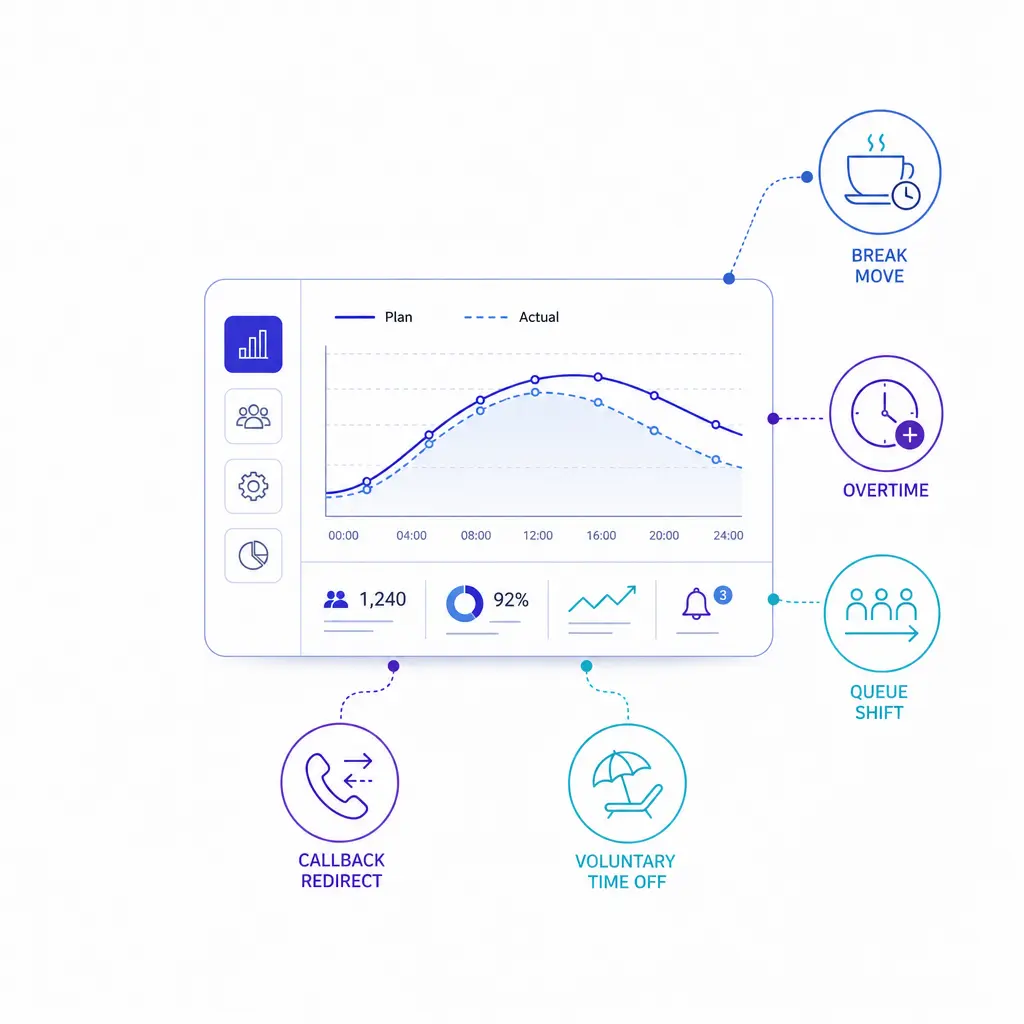
Intraday management is what keeps coverage intact when the day drifts from plan. Supervisors move breaks, offer overtime, approve voluntary time off, shift agents between queues, and reallocate capacity across voice, chat, and follow-up tasks.
Bad history produces bad forecasts. Before modeling anything, remove duplicate records, system outages, routing loops, one-time anomalies, and reporting artifacts that do not represent normal customer demand.
It also helps to keep a simple event log beside the data. If volume spiked because a campaign launched early or because a location closed unexpectedly, document it so future planners know whether to repeat that pattern or exclude it.
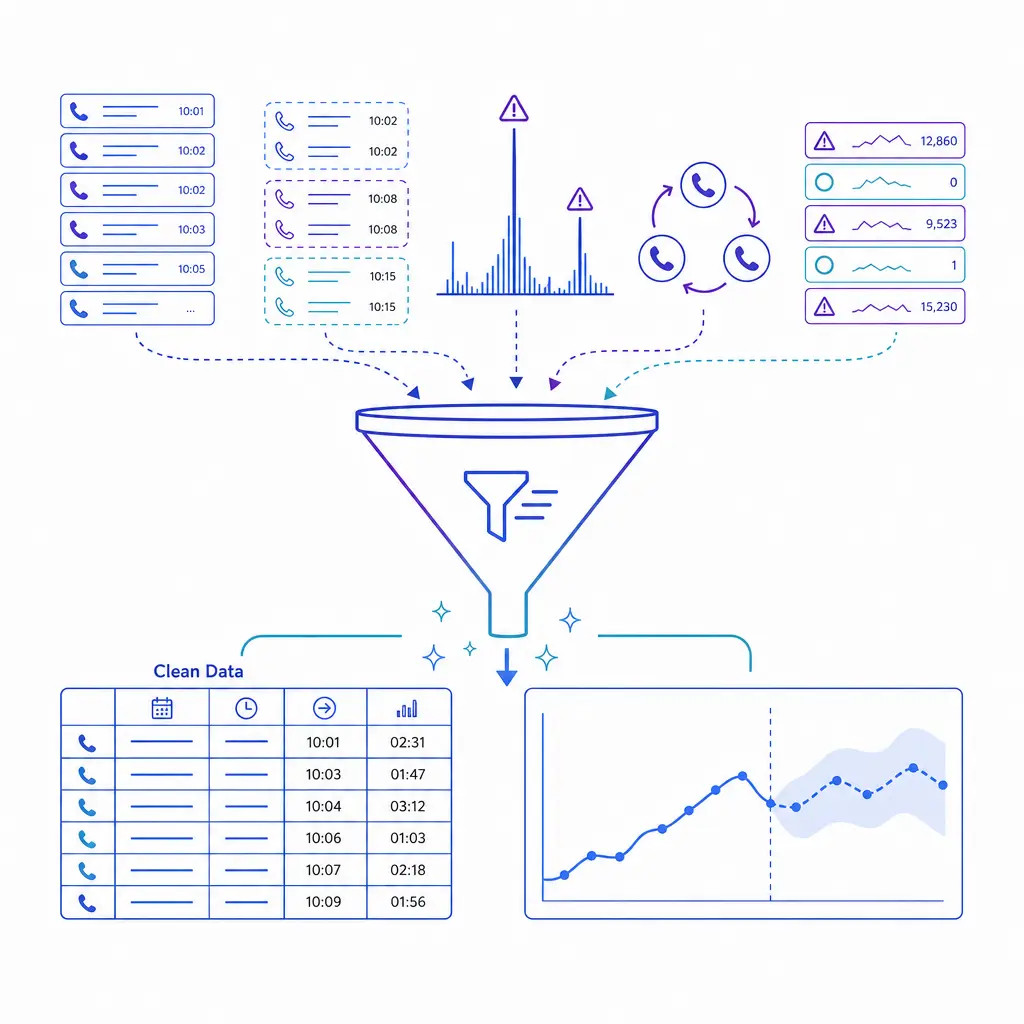
Bad history produces bad forecasts. Remove duplicate records, system outages, routing loops, and one-time anomalies before modeling, and keep a simple event log so future planners know which spikes to repeat and which to exclude.
Forecast channels separately when they consume time differently or require different service logic. Voice usually needs immediate answer capacity, chat may allow controlled concurrency, email often behaves like backlog work, and appointment-related queues can peak around confirmations, reschedules, referrals, and intake completion.
If everything is blended into one forecast, the staffing logic gets blurred. A team may look fully staffed on paper while the phone queue is falling behind because too much capacity is tied up in lower-urgency work.
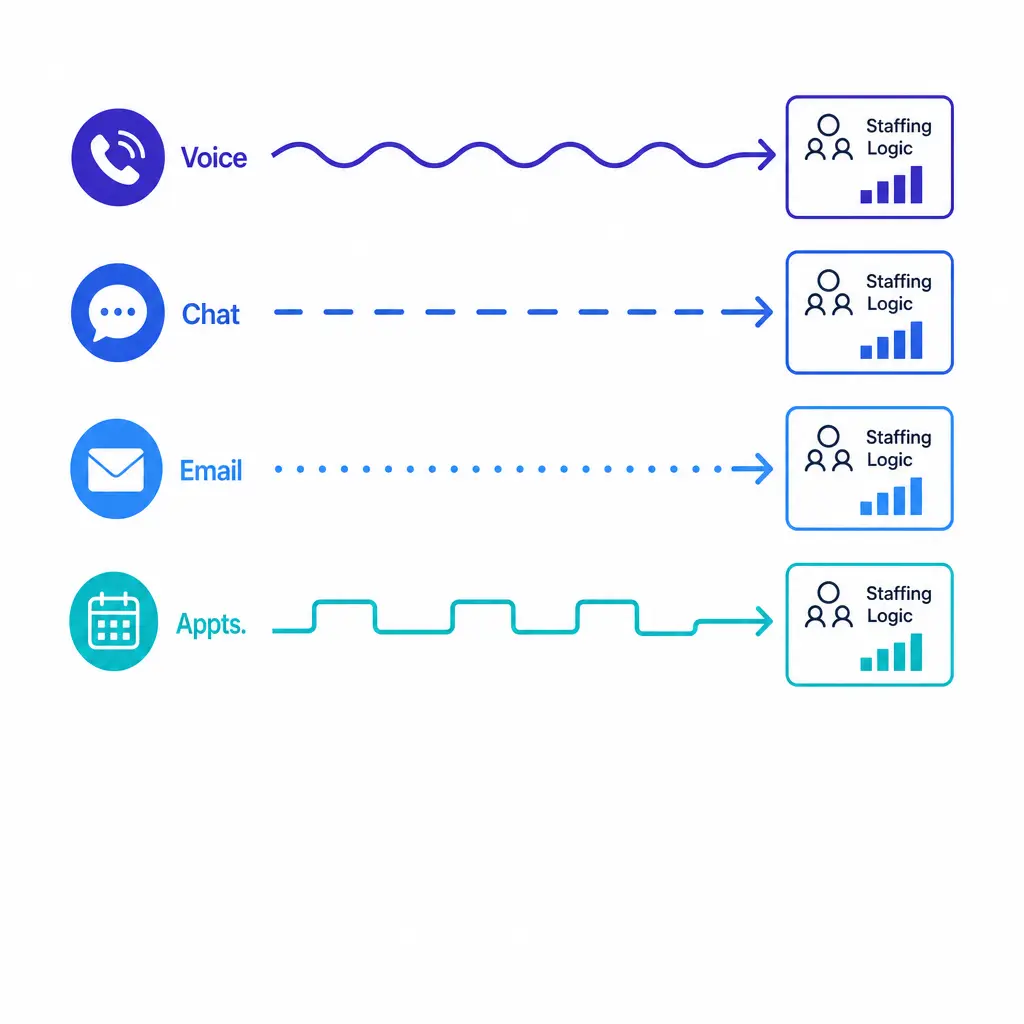
Forecast channels separately when they consume time differently. Voice needs immediate answer capacity, chat may allow controlled concurrency, email often behaves like backlog work, and appointment queues peak around confirmations, reschedules, referrals, and intake completion.
Shrinkage is the gap between paid time and actual handle-ready time. Training, QA reviews, meetings, coaching, PTO, absenteeism, system issues, and back-office work all belong here, along with spikes caused by campaigns, local events, recalls, billing cycles, or client-specific outreach.
Healthcare workflows add another layer. When protected health information is involved, access, handling, and workflow design should align with the HIPAA Security Rule, which means planners should make sure peak demand is not pushed into unprepared or unauthorized processes.
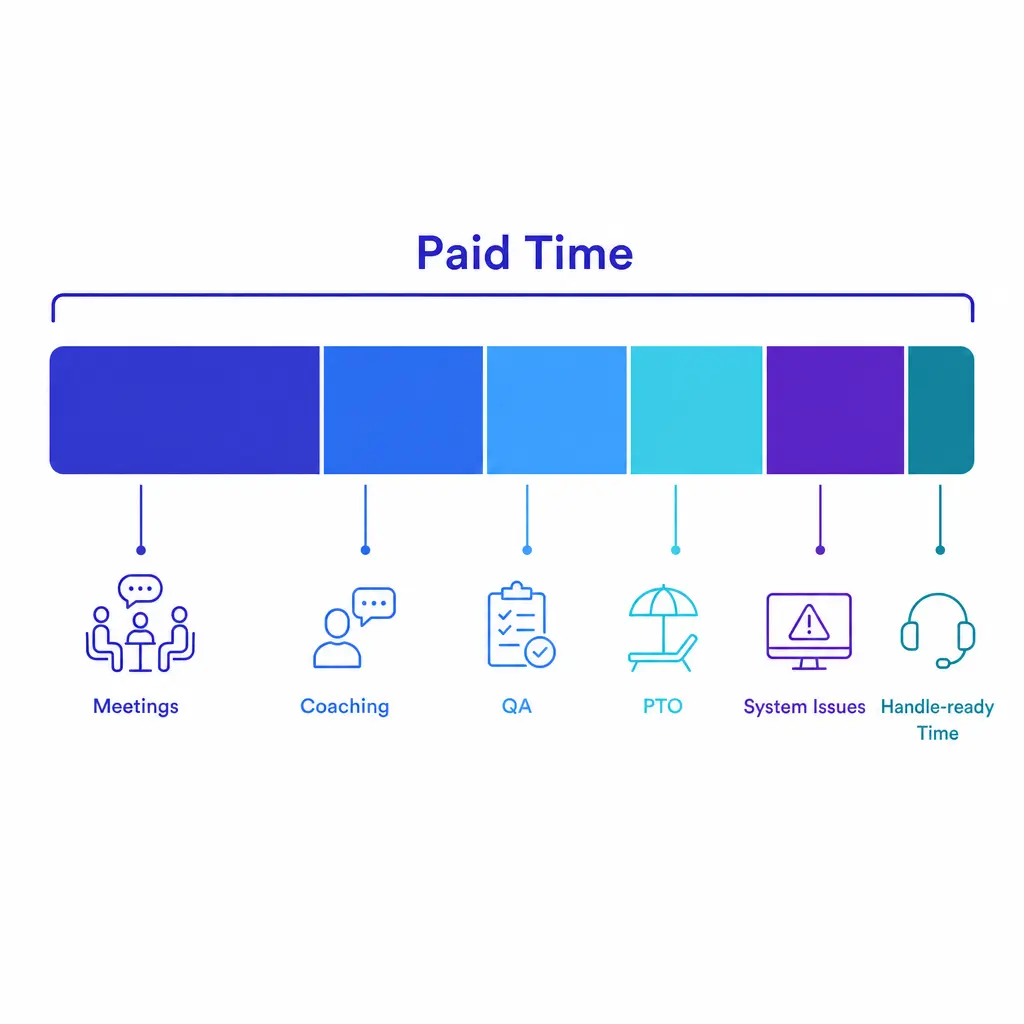
Shrinkage is the gap between paid time and handle-ready time. Training, QA reviews, meetings, coaching, PTO, absenteeism, and system issues all belong here, so paid hours should never be mistaken for available queue time.
Reliable WFM is iterative. Compare forecasted volume, average handle time, and required staff against actuals every week, then revise assumptions rather than defending a stale model.
Simple review questions help. Which intervals missed most often? Which campaigns changed contact mix? Where did handle time drift? Which shrinkage categories were consistently underestimated? Good forecasting gets better through feedback, not through bigger spreadsheets.
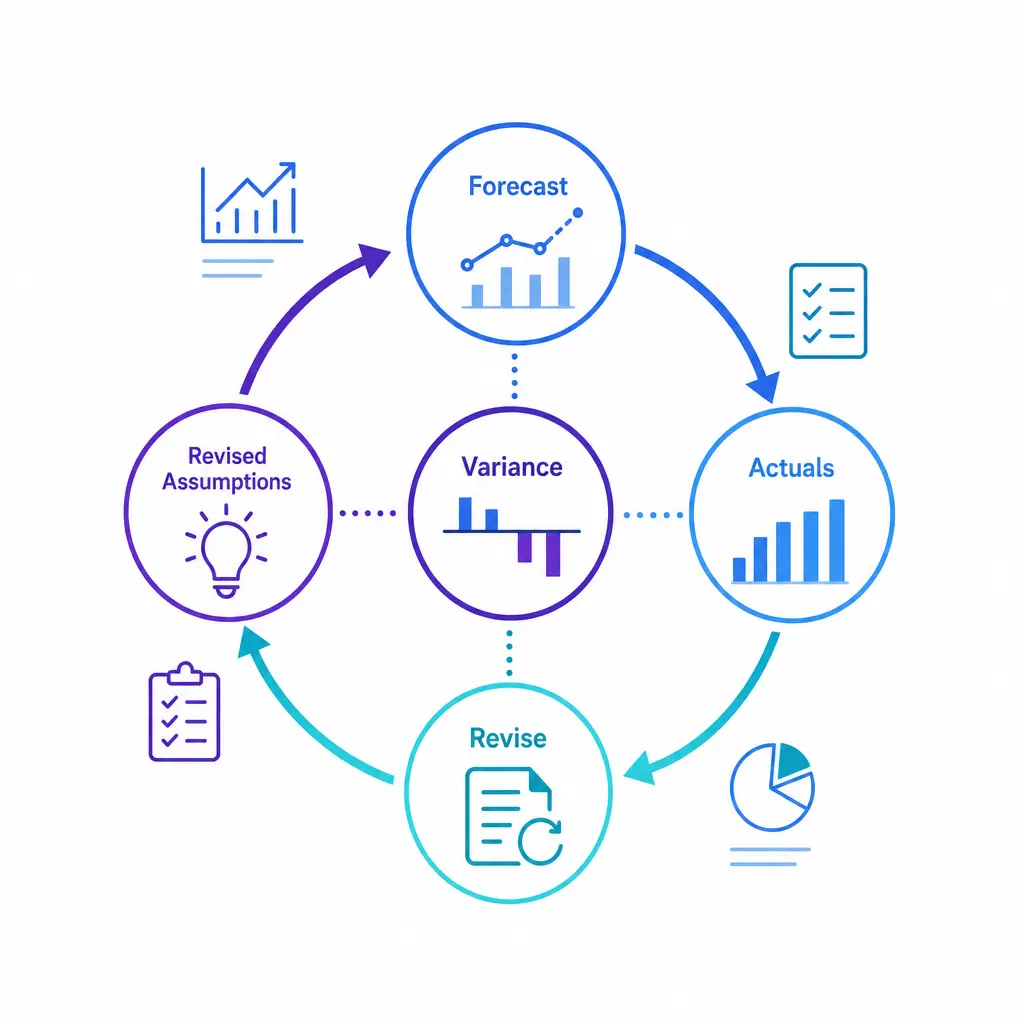
Reliable WFM is iterative. Each week, compare forecasted volume, handle time, and required staff against actuals, then revise assumptions instead of defending a stale model. Good forecasting improves through feedback, not bigger spreadsheets.
Build schedules around skill demand, not only total headcount. If only certain agents can handle legal screening, bilingual support, escalation calls, or complex appointment workflows, those skills need dedicated coverage in the intervals where they are most likely to be needed.
This is especially important in multi-location operations. One site may have enough people overall but not enough people with the right credentials, language capability, or queue experience at the busiest times.
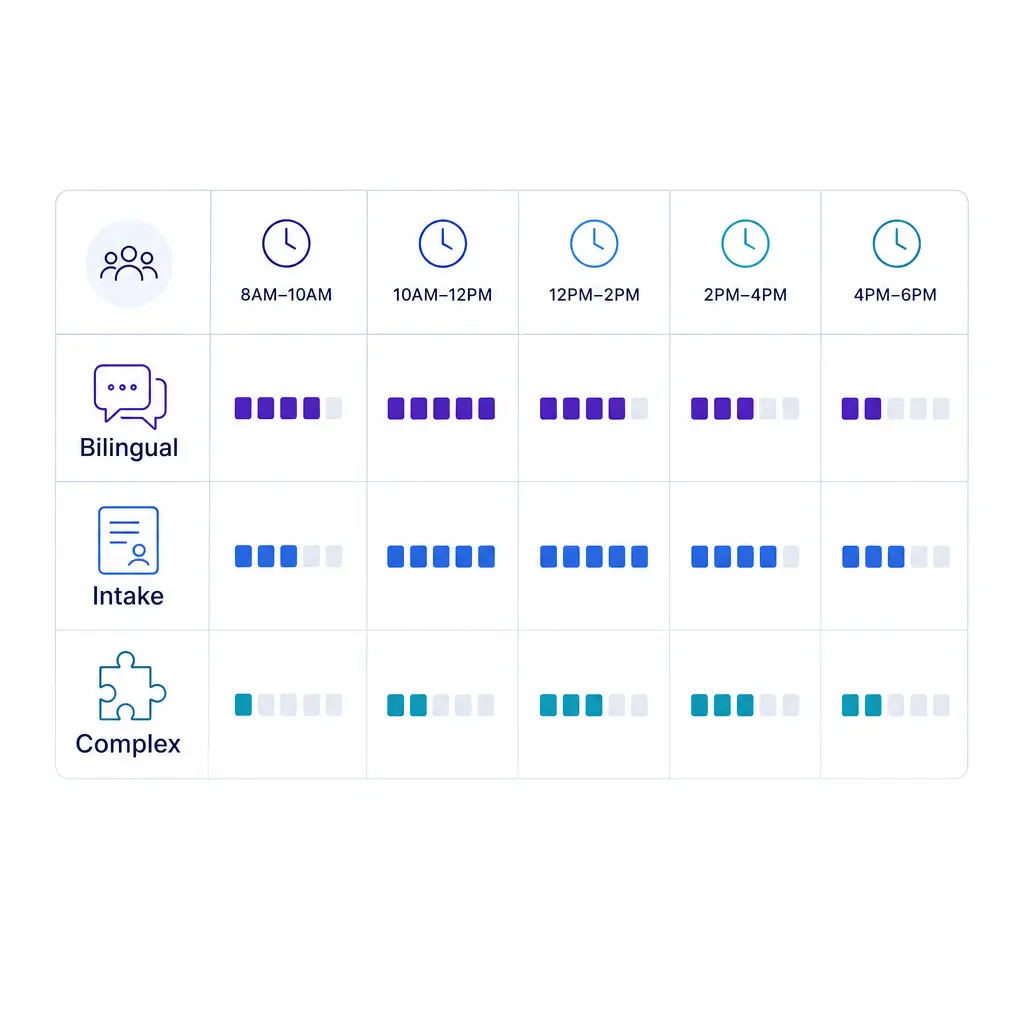
Build schedules around skill demand, not only total headcount. If only certain agents handle legal screening, bilingual support, or complex appointment workflows, those skills need dedicated coverage in the intervals where they are most likely needed.
After-hours call center scheduling should be designed intentionally, not improvised at the end of the week. Nights, weekends, holidays, and lunch-hour windows often need different staffing logic because volume may be lower while the cost of a missed contact is higher.
A practical approach is to define minimum viable coverage by queue, then layer overflow routes, callbacks, on-call support, or outsourced live answer coverage on top. That protects continuity without staffing every low-volume hour like a weekday peak.
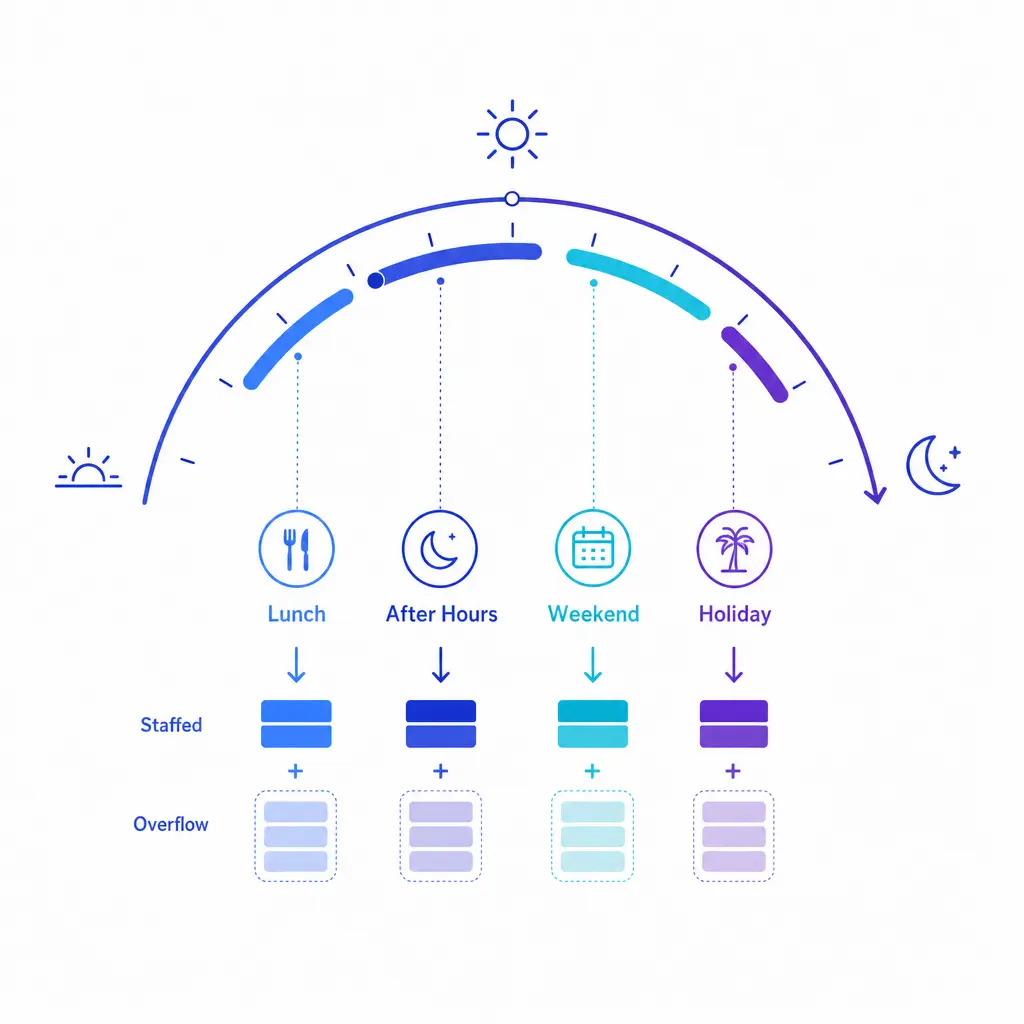
Nights, weekends, holidays, and lunch hours need intentional staffing logic. Define minimum viable coverage by queue, then layer overflow routes, callbacks, on-call support, or outsourced live answering on top to protect continuity without staffing every low-volume hour like a weekday peak.
When agents can request time off early, bid on shifts, or swap approved hours without unnecessary bottlenecks, schedule friction usually drops. The benefit is not only morale. It is fewer last-minute callouts and fewer emergency coverage scrambles.
If adherence is consistently weak, the first question should not always be discipline. In many operations, the schedule itself is too rigid, too inconsistent, or too detached from how work actually arrives.
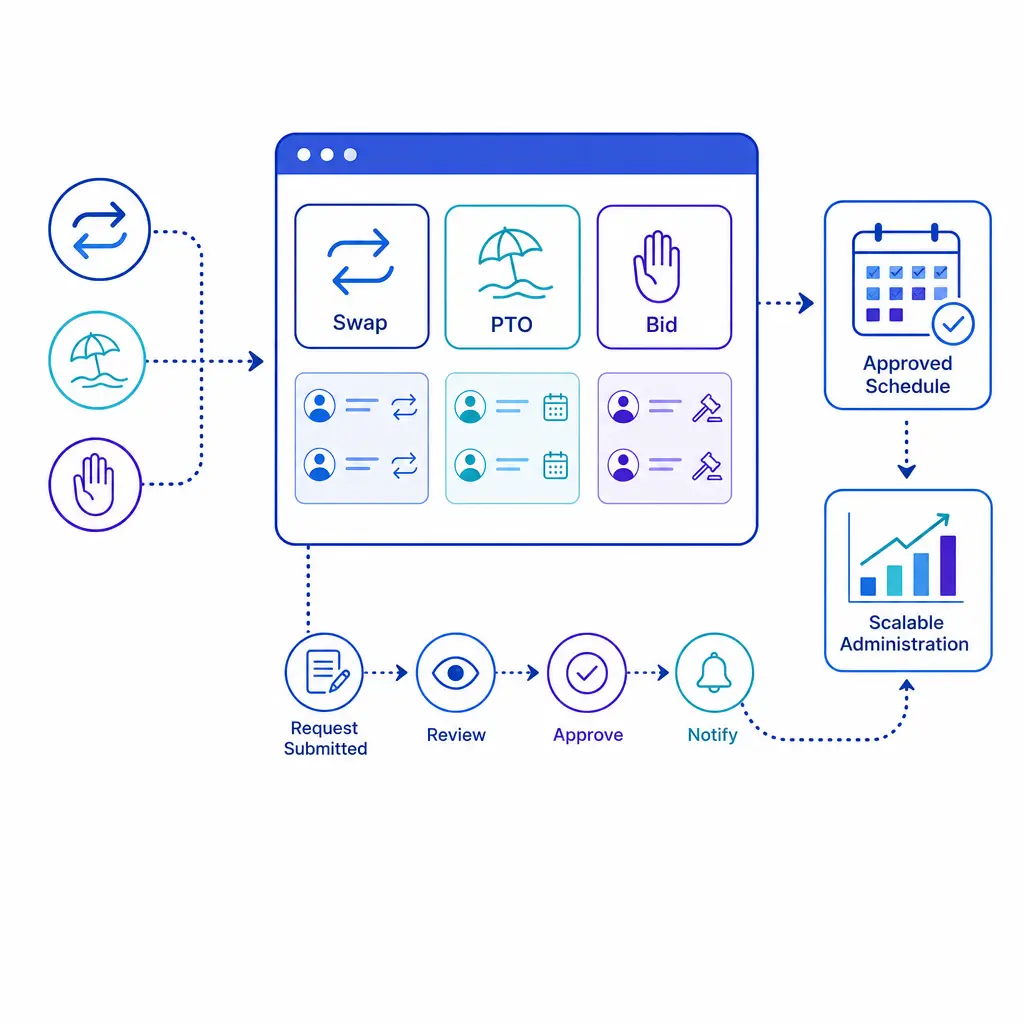
When agents can request time off early, bid on shifts, or swap approved hours through simple self-service, schedule friction drops. The result is fewer last-minute callouts and fewer emergency coverage scrambles.
Spreadsheets can work for a small, stable team with one channel and simple hours. They become fragile when you add skill routing, intraday moves, audit requirements, multi-site coverage, mobile requests, or a heavy volume of schedule exceptions.
Once complexity rises, the real test of call center scheduling software is not whether it looks polished. It is whether supervisors trust it during live operations and whether it reduces manual edits instead of creating a second system everyone works around.
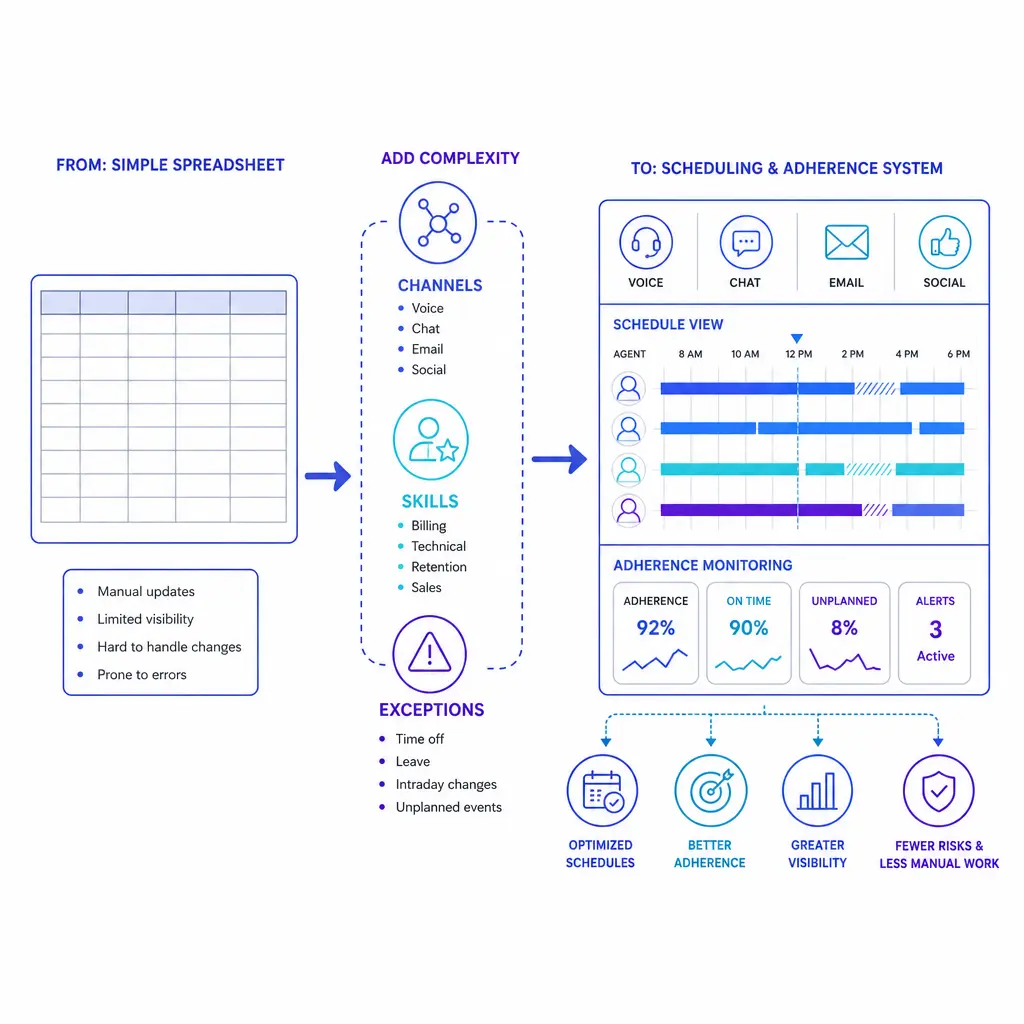
Spreadsheets work for a small, stable team with one channel and simple hours. As skill routing, multi-site coverage, audit requirements, and schedule exceptions pile up, they become fragile, and a structured platform starts to earn its place.
Reliable workforce management shows up in operating results. Core contact-center measures such as service level, average speed of answer, abandonment rate, contact handling time, and agent occupancy show whether staffing matched real demand.
WFM-specific measures explain why the result happened. Track schedule adherence, conformance, shrinkage, forecast accuracy, staffing variance by interval, overtime, backlog growth, callback volume, and agent attrition together rather than one at a time.
First-contact resolution matters too, even though it is not a pure WFM metric. A schedule that answers quickly but routes complex work to the wrong people may look efficient while creating rework, repeat contacts, and poor intake quality.
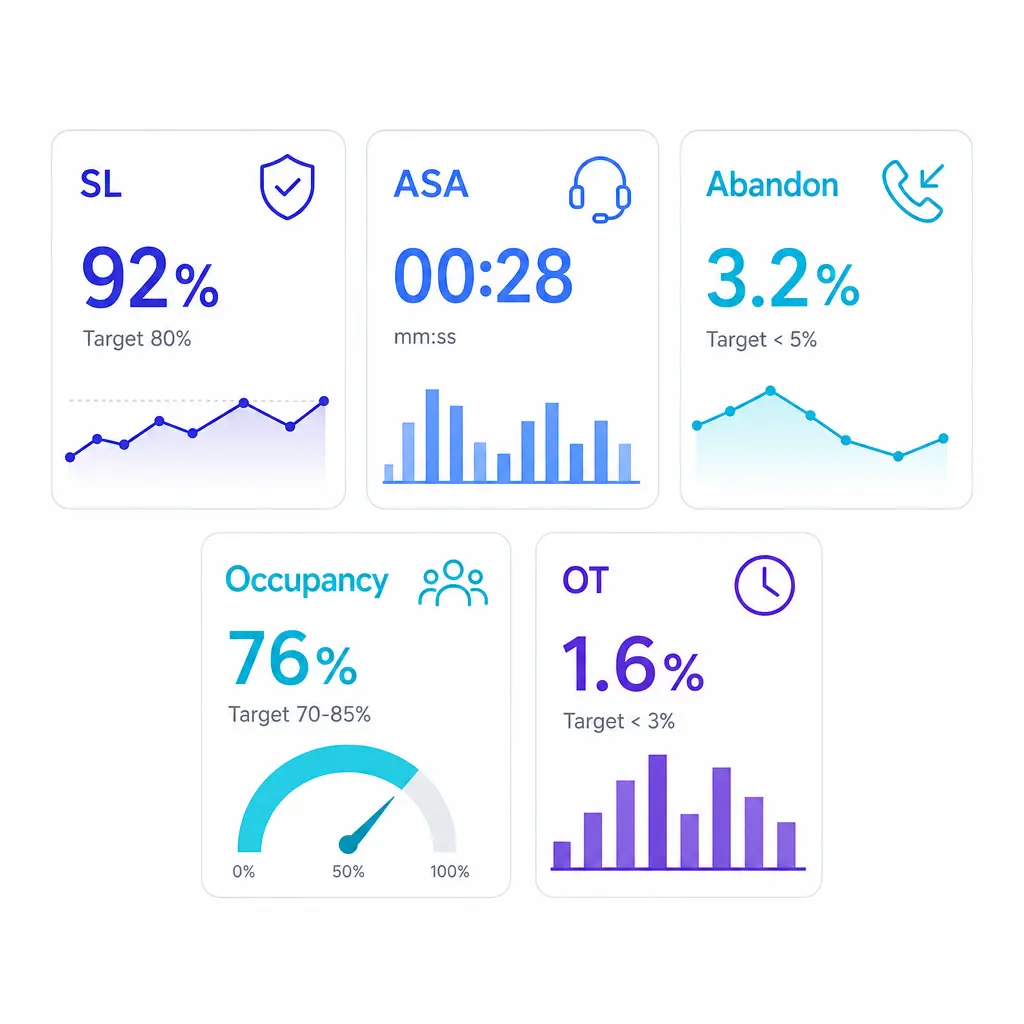
A simple dashboard tracks the core results: service level, average speed of answer, abandonment rate, occupancy, and overtime. WFM-specific measures such as adherence, shrinkage, and forecast accuracy then explain why those results happened.
What is the 80/20 rule in call centers? In most call center discussions, it refers to a service-level target of answering 80 percent of contacts within 20 seconds. It is a common benchmark, not a universal rule, so the right target depends on queue value, customer expectations, and what a delayed answer actually costs the business.
What are the three types of scheduling? In practice, most operations use fixed schedules, rotating schedules, and flexible schedules. Many teams blend them, using fixed patterns for core coverage and flexible patterns for peak intervals, part-time staffing, or after-hours work.

The 80/20 benchmark means answering 80 percent of contacts within 20 seconds. It is a common planning target, not a universal rule, so the right goal depends on queue value, customer expectations, and what a delayed answer costs.

Common WFM mistakes include treating it as software only, planning from daily averages, ignoring shrinkage, overfocusing on adherence, combining unlike workloads, and assuming after-hours volume is easy to cover. Weak inputs and unclear rules still produce weak schedules.
Whether you call it call center workforce management software, contact center workforce management software, or call center WFM, the buying question is the same: does the system help operators plan better and respond faster? The most useful platforms support omnichannel forecasting, schedule generation, real-time adherence, intraday controls, reporting, auditability, and integrations with ACD, CRM, ticketing, QA, and appointment systems.
Mobile self-service is also more important than it sounds. When agents can view schedules, request PTO, or submit swap requests without creating supervisor bottlenecks, schedule administration becomes more scalable.
What is the best WFM software for call centers? There is no single best option for every operation. The right choice is the one that fits your channel mix, coverage hours, skill complexity, integration needs, reporting expectations, and the way your supervisors actually run the floor.
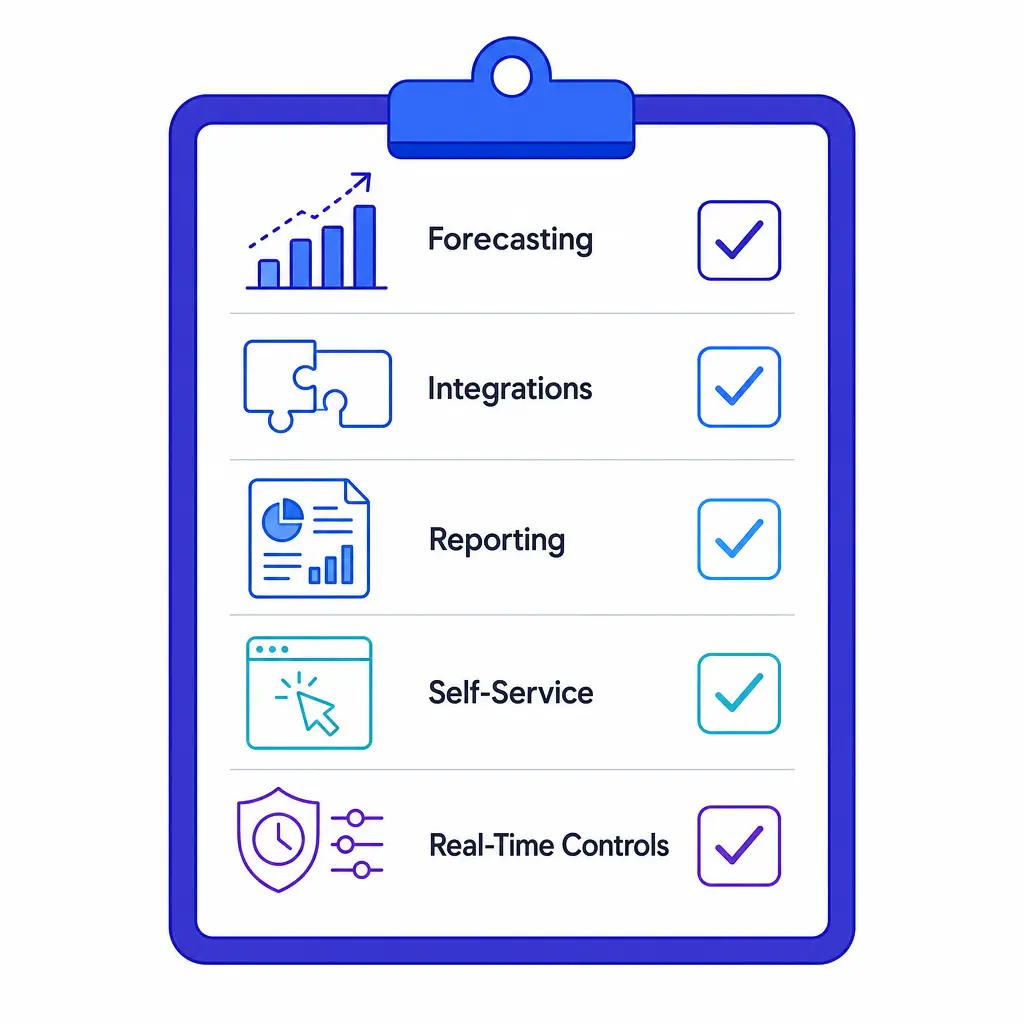
When evaluating software, look for omnichannel forecasting, schedule generation, real-time adherence, intraday controls, reporting, auditability, and integrations with ACD, CRM, ticketing, QA, and appointment systems, plus mobile self-service that reduces supervisor bottlenecks.
If the answers are simple, lightweight tools may be enough. If they are not, evaluate software and staffing design together so you do not automate a broken operating model.
Not every coverage problem should be solved with more in-house headcount. For overflow, lunches, after-hours windows, weekends, holidays, or unpredictable intake surges, Go Answer can provide a complementary layer for live answering, bilingual support, live chat, and appointment scheduling so your core team does not have to absorb every spike alone.
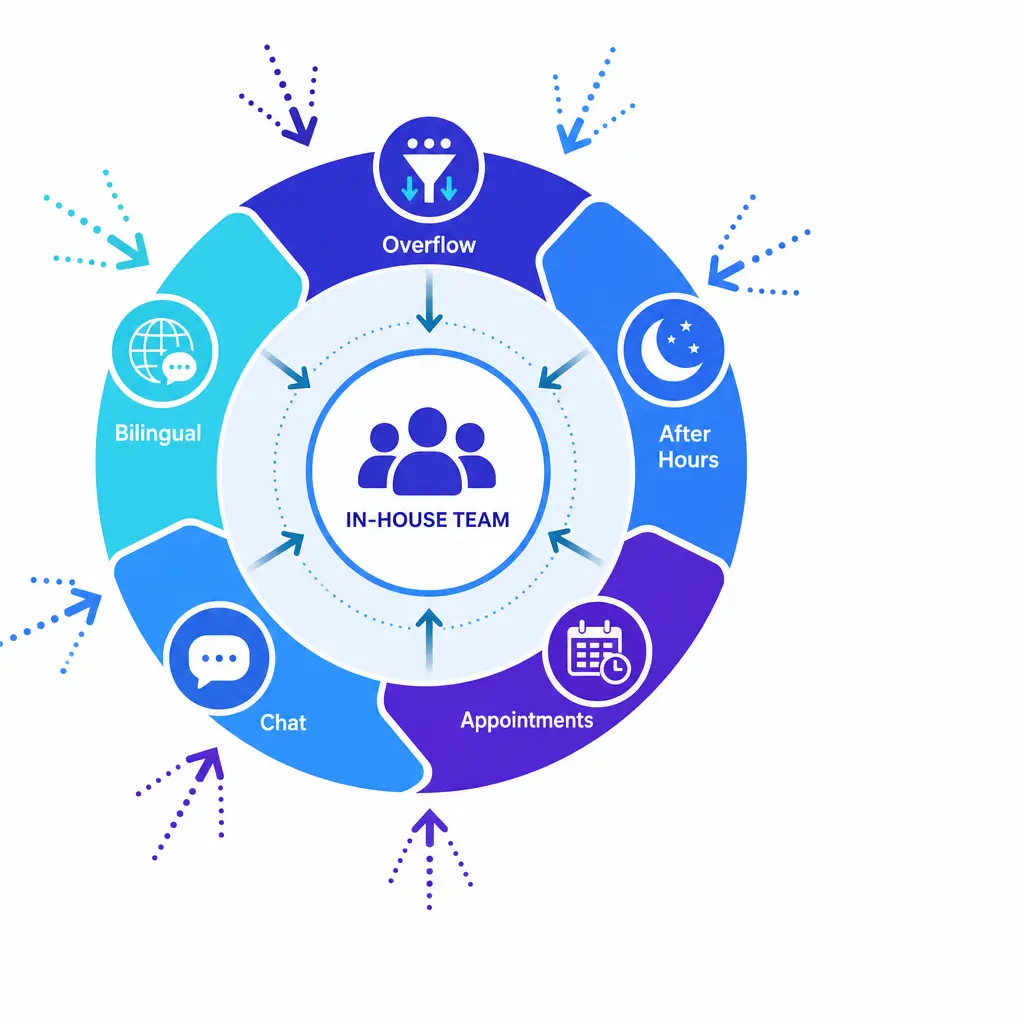
An outsourced layer can absorb overflow, after-hours, bilingual, live chat, and appointment demand, so your core team does not have to absorb every spike alone. It complements internal staffing instead of adding more in-house headcount.
This is especially useful when the cost of a missed contact is high. A plaintiff lead that goes to voicemail, a patient call that waits too long, or a service request that sits overnight can create revenue leakage, intake loss, or a poor customer experience that standard schedules do not fully protect against.
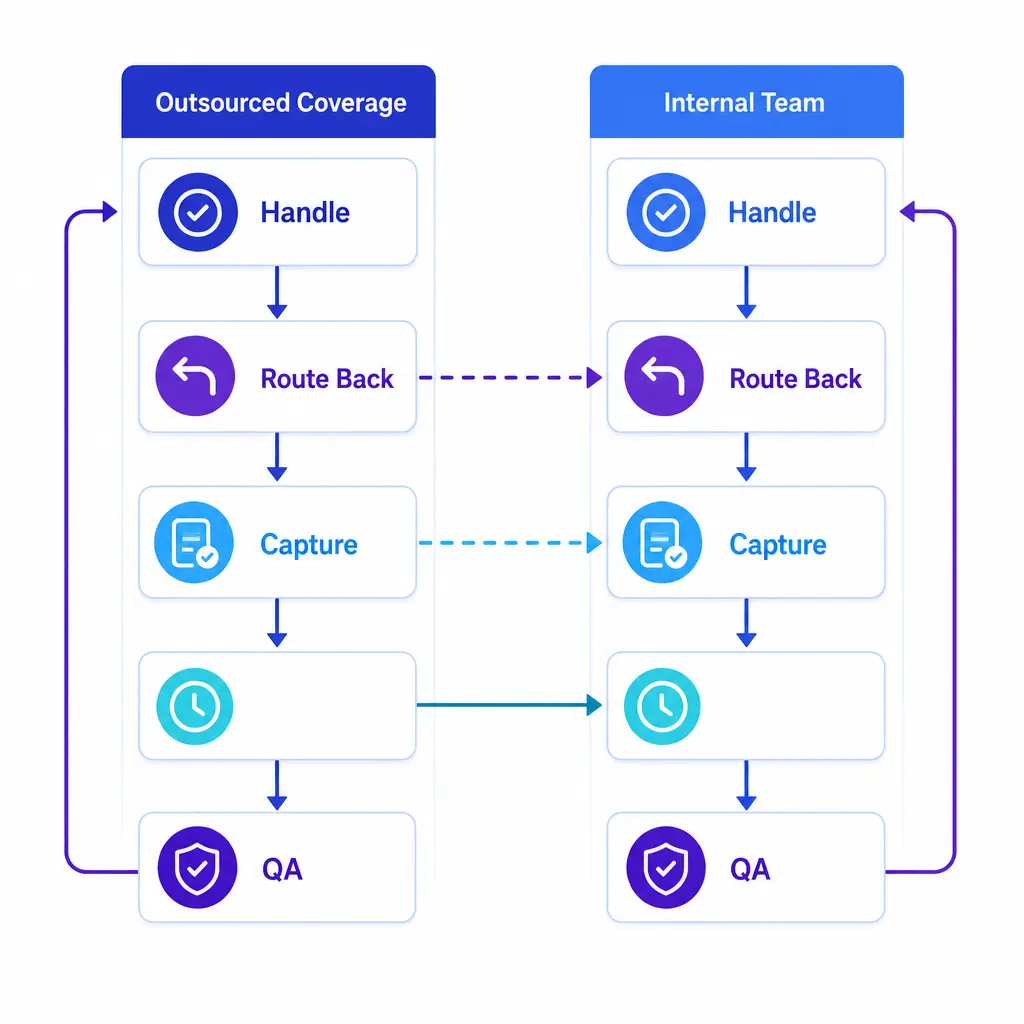
Outsourced coverage works best when the handoff is explicit. Define which contacts are fully handled, which are routed back, what information must be captured, what service-level agreements apply, and how quality assurance feedback moves between teams.
Start with a short action plan: audit the last four to eight weeks of interval volume, handle time, and shrinkage, separate channel workloads, find the three weakest intervals or skill groups, and write an intraday playbook for break moves, overtime, and callbacks.
It is the operating discipline of forecasting contact demand, converting that demand into staffing requirements, building schedules, and managing adherence and intraday changes so the right people are available at the right time.
The best option is the one that fits your operation. Evaluate forecasting quality, scheduling flexibility, real-time visibility, integrations, reporting, self-service, and how well the tool handles your channel mix and skill complexity.
Most teams use fixed, rotating, and flexible schedules. Many operations combine them, using fixed patterns for core coverage and flexible patterns for peak periods, part-time staffing, or after-hours support.
It usually means a target of answering 80 percent of contacts within 20 seconds. It is widely used as a planning benchmark, but it is not automatically the right target for every queue.
When actual agent availability falls below the schedule in key intervals, answer speed and abandonment usually worsen quickly. Strong adherence keeps the staffing plan intact, but it only helps if the original forecast and schedule were realistic.
If your team needs more reliable overflow, after-hours, bilingual, live chat, or appointment scheduling coverage, Request Pricing or Book a Discovery Call with Go Answer. You can also talk to a specialist to see how it works, view use cases, or explore enterprise BPO options that reduce coverage risk without overbuilding internal schedules.

Learn why thousands of companies rely on Go Answer.
Try us risk-free for 14 days!
Enjoy our risk-free trial for 14 days or 200 minutes, whichever comes first.
Have more questions? Call us at 888-462-6793
Learn why thousands of companies rely on Go Answer.
Have more questions? Call us at 888-462-6793
If you would like to get in contact with a Go Answer representative please give us a call, chat or email.

Thanks for your interest!
A representative will be reaching out to you shortly.
Have more questions? call us on 888-462-6793
