
What Is Outsourcing? Types, Examples, and How Companies Decide What to Outsource
By Eddie FieldsLast modified: January 5, 2027
Voted Top Call Center for 2024 by Forbes
Virtual Receptionists
Save time and money with our virtual receptionists.
AI Receptionist
AI-powered receptionist that answers, routes, and qualifies calls 24/7.
Enterprise Solutions
Solutions designed to scale with your organization’s needs.
Legal Services
Our virtual legal receptionists are experts in legal intake.
Last modified: January 5, 2027
Outsourcing is using a third-party company to perform a business task, function, or process instead of building that capacity entirely with your own employees or direct contractors. It is different from offshoring, which means moving work to another country; outsourced work can stay local, regional, or global.
This guide is for operations leaders, practice administrators, legal intake teams, healthcare organizations, and multi-location service businesses that need dependable coverage without expanding fixed overhead too quickly. You will learn the outsourcing definition in plain English, the main types of outsourcing, practical outsourcing examples, the difference between insourcing vs outsourcing, and a simple framework for deciding what should stay in-house.
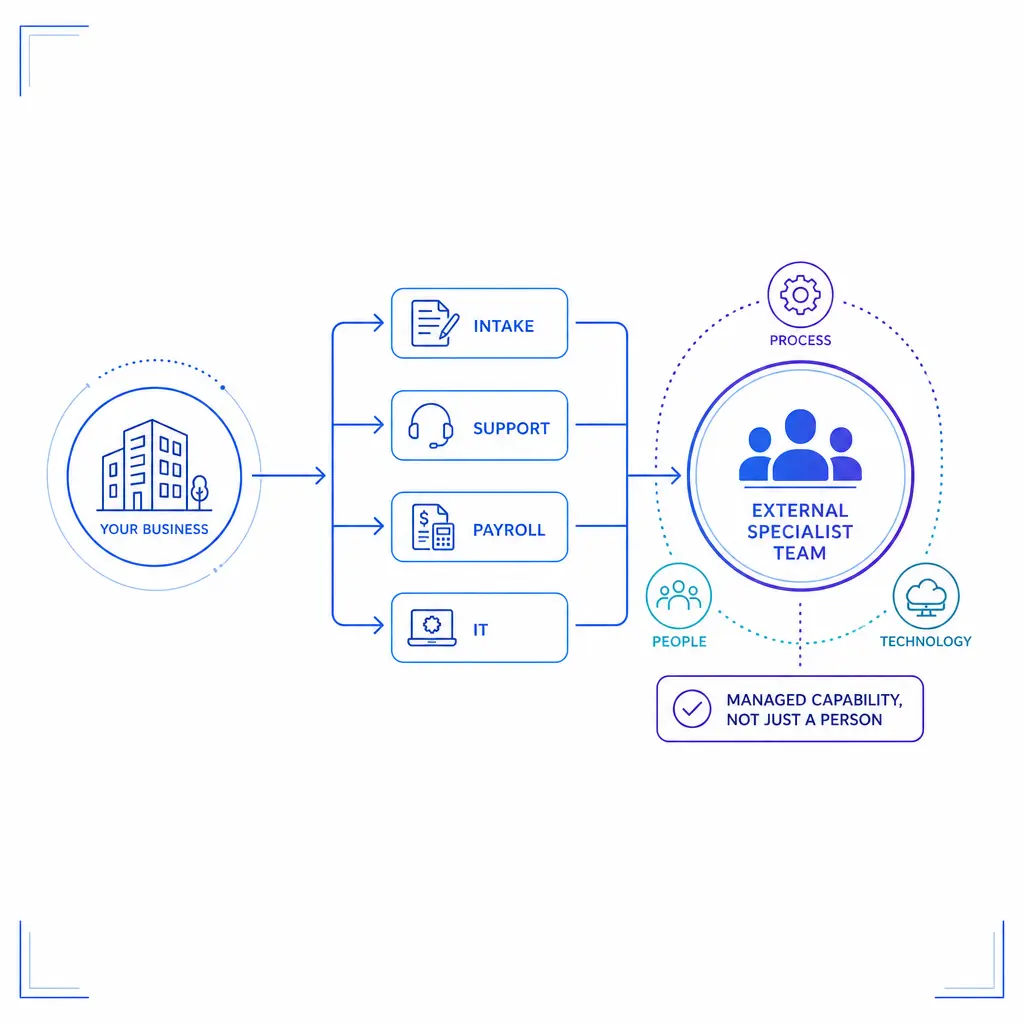
At its core, outsourcing means sending a defined piece of work to an outside provider while your team keeps ownership of strategy, standards, and results. It can be local, regional, or global, and it works best when the task is clear, measurable, and well managed.
In simple words, outsourcing means handing a defined piece of work to an outside specialist rather than staffing, training, and managing that work entirely inside your company. You still decide what good looks like. The provider helps you deliver it with people, process, and often technology.
A useful way to think about what is outsourcing in business is this: you are not buying a person alone. You are buying a managed capability. That capability might be after-hours phone coverage, overflow intake, payroll processing, recruiting support, software development, or a broader business process.
The basic process is straightforward. First, define the work clearly. Then set requirements, choose a provider, onboard the workflow, and measure results against agreed standards.
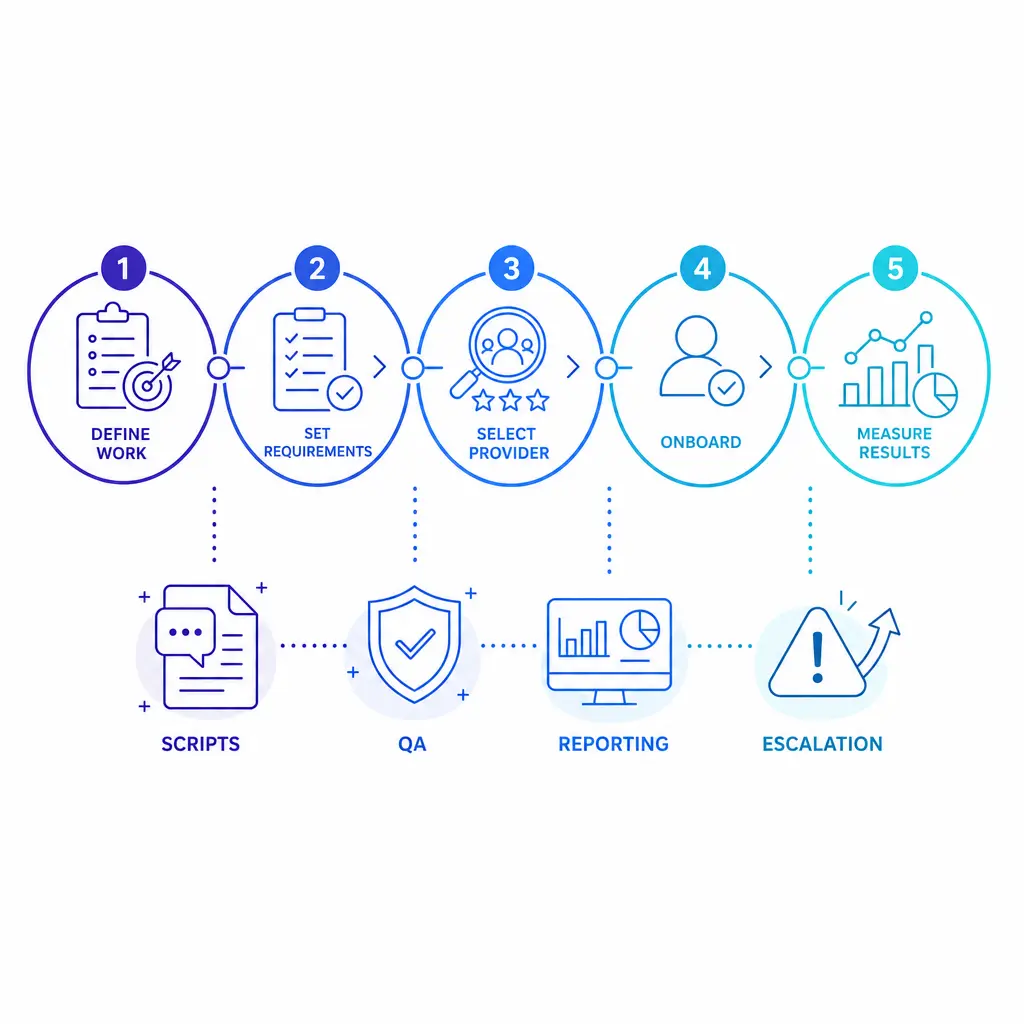
Every outsourcing program follows the same arc: define the work, set requirements, choose a provider, onboard the workflow, and measure results against agreed standards. Clear scope up front is what makes the later steps predictable.
What stays with your company is just as important as what moves out. You still own the strategy, customer promise, process design, approval rules, and the vendor relationship itself. Outsourcing transfers execution of defined work, not accountability for the outcome.
That is why strong outsourcing programs treat the provider as an extension of operations, not a black box. Internal owners still review reporting, update scripts, resolve edge cases, and make sure the outsourced workflow matches the business as it changes.
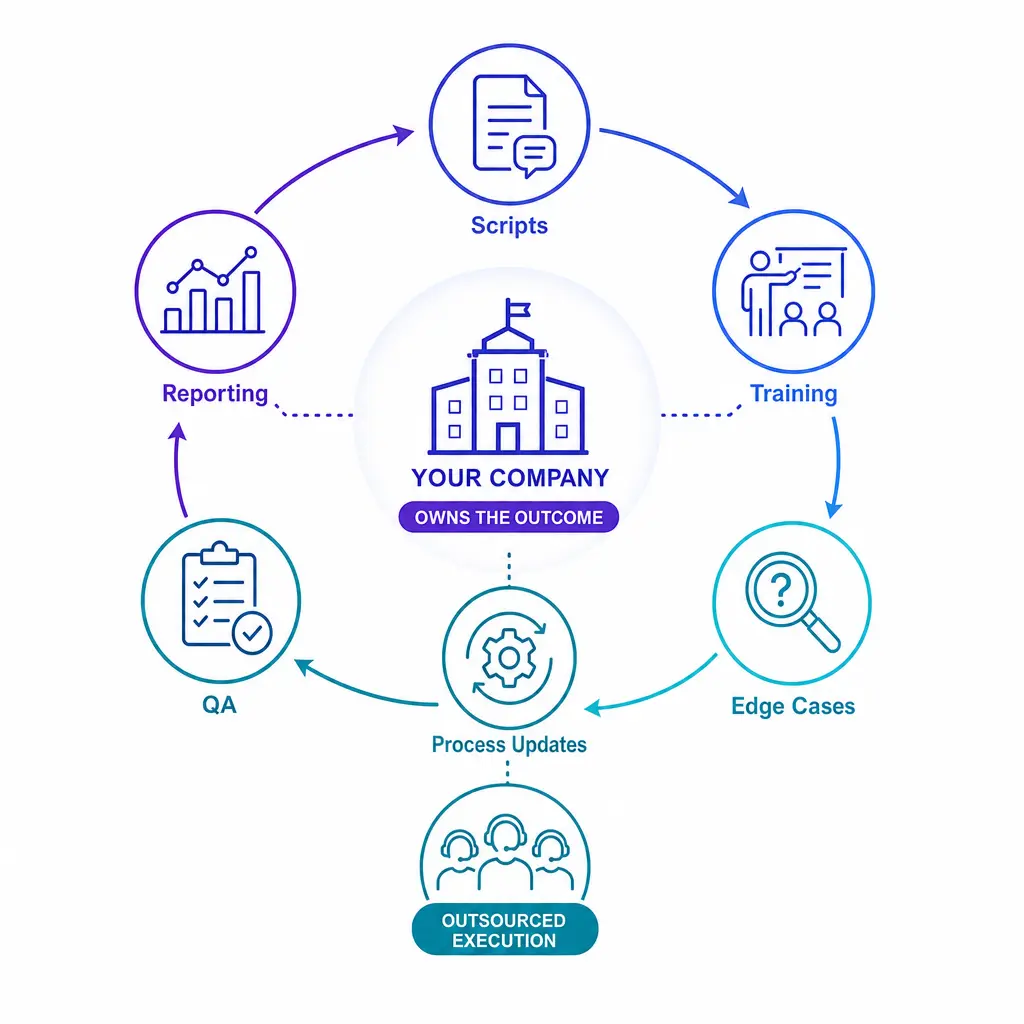
Go-live is the start of the work, not the finish. Internal owners keep reviewing reporting, updating scripts, resolving edge cases, and checking QA so the outsourced workflow keeps pace as the business changes.
Location-based models are the simplest way to classify types of outsourcing. Onshore outsourcing usually makes collaboration easier and may simplify language, regulatory, and customer experience needs. Nearshore outsourcing often balances cost and time-zone alignment. Offshore outsourcing can expand capacity and provide overnight or 24/7 coverage. Onsite outsourcing is useful when the work requires deep process immersion, physical access, or close in-person coordination.
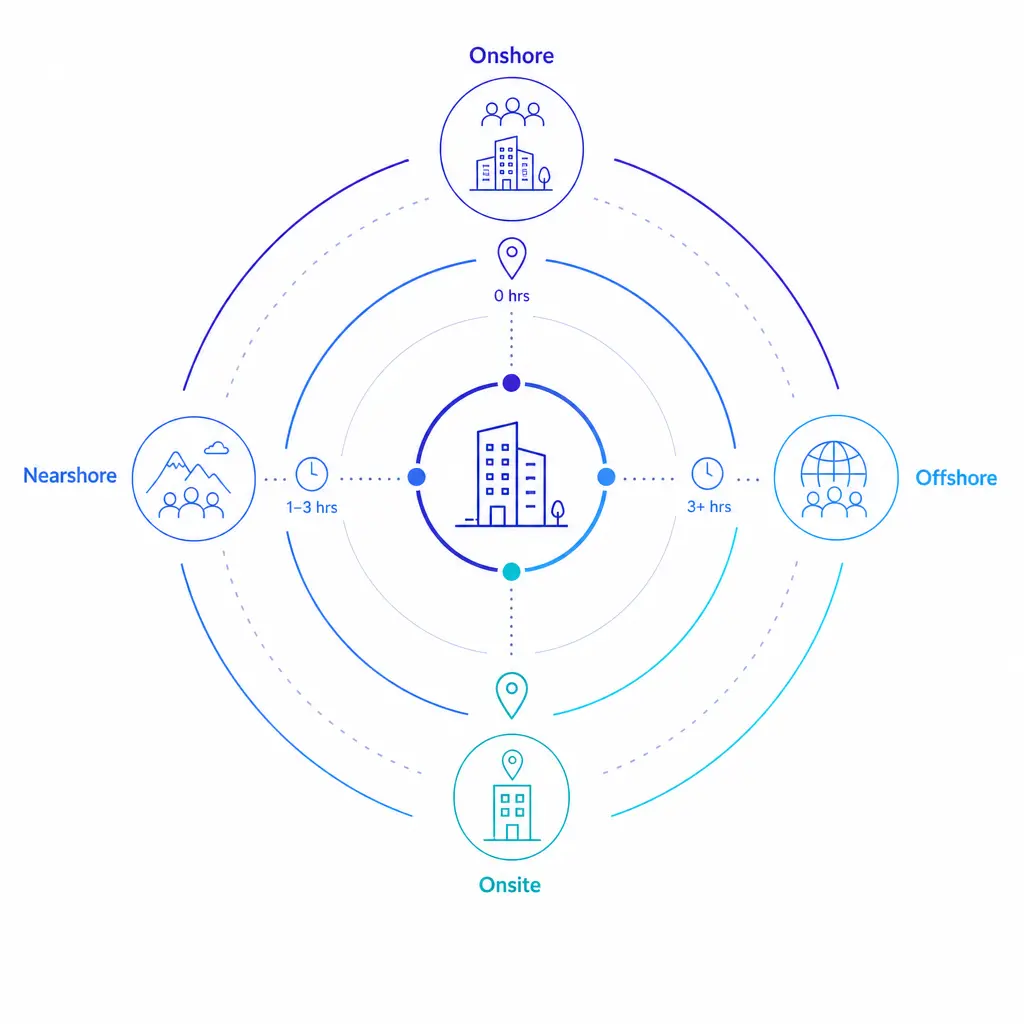
Location is a trade-off, not a ranking. Onshore simplifies collaboration, nearshore balances cost with time-zone overlap, offshore expands capacity and overnight coverage, and onsite suits work that needs close in-person coordination.
When companies outsource repeatable operational work such as customer care, order handling, back-office administration, or intake, it is commonly called business process outsourcing, or BPO. Other functions can be outsourced too, including IT support, finance, HR administration, recruiting, logistics coordination, data processing, and specialized research.
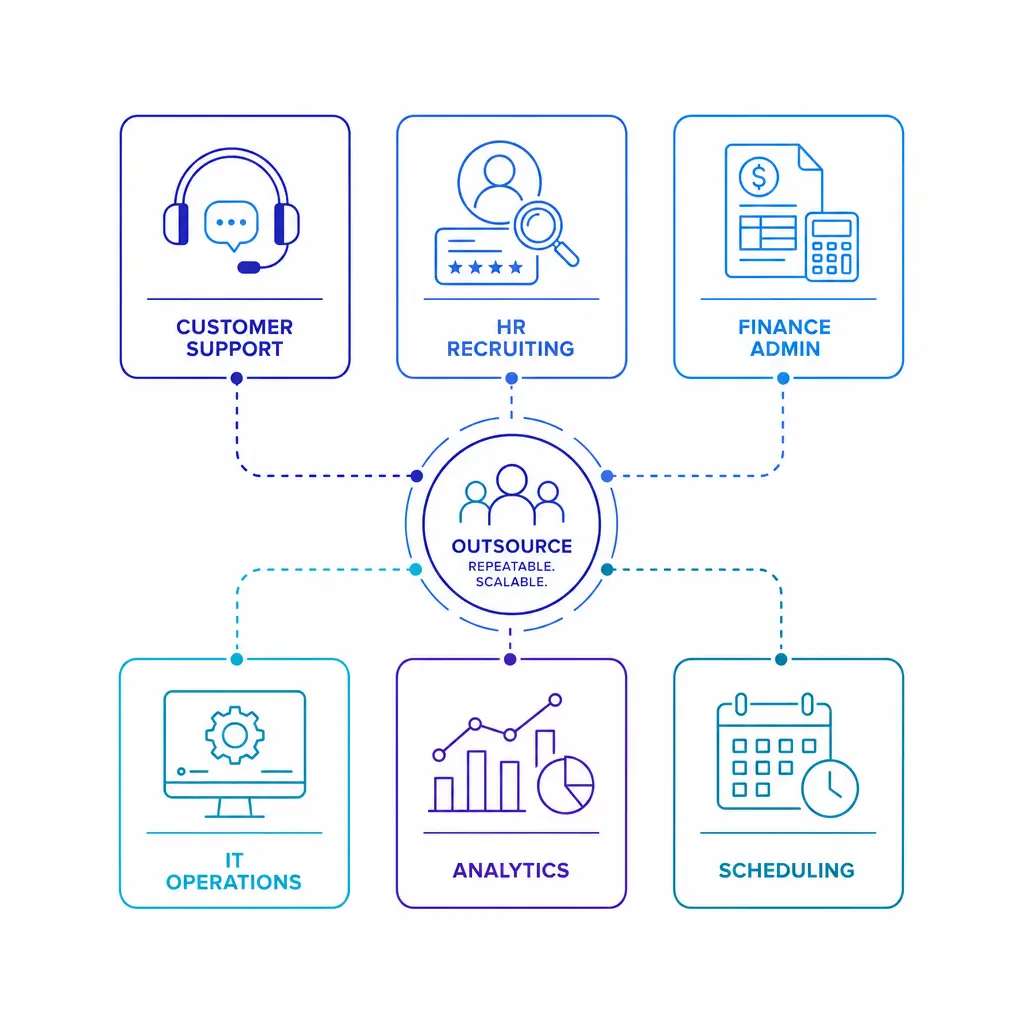
Repeatable operational work is usually called business process outsourcing, or BPO. Support, HR, finance, IT, and specialized research are the most common functions, and the best candidates are tasks that are measurable, documented, and not unique to your brand.
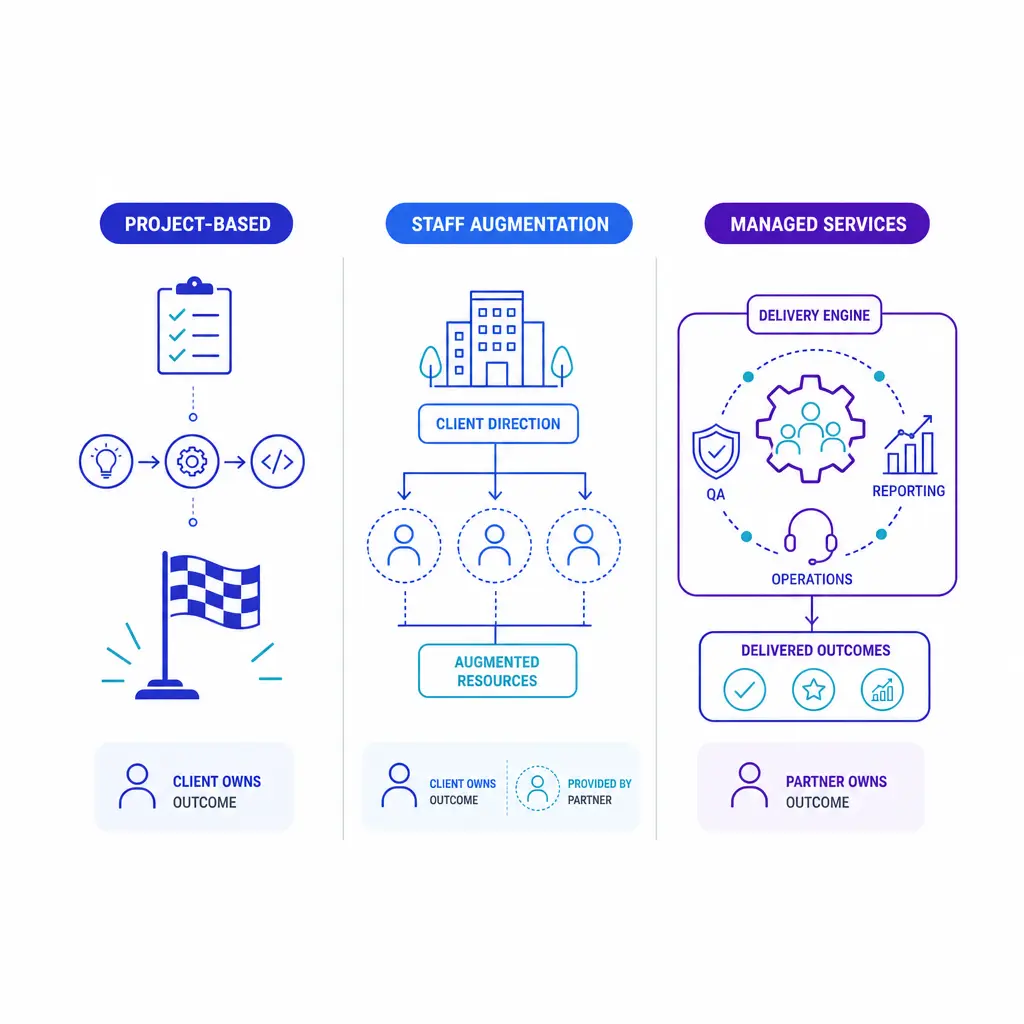
Companies also choose between different delivery models. A project-based engagement is best for a defined beginning and end, such as a software build, data cleanup, or seasonal backlog. Staff augmentation adds outside people under your direction when you need more hands but want to keep direct day-to-day control.
Managed services is the most complete form of outsourcing. In that model, the provider owns staffing, scheduling, supervision, training, QA, and day-to-day delivery against targets you define. For high-volume functions like answering, intake, or support coverage, managed services often creates the clearest accountability.
Customer support is one of the clearest outsourcing examples because the work is continuous, measurable, and volume-sensitive. A home services brand might outsource after-hours answering so no lead is missed at night. A legal marketing team might outsource intake overflow during campaign spikes. A clinic might use an external team for appointment scheduling and message capture outside normal front-desk hours.
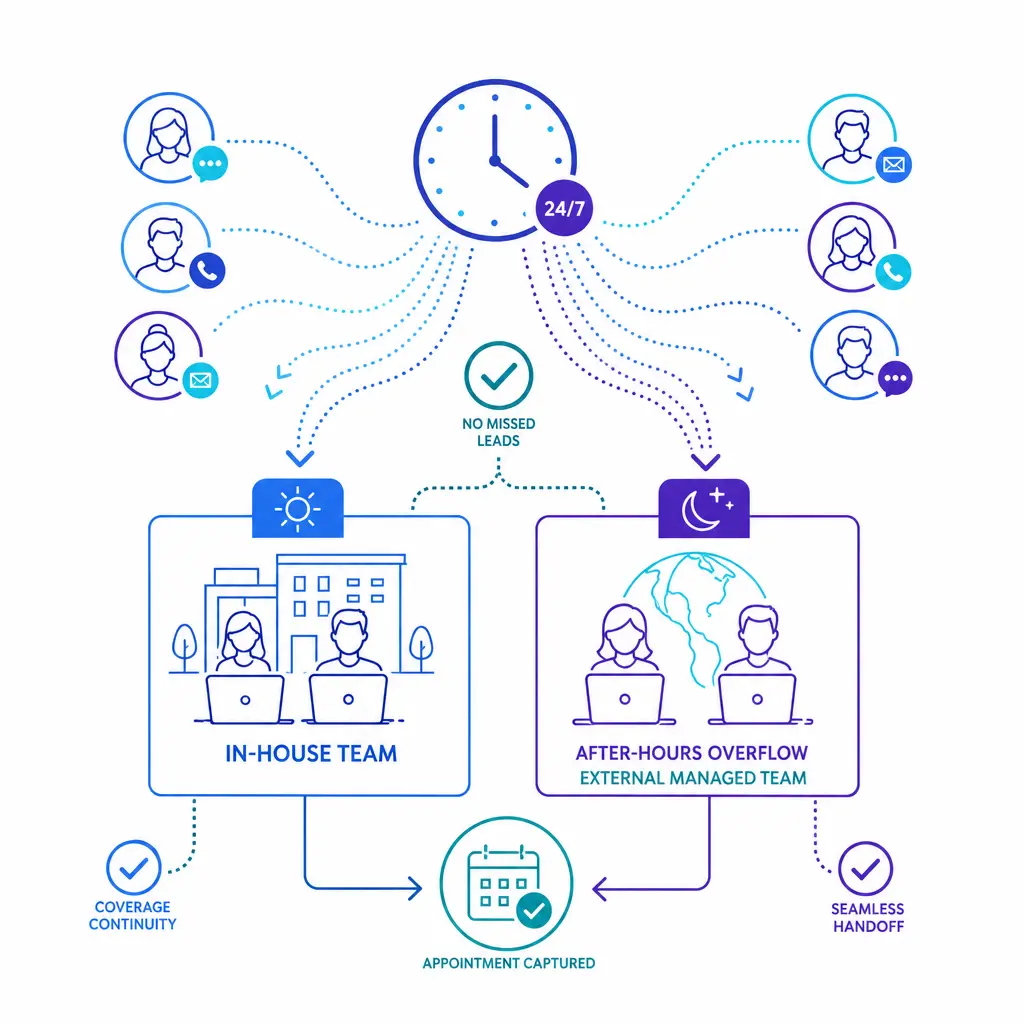
Customer support shows outsourcing at its clearest. Calls that arrive after hours or during campaign spikes move to an external team that answers, captures the lead, and schedules the next step, so no inquiry waits until morning.
Back-office work is another common fit. A growing company may use an outside provider for bookkeeping, payroll support, recruiting coordination, or insurance verification because those tasks matter, but they do not always require a full internal department at every stage of growth.
IT functions are frequently outsourced when demand changes faster than the internal team can scale. Examples include help desk coverage, patching, cloud administration, software QA, or project-based development. Manufacturing and logistics can also be outsourced when the company wants more capacity without building another facility or warehouse operation.
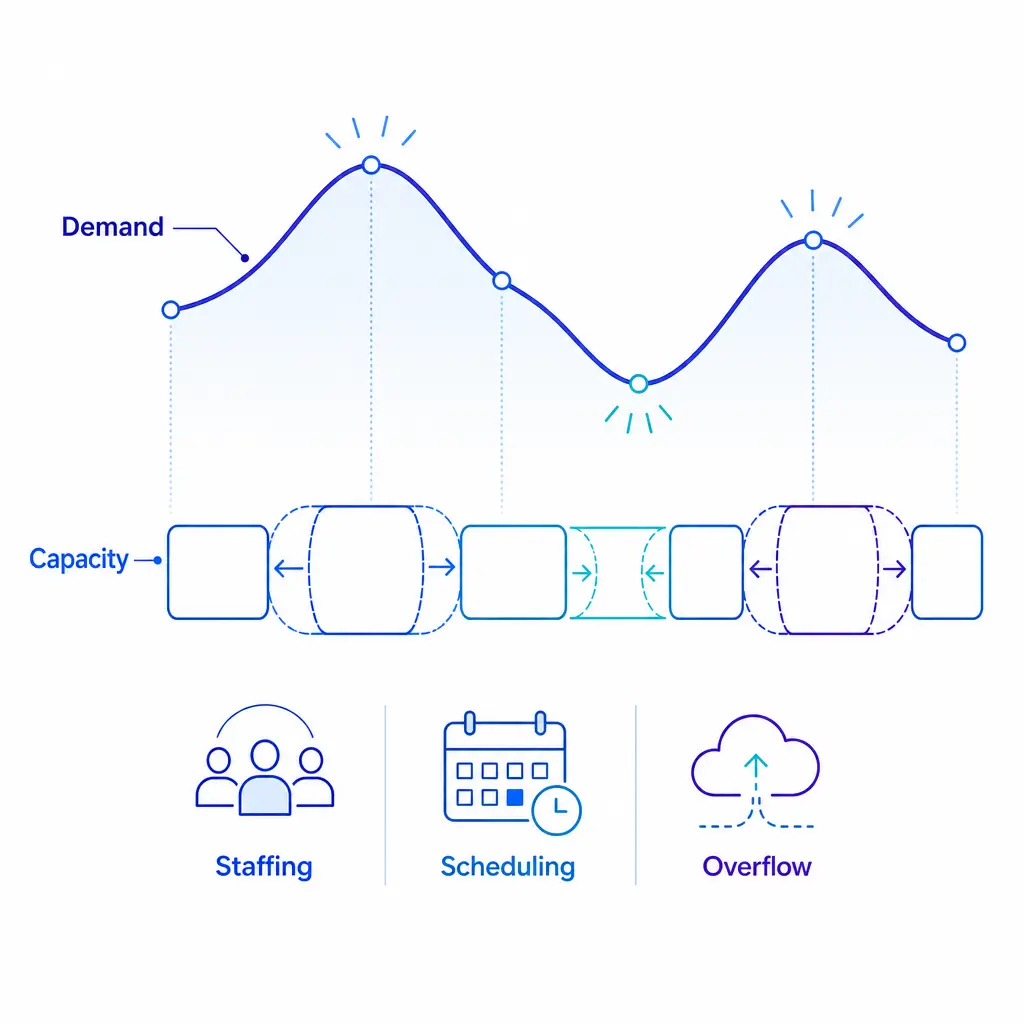
Demand rarely stays flat. Outsourced capacity can expand for seasonal peaks and campaign spikes, then contract when volume falls, which avoids the cost of full-time staffing sized for the busiest week of the year.
The first reason is cost structure. Outsourcing can turn part of a fixed staffing expense into a variable operating expense, which is helpful when demand changes week to week or season to season. It can also reduce the hidden cost of recruiting, scheduling, supervision, absentee coverage, and technology for non-core functions.
The second reason is access to specialized expertise. Many companies do not need to build every process from scratch if a provider already has trained staff, quality assurance routines, reporting practices, and workflow technology in place. That matters when speed to execution is more valuable than building an internal team slowly.
The third reason is scalability. Outsourcing can give the business a way to extend hours, add overflow coverage, support multiple locations, or stand up a new process without waiting for a full hiring cycle. This is especially useful for inbound-heavy operations where missed calls, delayed responses, and inconsistent intake directly affect revenue.
The fourth reason is focus. Leadership teams usually get the most leverage by keeping their best people on strategy, customer relationships, service quality, and the work that differentiates the business. Outsourcing makes more sense when the process is important but not unique enough to justify constant internal attention.
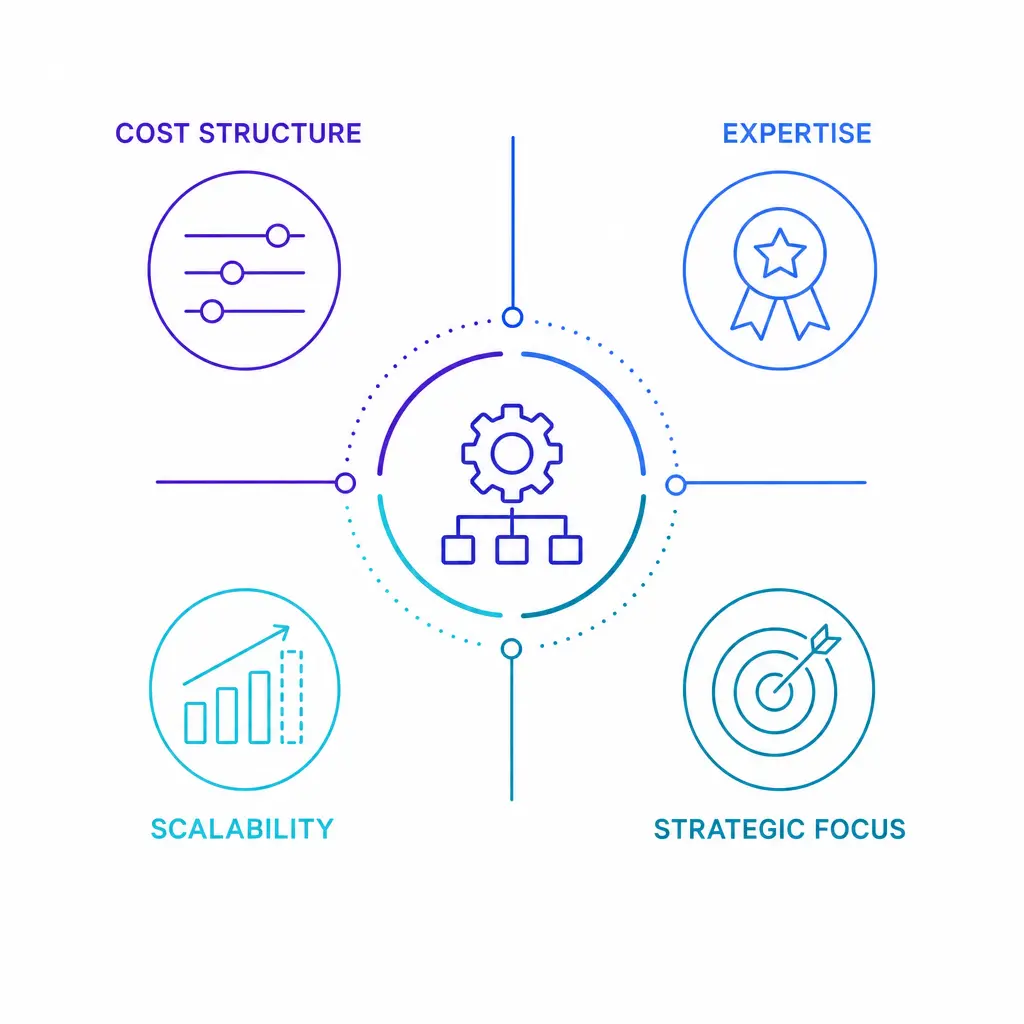
The advantages are flexibility, faster access to talent, broader coverage, and the ability to add capacity without committing to permanent headcount too early. A good outsourcing partner can also improve process discipline because workflows, escalation rules, and reporting usually become more explicit once another team has to run them consistently.
The risks are real too. Quality can slip if the scope is vague. Communication can break down if ownership is unclear. Hidden costs appear when training is rushed, systems are disconnected, or exceptions are more frequent than expected.
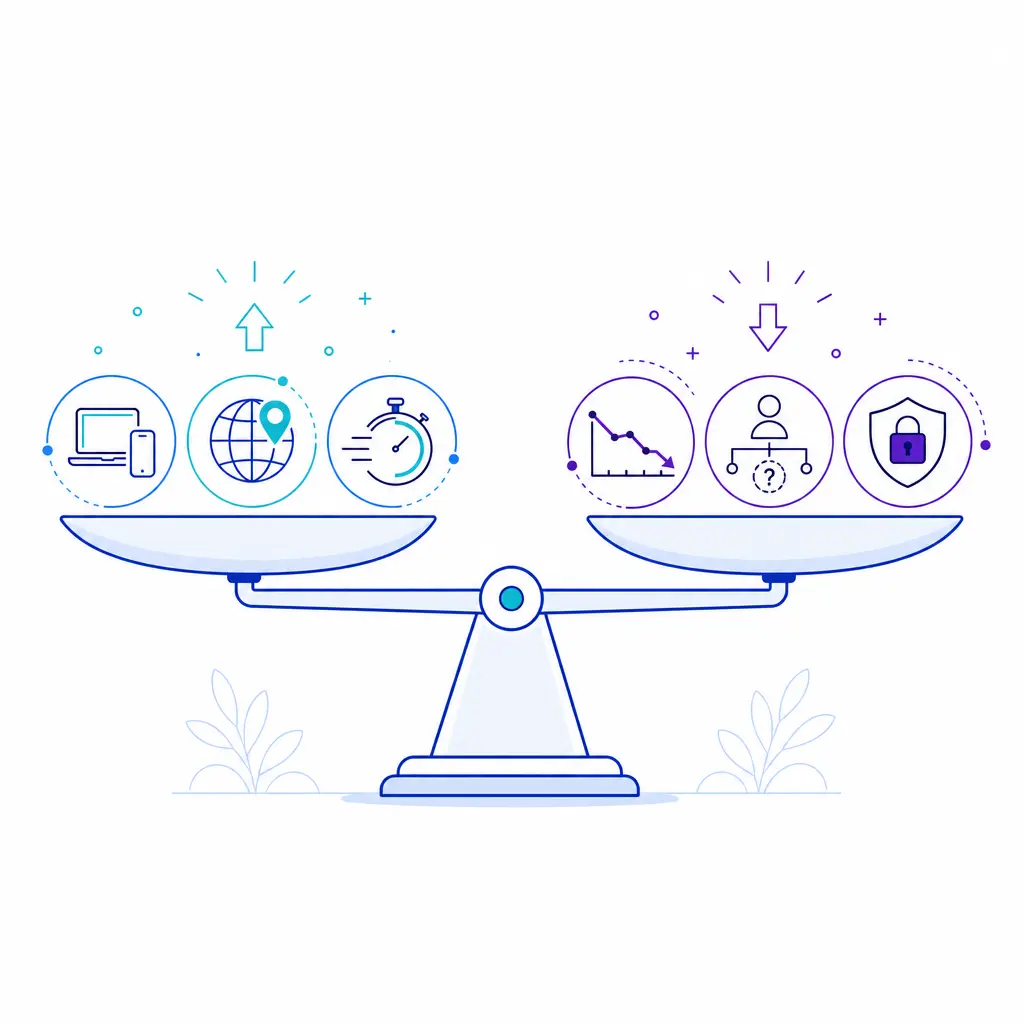
Outsourcing adds flexibility, faster access to talent, and broader coverage, but it carries real risks too. Vague scope, unclear ownership, rushed training, and disconnected systems are where quality, communication, and cost usually slip.
Security and compliance deserve separate attention. The NIST Cybersecurity Framework 2.0 emphasizes governance and supply chain risk management, which is a useful baseline for vetting vendors that will handle systems, customer information, or sensitive workflows.
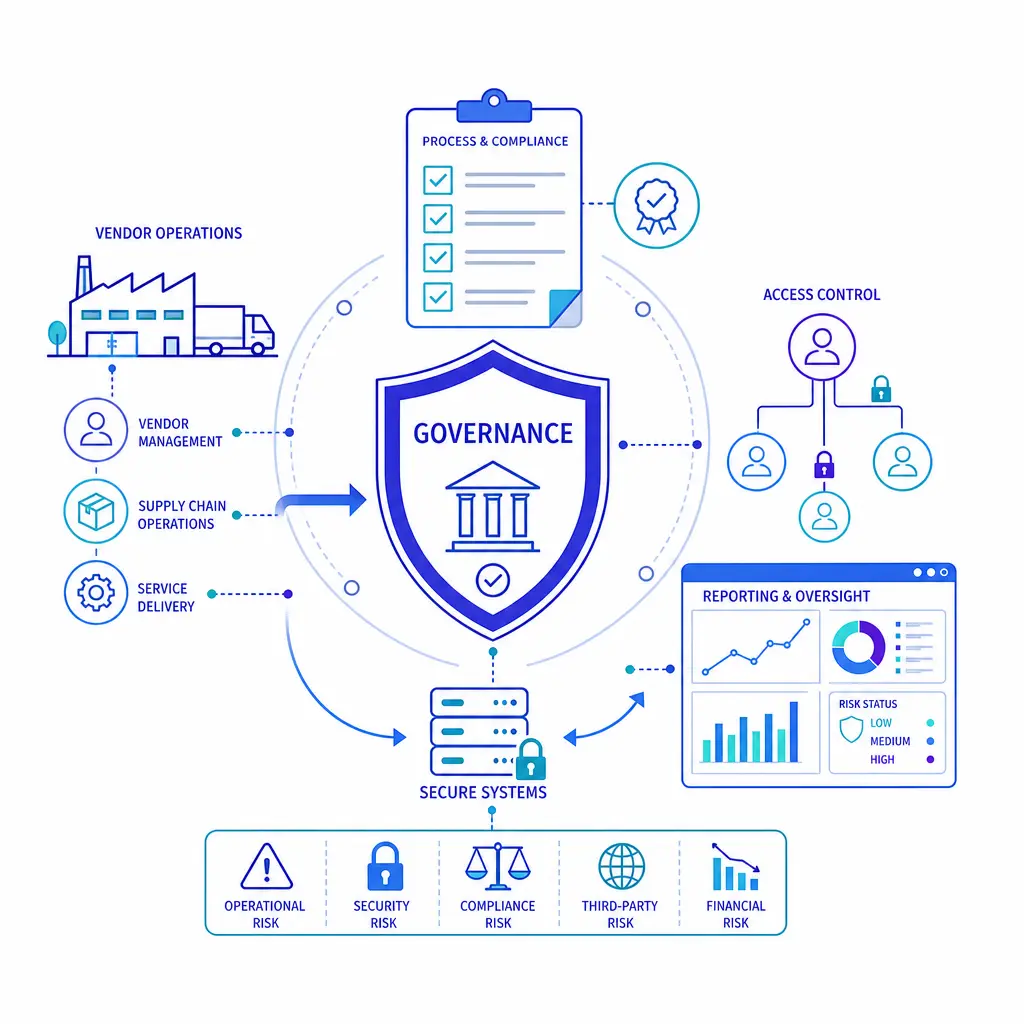
Treat security and governance as selection criteria, not afterthoughts. Set access controls, approved tools, data handling rules, and incident reporting expectations early, and use the NIST Cybersecurity Framework 2.0 as a baseline for vetting vendors.
Outsourcing is neither automatically good nor automatically bad. It works well when the process is defined, the vendor is managed, and the results are reviewed. It works poorly when a company outsources a messy process and expects the vendor to fix strategy, staffing, and process design at the same time.
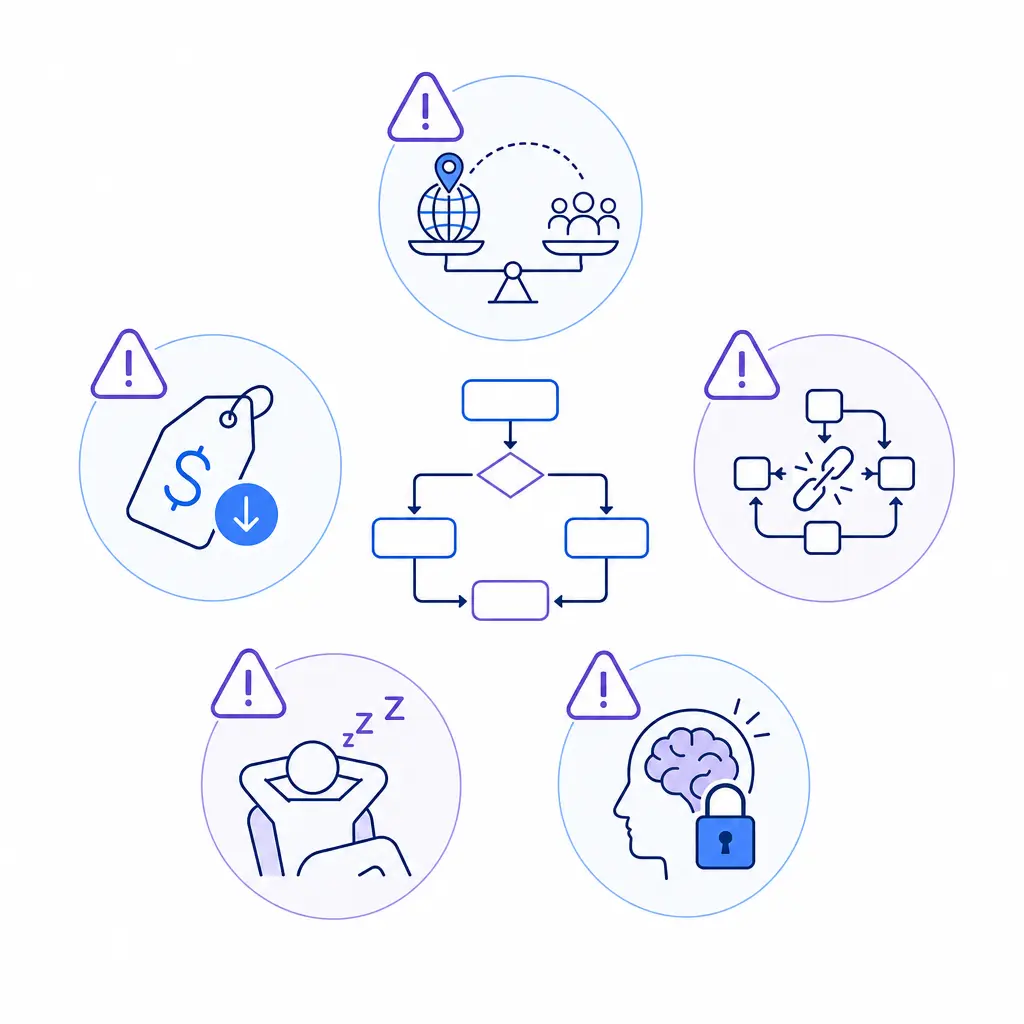
When evaluating insourcing vs outsourcing, the real question is not which model is universally better. The question is which model fits this process, this stage of growth, and this risk profile.
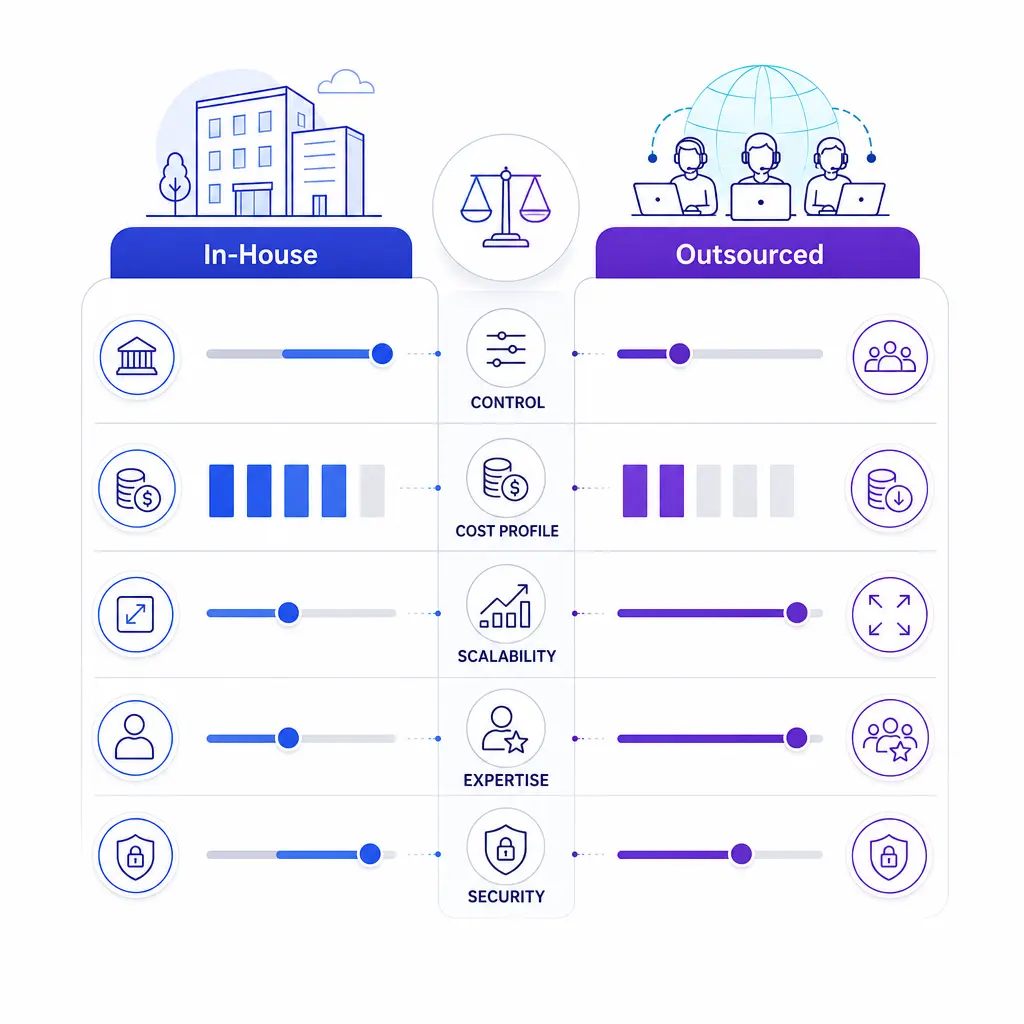
The choice is not which model is universally better, but which fits this process, this stage of growth, and this risk profile. Insourcing offers direct control and company-specific knowledge; outsourcing offers variable cost, faster scaling, and immediate expertise.
Keep work in-house when it requires constant judgment from licensed professionals, rapid policy interpretation, close executive context, or deep ownership of the customer relationship. This often includes pricing strategy, final clinical or legal judgment, sensitive employee decisions, and high-stakes exceptions.
Outsource when the work is repeatable, trainable, volume-sensitive, and important to execute well but not essential to keep under direct daily management. Examples include overflow communications, structured intake, appointment support, back-office processing, and standardized support tasks.
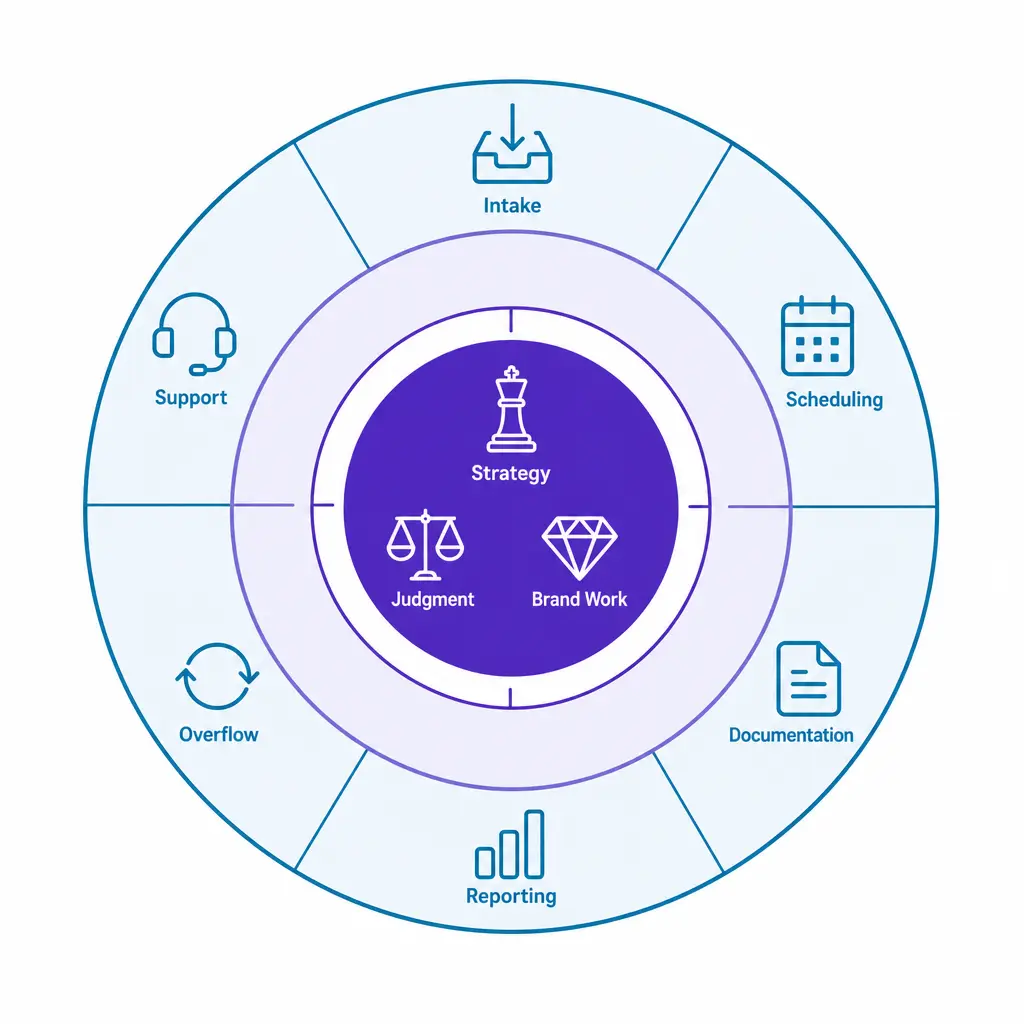
Keep pricing strategy, final clinical or legal judgment, sensitive employee decisions, and high-stakes exceptions in-house. Outsource work that is repeatable, trainable, and volume-sensitive, such as overflow communications, structured intake, appointment support, and standardized support tasks.
A practical decision framework starts with strategic importance. If the activity directly creates differentiation, shapes the brand at a high level, or depends on proprietary judgment, keep it closer to the core team. If it supports the business without defining it, it may be a candidate for outsourcing.
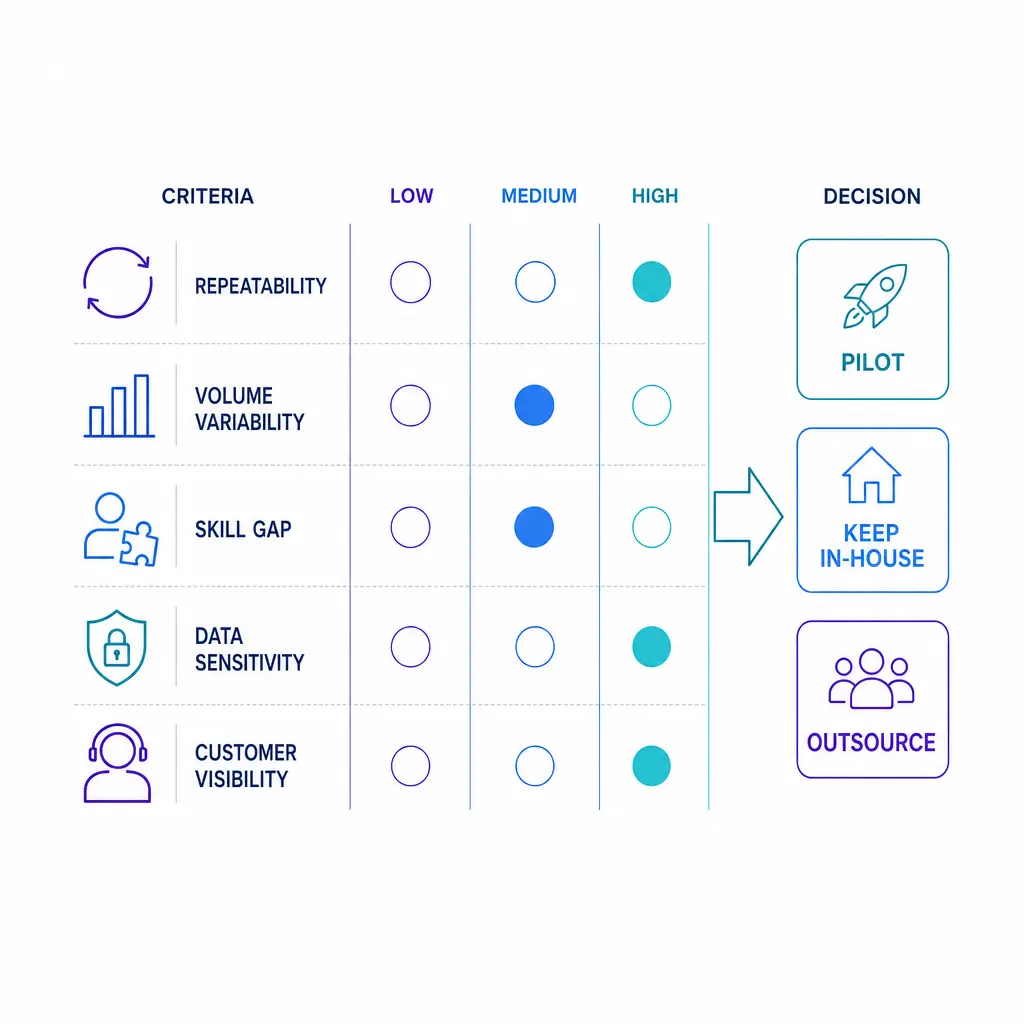
Before choosing a provider, ask practical questions. Who owns staffing and scheduling? How are quality reviews handled? What happens when call volume spikes, instructions change, or a script no longer fits reality? What reports will you receive, and how quickly can the team adapt?
Start with a pilot when possible. Give the provider a defined workflow, a limited time frame, and clear success metrics. Review performance honestly before expanding scope.
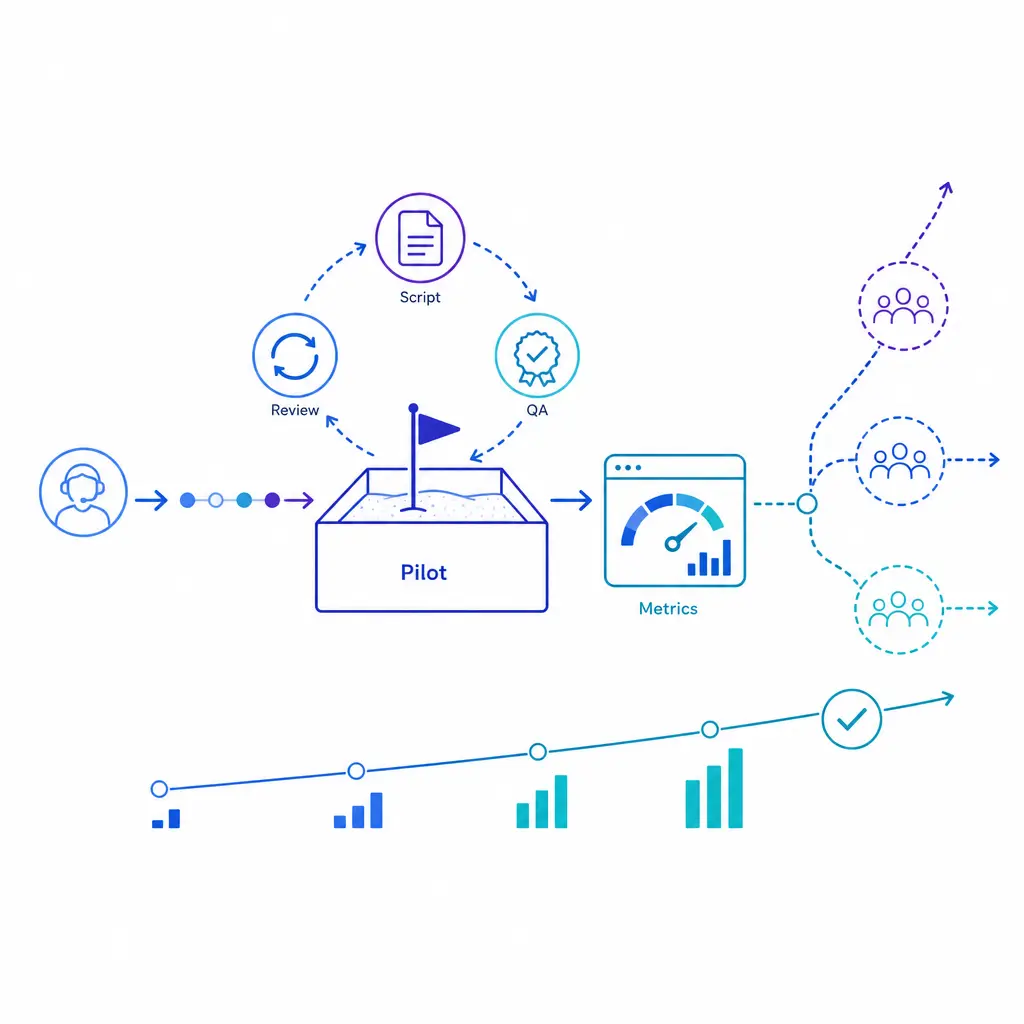
Start with a pilot when possible. Give the provider one defined workflow, a limited time frame, and clear success metrics. Review performance honestly before you expand scope, and use what you learn to tighten scripts, escalation paths, and reporting.
This is also the best way to answer the question, “What jobs cannot be outsourced?” If a workflow cannot be documented, measured, supervised, or safely delegated without constant internal judgment, it probably should not be outsourced in its current form.
Often, yes. Customer support is usually a strong outsourcing candidate when the business needs broader coverage, consistent answer handling, overflow support, appointment setting, lead capture, or after-hours responsiveness. These are high-volume interactions where process discipline and availability matter as much as individual expertise.
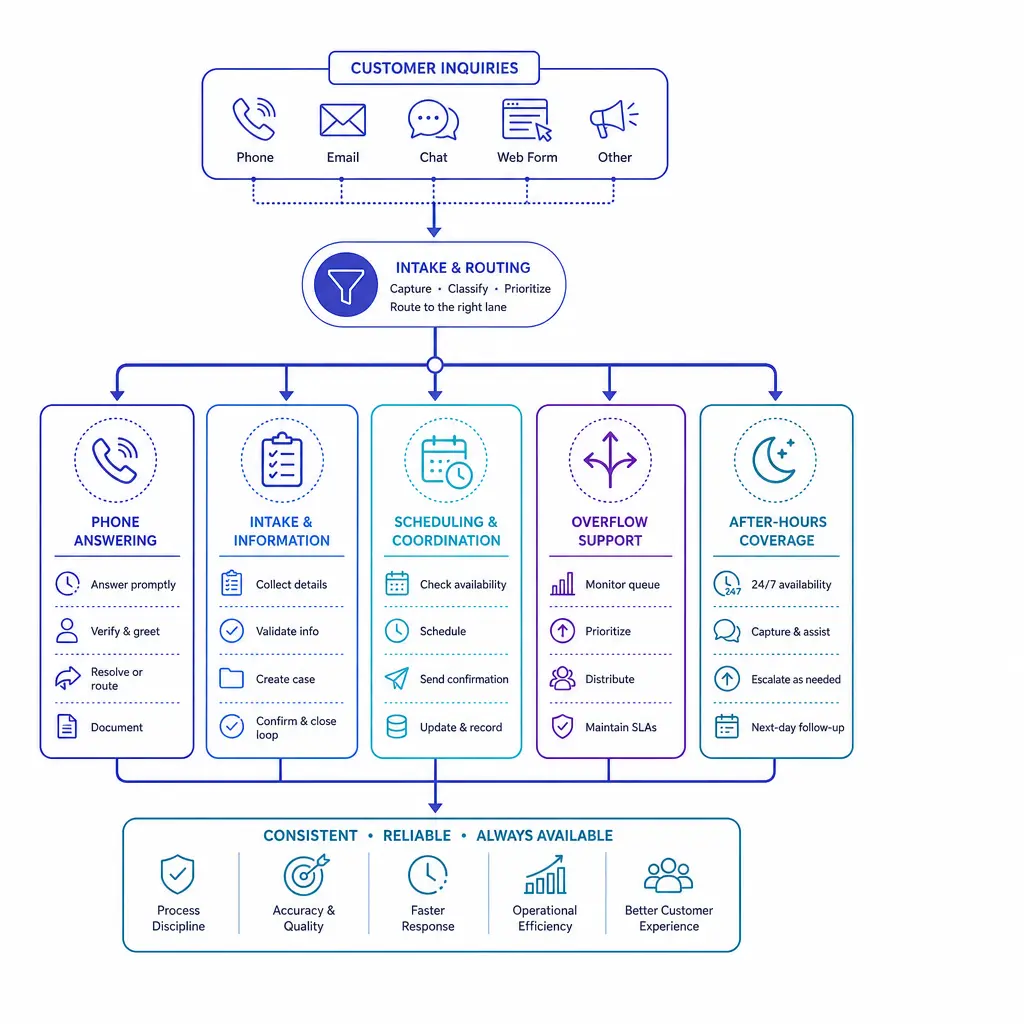
Customer support is a strong outsourcing candidate when you need broader coverage, consistent answers, overflow support, appointment setting, lead capture, or after-hours responsiveness. These are high-volume, repeatable interactions where process discipline and availability matter as much as individual expertise.
It is a weaker fit when the business has not defined ownership, scripts, escalation paths, or service standards. If your internal team gives different answers every day, an external team will struggle too. The process should be stable enough to train, but flexible enough to improve.
For healthcare organizations, vendor selection has extra consequences. An answering or intake partner may qualify as a business associate under HIPAA guidance when it handles protected health information on behalf of a covered entity, which makes security, access controls, and agreement structure especially important.
For legal intake-heavy teams, the same principle applies even if the workflow differs: keep professional judgment internal, and outsource the structured front-end work that benefits from speed, consistency, and coverage. If you are evaluating phone answering, intake, or overflow workflows, Go Answer can be a useful starting point for mapping what should stay in-house and what can be handled by an external team.
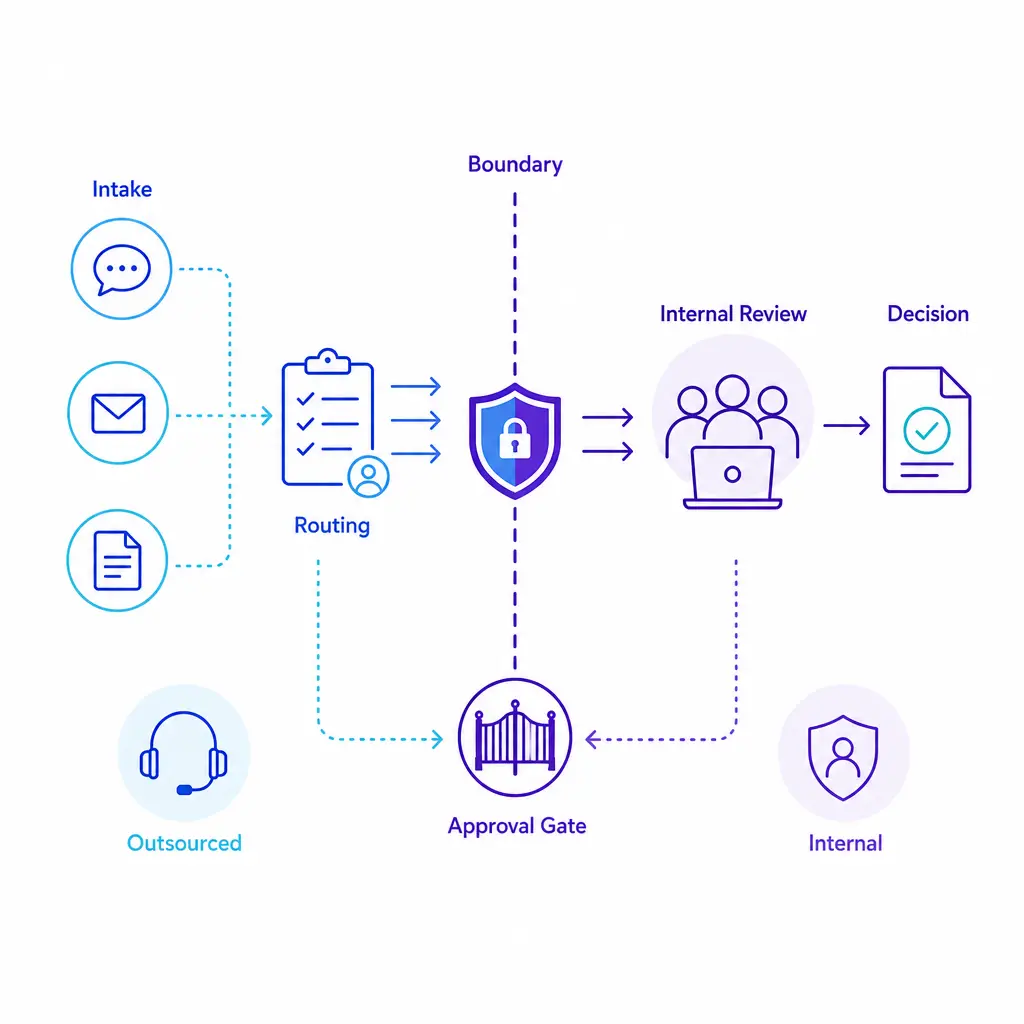
In healthcare and legal intake, keep professional judgment inside your organization and outsource the structured front-end work. For healthcare, an answering partner handling protected health information may qualify as a business associate, so security, access controls, and agreement structure matter.

Judge outsourcing by coverage, quality, conversion, and reliability, not labor cost alone. Track answer rate, speed to lead, first-response time, accuracy, and capture rate, and decide which metrics you need daily, weekly, and monthly.
In simple terms, outsourcing means paying an outside company to handle work for your business instead of doing all of that work with your internal team.
A straightforward example is using an external team to answer calls after hours, capture leads, schedule appointments, or route urgent issues when your in-house staff is unavailable.
The four common location-based types are onshore, nearshore, offshore, and onsite. Companies also classify outsourcing by function, such as customer support, HR, finance, IT, or broader BPO.
It depends on the process and the provider. Outsourcing is good when the work is defined, measurable, and actively managed. It is bad when a company uses it to hide broken operations or chooses a vendor on price alone.
Work that depends on constant executive judgment, licensed decision-making, proprietary strategy, or highly sensitive exceptions is usually a poor outsourcing candidate until the process is clearer and better controlled.
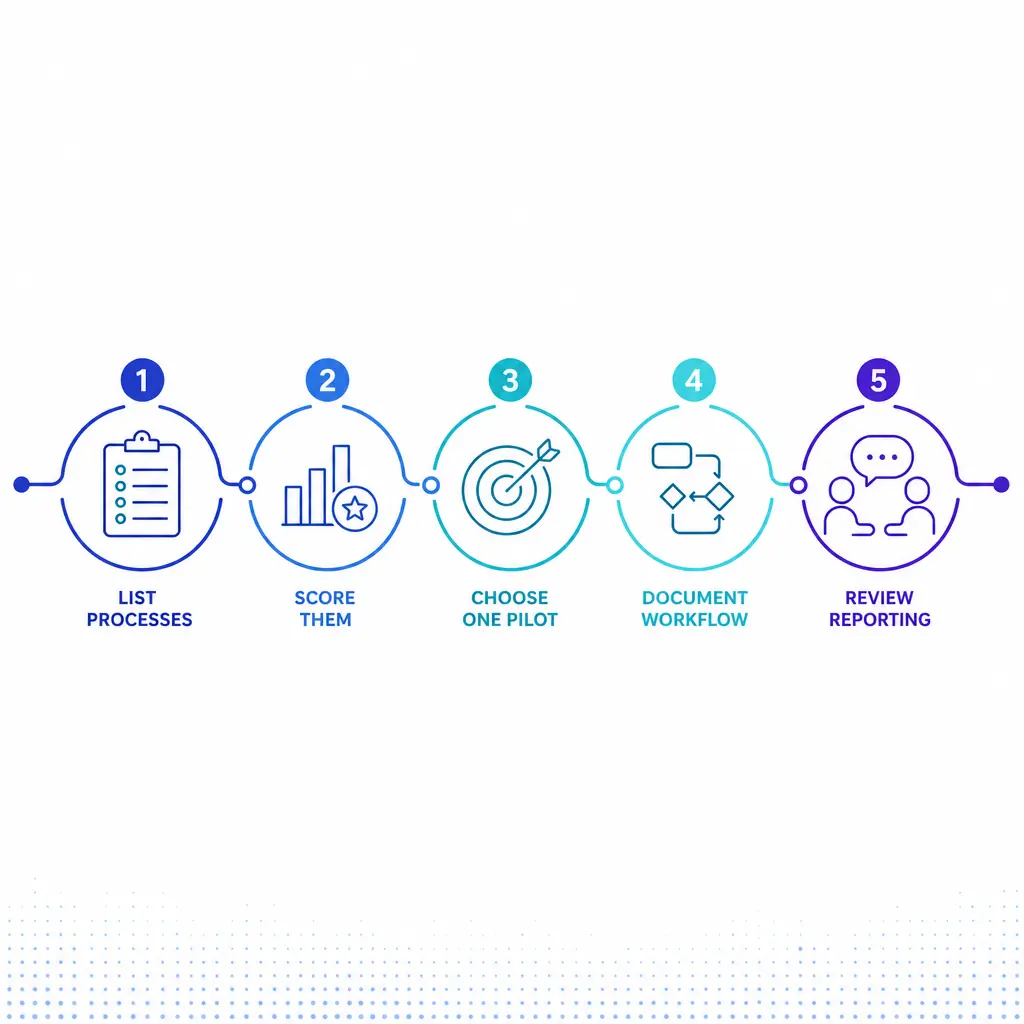
If you are weighing in-house staffing against a managed support model, Go Answer can help you evaluate the tradeoffs in practical terms: coverage, intake quality, QA, escalation design, and operational fit. You can Request Pricing, Book a Discovery Call, or simply Talk to a Specialist about your workflow.
If you are still earlier in the process, you can Explore Enterprise BPO, See How It Works, or View Use Cases to compare what an outsourced phone, chat, intake, or after-hours model could look like for your team.

Learn why thousands of companies rely on Go Answer.
Try us risk-free for 14 days!
Enjoy our risk-free trial for 14 days or 200 minutes, whichever comes first.
Have more questions? Call us at 888-462-6793
Learn why thousands of companies rely on Go Answer.
Have more questions? Call us at 888-462-6793
If you would like to get in contact with a Go Answer representative please give us a call, chat or email.

Thanks for your interest!
A representative will be reaching out to you shortly.
Have more questions? call us on 888-462-6793
