
Business Associate Agreements: What Healthcare Groups Need From Call Center and Answering Vendors
By Rick AlovisLast modified: January 12, 2027
Voted Top Call Center for 2024 by Forbes
Virtual Receptionists
Save time and money with our virtual receptionists.
AI Receptionist
AI-powered receptionist that answers, routes, and qualifies calls 24/7.
Enterprise Solutions
Solutions designed to scale with your organization’s needs.
Legal Services
Our virtual legal receptionists are experts in legal intake.
Last modified: January 12, 2027
When a healthcare group outsources patient calls, the contract question is not just legal. It is operational. If an answering service, overflow team, or appointment-scheduling vendor touches patient information, the healthcare group needs clarity on scope, access, recordings, incident response, and downstream tools before the phones ever roll over.
This guide is for practice administrators, privacy leaders, procurement teams, and operations owners evaluating a call center or answering partner. It explains the business associate agreement in plain language, shows when a vendor likely needs one, and gives you a practical checklist for reviewing call-handling vendors without turning the article into legal advice.
A business associate agreement is a HIPAA-required contract between a covered entity and a vendor that handles PHI on its behalf. For healthcare call centers and answering services, a BAA should be in place before patient messages, appointment details, or other protected health information are handled.
The required contract elements for business associate agreements give you the baseline. For a phone-based vendor, the real work is translating those requirements into live workflows, recordings, transcripts, escalations, and access controls that match how patient calls are actually handled.
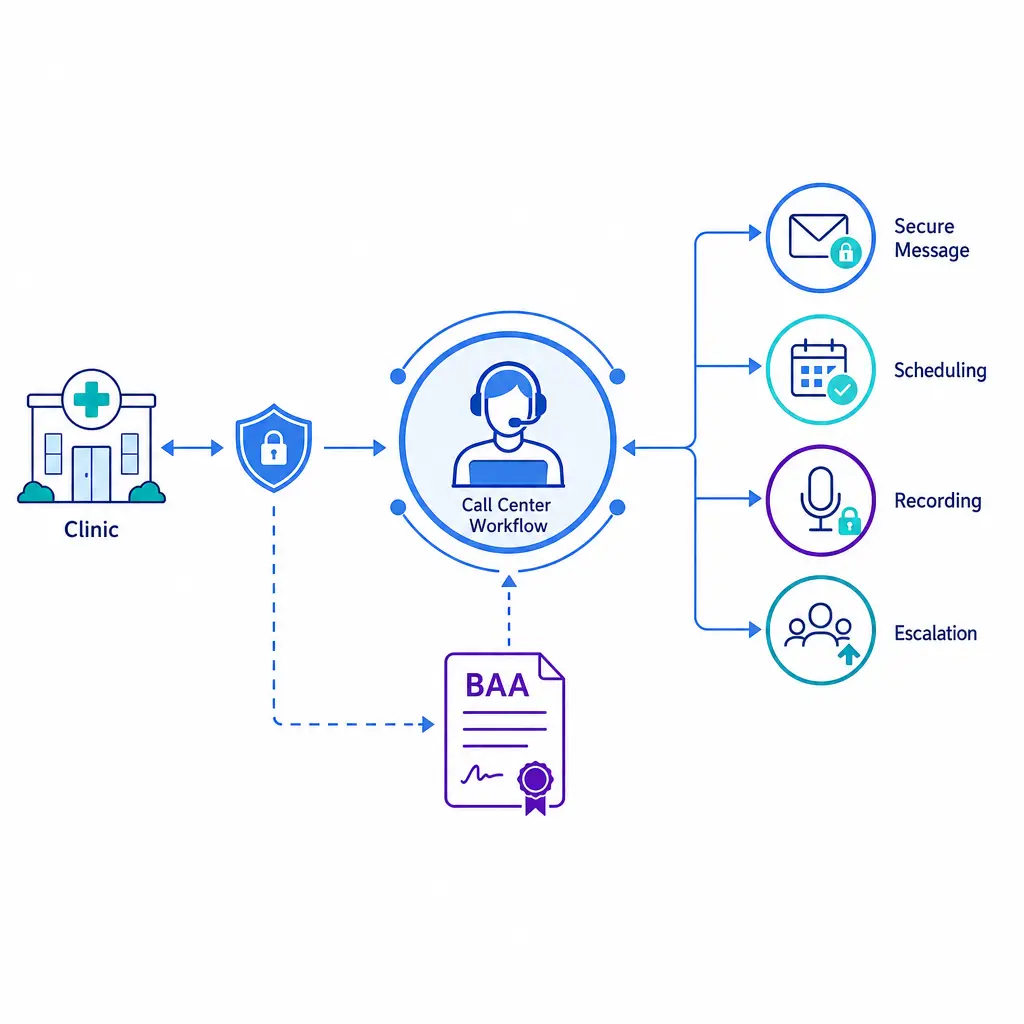
When a vendor answers, schedules, or routes patient calls on a provider’s behalf, patient information flows through the vendor’s people and systems. A business associate agreement is the HIPAA-required contract that governs that flow and should be in place before any patient messages or appointment details are handled.
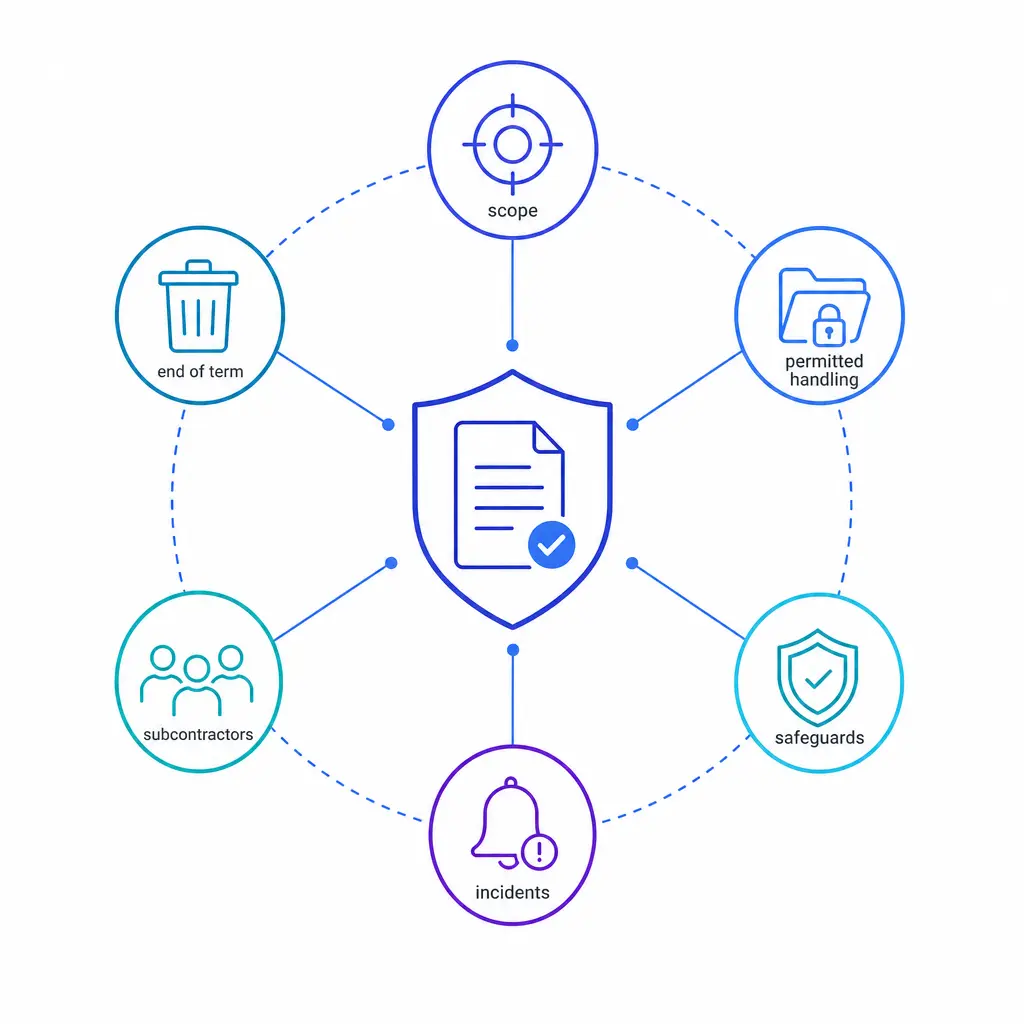
A call center BAA should cover six things: service scope, permitted handling, safeguards, incident response, subcontractors, and end-of-term handling. Together they turn the HIPAA baseline into terms that match how patient calls are actually answered.
A call center vendor usually needs a BAA when it answers patient calls, schedules appointments, relays clinical messages, or stores call content on behalf of a provider. Under HIPAA guidance on business associates, a vendor becomes a business associate when it performs a function or service for a covered entity that involves PHI.
That matters because the phone workflow itself can create exposure fast. A live agent may hear symptoms, confirm an appointment, capture a callback number, route an urgent message, or document details tied to care or payment. Even if the vendor sees only part of the patient picture, the workflow still needs a clear contract and clear controls.
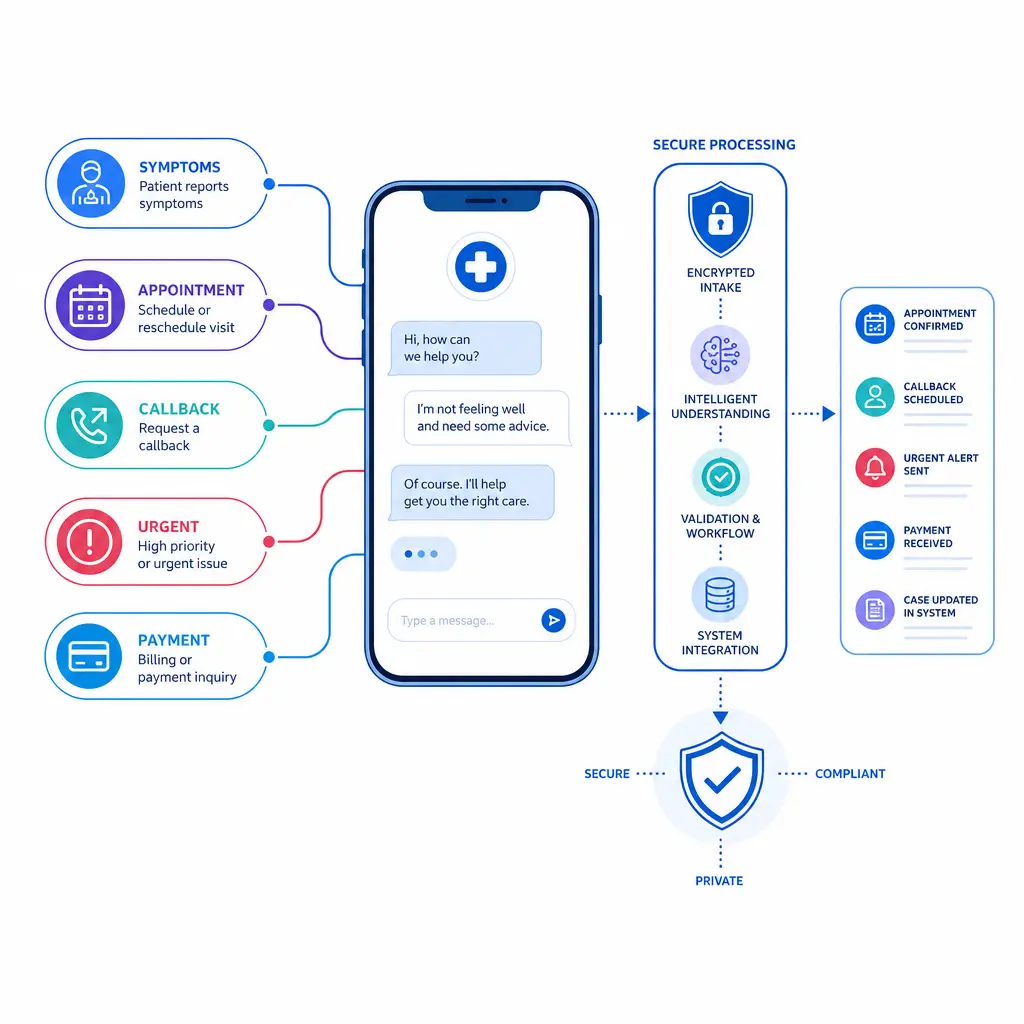
A single call can reveal symptoms, confirm an appointment, capture a callback number, or route an urgent message. Even when the vendor sees only part of the patient picture, the workflow needs a clear contract and clear controls.
For healthcare groups, the BAA is not a paperwork exercise. It is the bridge between legal requirements and frontline operations. If the agreement says the vendor only takes basic messages, but the live script invites clinical detail, the workflow has already outgrown the contract.
Use a simple screening question: will the vendor receive patient-specific information as part of doing the job you are outsourcing? If yes, treat the arrangement as BAA-likely and route it through privacy, legal, security, and operations review before launch.
Do this review before the pilot, before the overflow number is activated, and before after-hours rollover begins. Patient data often enters the workflow earlier than teams expect, especially during test calls, message-routing setup, and training.
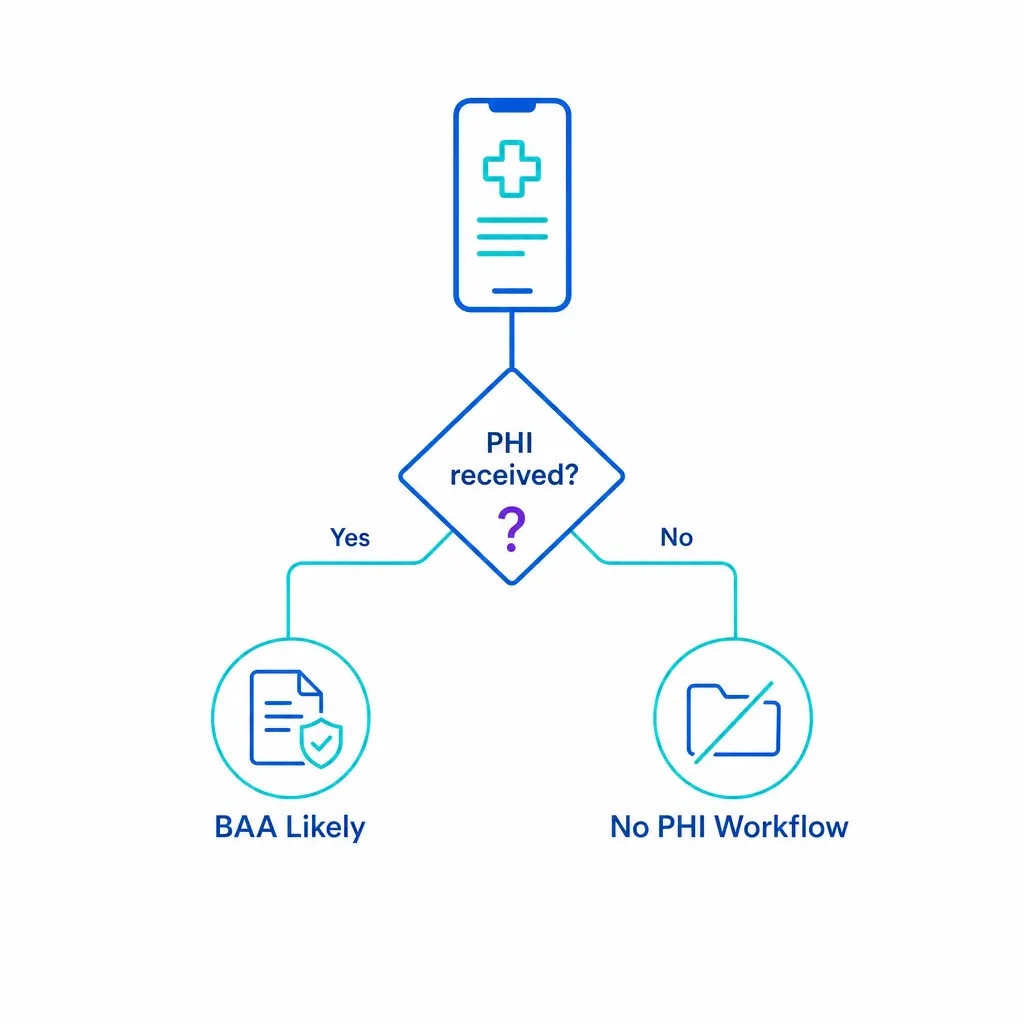
Ask one question: will the vendor receive patient-specific information as part of the job you are outsourcing? If yes, treat the arrangement as BAA-likely and send it through privacy, legal, security, and operations review before launch.
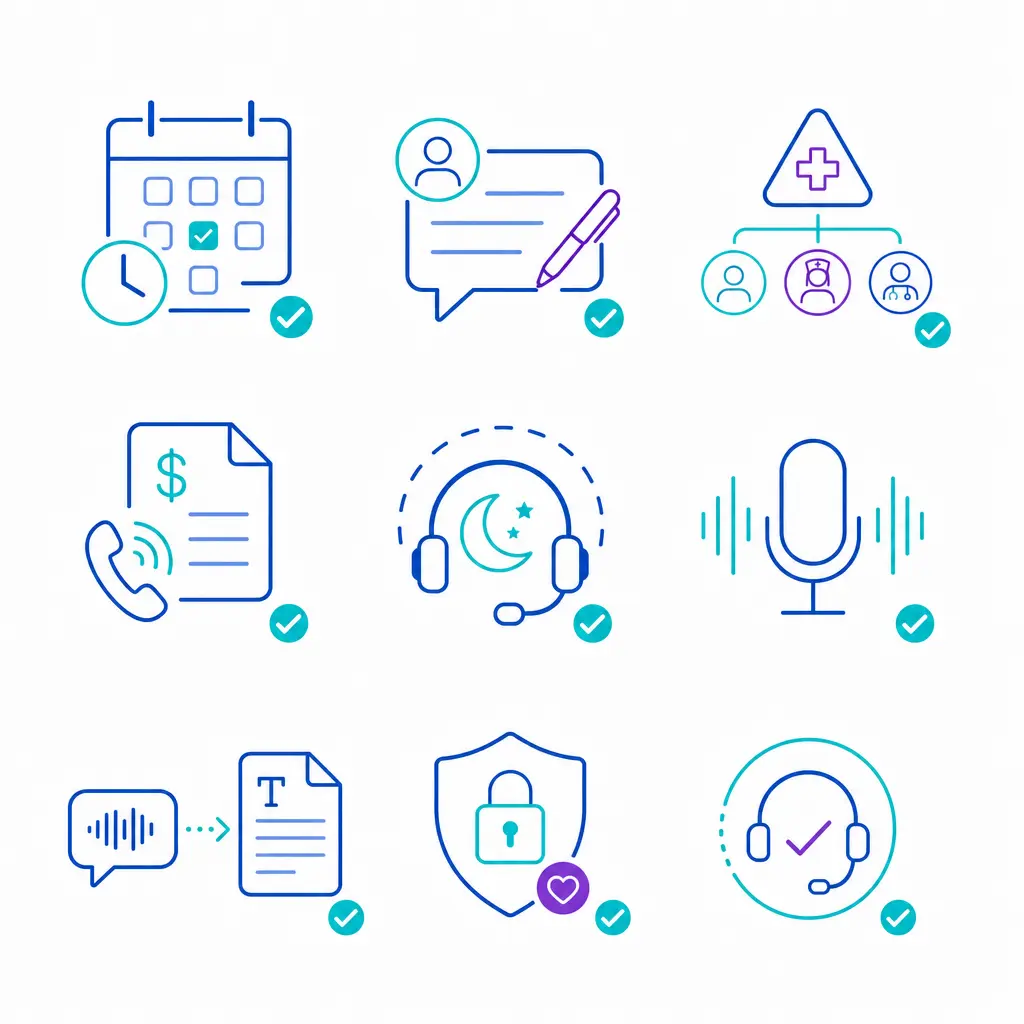
Appointment scheduling, message taking, triage escalation, billing calls, after-hours answering, and call recording, transcription, or QA review usually trigger BAA review. Only general marketing or non-PHI lines may sit outside it, and only if they are designed to avoid unexpected disclosures.
A vendor may sit outside the business associate role when the service is limited to general business calls, no patient-specific information is expected, and the workflow is intentionally designed to reroute or stop unexpected disclosures rather than capture them. In practice, this is more common for a corporate switchboard or a pure sales line than for an answering service attached to a clinic.
If you are relying on a no-BAA position, document the reasoning. General lines can drift into patient use quickly, and once the workflow changes, the contract position may need to change with it.
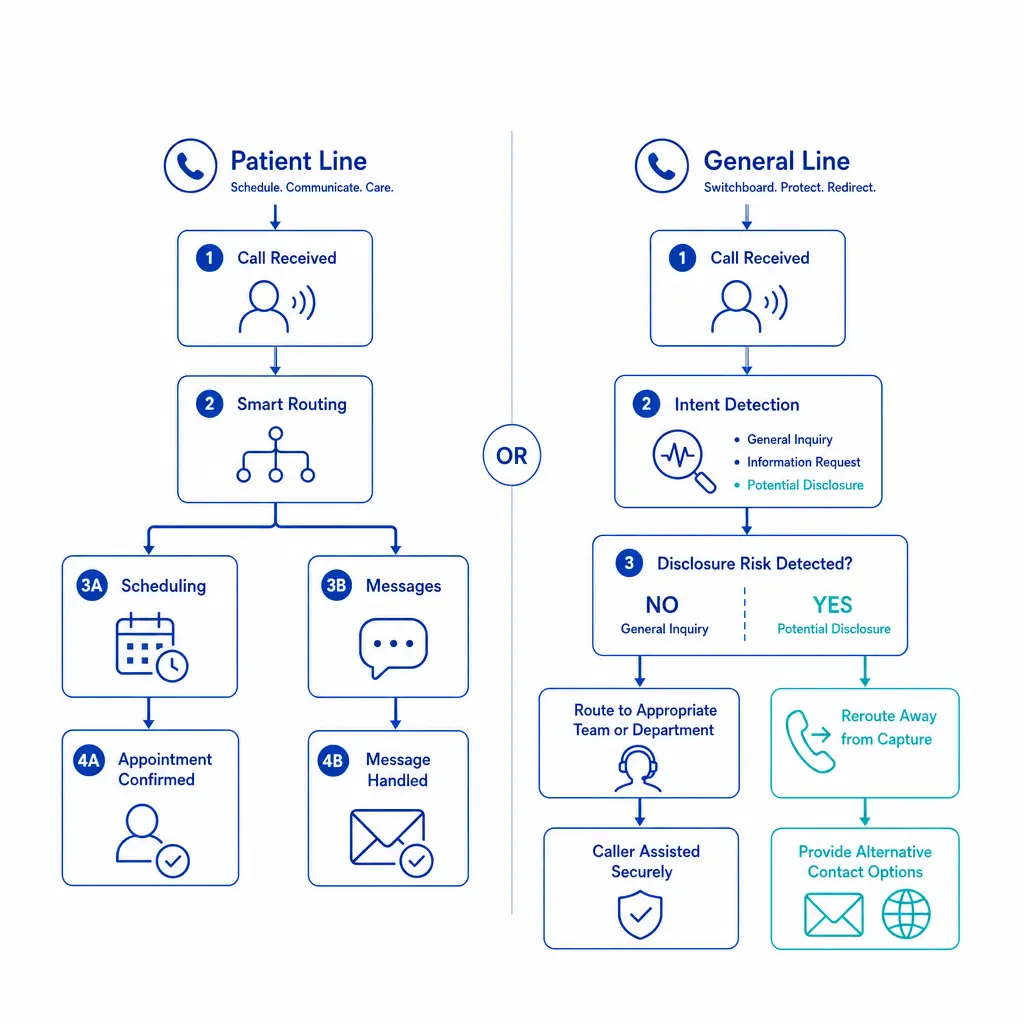
A vendor may sit outside the business associate role when the service is limited to general business calls and built to reroute unexpected disclosures. If you rely on a no-BAA position, document the reasoning and revisit it when the workflow changes.
Start with scope, not boilerplate. The BAA should match the actual service being purchased: appointment scheduling, overflow answering, referral capture, on-call escalation, bilingual support, billing calls, recordings, and QA review. If the contract describes less than the workflow really does, the agreement will not govern the real risk.
Ask whether the vendor can use patient-call data only to perform the service, or whether the language leaves room for broader internal use. For call-center relationships, precise scope protects both sides because it aligns scripts, permissions, and system access with what the healthcare group actually approved.
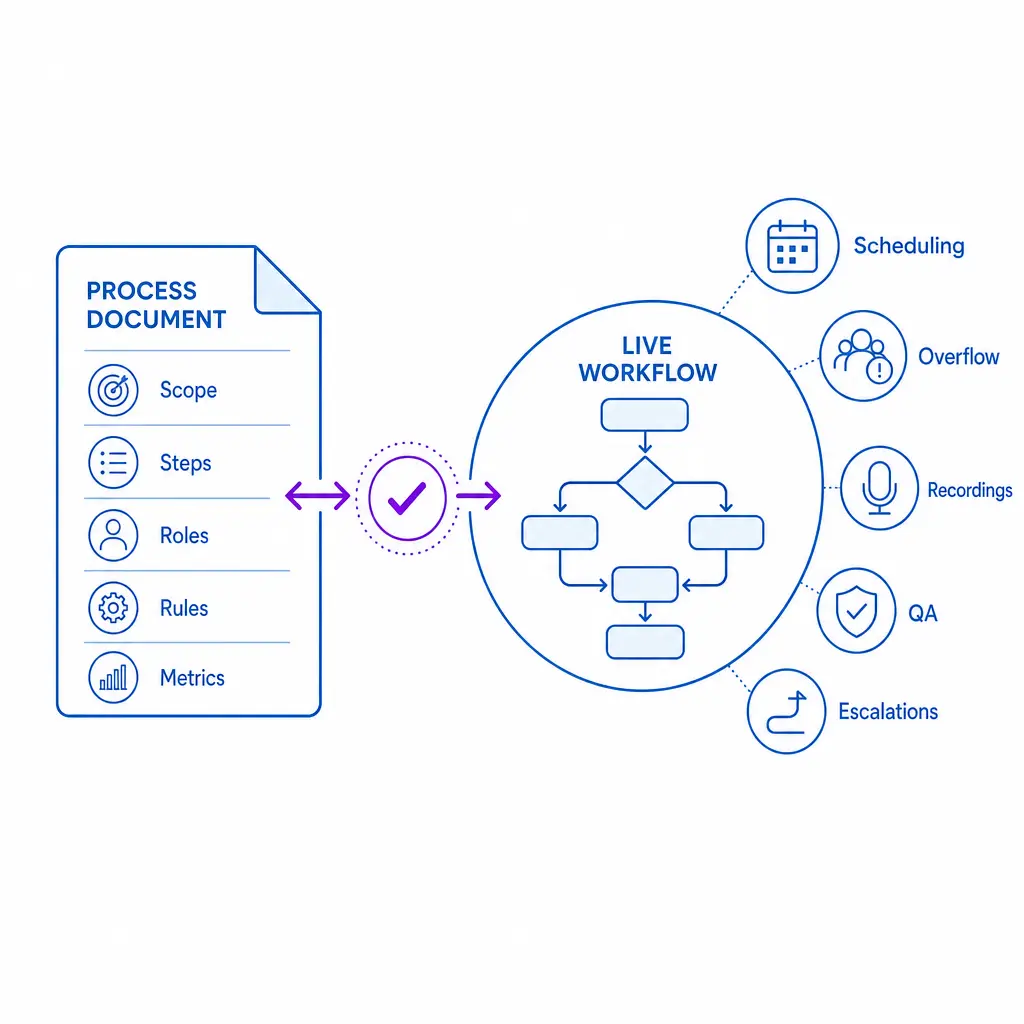
Start with scope, not boilerplate. The BAA should describe the services you actually buy, from scheduling and overflow answering to recordings and QA review, and should limit vendor use of patient-call data to performing the service.
Ask how the vendor operationalizes the administrative, physical, and technical safeguard standards in the Security Rule. In a call environment, that usually translates into role-based access, secure authentication, workstation discipline, controlled downloads, storage restrictions, and a reliable process for disabling access when agents change roles or leave.
Do not accept vague answers like “we are HIPAA aware.” You want to know how the vendor limits access by queue, client, role, and shift, and whether those controls can be shown in practice rather than described in general terms.
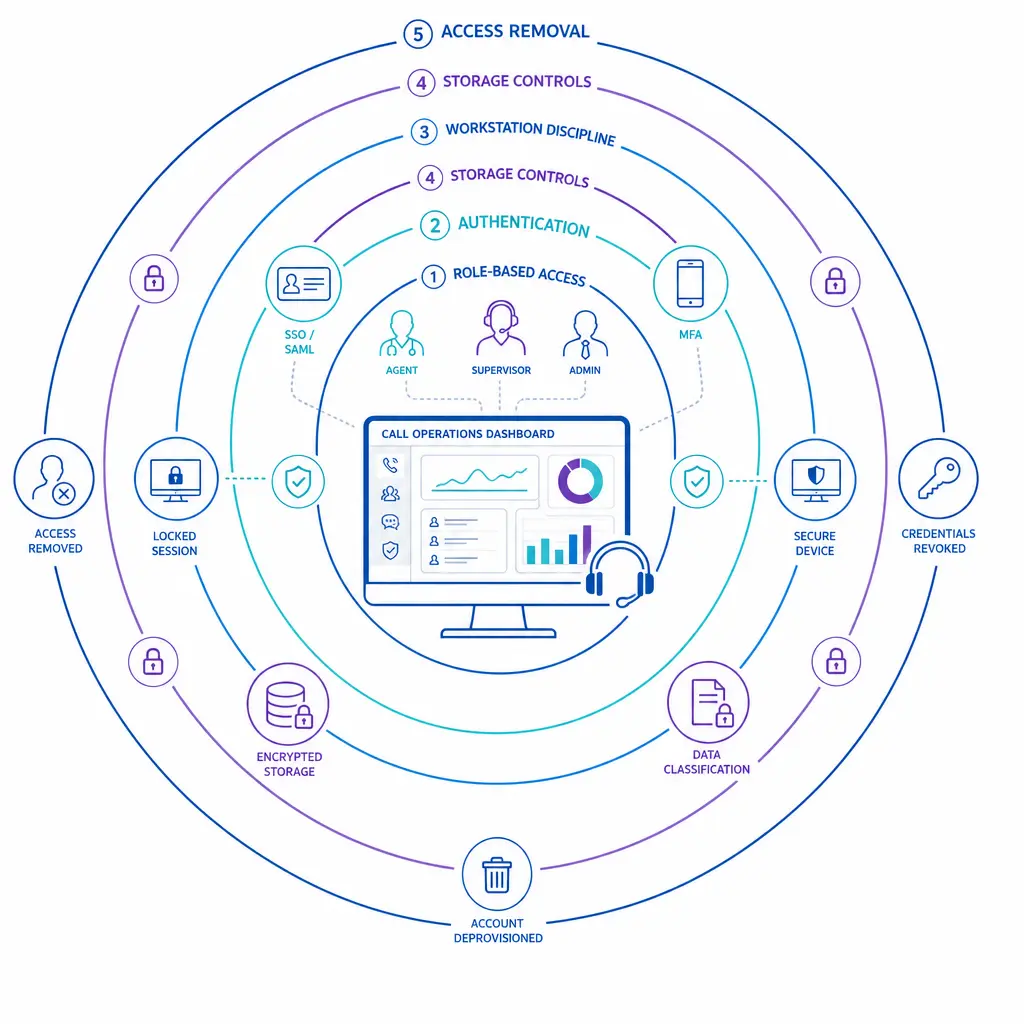
In a call environment, safeguards usually mean role-based access, secure authentication, workstation discipline, controlled downloads, storage restrictions, and fast removal of access when agents change roles or leave. Ask the vendor to show these controls in practice.
The BAA should spell out who reports what, to whom, and on what timeline after a suspected issue. The Breach Notification Rule provides the federal framework for breaches of unsecured PHI, but healthcare groups often need faster operational notice so they can investigate, contain, and coordinate next steps.
For call-center procurement, ask for specifics. Who receives the initial alert, what evidence is preserved, how message logs are reviewed, and who can isolate the affected workflow if the issue involves recordings, transcripts, or an after-hours escalation path.
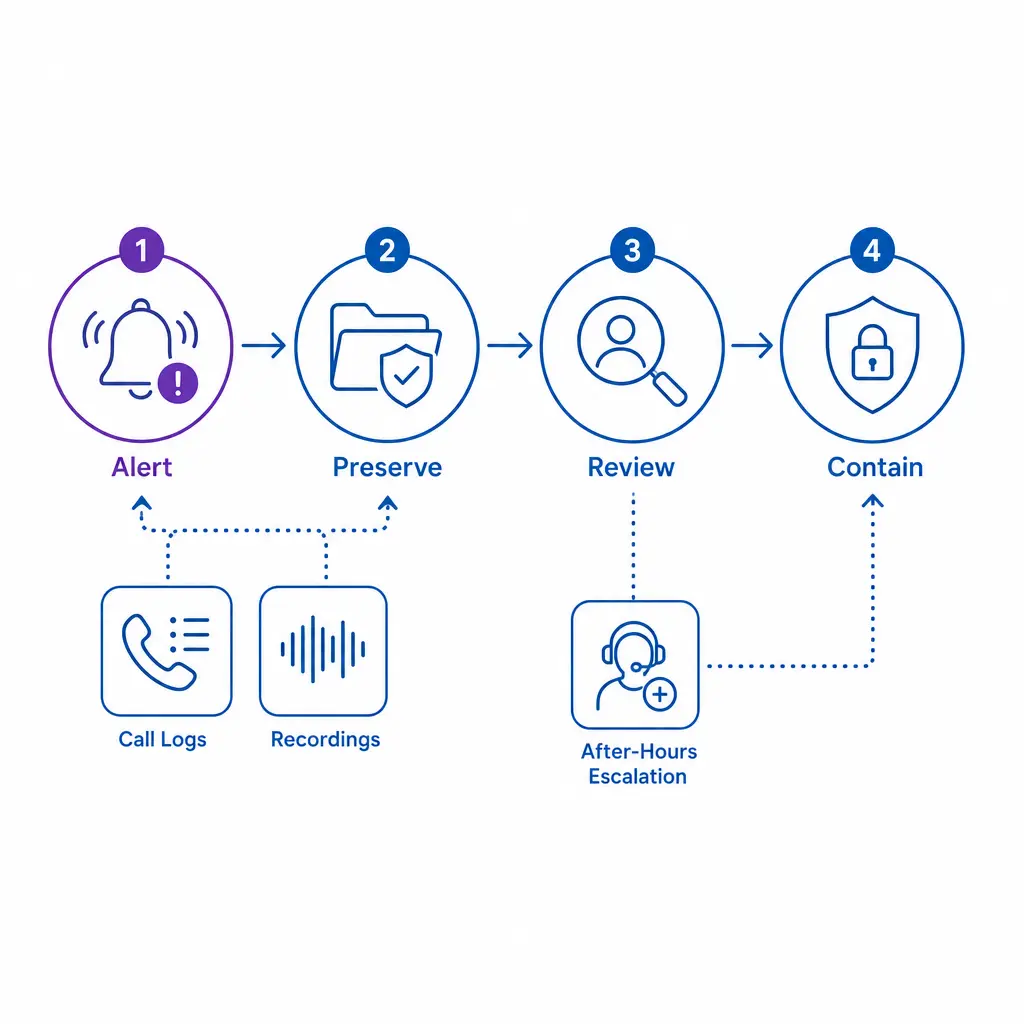
The BAA should name who reports what, to whom, and on what timeline. Ask who receives the initial alert, what evidence is preserved, how message logs are reviewed, and who can isolate the affected workflow if recordings, transcripts, or after-hours escalations are involved.
Training should be workflow-specific, not generic. Agents who answer patient calls should know what information the script requires, what to avoid collecting unnecessarily, when to escalate, and how to handle sensitive disclosures without widening access to people or systems that do not need them.
Call recording deserves its own review. Ask whether every queue is recorded, whether recordings can be limited by workflow, who can retrieve them, whether QA teams can hear patient calls across accounts, and whether transcripts or summaries are created downstream.
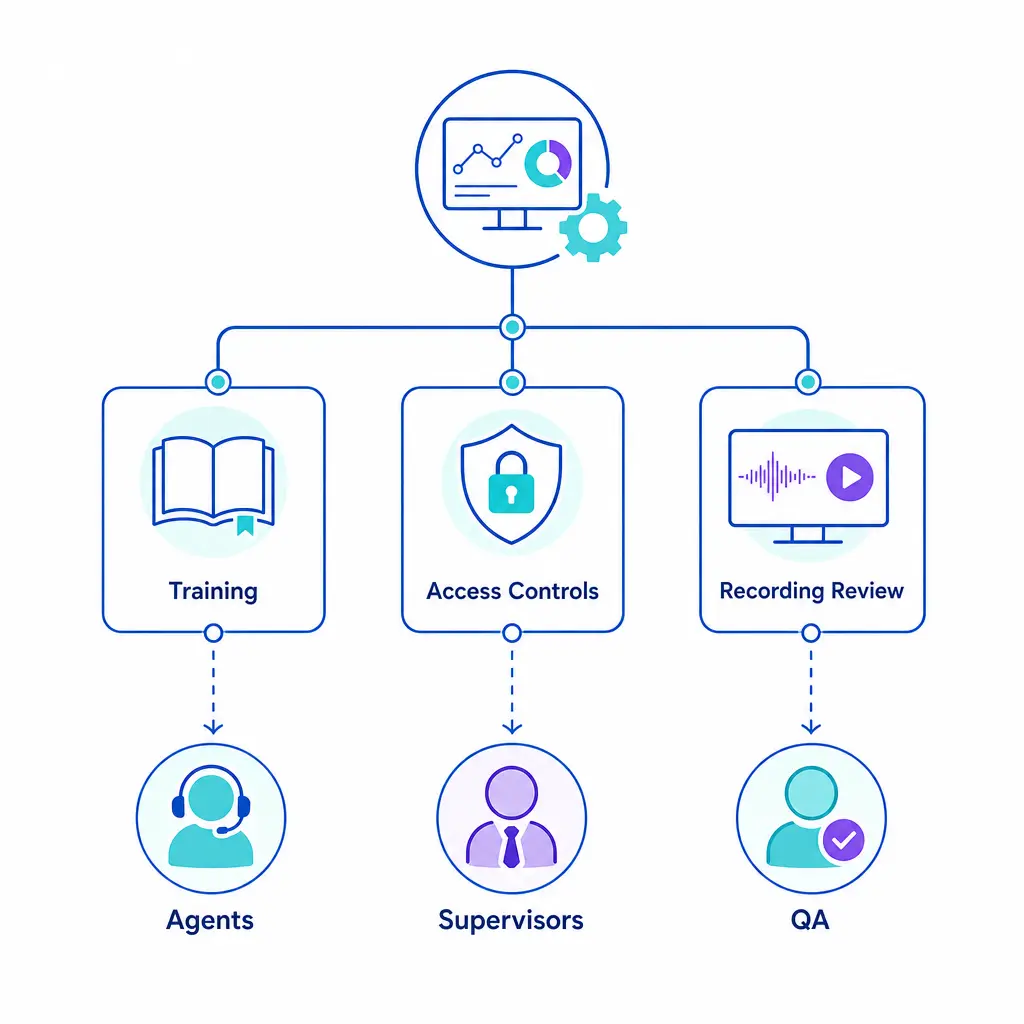
Training should be specific to the workflow. Review what the script requires agents to collect, when they escalate, who can retrieve recordings, and whether QA teams can hear patient calls across accounts or create transcripts and summaries downstream.
Call centers rarely run on people alone. They often depend on telephony platforms, scheduling systems, CRMs, storage tools, analytics layers, transcription workflows, and overflow partners. Because business associates can be directly liable under HIPAA, and subcontractors can also fall inside the compliance chain, healthcare groups should ask for a plain-language map of every provider that supports the service.
If the vendor cannot explain where call notes live, who hosts recordings, or which partner handles overflow traffic, the BAA review is incomplete. Downstream visibility is especially important for multi-location groups that route different call types through different systems.
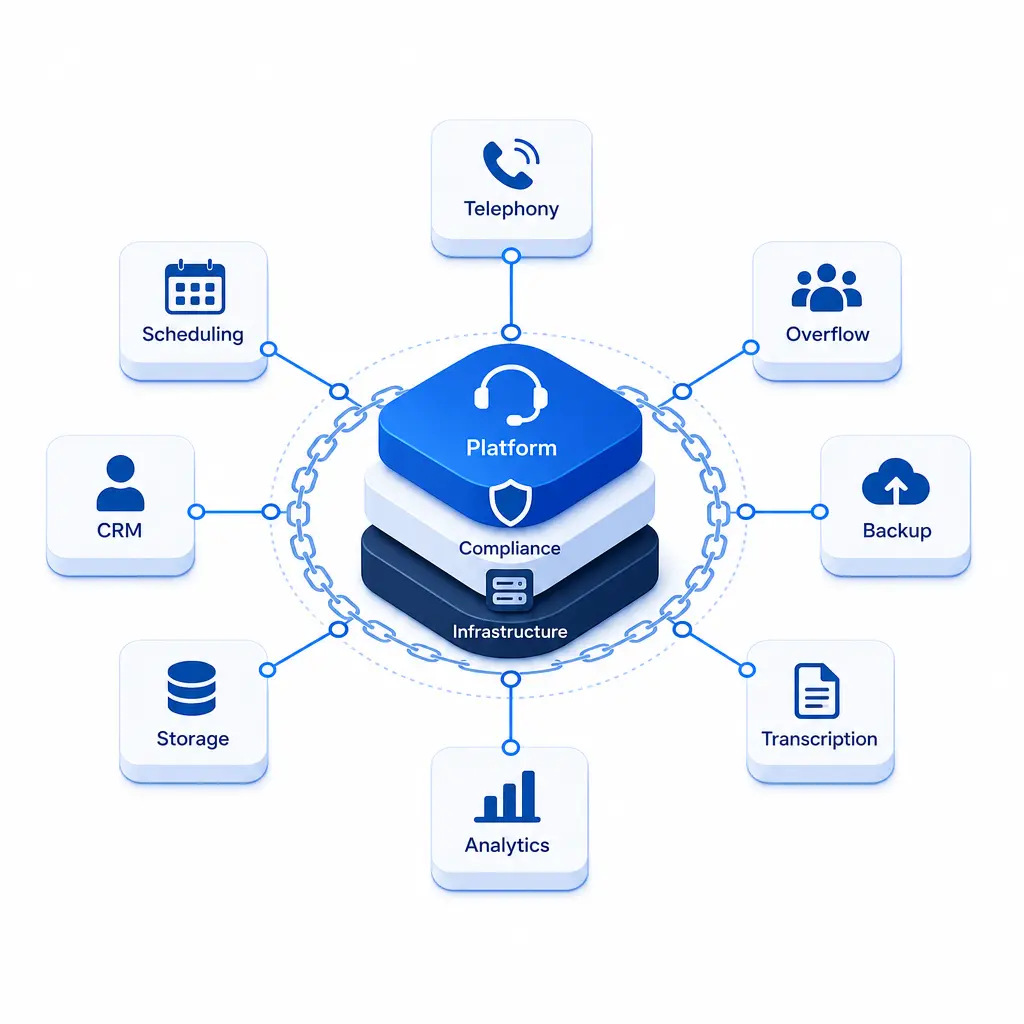
Call centers depend on telephony platforms, scheduling systems, CRMs, storage tools, transcription workflows, and overflow partners. Ask for a plain-language map of every provider behind the service, because subcontractors can sit inside the compliance chain.
End-of-term language should be practical, not abstract. The contract should make clear what gets returned, what gets destroyed, what may need to be retained temporarily, and how completion will be confirmed. For phone vendors, include recordings, transcripts, message logs, QA samples, escalation records, exports, backups, and test data if it contains patient information.
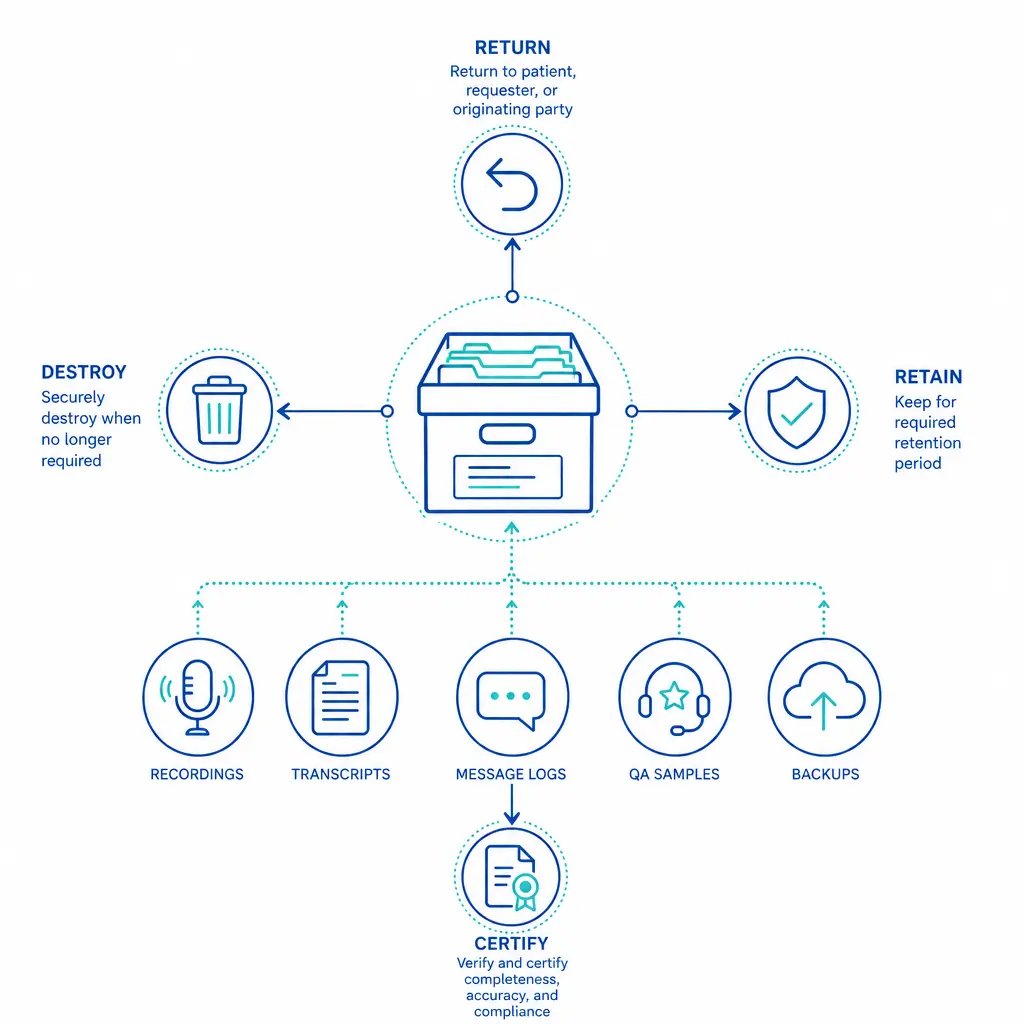
Spell out what is returned, destroyed, or retained temporarily, and how completion is confirmed. For phone vendors that includes recordings, transcripts, message logs, QA samples, escalation records, exports, backups, and test data containing patient information.
Procurement teams often focus on coverage, pricing, and staffing depth, then realize too late that documentation is thin. Ask what the vendor can provide during onboarding, incident review, or client audit: policies, training attestations, access logs, queue maps, retention schedules, and evidence of subcontractor oversight.
This is not about turning the vendor into your internal audit team. It is about making sure the relationship can withstand normal compliance questions without panic, guesswork, or retroactive cleanup.
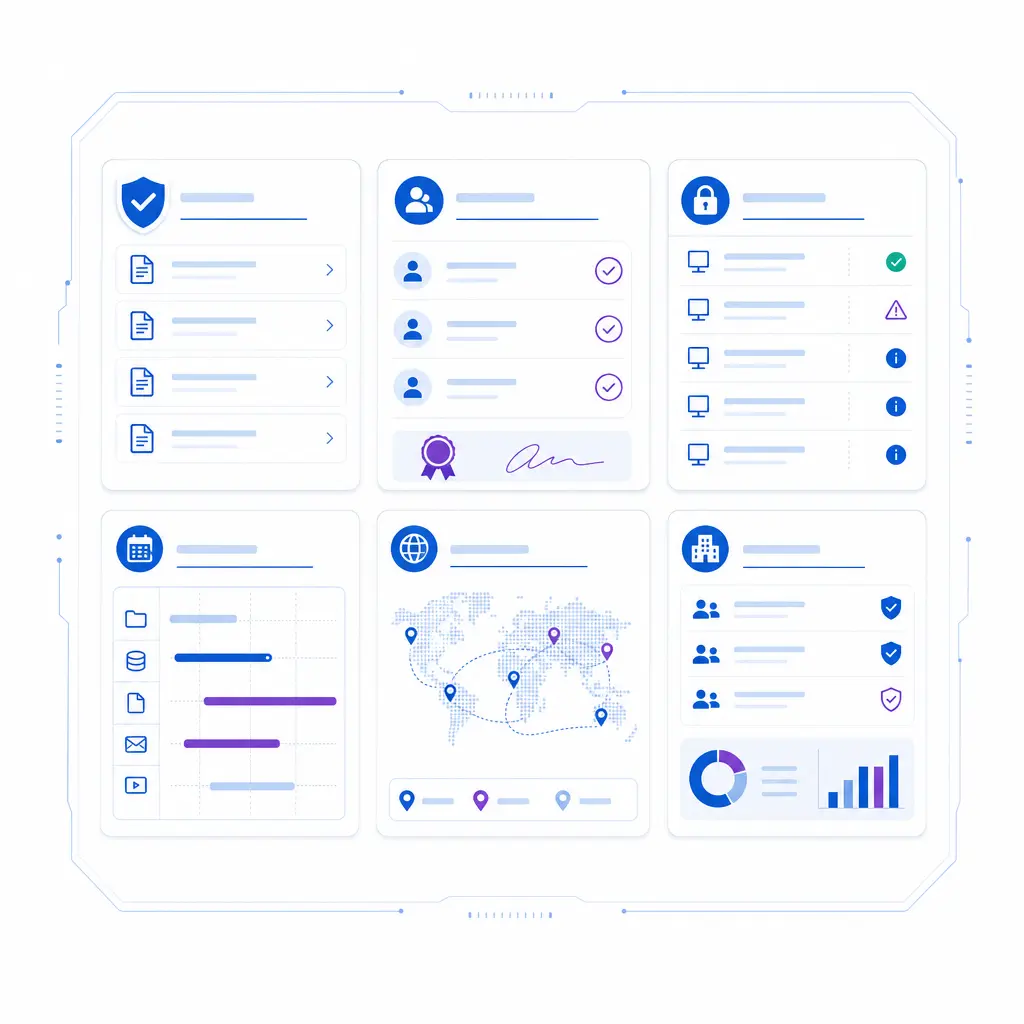
Ask what the vendor can provide during onboarding, incident review, or a client audit: policies, training attestations, access logs, queue maps, retention schedules, and evidence of subcontractor oversight. The goal is a relationship that withstands normal compliance questions without panic.
Keep the service narrow. If a vendor only needs appointment details and callback instructions, do not expose broader charts, inboxes, or historical records just because an integration makes it possible. Smaller data paths are easier to train, monitor, and govern.
For call centers, the cleanest BAA is the one that matches a tightly defined service model. Less ambiguity means fewer surprises when scripts evolve, after-hours volume spikes, or a new location joins the program.
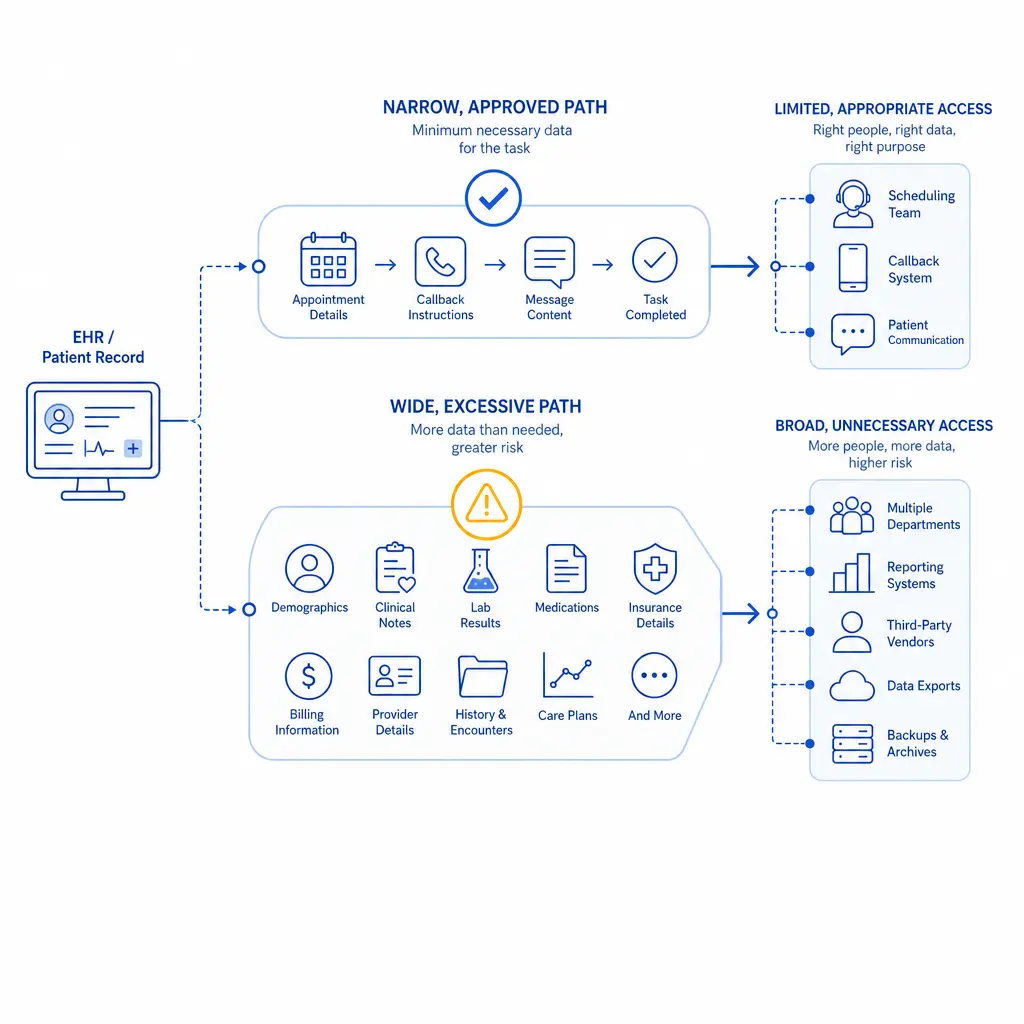
Keep the service narrow. If a vendor only needs appointment details and callback instructions, do not expose broader charts, inboxes, or historical records. Smaller data paths are easier to train, monitor, and govern as scripts, volumes, and locations change.
This is where healthcare procurement becomes practical. A business associate agreement can look acceptable on paper and still miss major operational details if no one asks about recordings, transcript storage, queue design, supervisor access, or after-hours escalation paths. If you are evaluating Go Answer or another healthcare answering vendor, use the checklist below to turn legal language into measurable controls.
The goal is not to make the vendor recite policy. It is to confirm that the service design, the BAA, and the day-to-day workflow all describe the same reality.
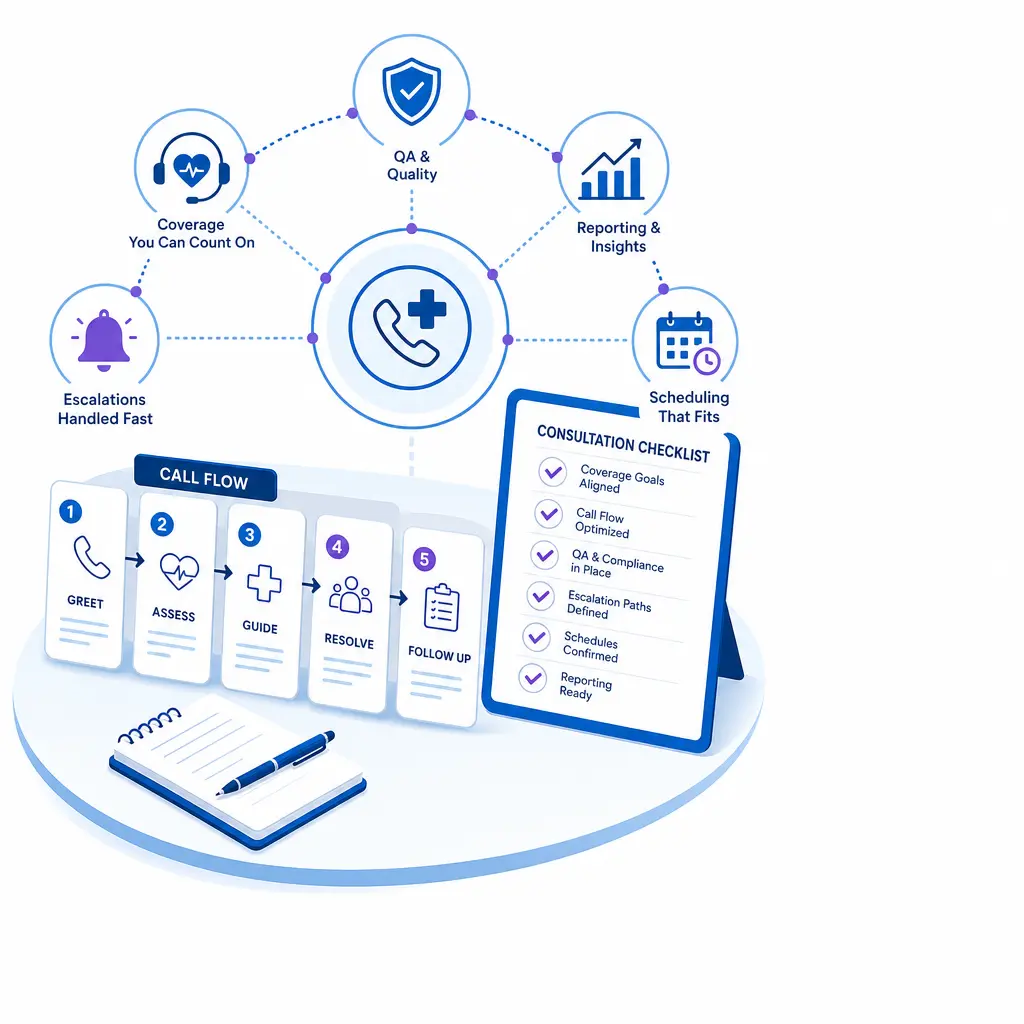
A good vendor review is a conversation, not a policy recital. Walk through call flows, recordings, access, escalations, and subcontractors together, and confirm that the service design, the BAA, and the day-to-day workflow all describe the same reality.
An NDA can still be useful, especially when a vendor may see pricing, scripts, training material, or other non-public business information. But a healthcare answering service that handles patient data needs more than a general confidentiality promise.
If a vendor says, “our NDA covers it,” treat that as a sign the review is not finished. The legal label matters less than whether the agreement truly matches the regulated workflow.
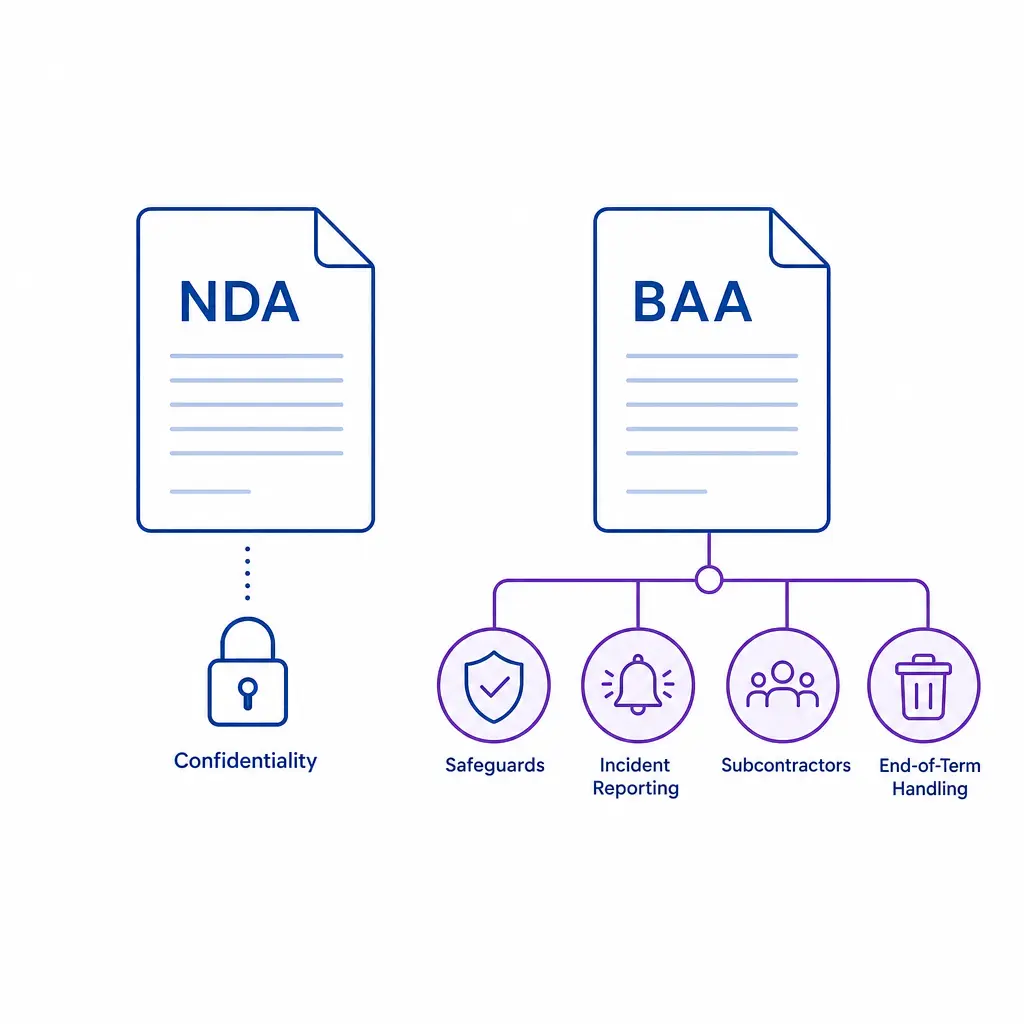
An NDA protects confidential business information broadly. A BAA is built for patient-data handling, with duties for safeguards, incident response, subcontractors, and end-of-term data. If a vendor says its NDA covers it, the review is not finished.
Most failures start with assumptions, not bad intent. The form gets signed, everyone relaxes, and the live workflow keeps changing.
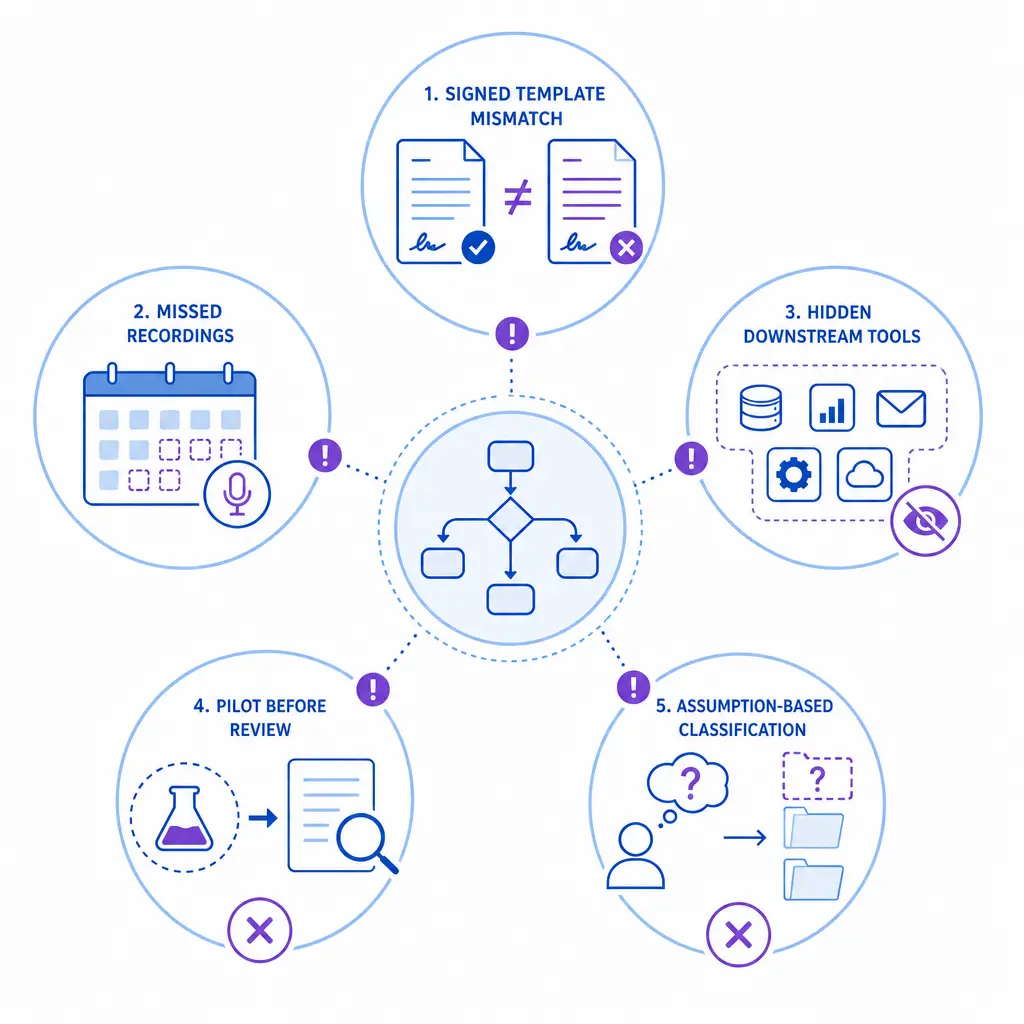
A business associate agreement template is a starting point, not a deployment plan. Even a decent HIPAA business associate agreement template has to be tailored to the actual service, the actual data flow, and the actual vendor stack.
For healthcare call coverage, review the template against what really happens in production: which queues accept patient calls, whether recordings are on, what fields agents enter, which platforms store notes, who handles overflow, and what must be returned or destroyed at termination. Then have counsel or privacy leadership decide whether the language fits the risk.
If you are searching for a business associate agreement example or sample business associate agreement, use it to build a review checklist, not to skip discovery. A template that ignores recordings, transcripts, QA access, or subcontractors can create false confidence instead of control.
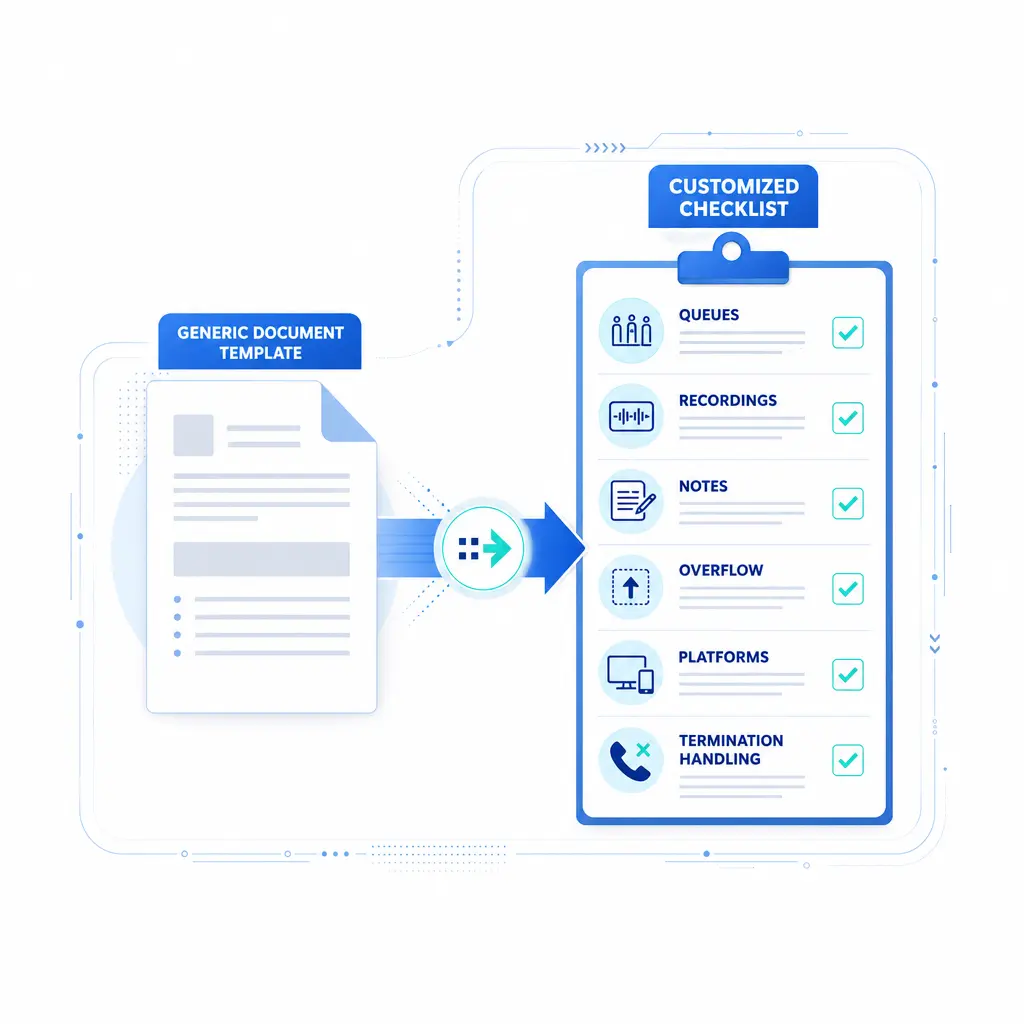
Treat a template as a starting point, not a deployment plan. Review it against production reality: which queues accept patient calls, whether recordings are on, what agents enter, where notes live, who handles overflow, and what must be returned or destroyed at termination.
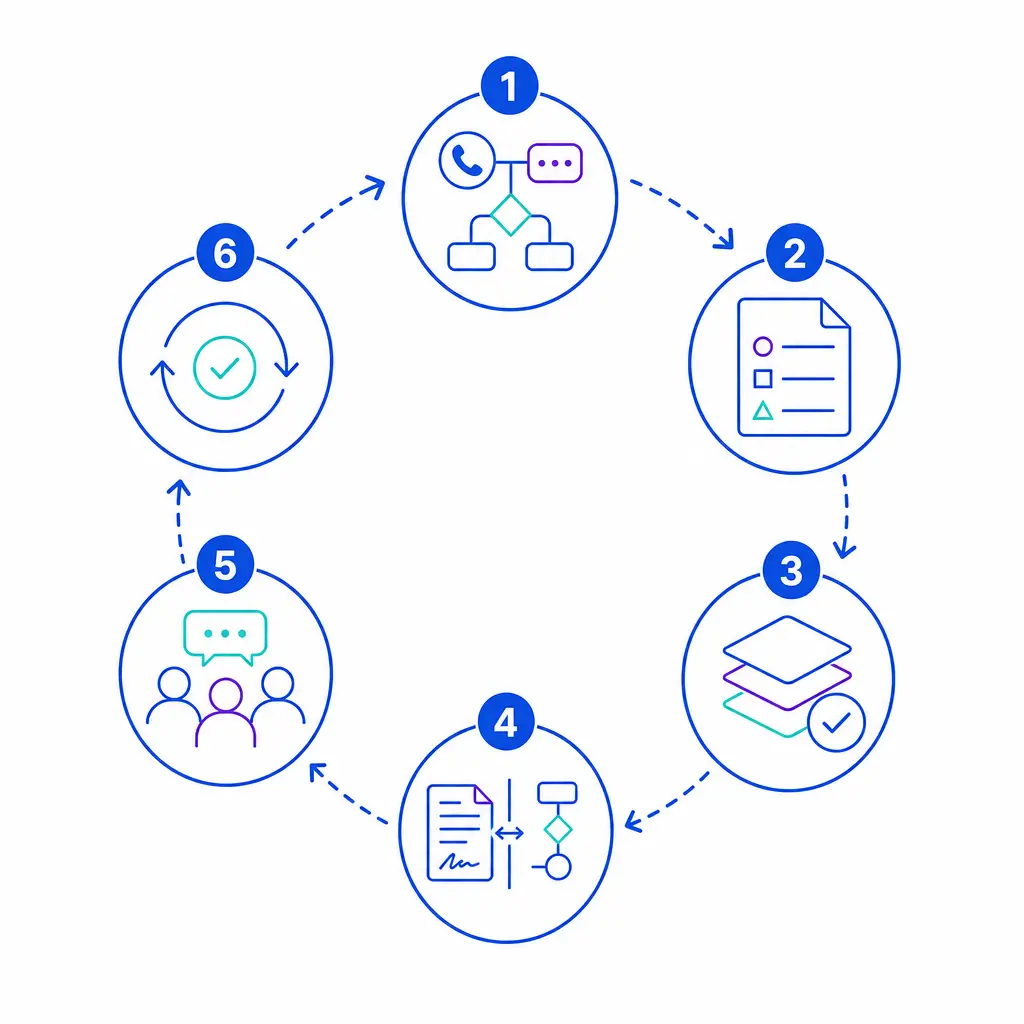
As a working rule, if a vendor will handle patient-specific information to do the job you are outsourcing, route the relationship as BAA-likely. For phone operations, that often includes answering services, schedulers, overflow teams, and after-hours partners that handle patient calls.
Before launch, before test data is used, and before live or transferred calls include patient information. Do not wait for the pilot to prove useful first.
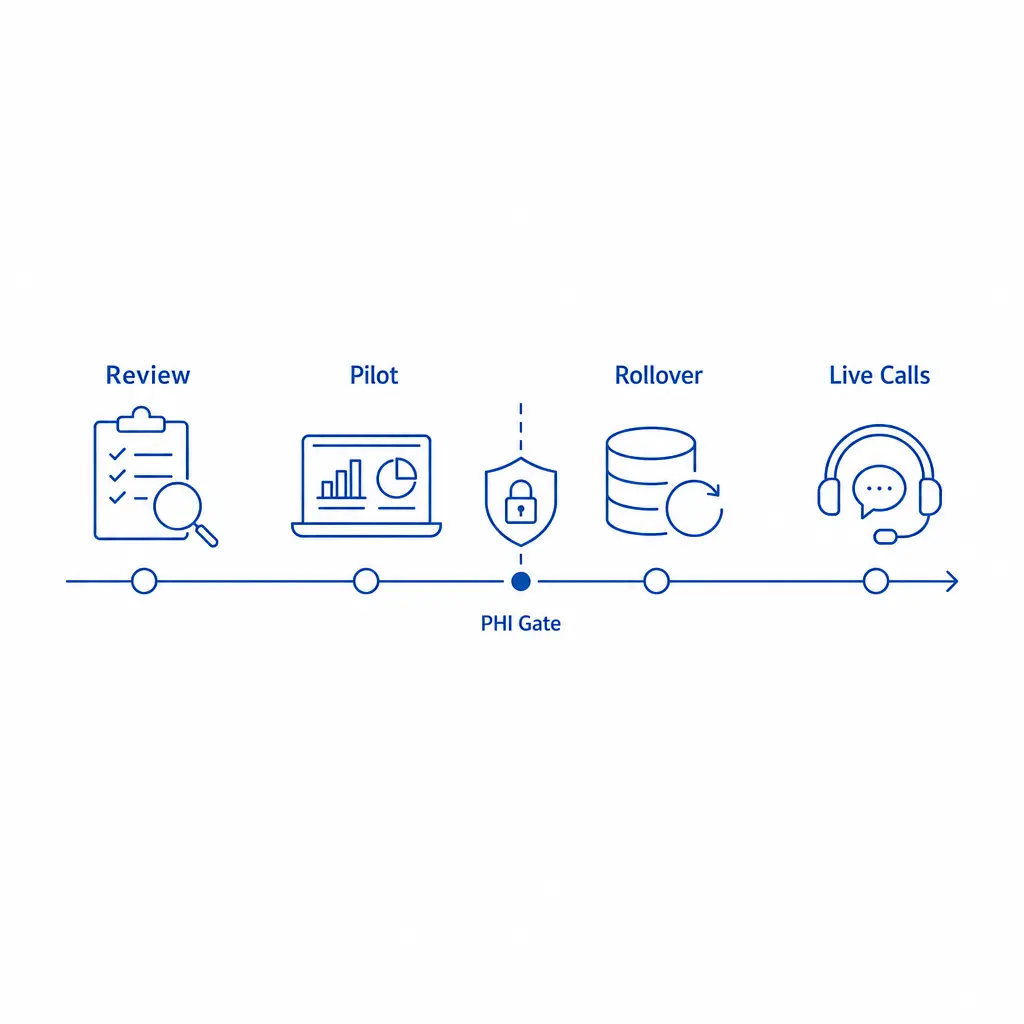
Privacy review belongs ahead of every milestone: before the pilot, before the overflow number is activated, and before after-hours rollover begins. Patient data often enters earlier than teams expect, through test calls, message-routing setup, and training.
No. An NDA protects confidentiality generally, while a BAA is designed for a regulated workflow involving patient information and vendor responsibilities around that workflow.
At a practical level, it should match the service scope and address permitted handling, safeguards, reporting, subcontractors, operational cooperation, and end-of-term handling of data. For call centers, it should also reflect recordings, transcripts, message logs, and escalation paths if those are part of the service.
Escalate immediately through privacy, security, legal, and operations. Preserve records, contain access, determine whether the issue is contractual, technical, or reportable, and decide whether remediation, notification, or termination is needed.
If your team is comparing healthcare answering vendors, Go Answer can walk through workflow scope, intake quality, coverage design, escalations, recordings, and subcontractor visibility so stakeholders can evaluate fit before after-hours or overflow traffic goes live. That is often the fastest way to see whether the proposed service model matches the controls your organization expects.
Request Pricing or Book a Discovery Call to review your call flows, coverage requirements, and vendor-evaluation questions. From there, your team can see how it works, explore enterprise BPO options, and review use cases relevant to healthcare operations.

Learn why thousands of companies rely on Go Answer.
Try us risk-free for 14 days!
Enjoy our risk-free trial for 14 days or 200 minutes, whichever comes first.
Have more questions? Call us at 888-462-6793
Learn why thousands of companies rely on Go Answer.
Have more questions? Call us at 888-462-6793
If you would like to get in contact with a Go Answer representative please give us a call, chat or email.

Thanks for your interest!
A representative will be reaching out to you shortly.
Have more questions? call us on 888-462-6793
