
Outbound Call Center Services: Appointment Setting, Follow-Ups, and Lead Outreach Done Right
By Adam AlovisLast modified: December 8, 2026
Voted Top Call Center for 2024 by Forbes
Virtual Receptionists
Save time and money with our virtual receptionists.
AI Receptionist
AI-powered receptionist that answers, routes, and qualifies calls 24/7.
Enterprise Solutions
Solutions designed to scale with your organization’s needs.
Legal Services
Our virtual legal receptionists are experts in legal intake.
Last modified: December 8, 2026
In this guide, outbound call center services means structured, agent-led phone outreach used to book appointments, qualify leads, confirm next steps, recover missed opportunities, and keep follow-up moving at scale. The goal is not just more dials. It is better coverage, cleaner handoffs, and more consistent outcomes.
This article is for enterprise service businesses, intake-heavy law firms, healthcare practices, and high-volume teams that need reliable follow-up without adding more strain to internal staff. You will learn what outbound programs usually include, how a campaign is built, what changed recently, where compliance matters, which KPIs matter, and how to decide whether outsourcing is the right fit.
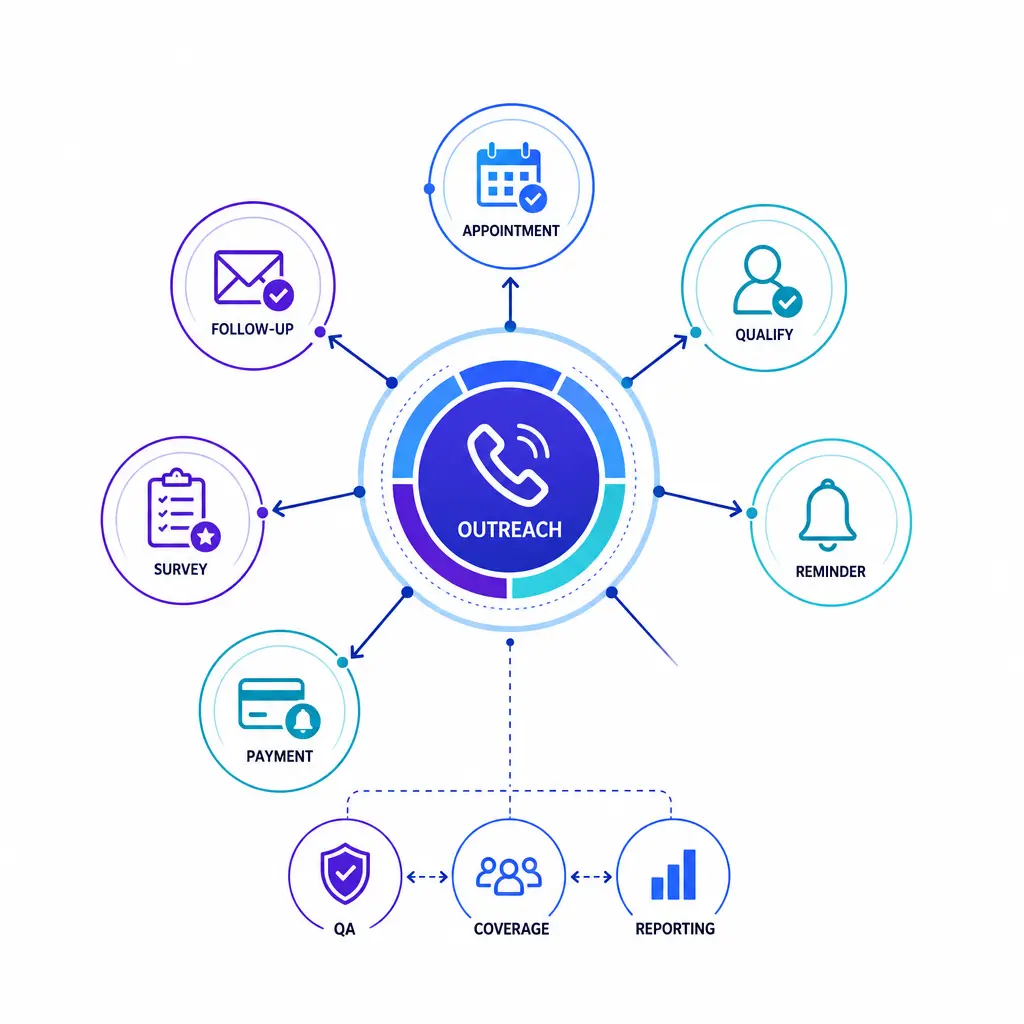
Outbound call center services are structured, agent-led phone outreach that books appointments, qualifies leads, confirms next steps, and recovers missed opportunities. The goal is better coverage, cleaner handoffs, and more consistent outcomes, not just more dials.
At an operating level, outbound call center services are programs where the agent starts the conversation instead of waiting for an inbound call. The outreach can be sales-related, service-related, or operational, but the best programs all share the same basics: clear audience rules, strong scripting, accurate dispositioning, and accountable reporting.
Most buyers are not looking for generic cold calling. They are looking for dependable execution on a specific workflow, such as recovering missed leads, confirming appointments, reactivating dormant contacts, qualifying prospects before transfer, or completing required follow-up after an inbound interaction.
An outbound rep typically works from a campaign brief, a script framework, and a set of escalation rules. Their job is to start the conversation, verify context, move the caller toward a defined next step, log the outcome accurately, and hand off exceptions without losing momentum.
That next step can be an appointment, a qualified transfer, a callback, a survey completion, a payment conversation, or a status update. In stronger programs, the rep is measured on outcome quality, not just call activity.
No. Cold calling is only one subset of outbound calling. Many outbound programs are warm, service-driven, or operational, such as calling back a recent web lead, confirming a scheduled appointment, re-engaging a past customer, or following up after a missed inbound inquiry.
That distinction matters because the workflow, compliance posture, script style, and KPI targets are very different for a cold prospecting campaign than they are for a follow-up or reminder campaign.
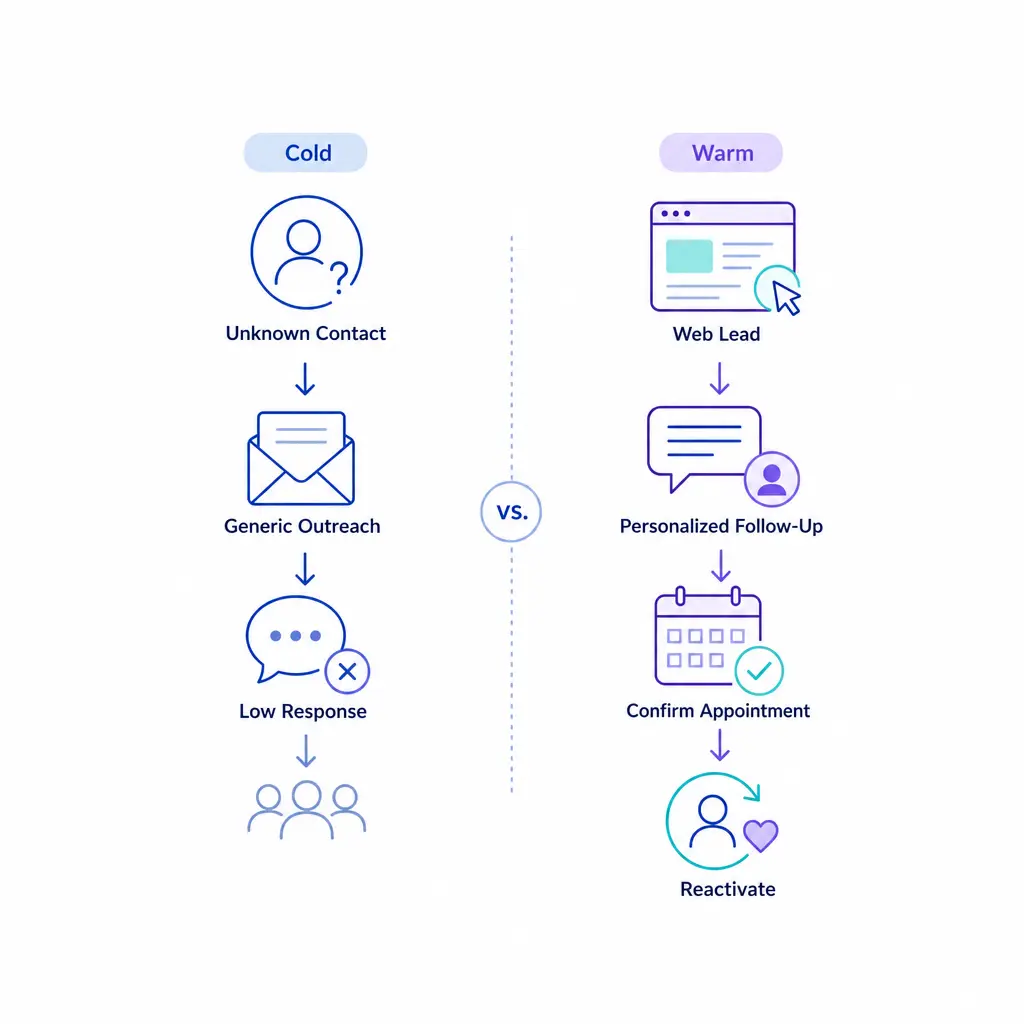
Cold calling is only one kind of outbound. Many programs are warm and service-driven, such as calling back a recent web lead, confirming an appointment, or re-engaging a past customer, and they need different scripts, compliance rules, and KPI targets.
The biggest shift is that AI voice and caller identity are now front-line planning issues, not side topics. The FCC has stated that AI-generated voices in robocalls are illegal under the TCPA, and carriers continue implementing STIR/SHAKEN call authentication to reduce spoofing and strengthen caller identity.
For operators, that changes campaign design. Outreach rules now need to account for consent, caller-ID reputation, escalation to a live agent, and a clear record of what happened on every attempt.
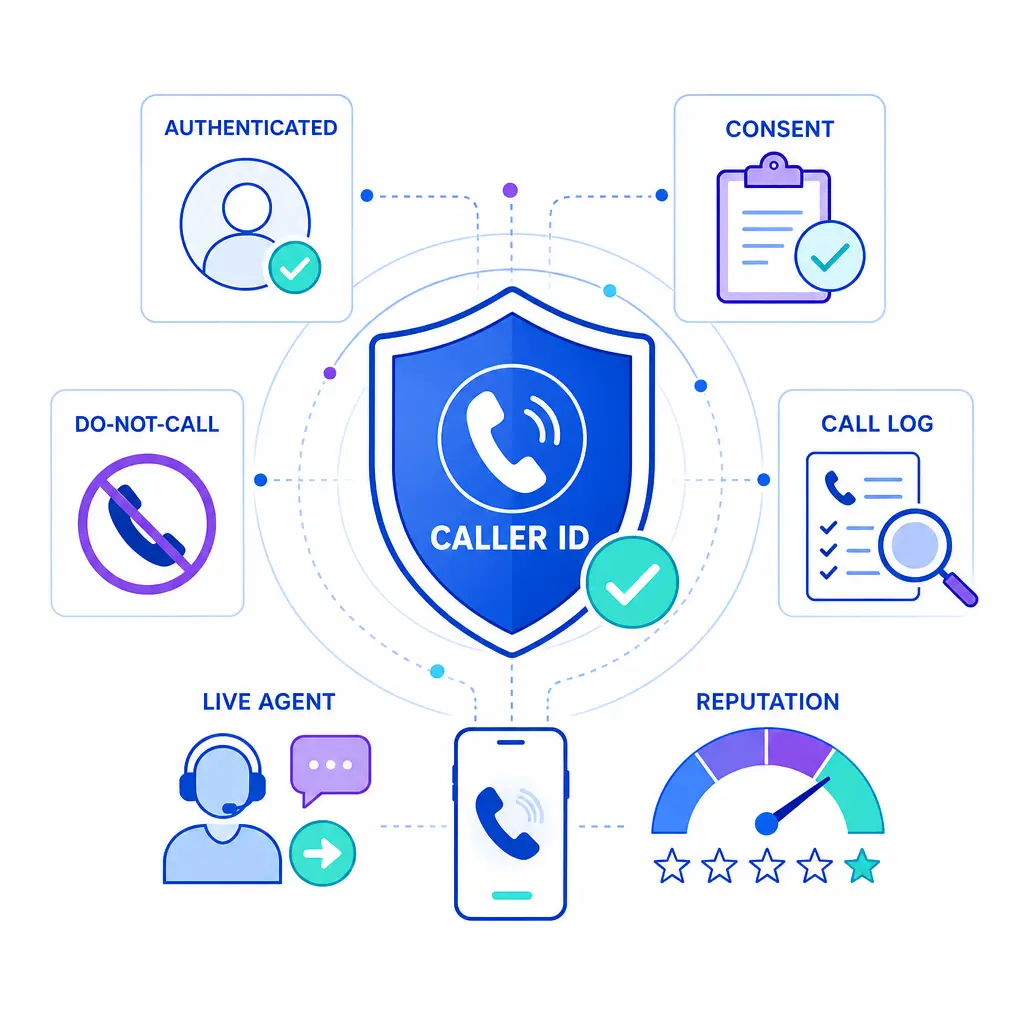
AI-generated voices in robocalls are illegal under the TCPA, and call authentication is tightening around caller identity. Campaign rules now need to account for consent, caller-ID reputation, escalation to a live agent, and a clear record of every attempt.
The strongest outsourced outbound programs feel like an extension of your intake or customer operations team. For Go Answer, the practical focus is usually simple: make sure the right people are called, the right message is delivered, and the next step is captured cleanly.
Appointment setting works best when the campaign is tied to a real scheduling workflow instead of a loose lead list. Agents need enough context to explain the purpose of the call, confirm readiness, and place the contact into the right time slot, location, or queue.
Confirmation campaigns are equally important. A well-run reminder and confirmation process can reduce no-shows, surface reschedule requests early, and protect staff time that would otherwise be lost to back-and-forth follow-up.
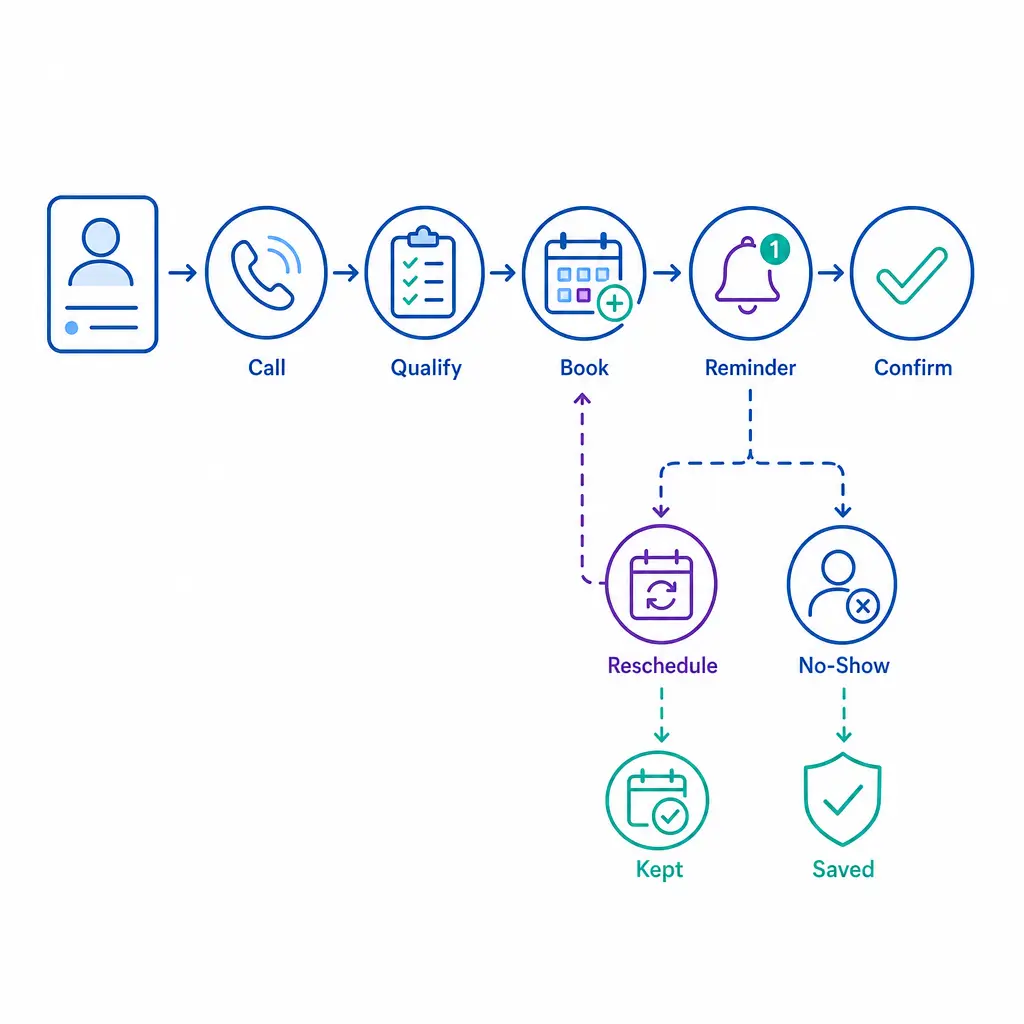
Appointment setting works best when it is tied to a real scheduling workflow. Agents explain the purpose of the call, confirm readiness, and place the contact into the right slot or queue, while reminder and confirmation calls reduce no-shows and surface reschedule requests early.
Not every lead should go directly to your sales team or intake staff. A structured qualification step helps screen for fit, timing, geography, service need, case type, budget, urgency, or any other criteria that determine whether the lead is worth immediate handoff.
This matters even more for businesses with uneven inbound volume. If your team is strongest at closing or handling complex intake, outbound qualification protects that time by filtering out low-fit contacts and advancing the ones that are ready now.
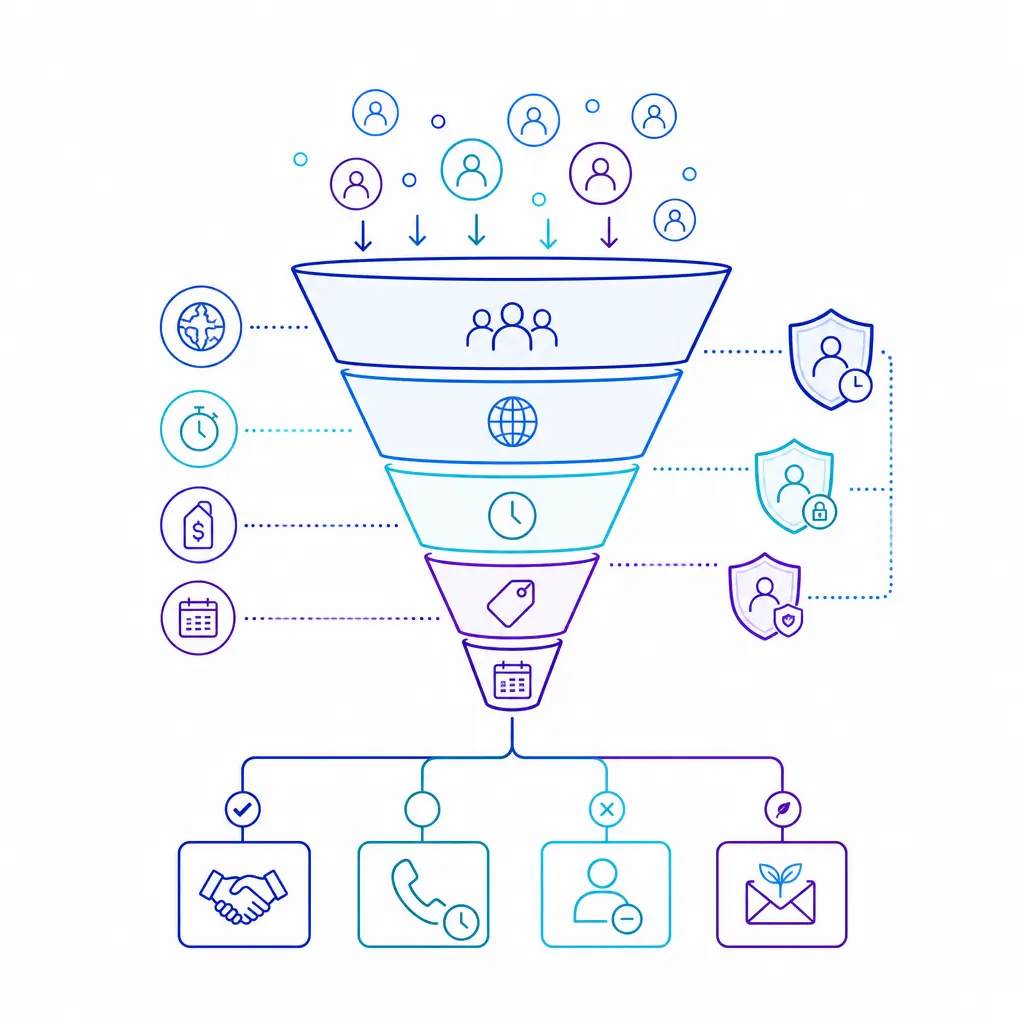
A structured qualification step screens raw leads for fit, timing, geography, service need, and urgency. Only qualified contacts move on as clean, CRM-ready handoffs to sales or intake, which protects your team's time from low-fit contacts.
Missed inbound calls, abandoned forms, unreturned voicemails, dormant accounts, and old but still valuable leads often go untouched once the day gets busy. An outbound team closes that gap by turning forgotten contacts into scheduled callbacks, re-engagement conversations, or final dispositions.
For legal intake, that can mean reconnecting with prospects who never completed screening. For healthcare or multi-location service businesses, it can mean reaching back out after an inquiry, a missed appointment, or an unfinished service conversation.
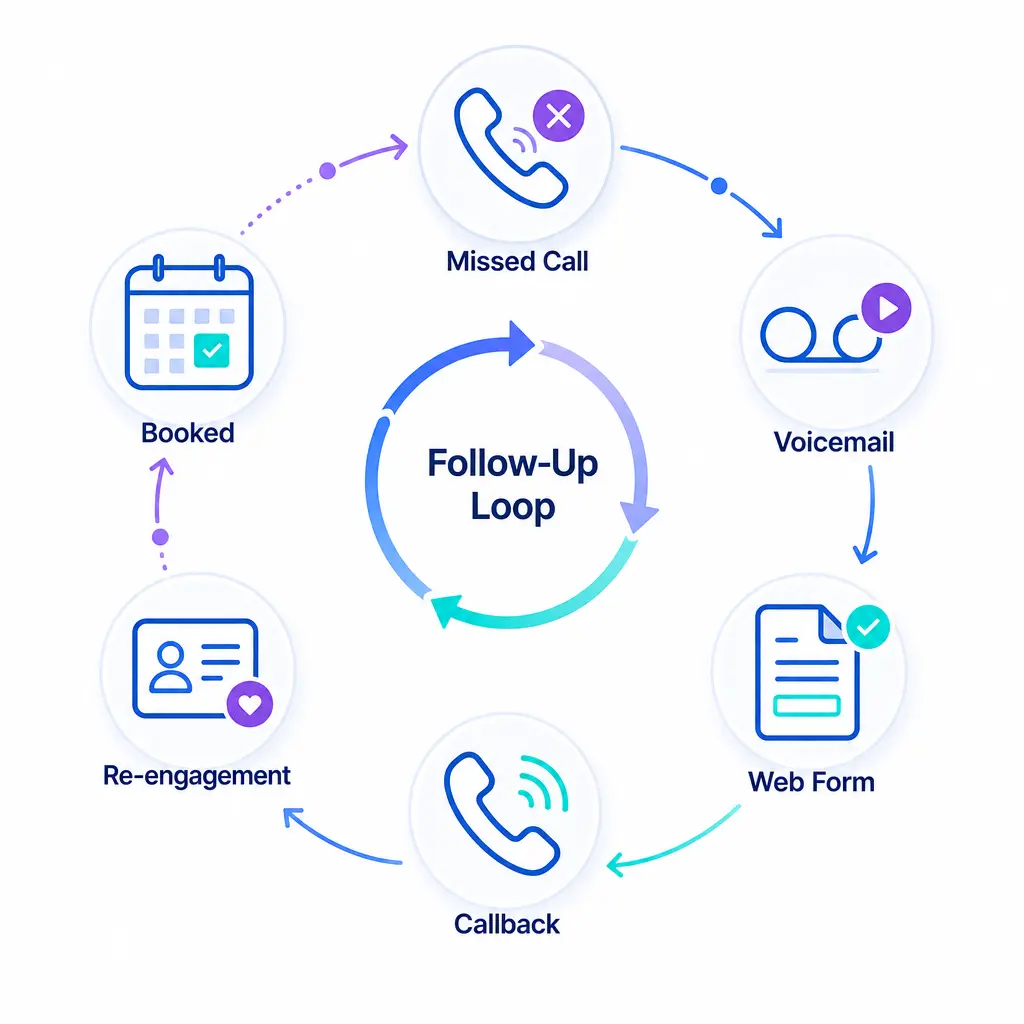
Missed inbound calls, abandoned forms, and unreturned voicemails often go untouched once the day gets busy. An outbound callback loop turns those forgotten contacts into scheduled callbacks, re-engagement conversations, or final dispositions.
Phone-based feedback is useful when digital response rates are weak or when nuance matters. Some contacts will explain a service issue, a decision delay, or a satisfaction concern on a call that they would ignore in a survey link.
These campaigns work best when the questions are tight, the objectives are clear, and the outcomes are coded consistently. That gives leadership something usable, not just a stack of unstructured comments.
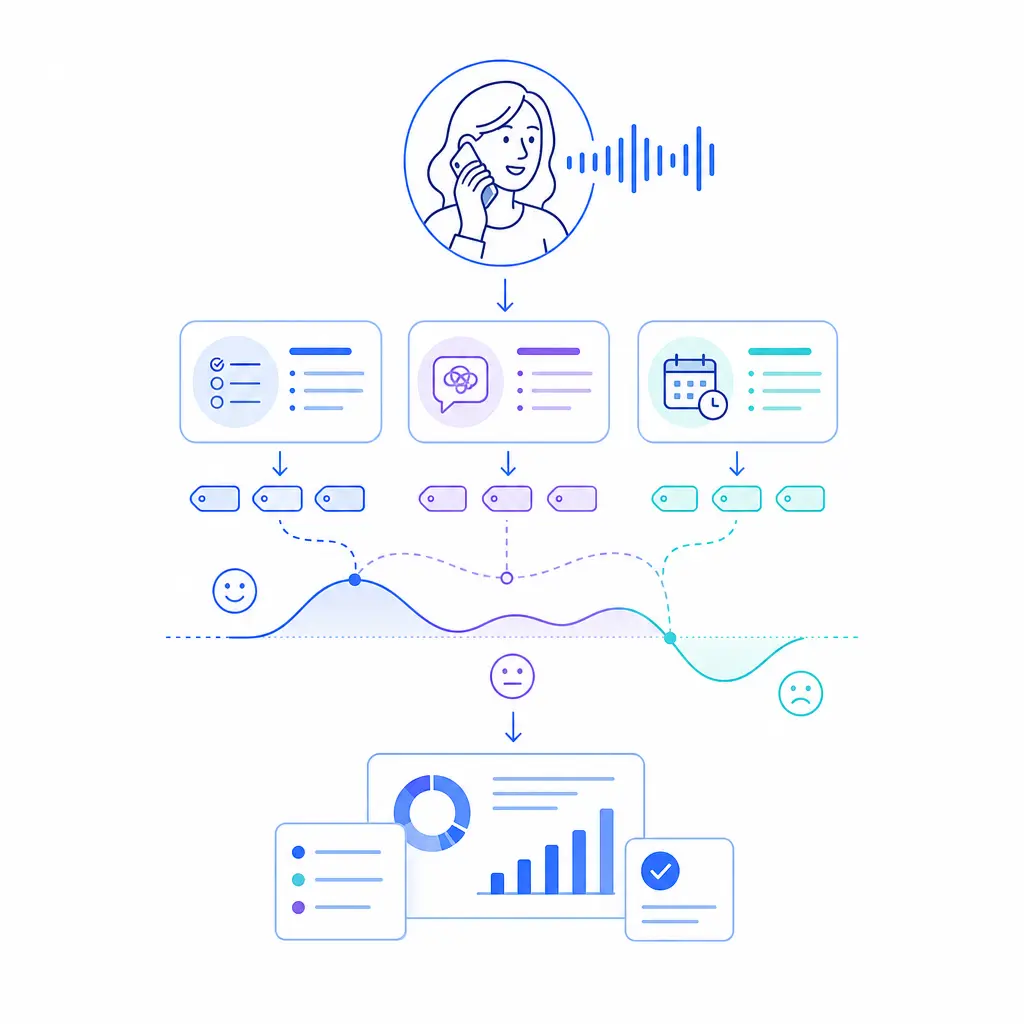
Phone-based feedback captures nuance that survey links miss. When questions are tight, objectives are clear, and outcomes are coded consistently, conversations become structured insights that leadership can actually use, rather than a stack of unstructured comments.
A courteous reminder call can be more effective than a generic message when timing, clarity, or account-specific context matters. The key is to keep the workflow controlled, with clear rules for what can be discussed, when the call should escalate, and how promises to pay or callback requests are documented.
Proactive notifications also help with scheduling changes, service interruptions, or next-step reminders. When these calls are integrated into normal operations, they reduce preventable inbound volume later.
Start with one primary outcome. That might be booked appointments, qualified transfers, completed follow-ups, dormant lead reactivation, or survey completions.
Then define the audience tightly. Good campaigns usually segment by source, age of lead, geography, service line, case type, language, or urgency instead of treating the whole list the same way.
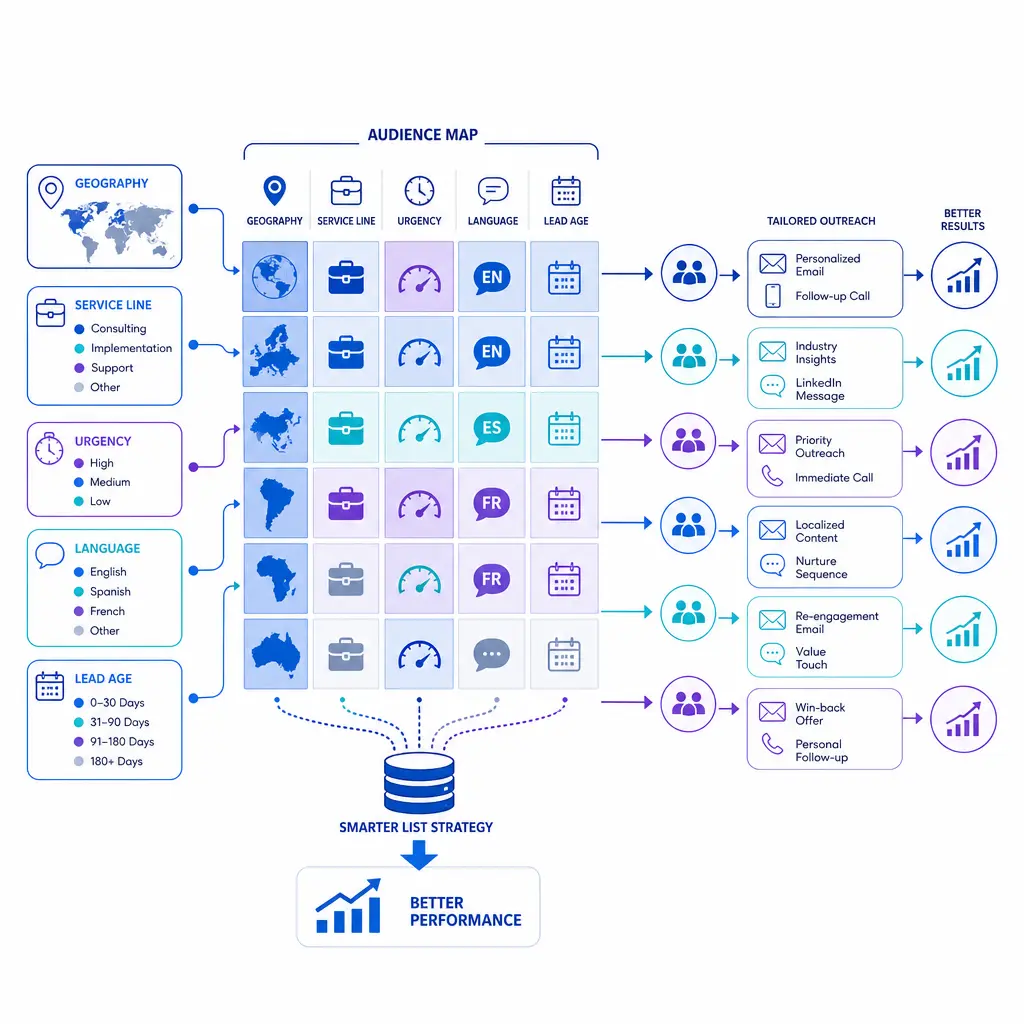
Define the audience tightly instead of treating the whole list the same way. Good campaigns segment by source, age of lead, geography, service line, case type, language, or urgency, so each group gets the right message and the right next step.
List quality affects everything that follows. Before launch, decide which records are callable, which should be suppressed, which numbers belong in which campaign, and what happens when someone asks not to be called again.
This is also where callback windows, retry logic, voicemail rules, and bilingual routing should be set. Clean rules protect both performance and compliance.
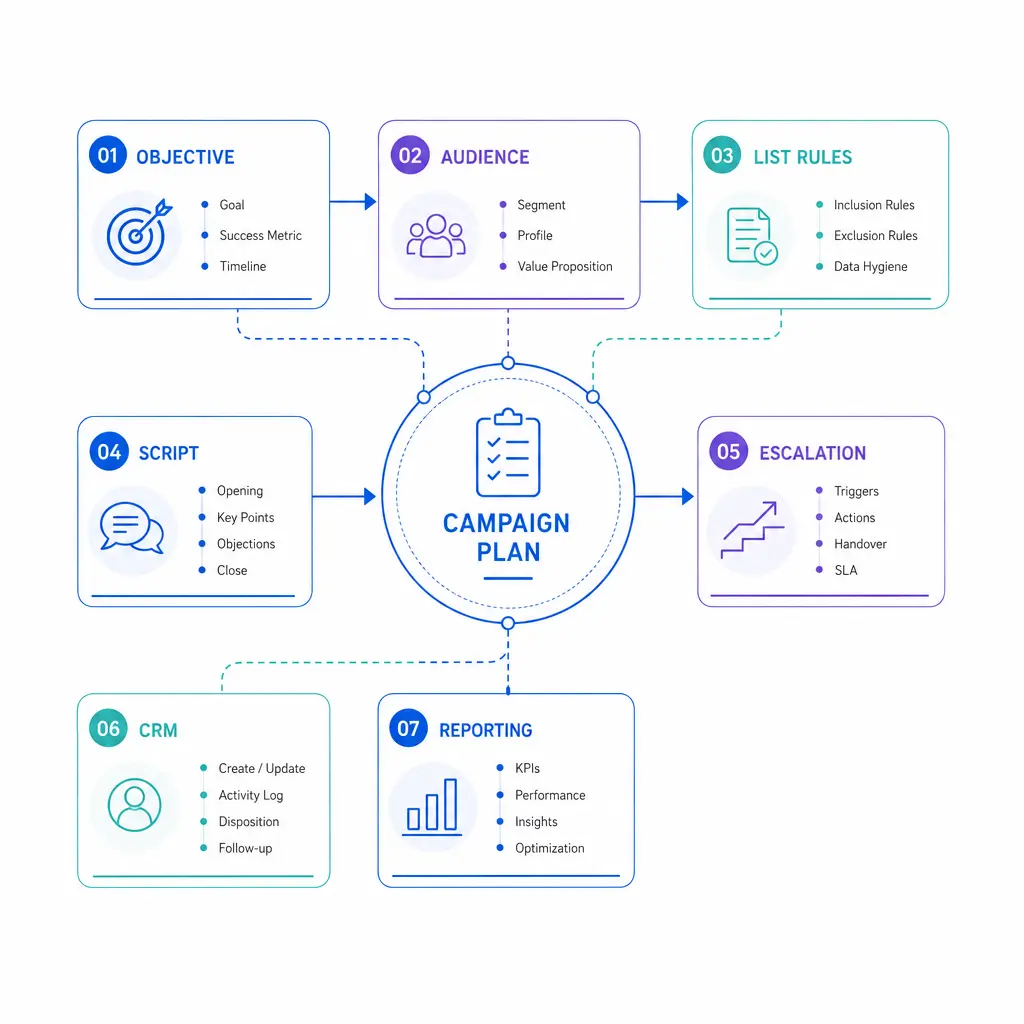
A campaign blueprint maps the objective, audience, script, outreach rules, and reporting into one plan. Clean rules for callable records, suppression, retries, voicemail, and opt-outs protect both performance and compliance before launch.
The best scripts are structured without sounding robotic. Agents need a clear opening, a reason for the call, prompts for discovery, and approved paths for common objections, transfers, callbacks, and exceptions.
Escalation rules matter just as much as the opening script. If a contact asks a billing question, needs legal clarification, wants to reschedule, or becomes a high-value lead, the program should define exactly where that conversation goes next.
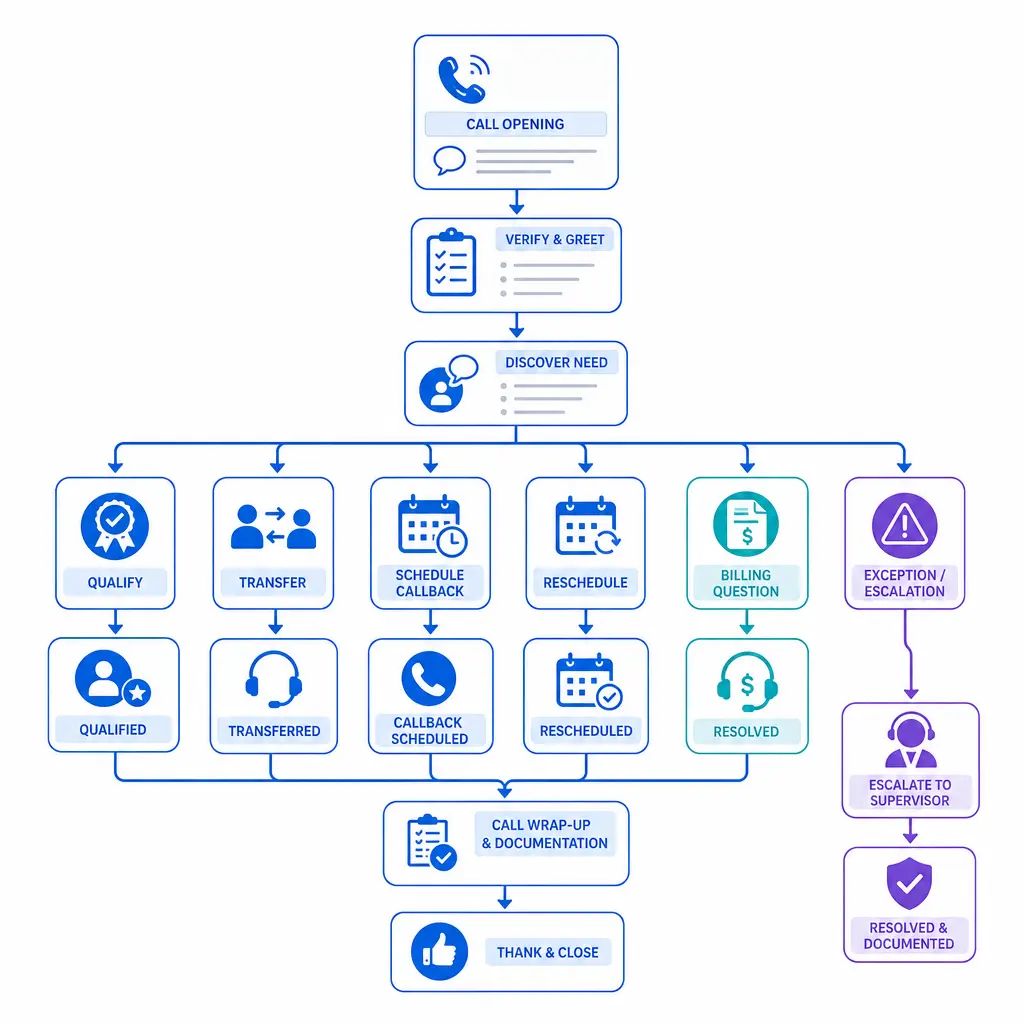
The best scripts are structured without sounding robotic. A clear opening and discovery prompts lead into approved paths for objections, transfers, callbacks, reschedules, and exceptions, so agents know exactly where each conversation goes next.
Agents need more than a script read-through. They need call intent, qualification standards, tone guidance, note-taking expectations, and examples of acceptable and unacceptable outcomes.
CRM workflows should be connected before the first call goes out. Dispositions, callback dates, transfer outcomes, and notes should feed a system your team can actually use after the call ends.
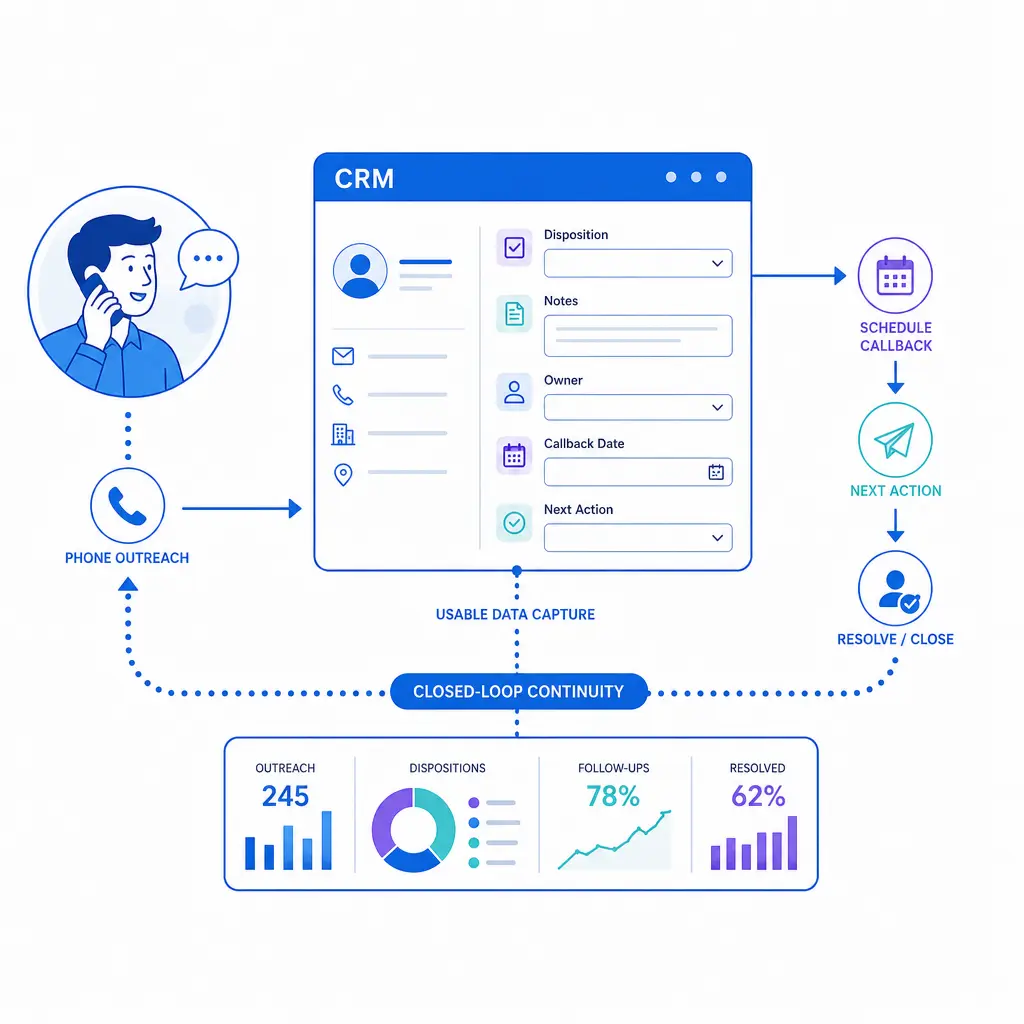
CRM workflows should be connected before the first call goes out. Dispositions, callback dates, transfer outcomes, and notes flow into a system your team can use, so the next step can start immediately after the call ends.
Most outbound programs improve faster when they launch with a narrow scope first. Early reviews usually focus on list quality, connect patterns, script friction, transfer quality, and whether the recorded outcomes match what the business actually needs.
From there, the work is operational. Tighten audience rules, refine the script, retrain on weak spots, and keep reporting focused on business outcomes rather than vanity activity.
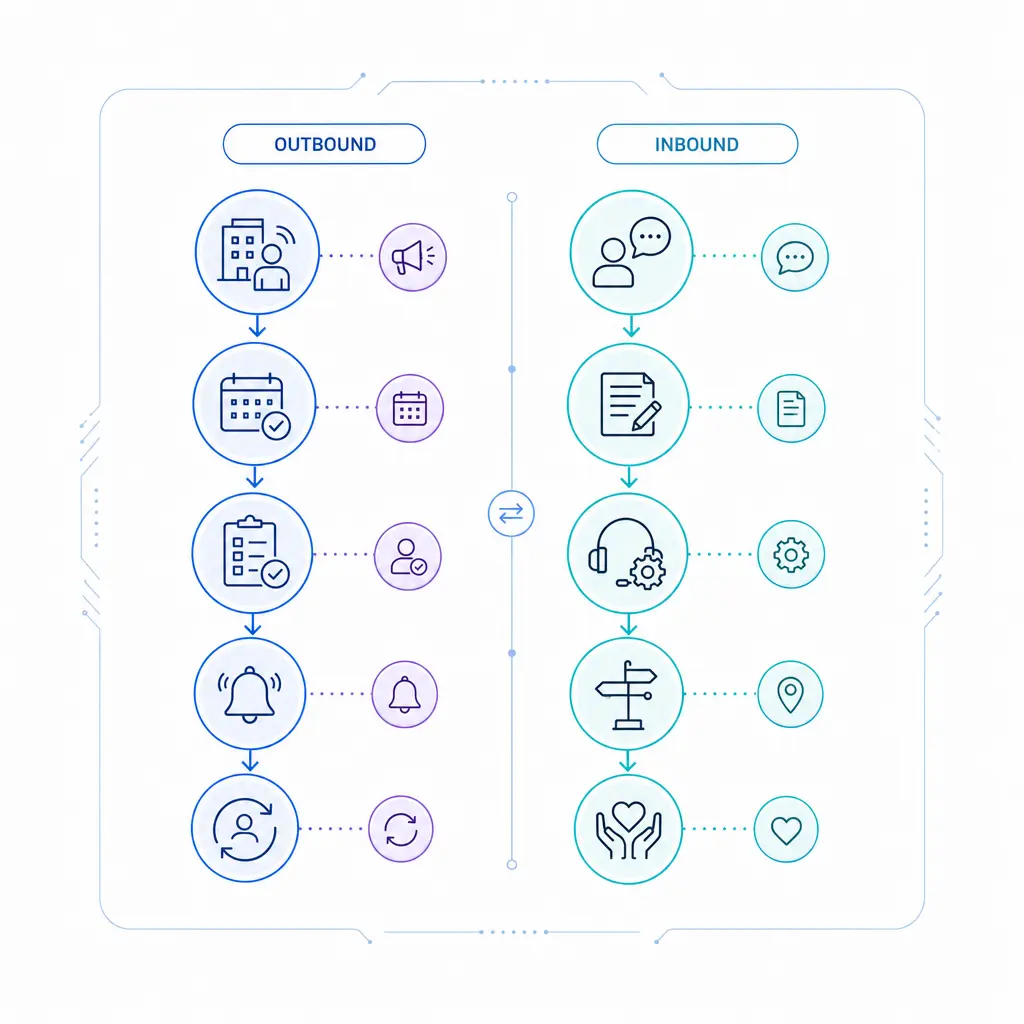
The simplest difference is who starts the interaction. In outbound, the business initiates contact. In inbound, the customer or prospect initiates contact.
Many businesses need both. A missed inbound opportunity often becomes an outbound recovery workflow, and a strong outbound program can reduce the avoidable inbound friction that happens when customers are left waiting for a callback.
Internal teams are often good at high-value conversations and poor at repetitive follow-up because their day gets interrupted by everything else. Outsourcing helps protect consistency, especially when leads, callbacks, reminders, or reactivation lists need daily attention.
This is usually the real buying trigger. Not a lack of phone skill, but a lack of protected capacity.
Outbound demand is rarely flat. Some businesses need a steady daily cadence, while others need extra coverage around seasonal surges, marketing pushes, event follow-up, or backlog cleanup.
An outsourced model gives you a faster way to add trained calling capacity without hiring, scheduling, and managing every seat internally. That flexibility matters for multi-location operations and intake-heavy environments.
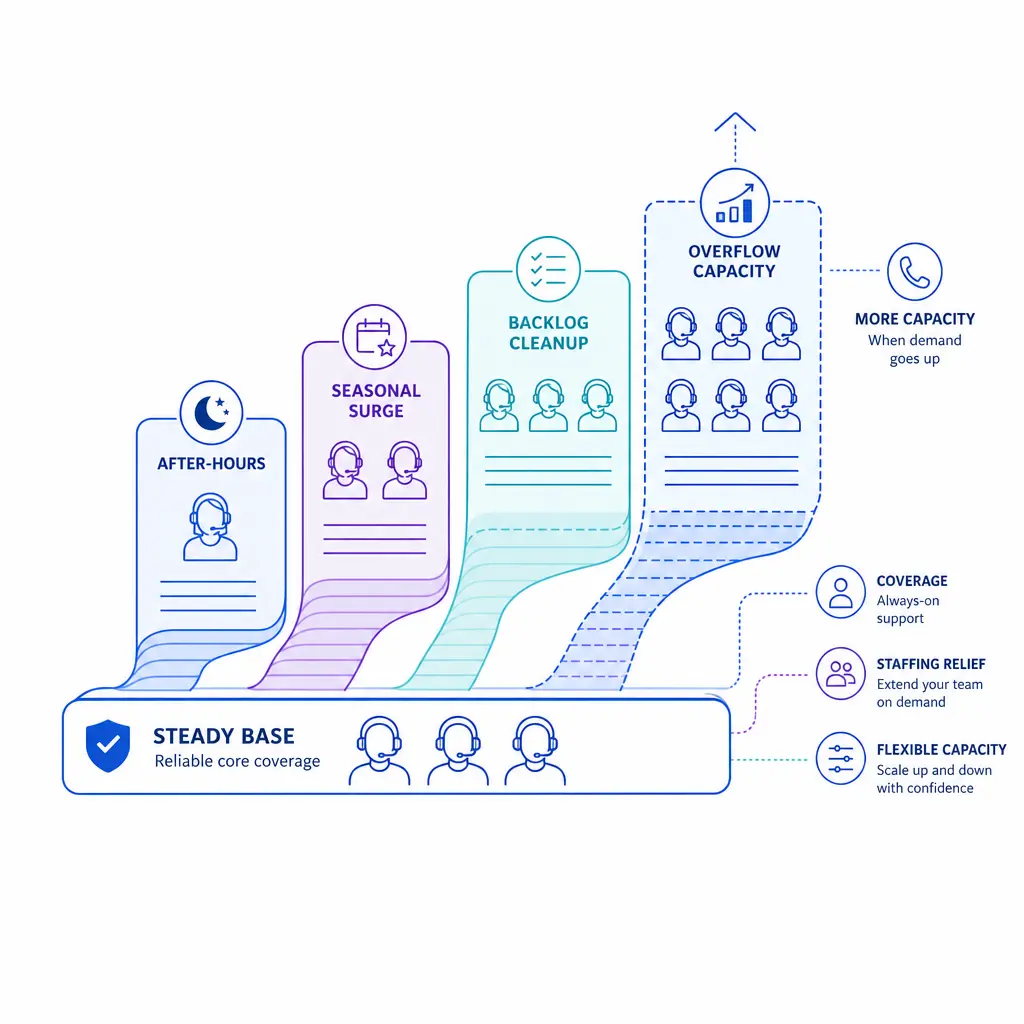
Outbound demand is rarely flat. An outsourced model adds trained calling capacity for seasonal surges, marketing pushes, event follow-up, or backlog cleanup without hiring, scheduling, and managing every seat internally, which helps multi-location and intake-heavy teams.
Good outsourced outbound support is not just labor. It is process discipline. That means tighter disposition standards, better note consistency, clearer callback ownership, and reporting that shows what actually happened to each segment.
When the CRM handoff is clean, your team does not waste time decoding spreadsheets or replaying incomplete conversations. They can work the next step immediately.
Many buyers do not want an AI-only voice experience for nuanced conversations. They want trained people handling objections, emotion, intake complexity, and judgment-heavy moments, while automation supports the workflow behind the scenes.
That support can include lead prioritization, post-call summaries, QA flagging, sentiment cues, and reminder logic. The value is not replacing the human conversation. It is making the human conversation more consistent and more usable after the call.
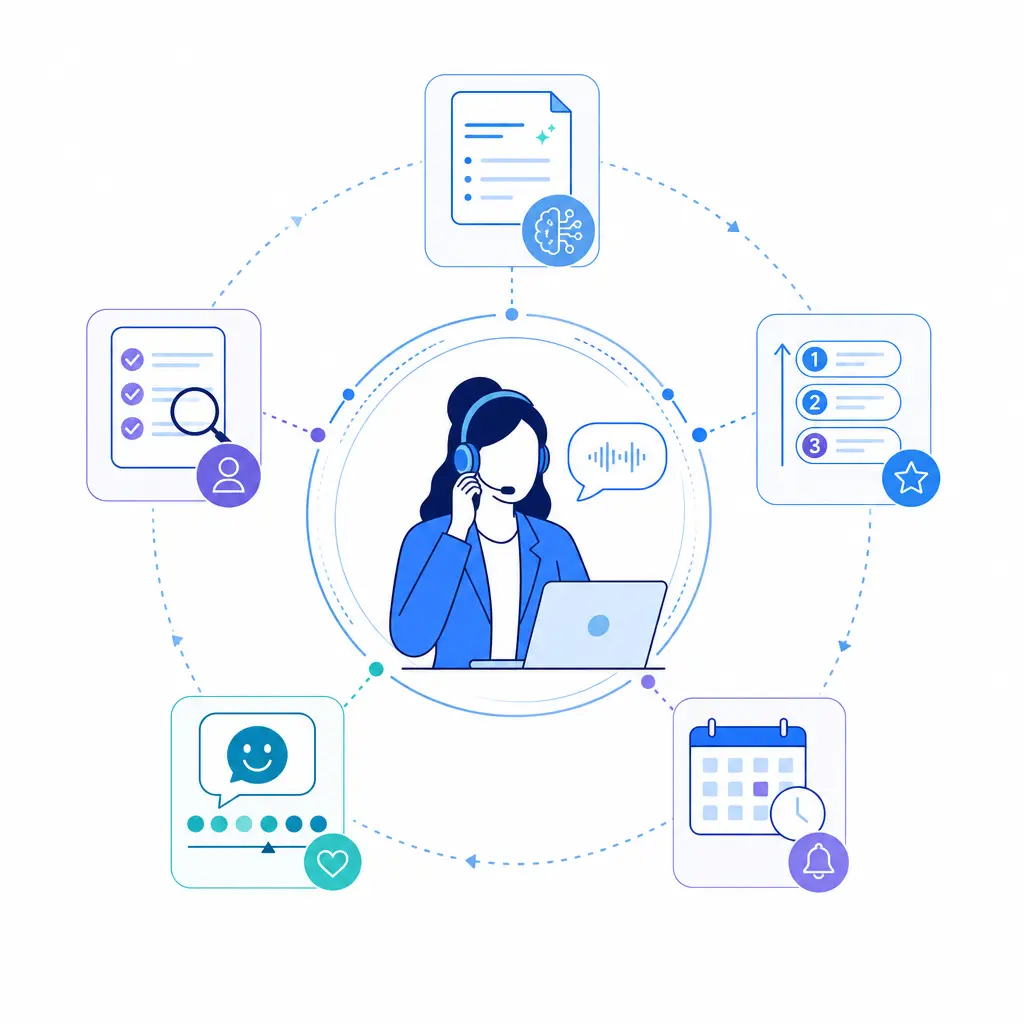
Trained people handle objections, emotion, and judgment-heavy moments, while automation supports the workflow behind the scenes with lead prioritization, post-call summaries, QA flagging, sentiment cues, and reminder logic that make each conversation more consistent and usable.
Good outbound reporting needs more than a total dial count. You need reason codes, attempt history, callback commitments, transfer outcomes, and closed-loop status updates back into the CRM or case-management workflow.
Decide early what should be captured on every call. At minimum, that usually includes contact result, next action, ownership, timing, and any information the receiving team will need to act without asking the same questions again.
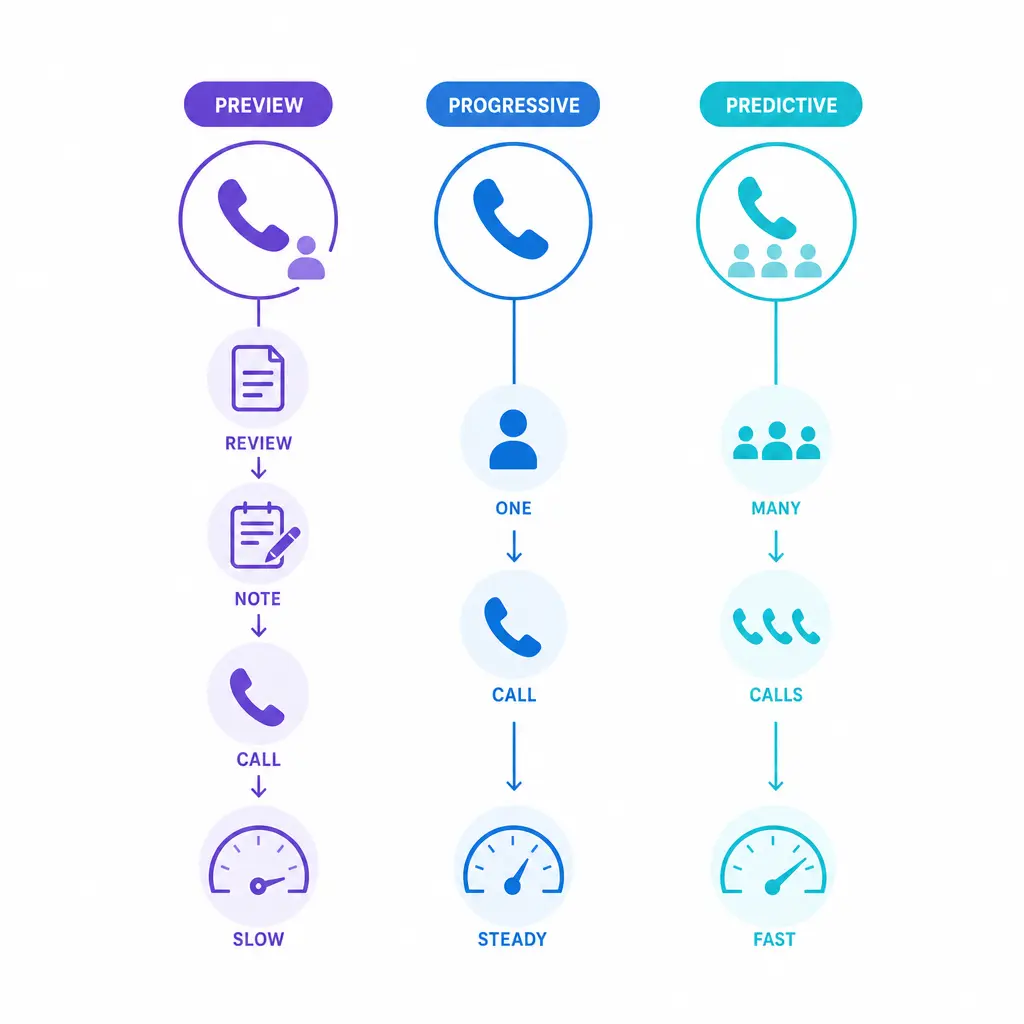
The right dialing approach depends on how much context the agent needs before speaking. Preview works best when the rep needs to read notes before calling. Progressive fits teams that want steady pace with cleaner agent availability. Predictive is usually reserved for simpler, higher-volume workflows where a faster rhythm matters more than deep pre-call review.
This is an operational decision, not a branding one. Highly nuanced legal, healthcare, or consultative campaigns usually need more context and more guardrails than a straightforward reminder or status-notification campaign.
In the United States, campaigns that use sales scripts, automated outreach, prerecorded content, or artificial voices can implicate the Telemarketing Sales Rule and National Do Not Call requirements as well as the Telephone Consumer Protection Act rules for robocalls and texts. That is why mature programs define list sources, suppression logic, opt-out handling, escalation rules, and how consent is captured before launch.
Caller trust matters too. Number governance, branded caller strategy, and attention to caller-ID reputation should be part of planning, especially when multiple campaigns share the same pool of numbers or when answer rates matter across different locations.
If a healthcare workflow includes protected health information, scripts, access controls, reporting, and vendor management should be designed around the HIPAA Rules. This article is operational guidance, not legal advice, so regulated teams should validate campaign design with counsel or compliance leadership.
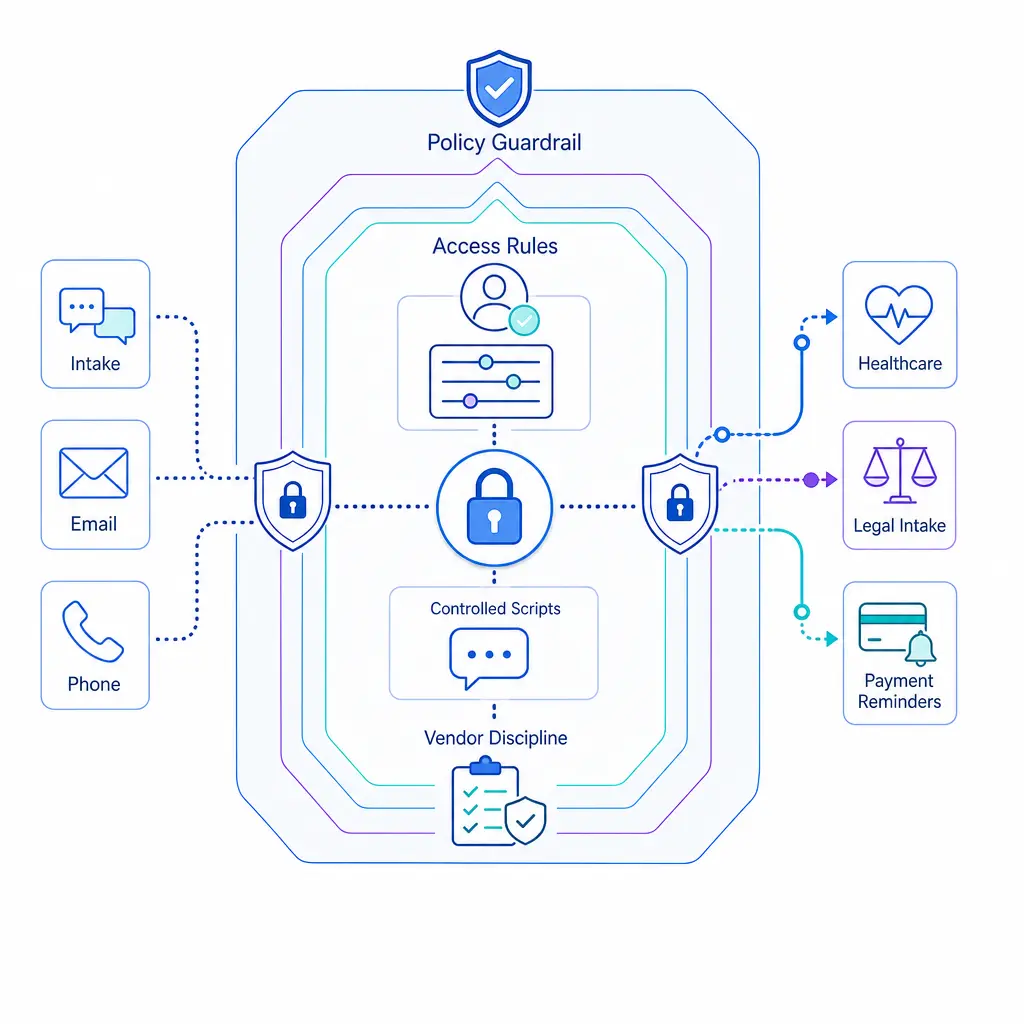
Regulated outbound workflows need guardrails. Healthcare, legal, and payment-sensitive campaigns call for controlled access, defined list sources, suppression logic, opt-out handling, and consent capture, with scripts and vendor management designed around rules such as HIPAA and the TCPA.
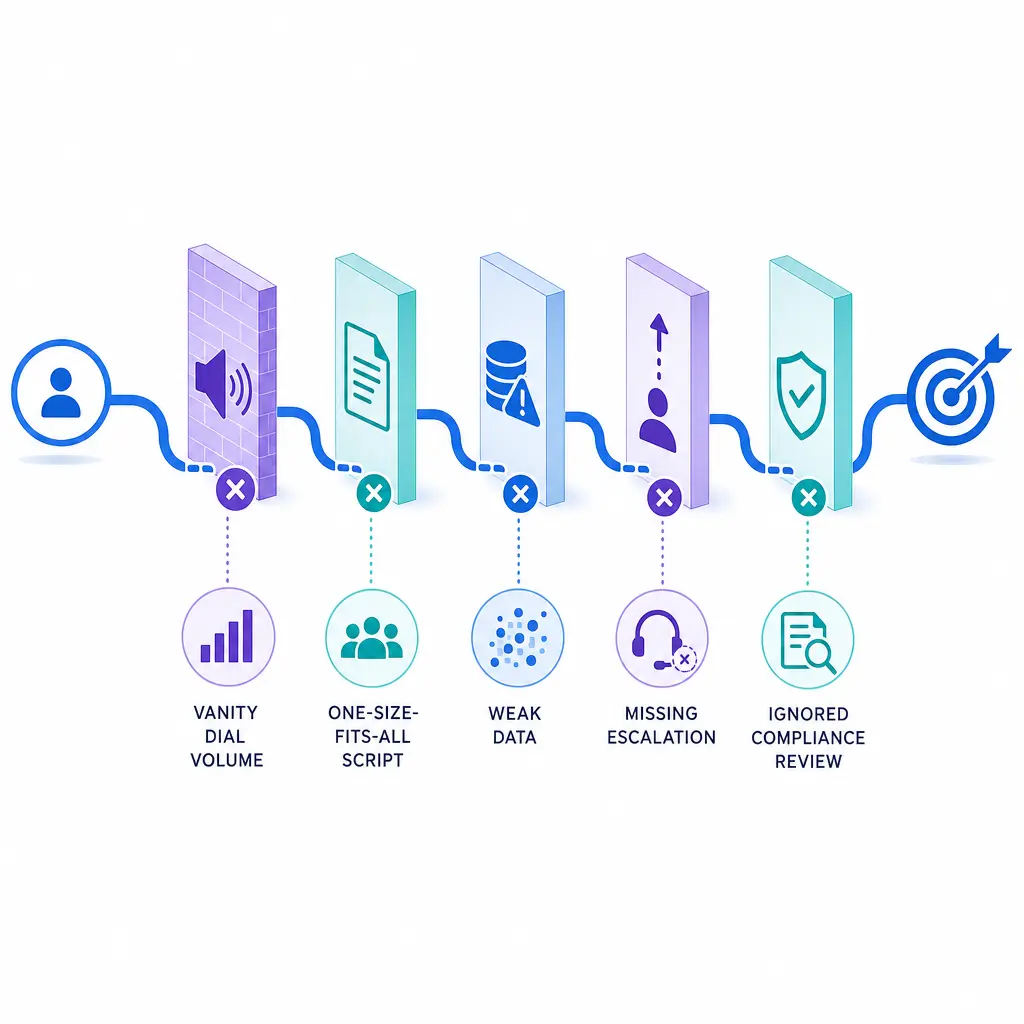
Five operational mistakes interrupt an otherwise smooth outbound process: judging by dial volume alone, using one script for every segment, sending weak data to good agents, skipping escalation design, and treating compliance as a one-time setup task.
Daily call totals vary widely, so they are rarely the best headline metric. A reminder campaign, a legal lead reactivation campaign, and a high-consideration B2B outreach program do not run at the same pace, and they should not be judged the same way.
If you only track contacts and appointments, you can miss the real issue. Many programs fail not because nobody answered, but because the wrong people were routed, the notes were weak, or the handoff broke after the call.
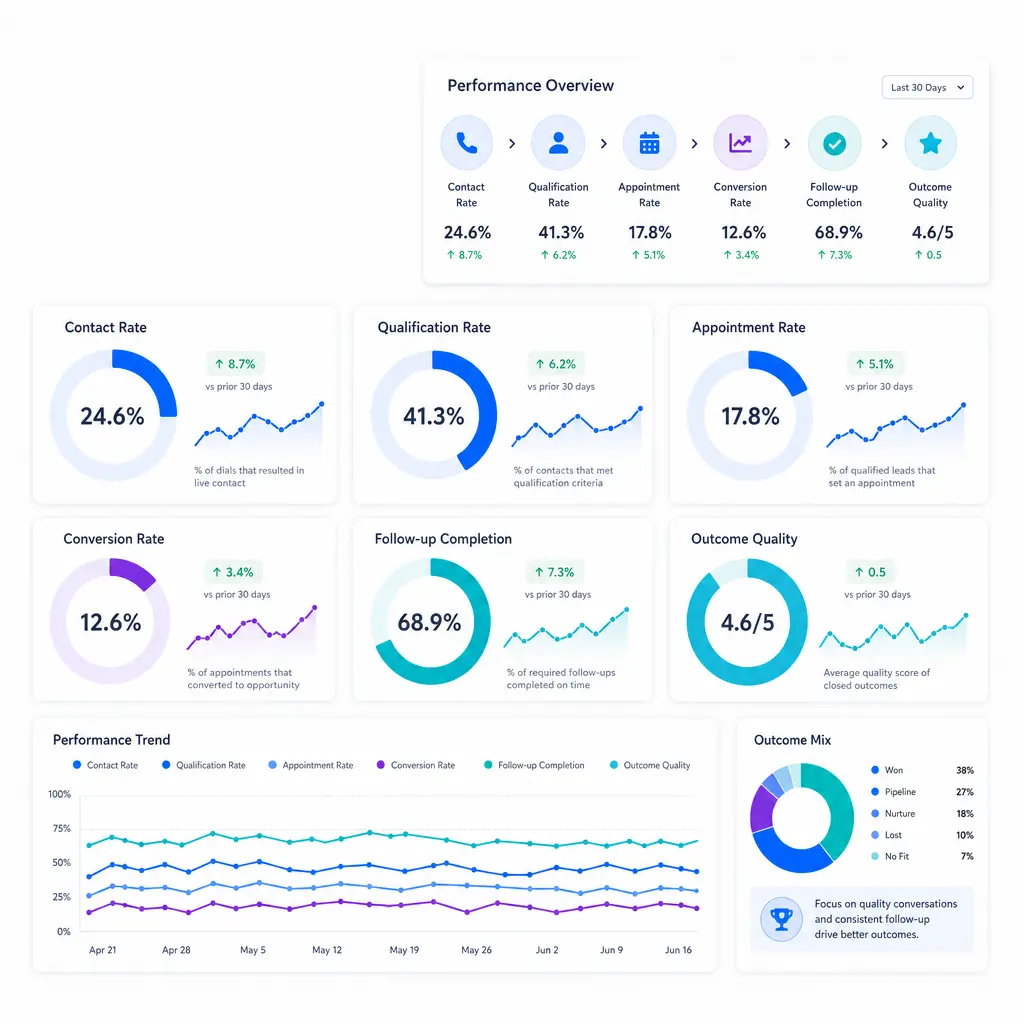
A focused dashboard tracks contact rate, qualification rate, appointment rate, conversion rate, follow-up completion, and outcome quality. Daily call totals are rarely the best headline metric, since different campaigns run at very different paces.
An outbound call center is usually a strong fit when there is a repeatable workflow that matters to revenue, intake quality, retention, or service continuity. It becomes even more valuable when internal teams are strong at core work but inconsistent at follow-up.
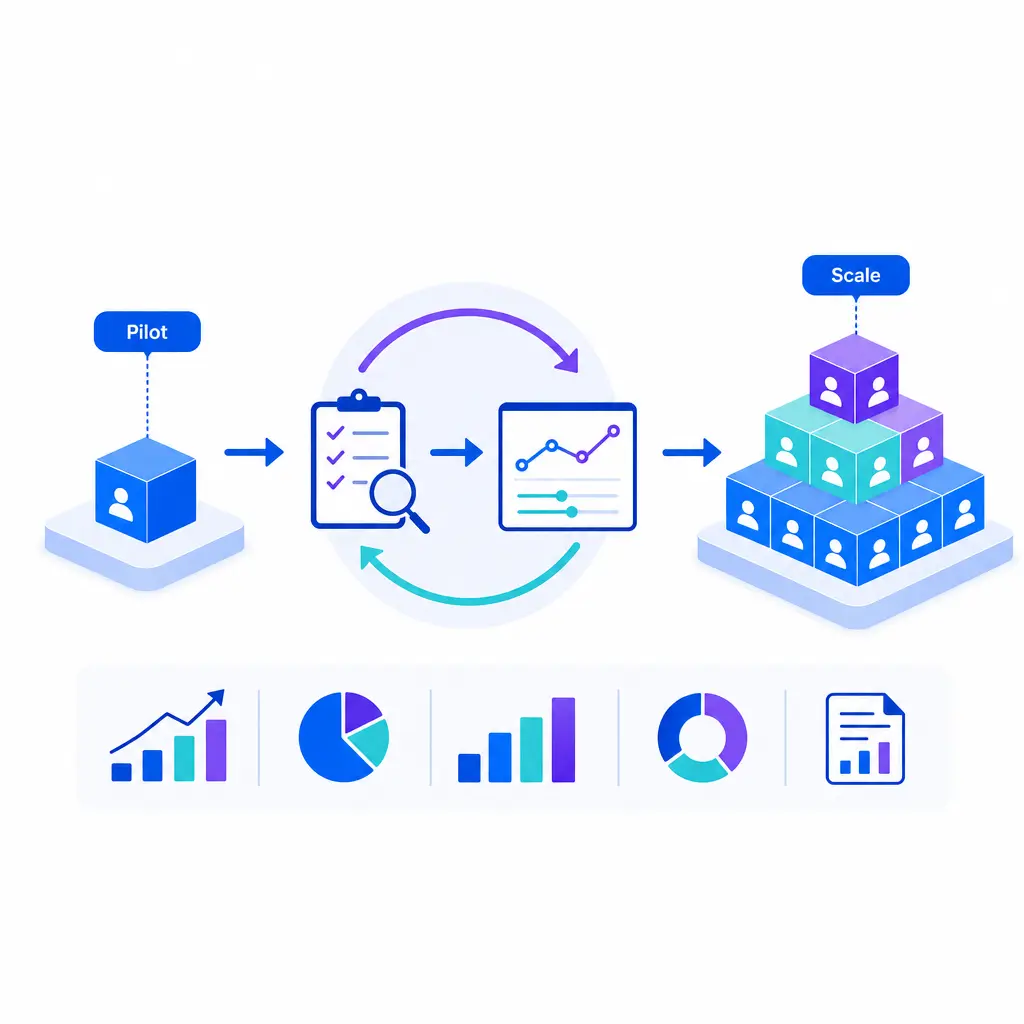
Start with a narrow segment, review actual outcomes, and scale once the script, reporting, and compliance controls are working. A controlled pilot lets a small test group grow into a larger rollout through review and optimization.
Outbound call center services are managed phone outreach programs in which agents contact prospects, customers, patients, or clients first. They are commonly used for appointment setting, qualification, reminders, reactivation, surveys, and follow-up that internal teams do not have time to complete consistently.
An outbound rep usually places calls from a defined list, follows a script framework, handles objections, captures outcomes, schedules next steps, and escalates issues that need another team. The best reps also protect data quality by documenting the conversation in a way your team can actually use.
No. Cold calling is one form of outbound, but many outbound programs are warm or service-based. Reminder calls, lead follow-up, appointment confirmation, post-inquiry callbacks, and lapsed-customer reactivation are all outbound without being traditional cold calls.
Inbound teams answer the calls that come to you. Outbound teams initiate contact to create movement toward a business goal, such as a booked appointment, a qualified lead, a completed follow-up, or a proactive account update.
There is no useful universal number. Daily volume depends on list quality, connect rate, talk time, compliance rules, transfer steps, and how much context each call requires. A complex legal or healthcare conversation will run at a very different pace than a simple reminder campaign.
Potentially, but the answer depends on jurisdiction, consent, script design, and whether prerecorded or AI-generated voices are being used. The FCC has stated that AI-generated voices in robocalls are illegal under the TCPA, so any AI-assisted outbound program should be reviewed by counsel before launch.
If you are comparing outbound call center services, start with one workflow that already matters to the business: missed-lead recovery, appointment setting, follow-up completion, reactivation, or proactive notifications. Then match the provider to your QA standards, reporting needs, integrations, and compliance requirements.
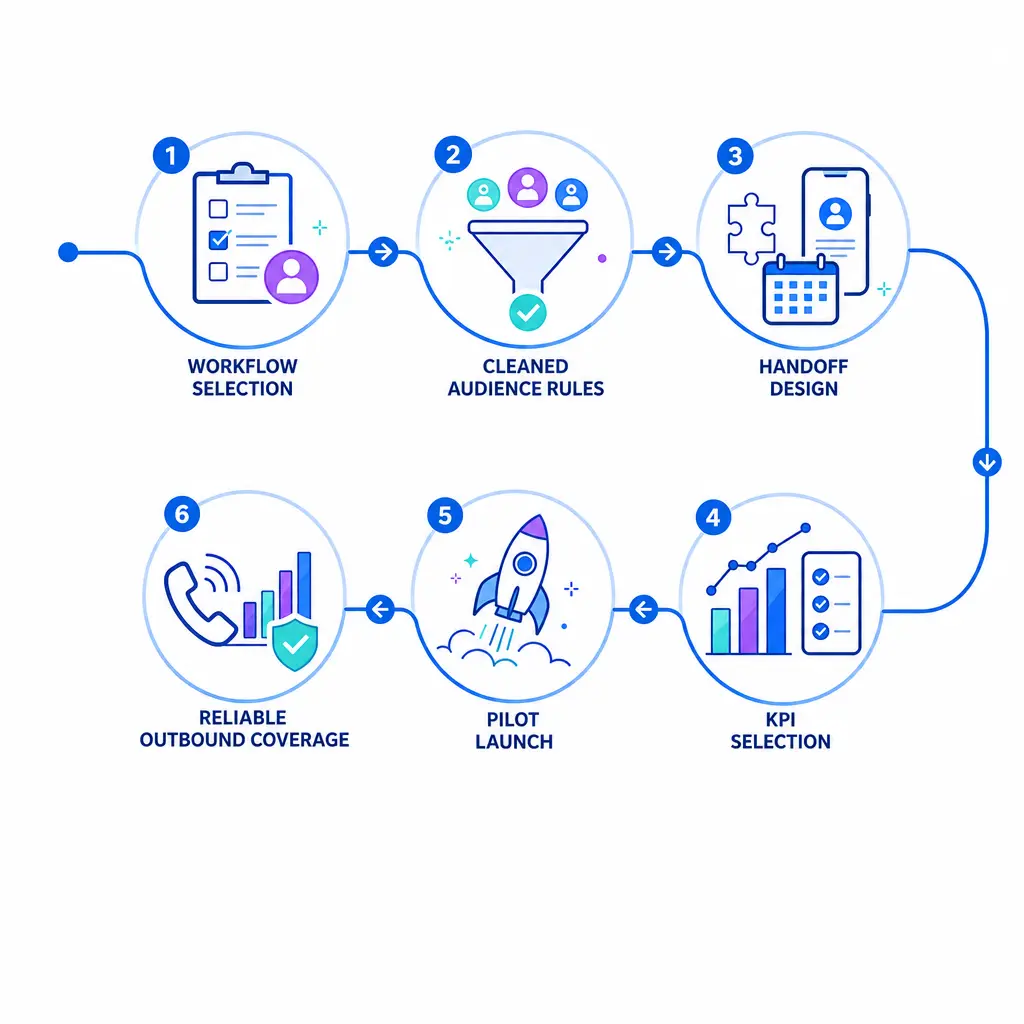
Start with one workflow that already matters, whether missed-lead recovery, appointment setting, follow-up completion, reactivation, or proactive notifications. Then match a provider to your QA standards, reporting needs, integrations, and compliance requirements to build reliable outreach coverage.
When you are ready to turn that plan into reliable coverage, Go Answer can help you Request Pricing or Book a Discovery Call. You can also See How It Works and evaluate whether enterprise BPO support fits your operation, your use cases, and your service-level expectations.

Learn why thousands of companies rely on Go Answer.
Try us risk-free for 14 days!
Enjoy our risk-free trial for 14 days or 200 minutes, whichever comes first.
Have more questions? Call us at 888-462-6793
Learn why thousands of companies rely on Go Answer.
Have more questions? Call us at 888-462-6793
If you would like to get in contact with a Go Answer representative please give us a call, chat or email.

Thanks for your interest!
A representative will be reaching out to you shortly.
Have more questions? call us on 888-462-6793
