
First Call Resolution: What It Is, Why It Matters, and How to Improve FCR
By Troy Van WillisLast modified: November 10, 2026
Voted Top Call Center for 2024 by Forbes
Virtual Receptionists
Save time and money with our virtual receptionists.
AI Receptionist
AI-powered receptionist that answers, routes, and qualifies calls 24/7.
Enterprise Solutions
Solutions designed to scale with your organization’s needs.
Legal Services
Our virtual legal receptionists are experts in legal intake.
Last modified: November 10, 2026
When customers have to call back for a simple fix, the problem is usually larger than one missed answer. It often points to weak routing, missing context, narrow agent authority, or a process built around handoffs instead of completion.
This guide is for enterprise and multi-location service teams, intake-heavy law firms, healthcare practices, and high-volume inbound businesses that want better coverage without losing control of quality. You will learn what first call resolution means, how to calculate first call resolution rate, what a good FCR target looks like, and how to improve first call resolution with practical operating changes.
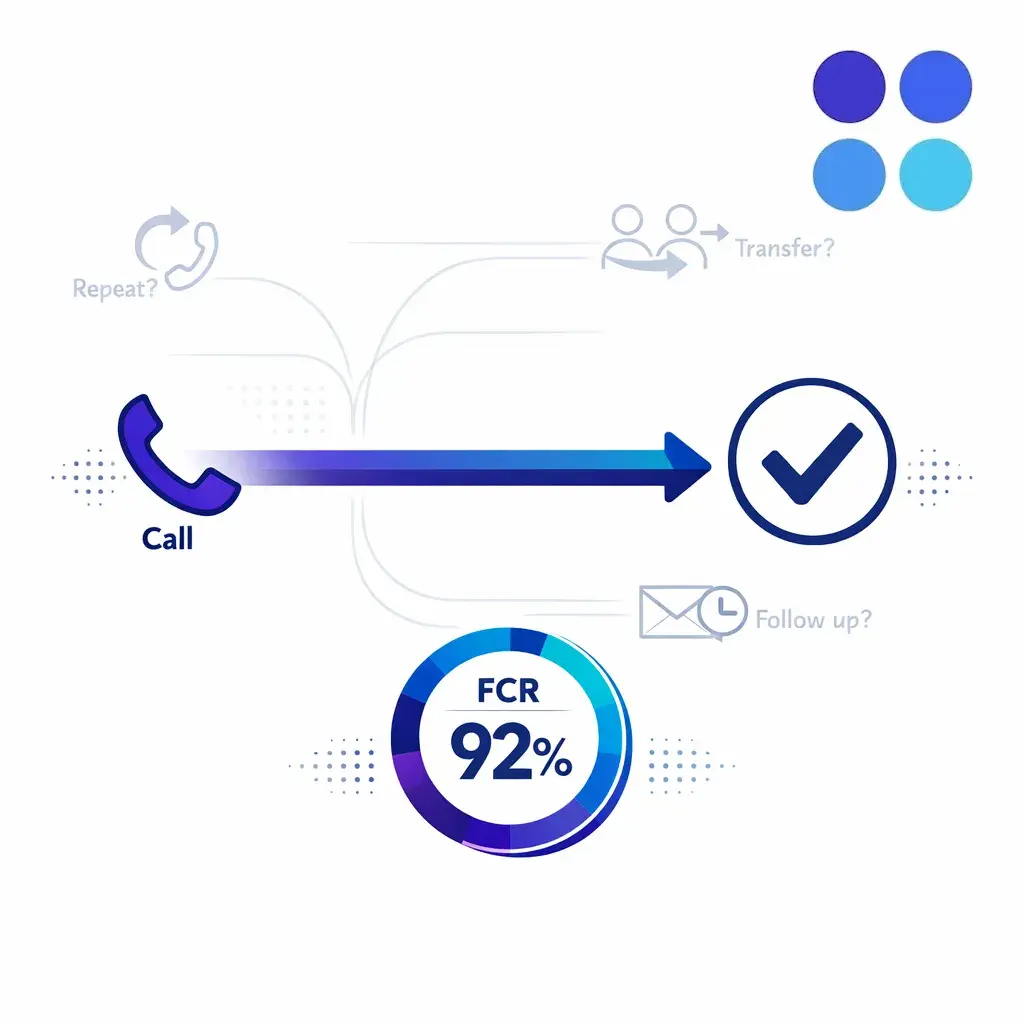
First call resolution measures whether a customer's issue is completely finished during the first interaction, with no second contact or separate follow-up path needed. It works as a quality measure and an efficiency measure at the same time.
In phone-first operations, teams usually say first call resolution. In omnichannel environments, many teams use first contact resolution to apply the same standard across chat, SMS, email, web forms, or portal messages. The core idea is unchanged: the customer’s need is actually finished, not just acknowledged.
What is first call resolution KPI? It is a quality and efficiency measure at the same time. A high score usually means the frontline team can diagnose, decide, and complete work without creating avoidable repeat contacts.
That distinction matters because a fast answer is not the same as a solved issue. If a caller still has to wait for another team, repeat the story later, or chase an update, the interaction may have been handled quickly but it was not resolved on first contact.
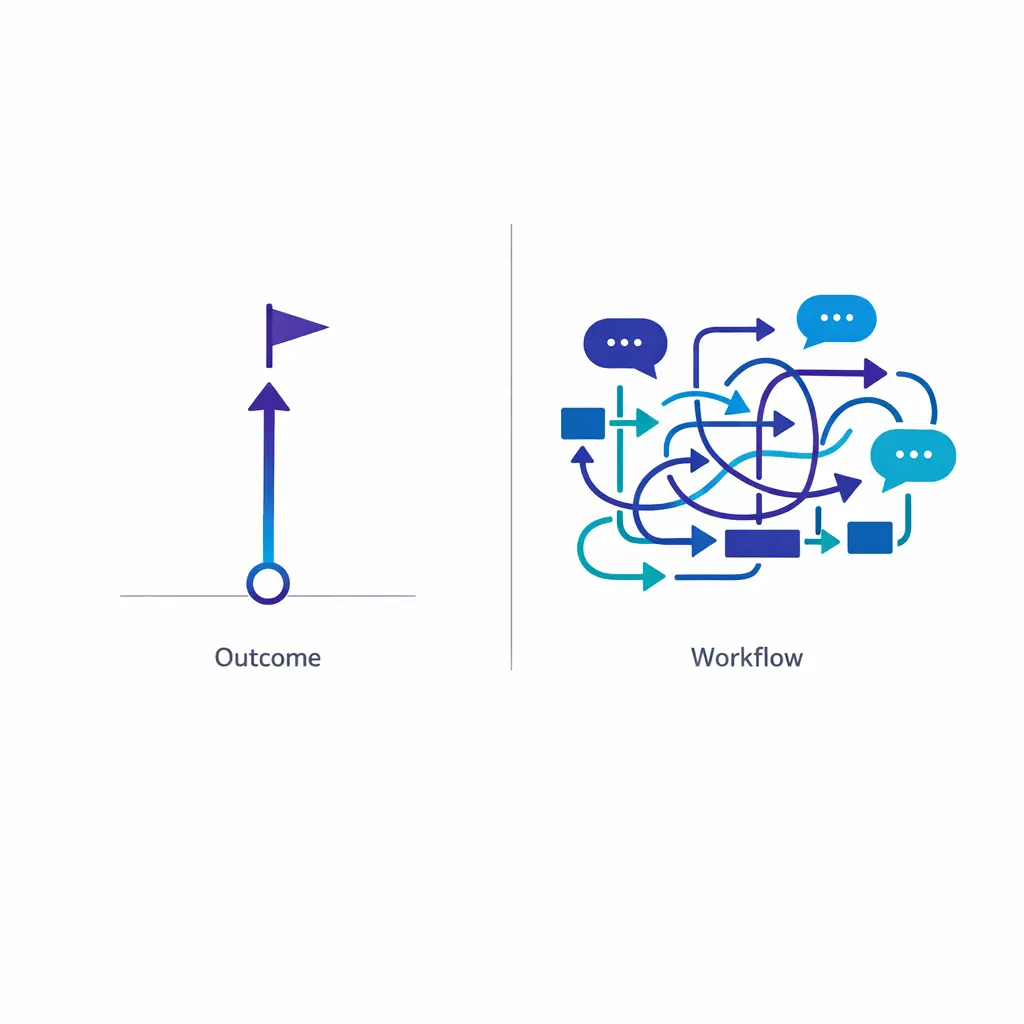
Customers judge service by the outcome, not the internal workflow. A completed solution feels very different from a transfer, a callback, or a repeated explanation, even when the answer arrives quickly.
FCR matters because customers experience service as an outcome, not as an internal workflow. If the answer requires a callback, a transfer, or a second explanation, the interaction usually feels harder than it should.
That is why FCR is closely related to customer effort score and customer satisfaction. One metric measures how easy the interaction felt, and the other measures how satisfied the customer was after the service experience.

Operationally, teams often feel low FCR as repeat demand. The same issue comes back into the queue, supervisors spend more time untangling exceptions, and agents lose time that could have gone to new customers or higher-value work.
For legal intake, after-hours answering, and healthcare scheduling, FCR also affects intake quality. Missing one clarification question or sending a caller down the wrong path can delay the next step, and in healthcare settings any workflow that handles protected health information must align with the HIPAA Privacy Rule.
FCR = issues resolved on the first contact / total issues x 100
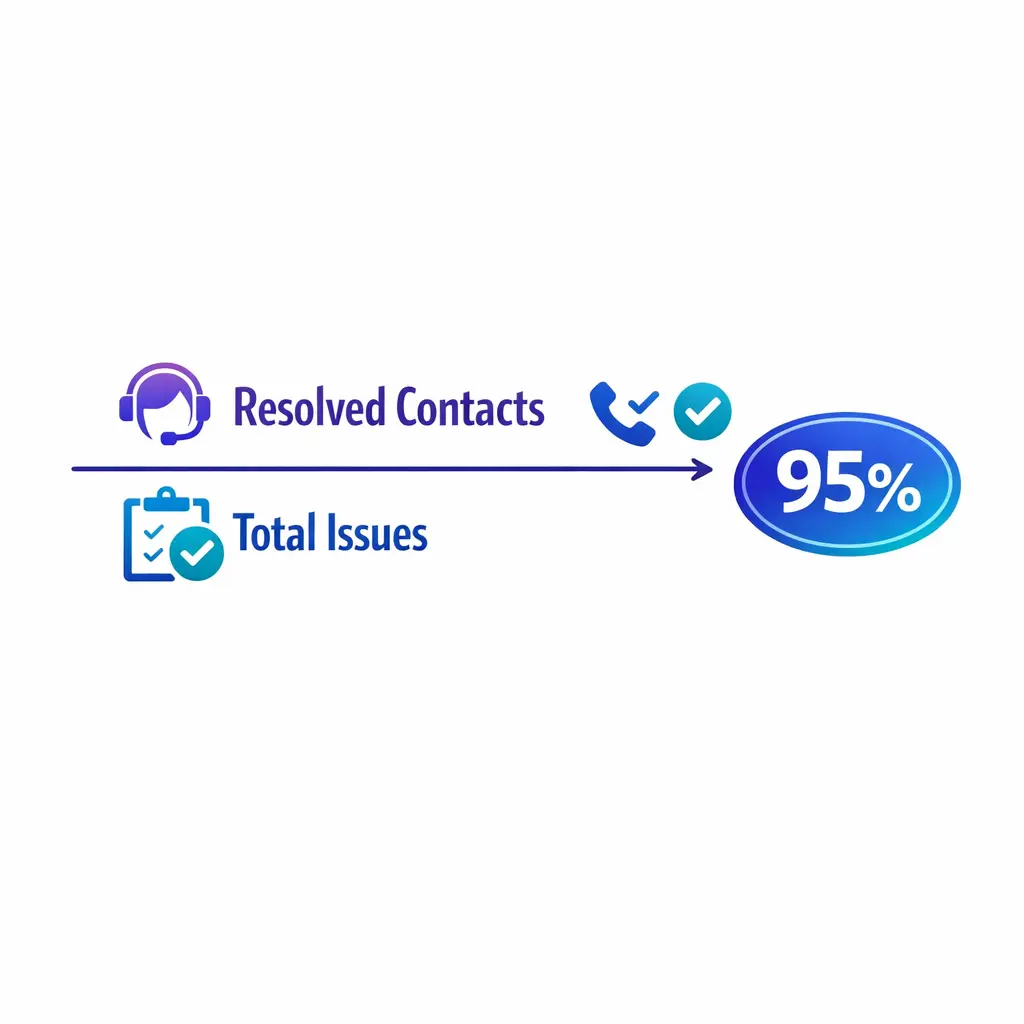
The math is simple: issues resolved on first contact, divided by total issues, times one hundred. In the example, 760 of 1,000 eligible issues resolved without a second contact gives a 76% first call resolution rate.
How do you calculate first call resolution? Start with a defined case universe. Decide whether you are measuring only phone calls or all inbound contacts, then document the repeat-contact window you will use for the same issue.
For example, if your team handled 1,000 eligible issues in a month and 760 were fully resolved without a second contact, your first call resolution rate would be 76%. The math is simple. The hard part is defining the word resolved honestly.
A practical definition is stricter than “the agent answered the phone.” A case is resolved when the customer’s stated need was completed, no additional contact from the customer was required inside your measurement window, and the issue did not come back for the same reason.
That means a transfer, a promise to call back, a generic intake form, or an unresolved escalation should not be counted as FCR unless your operating model explicitly treats that step as the final answer. Many teams inflate performance by counting progress as resolution.
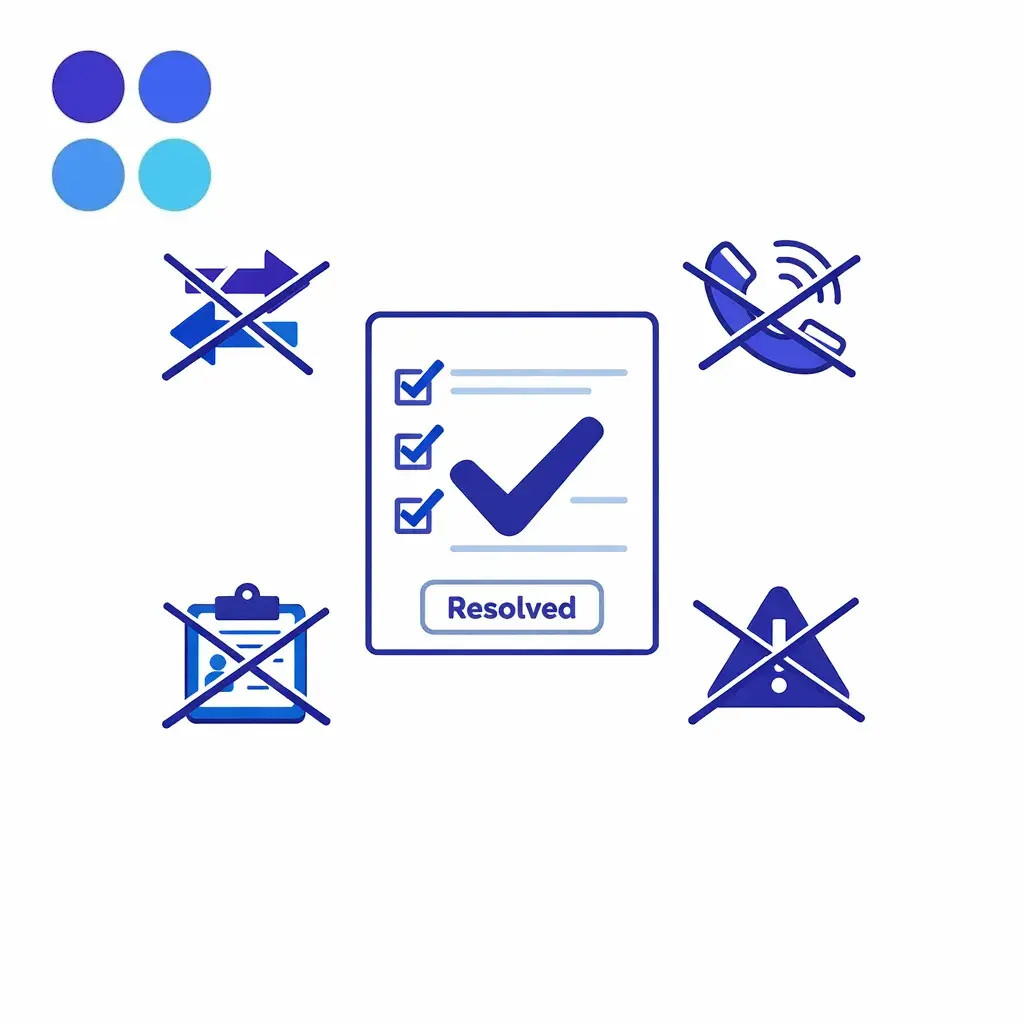
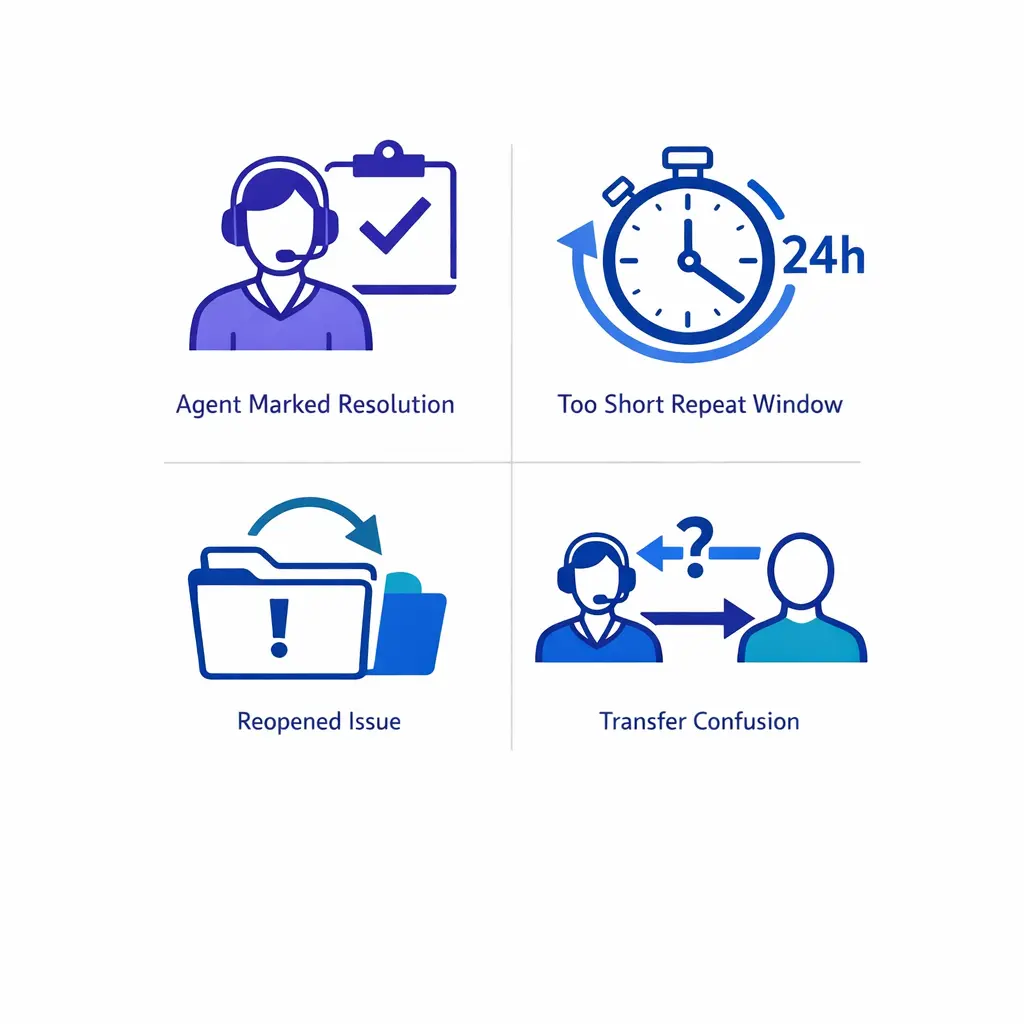
Once the definition is set, first call resolution rate becomes far more useful as a management tool. Without that discipline, teams can report a healthy number while customers still feel like they are doing the follow-up work themselves.
There is no single universal first call resolution industry standard that fits every operation. A password-reset help desk, a high-stakes legal intake line, and a multi-location scheduling center do not solve the same kinds of problems.
Still, industry commentary on first call resolution benchmarks often treats 70% to 79% as a solid working range and 80%+ as strong performance. Those numbers are most useful when the score is measured consistently and not padded by loose definitions.
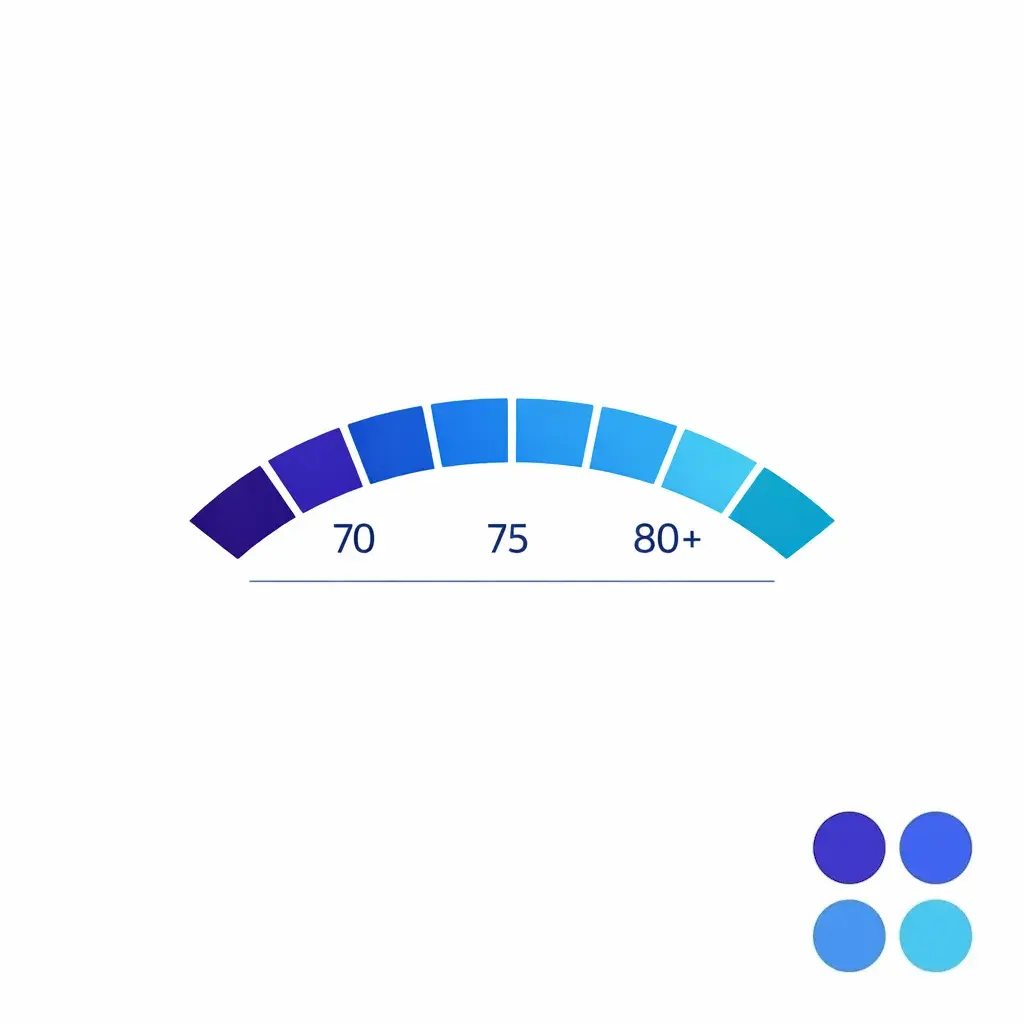
Industry commentary often treats 70% to 79% as a workable range and 80% or higher as strong performance. The right target still depends on issue complexity, compliance steps, and how much authority the frontline team has.
The right target depends on issue complexity, compliance steps, authentication requirements, documentation burden, and how much authority the frontline team actually has. A billing correction is different from clinical coordination, multi-party scheduling, or complex legal intake.
In practice, low FCR usually shows up in five places: knowledge, routing, systems, authority, and policy. If you want to improve first contact resolution, start by finding which of those five is breaking the customer journey most often.
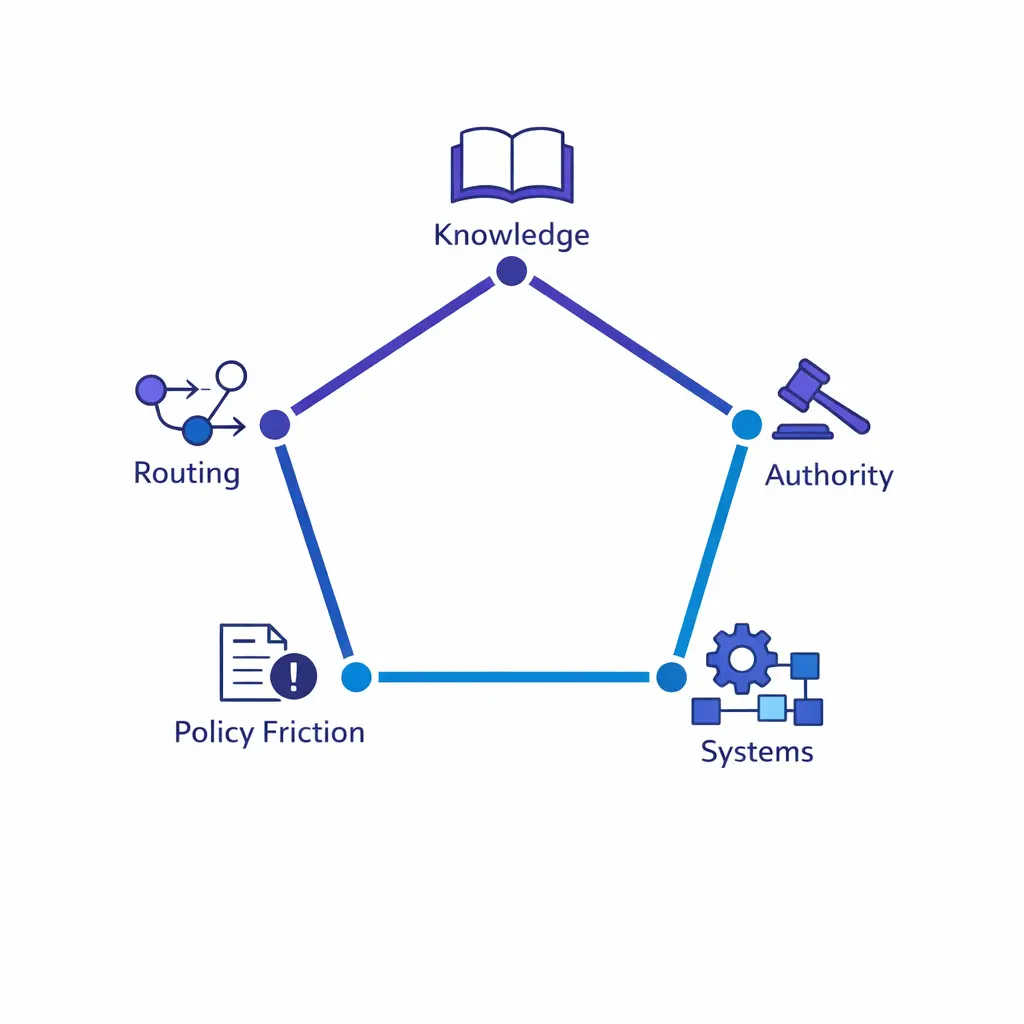
Low FCR usually traces back to five areas: knowledge, routing, systems, authority, and policy. Finding which of the five breaks the customer journey most often is the first step toward improvement.
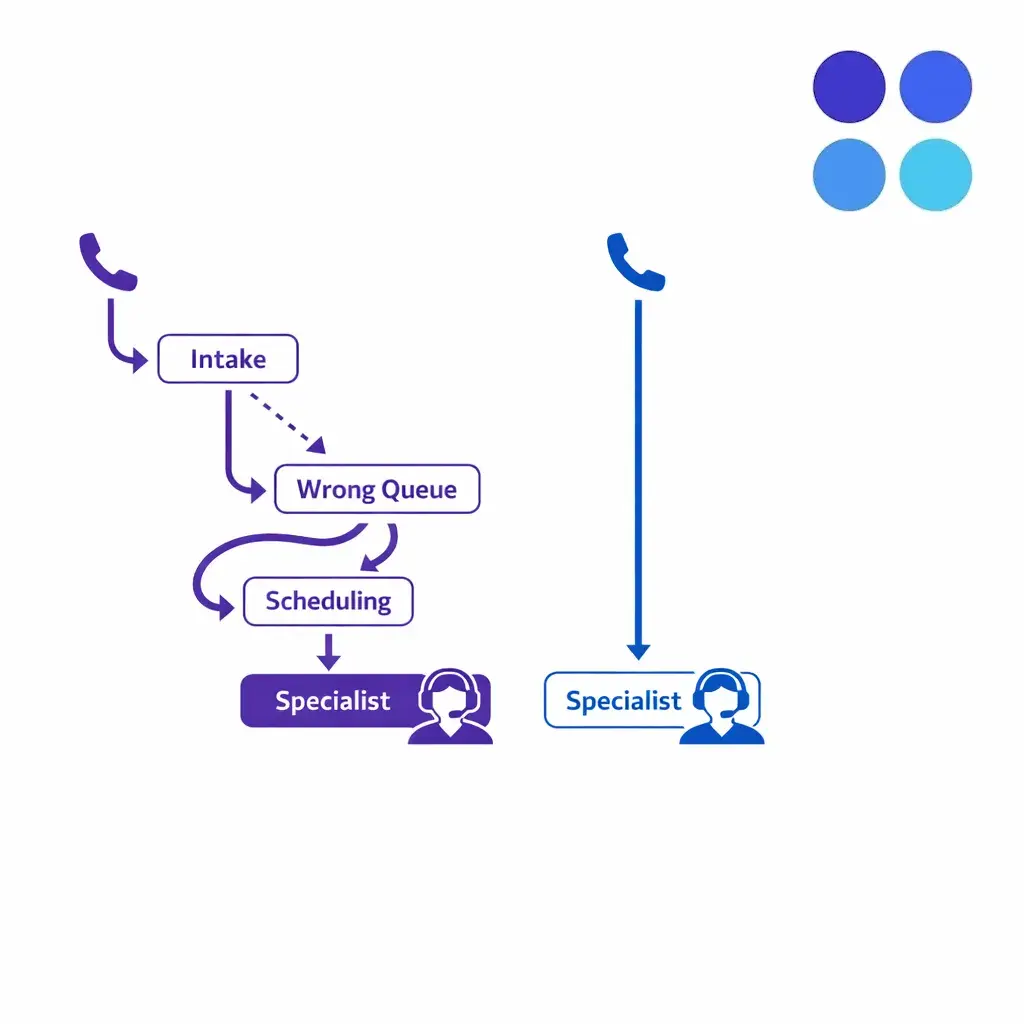
When specialized calls land in the wrong queue first, customers lose time before a qualified person ever joins the interaction. Weak routing creates repeat calls and delays the actual resolution.
These causes often stack together. A caller reaches the wrong queue, the agent cannot see the full history, the answer lives in a hard-to-search document, and the final fix still needs supervisor approval. At that point, low FCR is not an agent problem. It is an operating model problem.
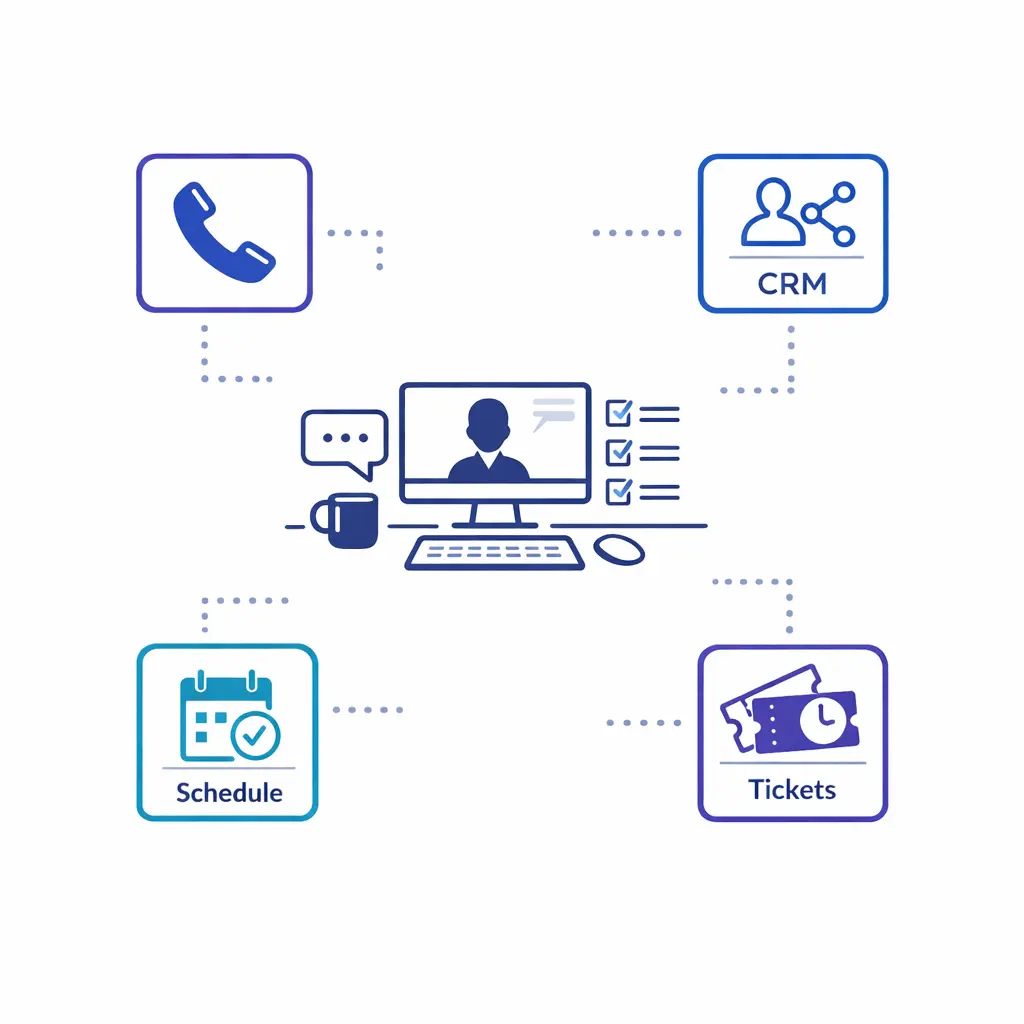
When the phone system, CRM, scheduling tool, and ticket history do not line up, agents spend the first part of the call reconstructing context instead of solving the issue. Disconnected systems slow resolution.
The fastest path to better FCR is usually not a new dashboard. It is a tighter operating system for who answers, what they can see, what they can do, and how your team learns from repeat contacts.
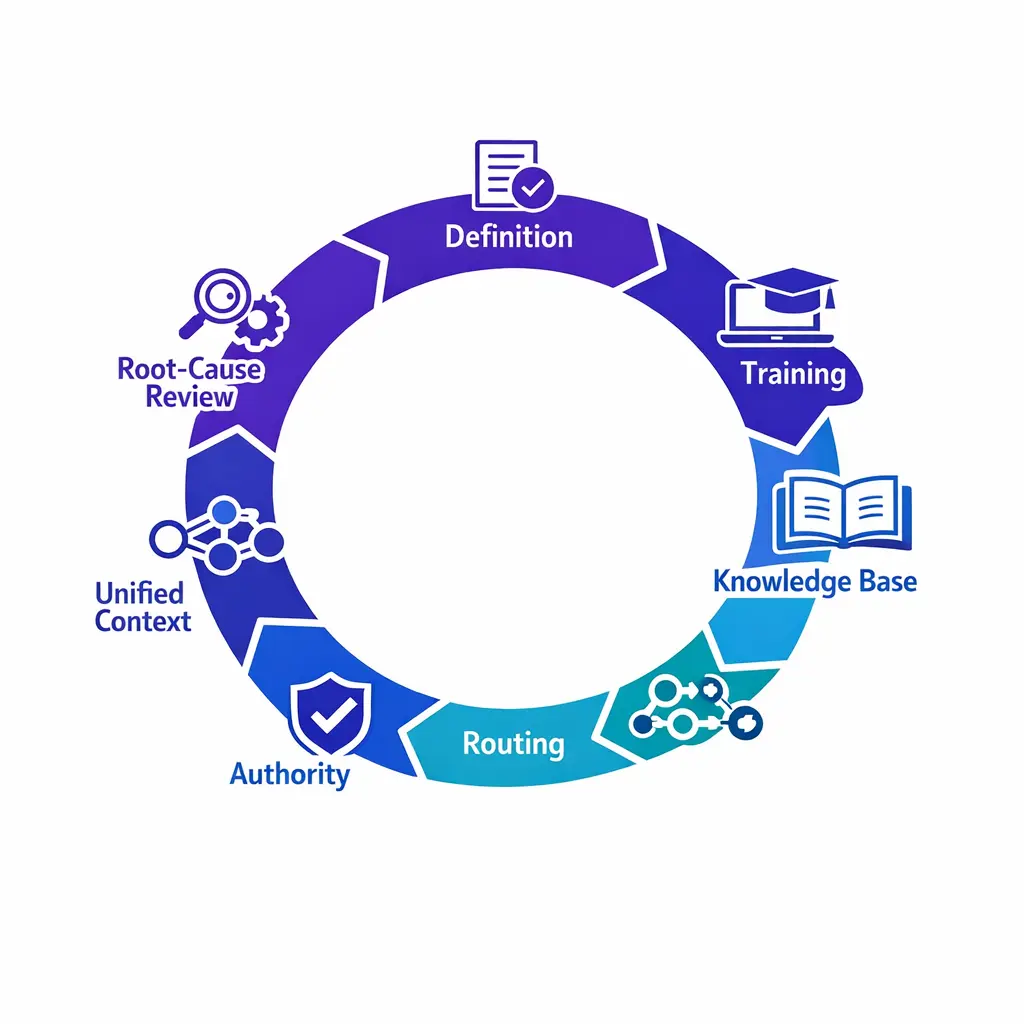
The fastest path to better FCR is a tighter operating system for who answers, what they can see, what they can do, and how the team learns from repeat contacts. Seven connected steps raise first call resolution.

A fast, searchable knowledge base helps agents find the right answer quickly. The best articles are short, current, and organized around real caller intent instead of internal department names, so answers are easy to find mid-call.

Bringing caller history, prior tickets, appointment data, and intake notes into one workflow means agents do not have to ask the same questions twice. Shared context across channels supports resolution on the first contact.
How do you improve first call resolution quickly? Start with the basics in order: define resolution honestly, route specialized work to the right queue sooner, and remove the top approval or system barrier that blocks frontline agents from finishing common requests.

Frontline staff who need approval for common fixes become message carriers. Preapproved actions, thresholds, and exception rules give agents authority with guardrails so they can solve common issues without waiting.
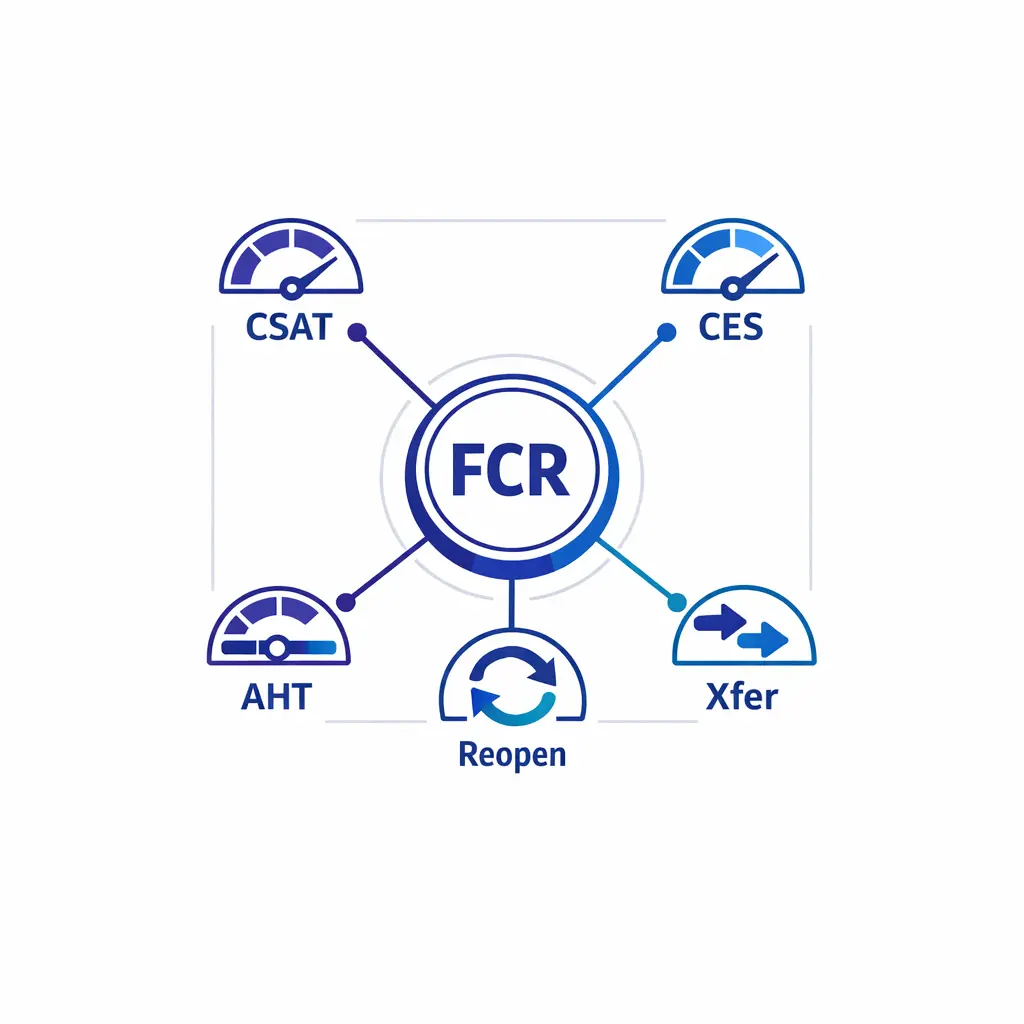
It also helps to balance FCR with CSAT, CES, average handle time, transfer rate, and reopen rate. If you chase FCR alone, agents may stay on calls too long, avoid complex cases, or mark partial progress as a win.
Examples make the metric easier to judge because FCR is only as good as the definition behind it.
A customer calls about a duplicate charge. The agent verifies identity, reviews the account, reverses the duplicate according to policy, confirms the updated balance, and sends confirmation during the same interaction. That is first call resolution.
If the agent only opens a ticket for finance and tells the customer to wait for a callback, the issue may be moving forward, but it is not resolved on the first interaction.
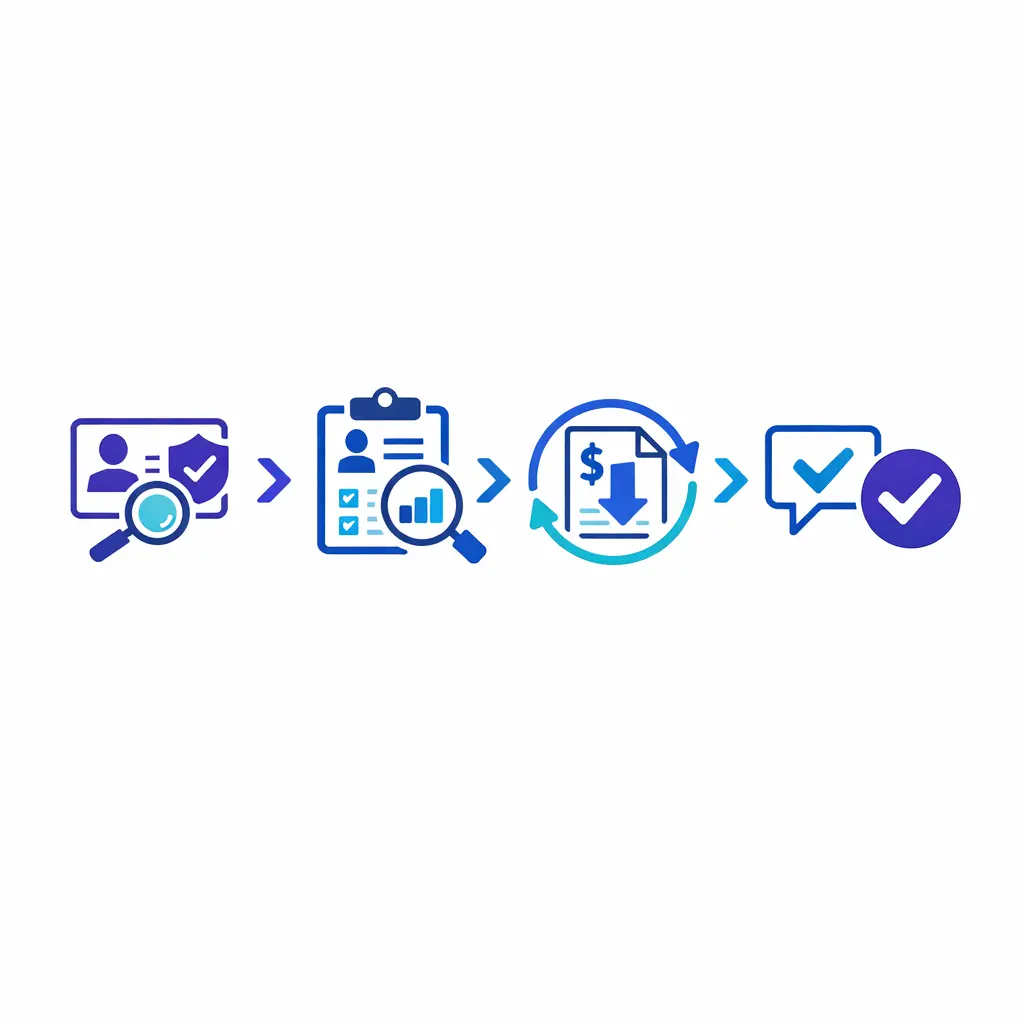
A duplicate charge is resolved in one call when the agent verifies identity, corrects the account, confirms the updated balance, and sends confirmation in the same interaction. A ticket and a callback promise are not resolution.
A caller cannot access a portal. The agent authenticates the user, confirms the error state, resets the credential, walks through a fresh login, and verifies access before ending the call. That is resolved on first contact.
If the agent has to transfer the caller because they do not have system access or cannot see the full history, the case may still be saved later, but the original interaction did not achieve FCR.

Restoring portal access takes authentication, a credential reset, and a test login before the call ends. If the agent must transfer the caller, the original interaction did not achieve FCR.
A patient or client needs to reschedule, update contact details, and confirm next-step instructions. If the agent completes the change, confirms the appointment, and answers the related question without a second contact, count it as FCR.
If the caller has to wait for a separate office to approve the change, it becomes a follow-up workflow rather than first-call resolution. This is one reason healthcare and multi-location operations need clean authority rules.
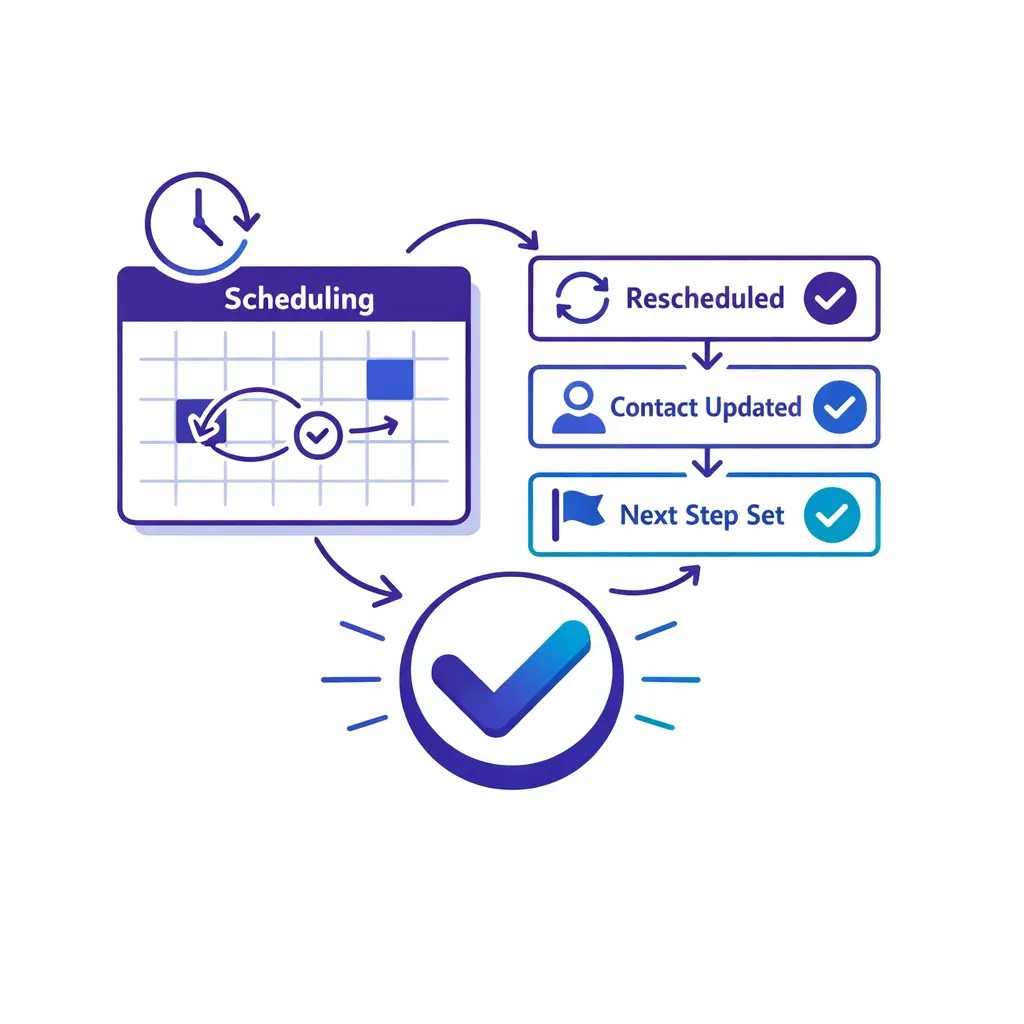
A scheduling call counts as FCR when the change is made, contact details are updated, and next steps are confirmed without a second contact. Waiting on a separate office turns it into a follow-up workflow.
FCR is stronger when paired with a small set of balancing metrics. That keeps teams from improving resolution on paper while harming speed, effort, or quality elsewhere.
FCR and AHT should work together, not fight each other. A short call that fails still creates more work, and a long call that solves everything may be worth it if the issue truly ends there.
The most common mistake is treating FCR as an agent-only metric. In many operations, the score is shaped just as much by routing logic, permissions, documentation quality, and cross-team handoff design as it is by frontline performance.
If you do only one thing this month, make your definition of resolved tighter. Once the score becomes honest, the right improvement priorities usually become much easier to see.
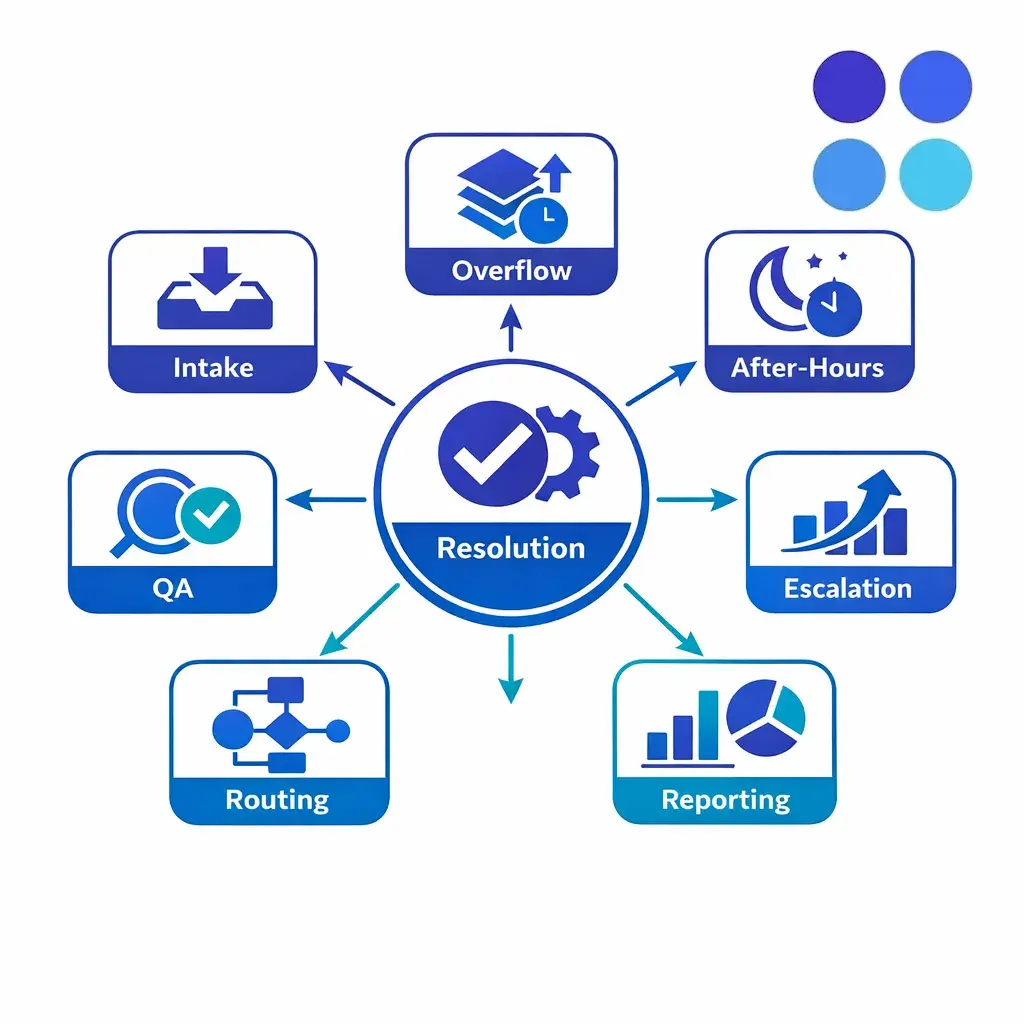
Coverage designed for resolution connects intake, overflow, after-hours coverage, QA, and reporting around the goal of finishing customer needs on the first contact, so the team is not just answering quickly but actually solving.
If your team needs better first-call resolution but cannot afford more missed after-hours demand, inconsistent intake, or fragile overflow coverage, Go Answer can help you redesign the handoff, routing, QA, and escalation model around actual resolution.
That is especially useful for teams handling live answering, legal intake, scheduling, urgent callbacks, and multi-location coverage. If you want to talk to a specialist first, you can also explore enterprise BPO, see how it works, and view use cases that match your workflow.

Learn why thousands of companies rely on Go Answer.
Try us risk-free for 14 days!
Enjoy our risk-free trial for 14 days or 200 minutes, whichever comes first.
Have more questions? Call us at 888-462-6793
Learn why thousands of companies rely on Go Answer.
Have more questions? Call us at 888-462-6793
If you would like to get in contact with a Go Answer representative please give us a call, chat or email.

Thanks for your interest!
A representative will be reaching out to you shortly.
Have more questions? call us on 888-462-6793
