
Customer Service Topics for Team Meetings: 20 Coaching Prompts That Improve QA and Escalation Handling
By Rick AlovisLast modified: October 20, 2026
Voted Top Call Center for 2024 by Forbes
Virtual Receptionists
Save time and money with our virtual receptionists.
AI Receptionist
AI-powered receptionist that answers, routes, and qualifies calls 24/7.
Enterprise Solutions
Solutions designed to scale with your organization’s needs.
Legal Services
Our virtual legal receptionists are experts in legal intake.
Last modified: October 20, 2026
Most customer service meetings fail for a simple reason: they cover updates, not behavior. Teams hear reminders, but they do not leave with a sharper standard for listening, documenting, de-escalating, or handing off an issue under pressure.
This article is for support leaders, intake managers, QA leads, and operations teams that need better frontline consistency. If you run a call center, support desk, legal intake team, healthcare front office, or multi-location service operation, this guide shows how to choose the right customer service topics, turn them into weekly coaching, and connect team meetings to measurable service quality improvement.
The same structure matters whether the work is handled fully in-house or shared with a partner such as Go Answer. When expectations are clear, QA calibration gets easier, escalation handling gets cleaner, and coaching stops feeling abstract.
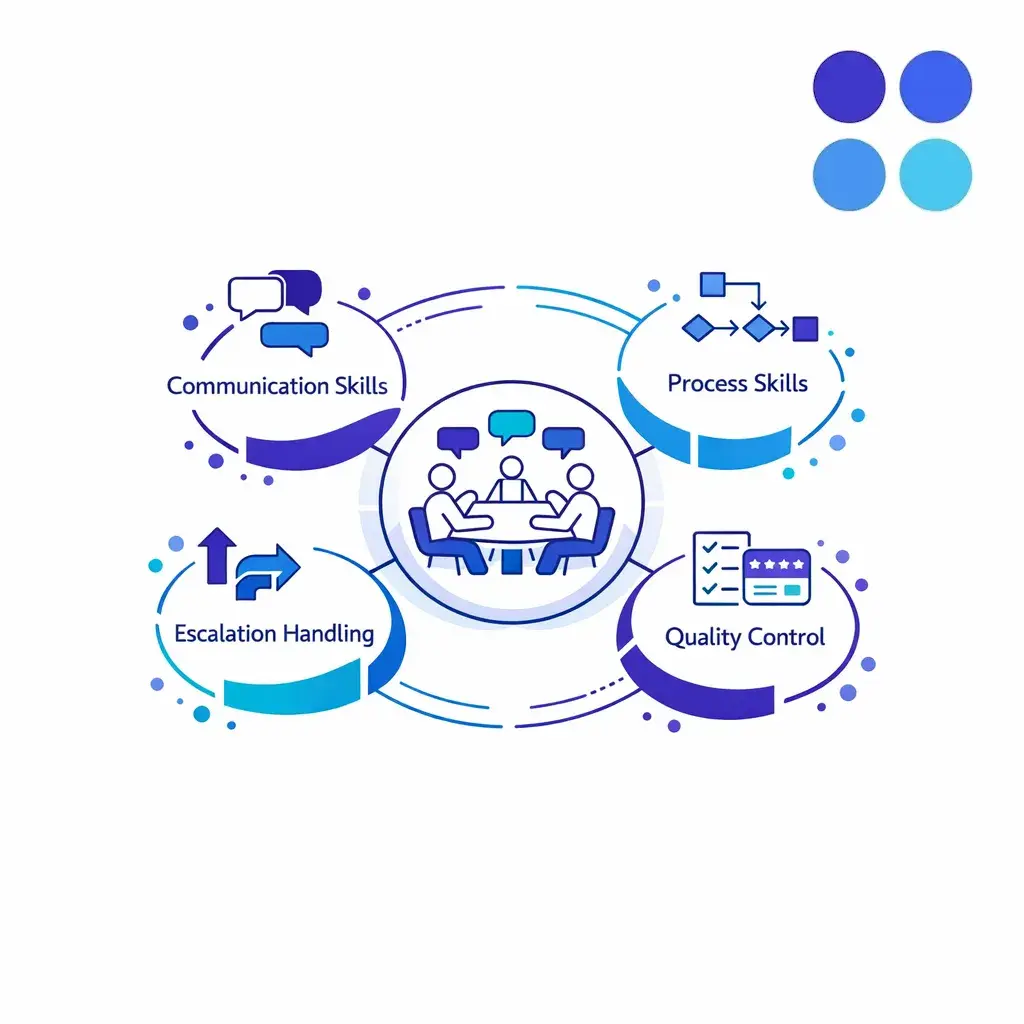
Team meetings improve service when they coach behavior, not just deliver updates. A coaching hub connects QA findings, escalation patterns, and short huddles so supervisors reinforce one clear standard.
Good team meeting topics for customer service should do more than fill 30 minutes. They should define what good looks like, show what poor execution sounds like, and make it easier for supervisors to coach the same standard across shifts, locations, and channels.
That is especially important in high-volume environments where a missed detail can create rework, callbacks, or preventable escalations. Many operations borrow structured communication habits from the AHRQ TeamSTEPPS program when they want cleaner internal handoffs and better shared understanding.
What are the topics related to customer service? The most useful customer service topics usually fall into four groups: communication skills, process skills, escalation handling, and quality control. Start with the 20 topics below, then rotate them based on QA findings, repeat complaints, and recent call patterns.
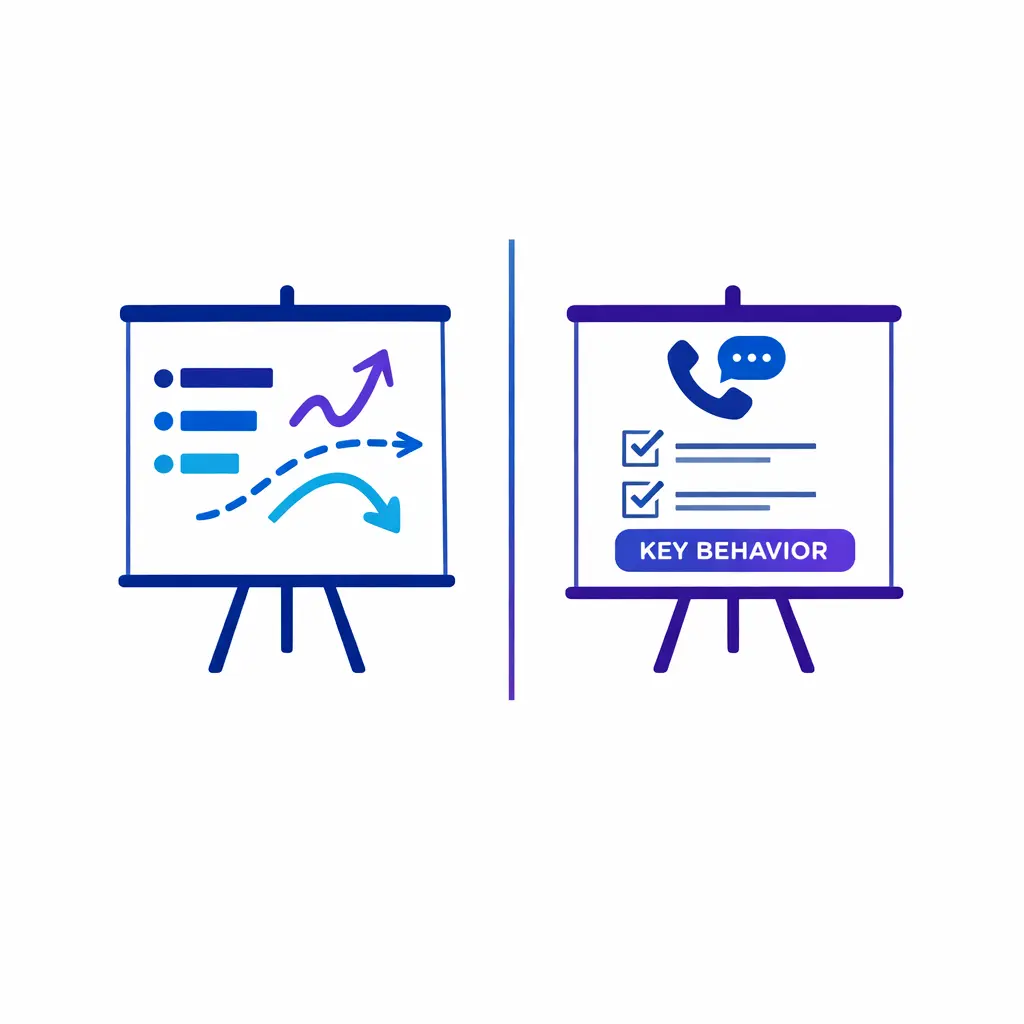
Most meetings fail because they cover updates, not behavior. Shift from status recaps to one coachable behavior per session so agents leave with a sharper standard for the next set of contacts.
Do not choose topics because they sound important. Choose them because they show up in scorecards, audit notes, repeat complaints, failed callbacks, incomplete intake, or inconsistent call handling.
If three QA items keep missing, those three misses should shape the next three meetings. That makes customer service coaching specific, fair, and immediately useful.
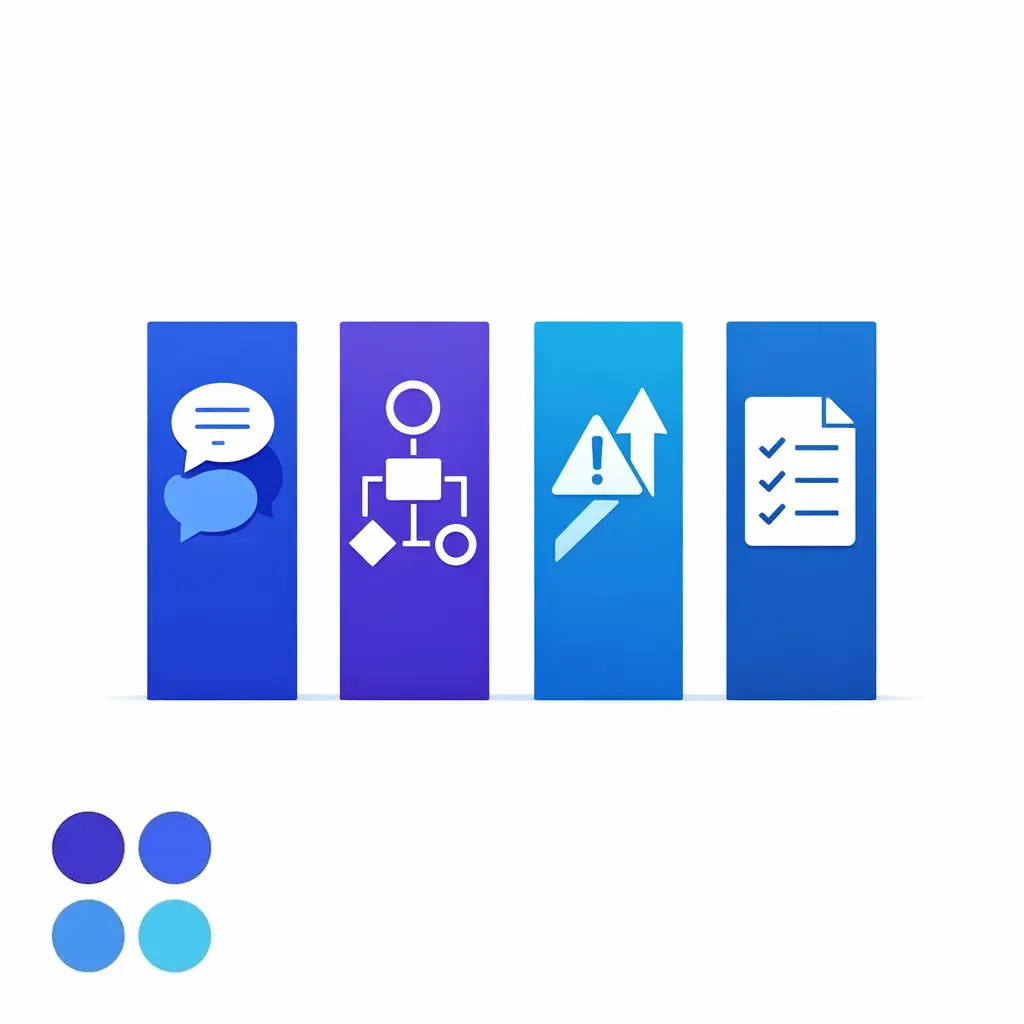
Useful customer service topics fall into four groups: communication skills, process skills, escalation handling, and quality control. Rotate across all four instead of over-indexing on tone alone.
Look for issues that consume leader time: angry callbacks, supervisor requests, unclear notes, weak transfers, or cases that bounce between teams. These are the customer service meeting topics that pay back fastest because they reduce rework and improve handoff quality.
When an escalation touches multiple people, coach agents to confirm owner, next step, and timing before the interaction ends. That one habit prevents vague promises and unclear follow-through.
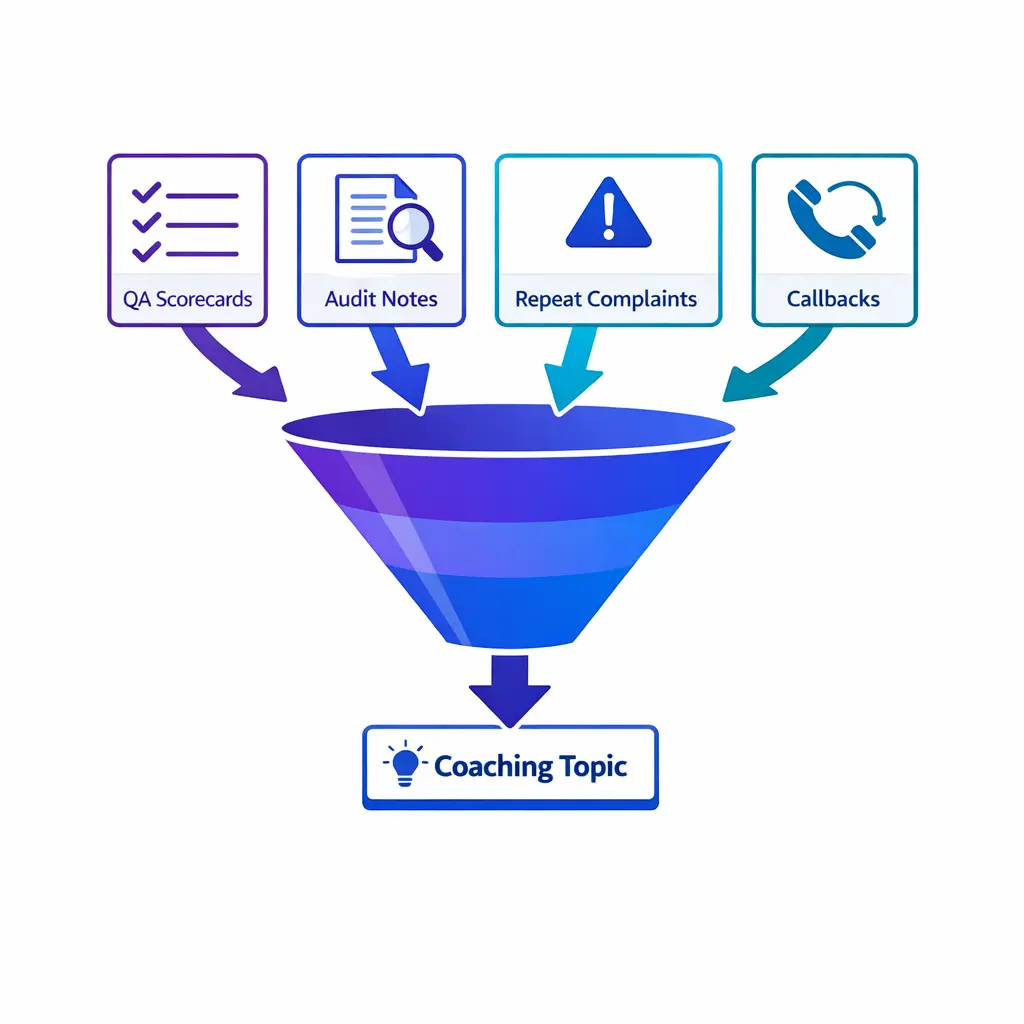
Choose topics from live performance, not from what sounds important. Let QA misses, audit notes, repeat complaints, and failed callbacks funnel into the next coaching topic.
Teams need both. Empathy, tone, and active listening protect the relationship, while verification, documentation, routing, and policy knowledge protect the operation.
A good monthly rotation includes one soft-skill topic, one workflow topic, one QA calibration topic, and one discussion pulled from a recent escalation. That balance keeps customer experience training practical instead of generic.
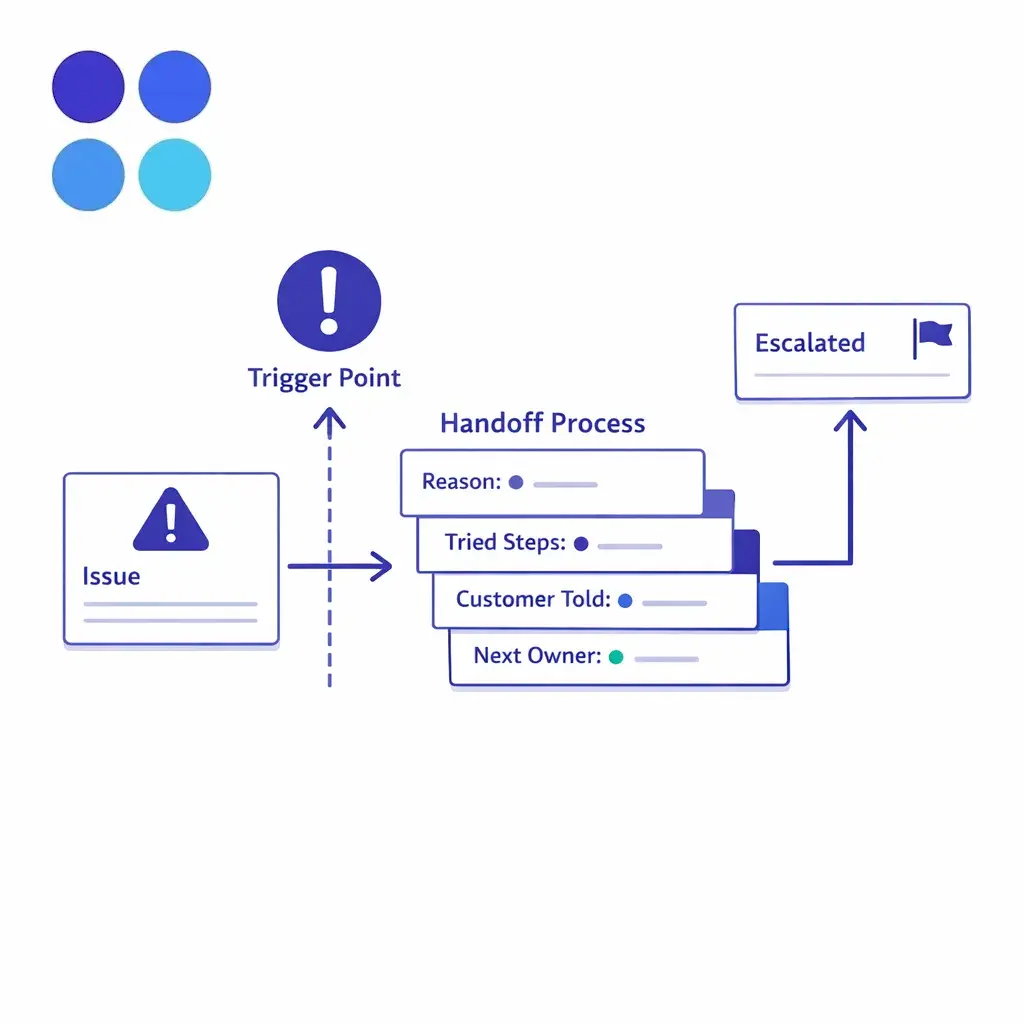
Prioritize escalation patterns that consume leader time — angry callbacks, unclear notes, weak transfers. Coach agents to confirm owner, next step, and timing before every handoff.
Listening is not passive. Agents should restate the issue, confirm the goal, and ask one clarifying question before offering a solution. The Teach-Back method is a useful model for confirming understanding before an issue moves forward. Coaching prompt: What question would have helped you understand the real issue faster on your last difficult interaction?
Empathy should acknowledge effort, urgency, or frustration without promising an outcome the team cannot control. Coach agents to separate understanding from commitment. Coaching prompt: Which line in this call showed care without creating a promise the operation could not keep?

Balance soft skills and process skills. Empathy and listening protect the relationship; verification, documentation, and routing protect the operation. A good rotation covers both each month.
Positive language does not mean sounding scripted or cheerful at the wrong time. It means replacing friction phrases with clearer, calmer language that keeps the interaction moving. Coaching prompt: Which part of your wording reduced trust, and how would you say it more constructively next time?
Strong service conversations have shape. The agent opens well, discovers the issue, confirms the next step, and closes with ownership instead of drifting through disconnected questions. Coaching prompt: At what point in this interaction did you lose control of the structure, and how could you have reset it?
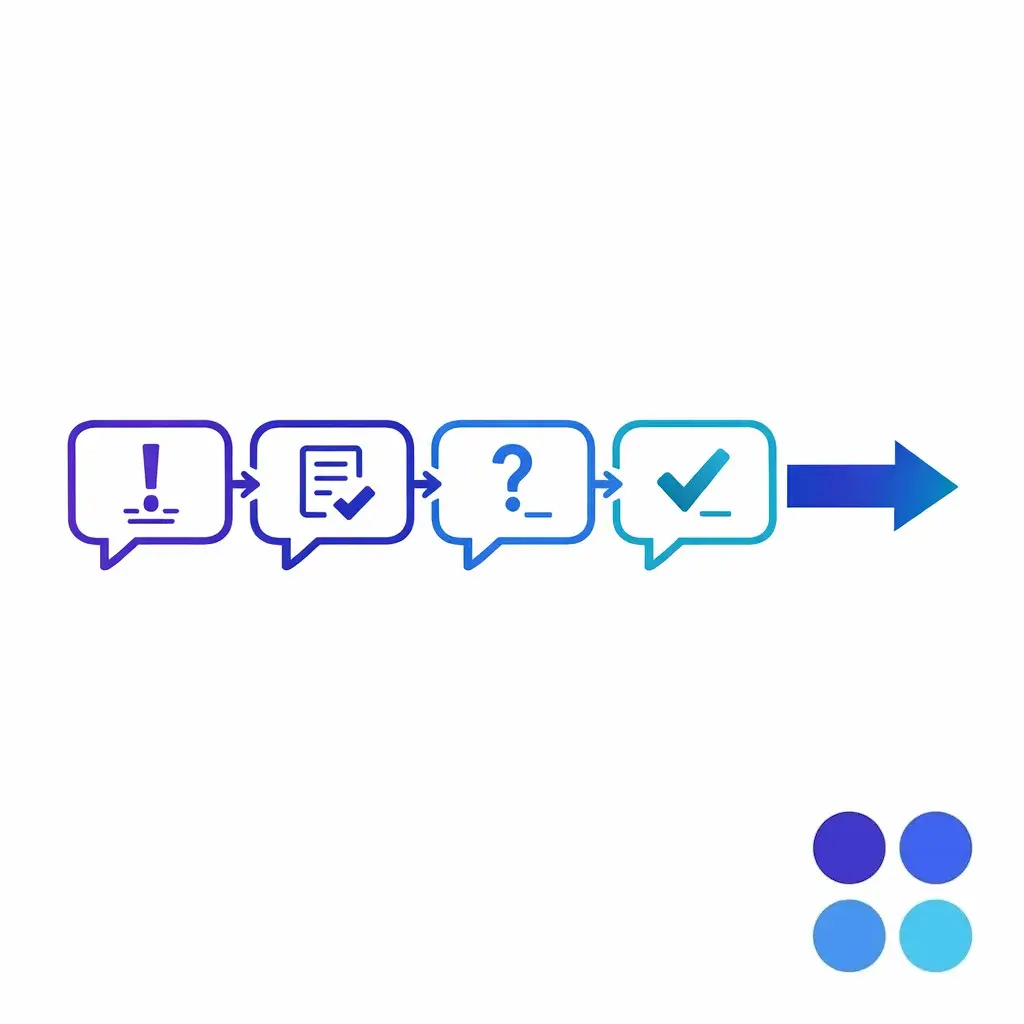
Active listening is not passive. Agents should restate the issue, confirm the goal, and ask one clarifying question before offering a solution — a teach-back habit that prevents rework.
Every team should be clear on when to escalate, when to keep ownership, and what information must travel with the case. A clean handoff includes the reason for transfer, what was already tried, what the customer was told, and who owns the next action. Coaching prompt: If this issue had to move to a supervisor right now, what would the next person need from your verbal and written handoff?
QA calibration: For this guide, QA calibration means supervisors, QA reviewers, and team leads score the same interaction, compare rationale, and agree on how the rubric should be applied before scores are used for coaching.
QA calibration is what keeps coaching fair. If two reviewers score the same call very differently, the team is not hearing one standard. Coaching prompt: Which score on this interaction is most open to interpretation, and what exact behavior should the rubric define more clearly?

Empathy should acknowledge frustration without promising an outcome the team cannot control. Coach agents to separate genuine understanding from a commitment the operation cannot keep.
Difficult calls are often tests of pace and emotional control. Agents need to acknowledge emotion, narrow the issue, and offer the next realistic step instead of matching the caller's intensity. Coaching prompt: What did you do that lowered the temperature of the call, and what kept it elevated?
Weak product or policy knowledge creates hesitation, inconsistent answers, and avoidable escalations. Use meetings to clarify the few rules that agents misuse most often, not to dump every policy update at once. Coaching prompt: Which policy point created uncertainty here, and what would a confident answer sound like?
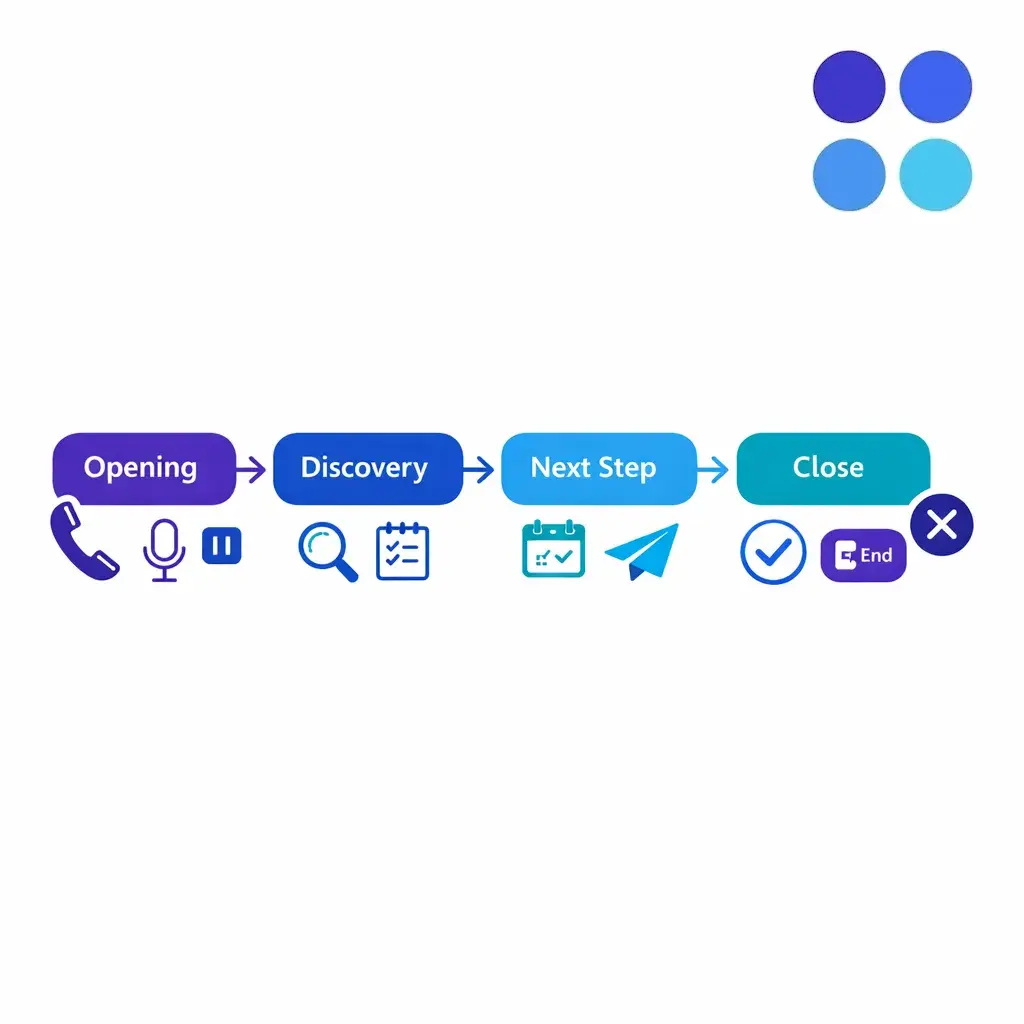
Strong service calls have shape: open well, discover the issue, confirm the next step, and close with ownership — instead of drifting through disconnected questions.
Good notes reduce repeat contacts, failed callbacks, and duplicate discovery. For healthcare practices, notes and messages also need to respect the HIPAA Privacy Rule. Coaching prompt: If another agent opened this record in six hours, would they know exactly what happened and what comes next?
Customers remember whether the team owned the issue, not whether the issue was easy. Coach agents to say what they will do, by when, and how the customer will know the status. Coaching prompt: Did you end this interaction with a clear owner and timeline, or just with reassurance?
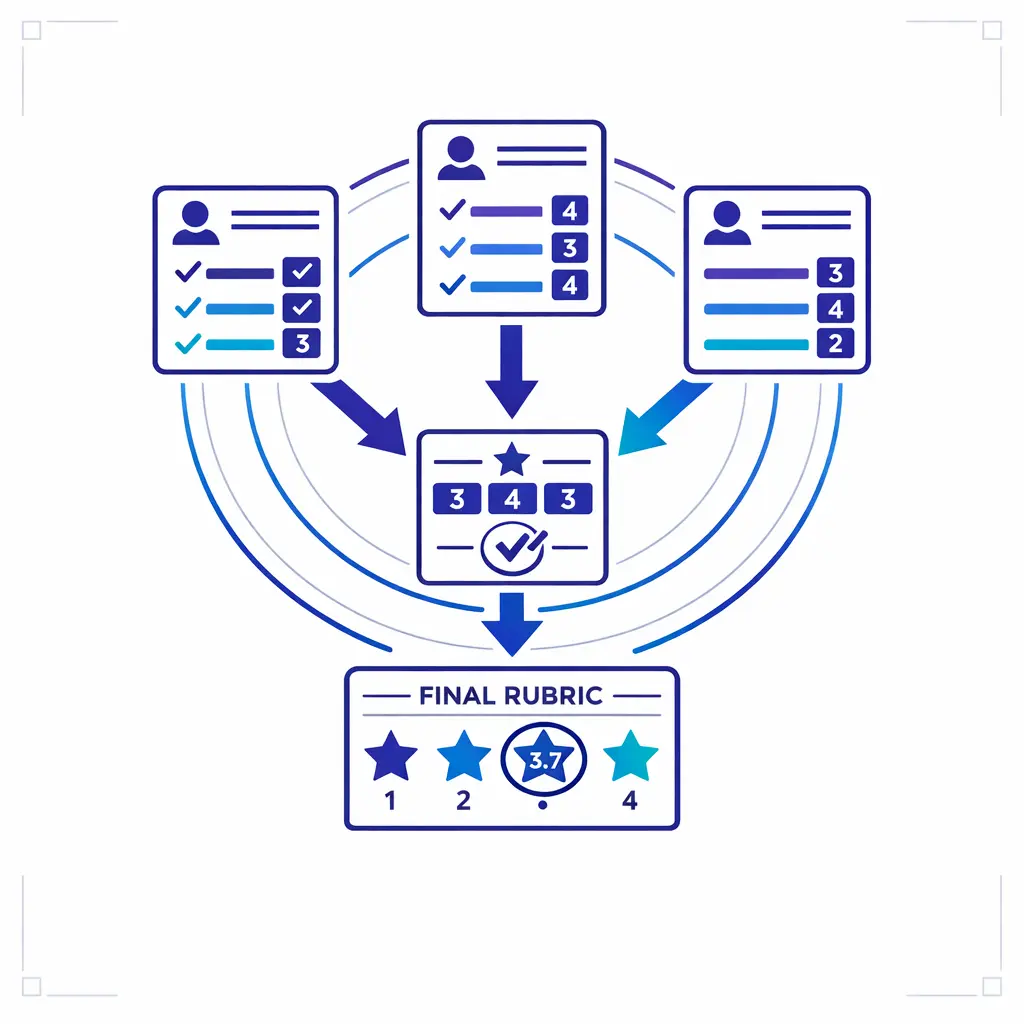
QA calibration keeps coaching fair. When supervisors and reviewers score the same call and align on the rubric, agents hear one standard instead of mixed signals.
Complaint handling is a separate skill from everyday service. The goal is to absorb friction, define the real concern, and move toward an actionable path instead of debating the customer's emotion. Coaching prompt: What sentence would have acknowledged the complaint more directly while still protecting policy?
Fast is not always efficient if the issue comes back. Meetings should help agents distinguish between productive speed and rushed handling that creates repeat work. Coaching prompt: Which part of this interaction was truly necessary, and which part could have been shorter without hurting quality?
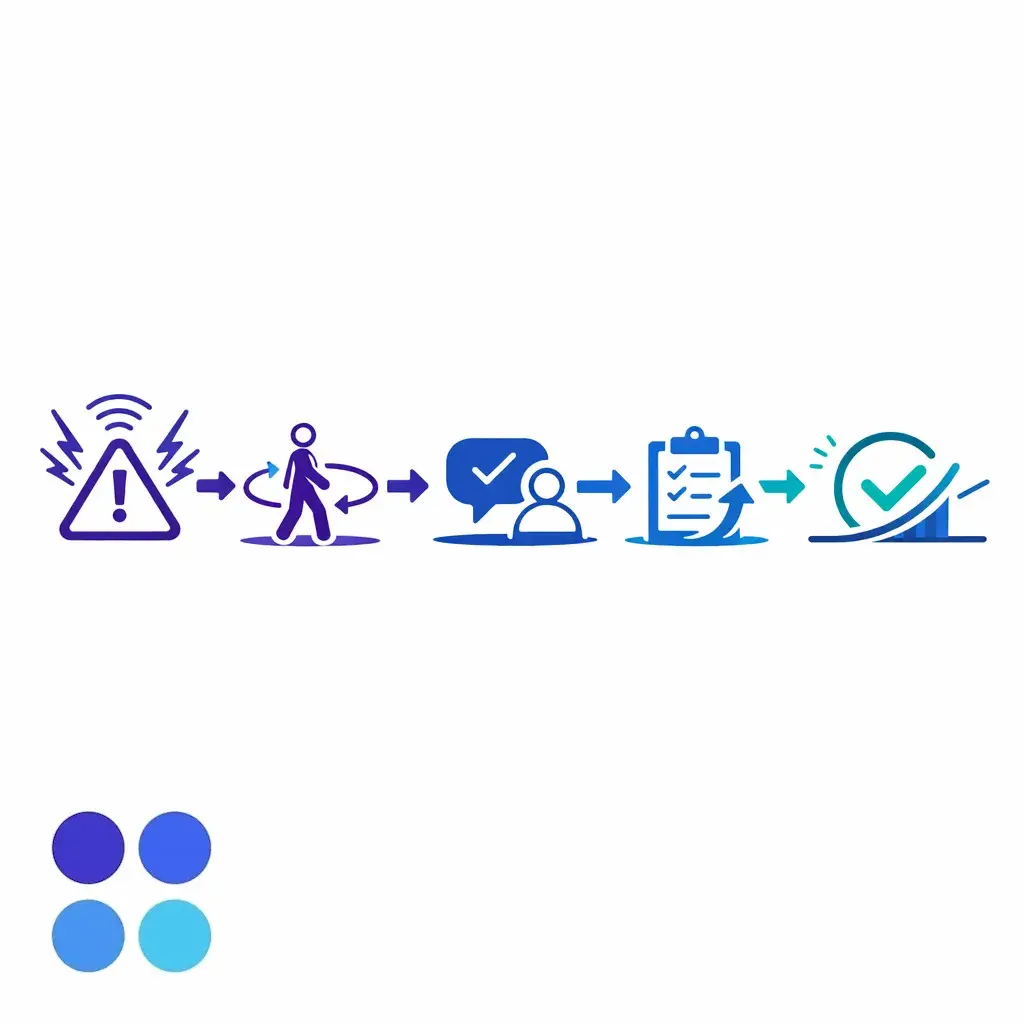
Difficult calls test pace and emotional control. Acknowledge the emotion, narrow the issue, and offer the next realistic step instead of matching the caller's intensity.
Customers should not receive one tone on the phone, a different answer in chat, and a third version by email. Use meetings to align standards across channels, especially for greeting, verification, next-step language, and documentation. Coaching prompt: If this same issue came in through chat, what would need to stay the same and what would need to change?
Real examples teach faster than generic reminders. Bring one strong call and one recoverable miss to each meeting so the team can hear the behavior, not just the summary. Coaching prompt: What exactly made this a strong or weak moment, and how would you coach it in one sentence?
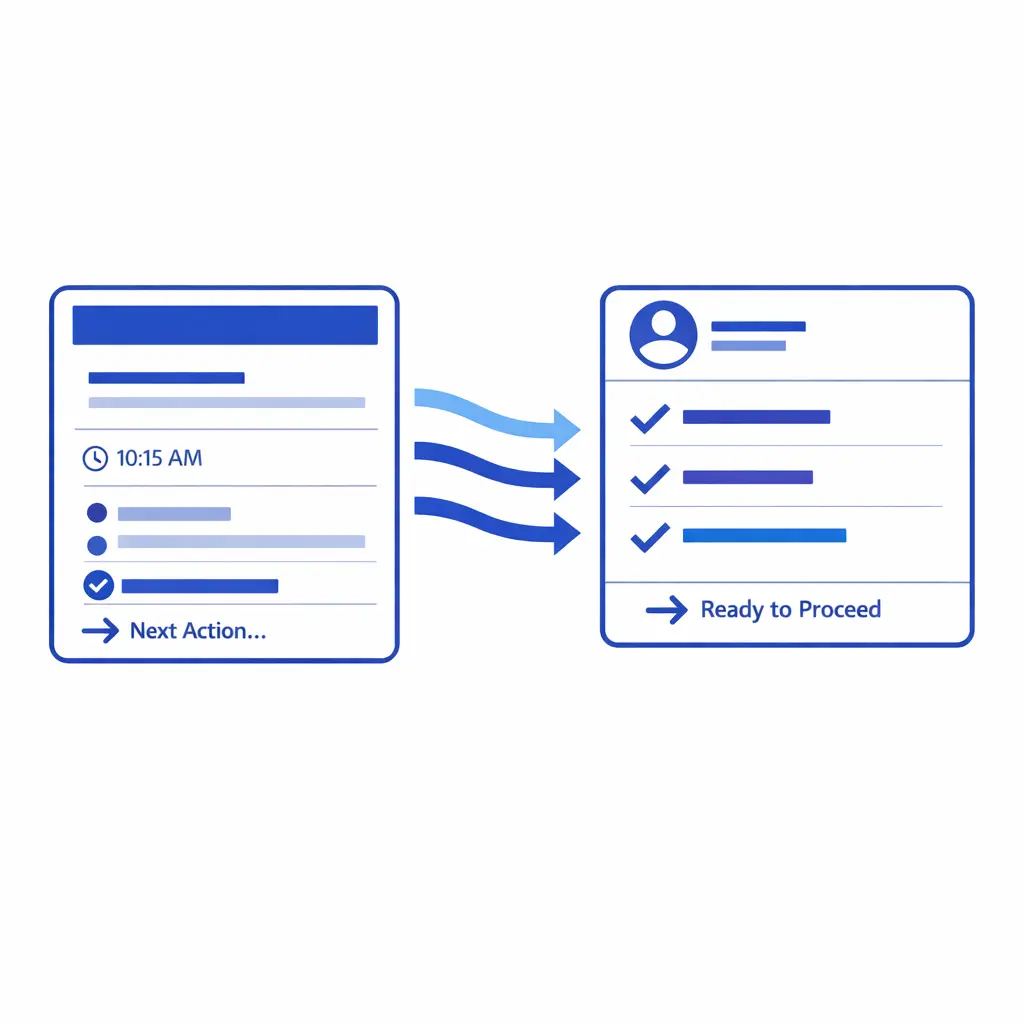
Good notes reduce repeat contacts and failed callbacks. If another agent opened the record in six hours, they should know exactly what happened and what comes next — and, in healthcare, only what is necessary.
When the same problem keeps appearing, do not stop at the last call. Use a brief root cause analysis to separate agent error from process confusion, knowledge gaps, routing problems, or system design. Coaching prompt: Is this failure really about behavior, or is the workflow itself making the miss more likely?
Customer service quality often depends on what happens after the contact leaves the frontline. Meetings should surface where sales, scheduling, intake, billing, nursing, or legal ops create friction for the agent or the customer. Coaching prompt: Which downstream handoff is creating the most avoidable confusion, and what should your team change before it transfers the work?
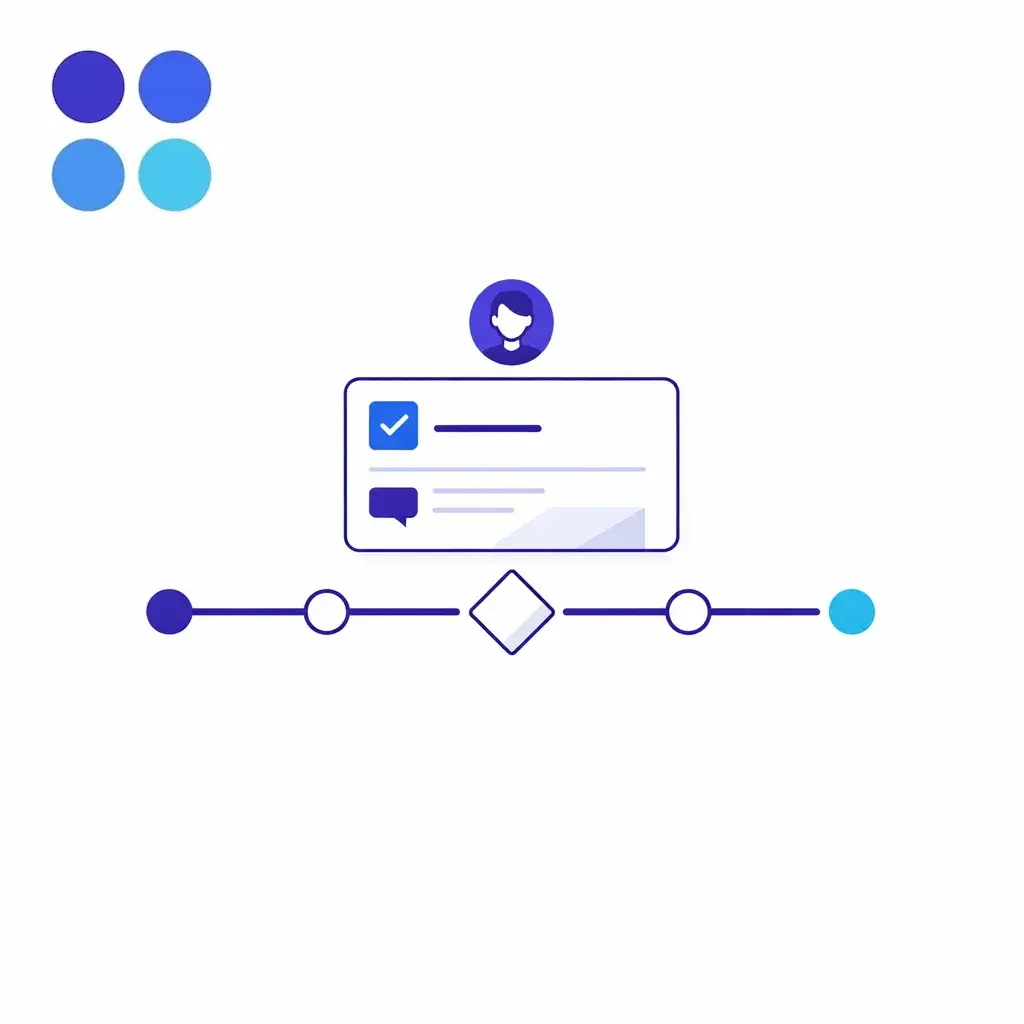
Customers remember whether the team owned the issue. Coach agents to say what they will do, by when, and how the customer will know the status — not just to reassure.
Etiquette still matters because it shapes the customer's first impression of competence. Focus on greeting clarity, pace, interruption control, holds, transfers, and close language that sounds confident rather than rushed. Coaching prompt: What part of your phone presence would make a new caller trust you faster?
Burnout shows up in tone, patience, and judgment before it shows up in attrition reports. Short meeting conversations about reset routines, difficult-call recovery, and peer support can protect consistency during heavy volume. Coaching prompt: What do you do between hard calls to reset without carrying the last interaction into the next one?

Fast is not efficient if the issue comes back. Help agents separate productive speed from rushed handling that creates repeat work and hurts first-contact resolution.
Advocacy does not mean saying yes to everything. It means helping the customer make progress inside the real constraints of policy, timing, and next-step ownership. Coaching prompt: Did your language make it clear that you were helping the customer move forward, even if the answer was limited?
Every meeting should end with one behavior each agent will test on the next set of contacts. The standard is not perfection; it is visible progress on a small, coachable habit. Coaching prompt: What is one thing you will do differently on your next five calls, and how will your lead know it happened?
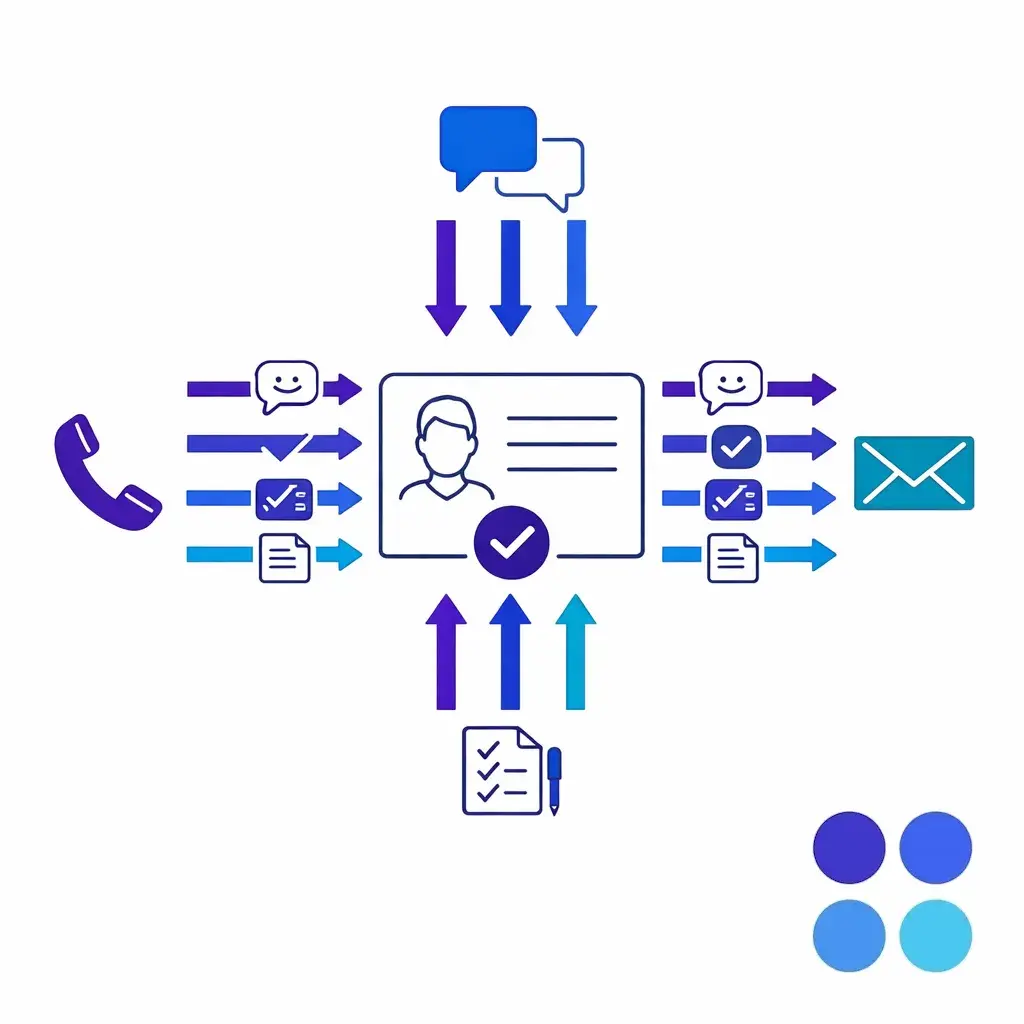
Customers should not get one tone on the phone, a different answer in chat, and a third by email. Align greeting, verification, next-step language, and documentation across every channel.
Short huddles work best when the meeting has one purpose and one behavioral takeaway. A 30-minute format is long enough for review, discussion, and commitment without turning the session into a lecture.
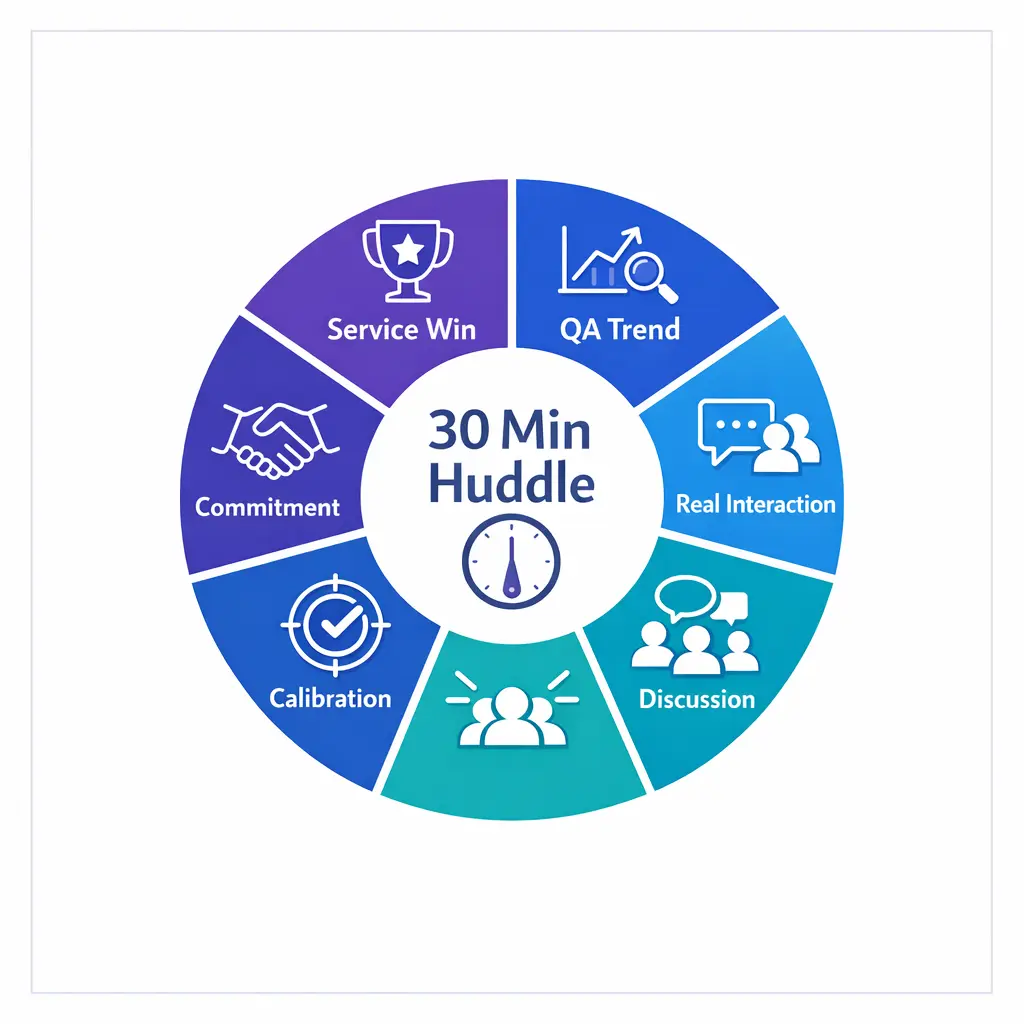
A 30-minute huddle works best with one purpose and one takeaway: open with a win, review a QA trend, play one real call, discuss, calibrate, then assign one commitment and metric.
Use prompts that force observation, not opinion. The best customer service coaching questions push agents to identify the exact behavior that helped or hurt the outcome.
Calibration should be simple enough to repeat every week. The goal is not to debate every point forever; it is to make the rubric more usable and the coaching more consistent.
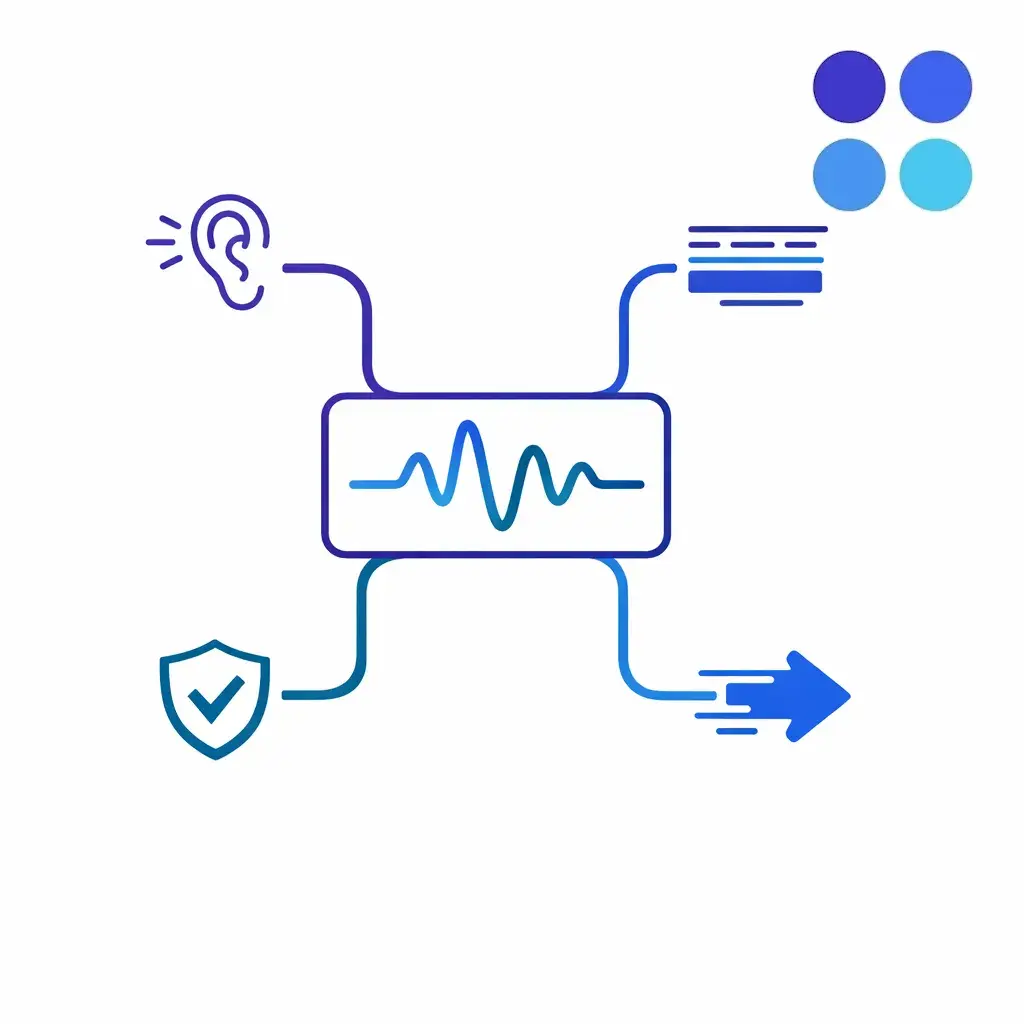
Real calls teach faster than generic reminders. Use prompts that force observation, not opinion, and bring one strong call and one recoverable miss to each meeting.
Do not track everything. Pick the few measures that connect directly to the behavior you coached, then review them long enough to see whether the behavior actually changed.
If the topic was active listening, look for fewer missed details and fewer repeat explanations. If the topic was escalation handling, look for cleaner handoffs, fewer supervisor rescues, and better note quality.
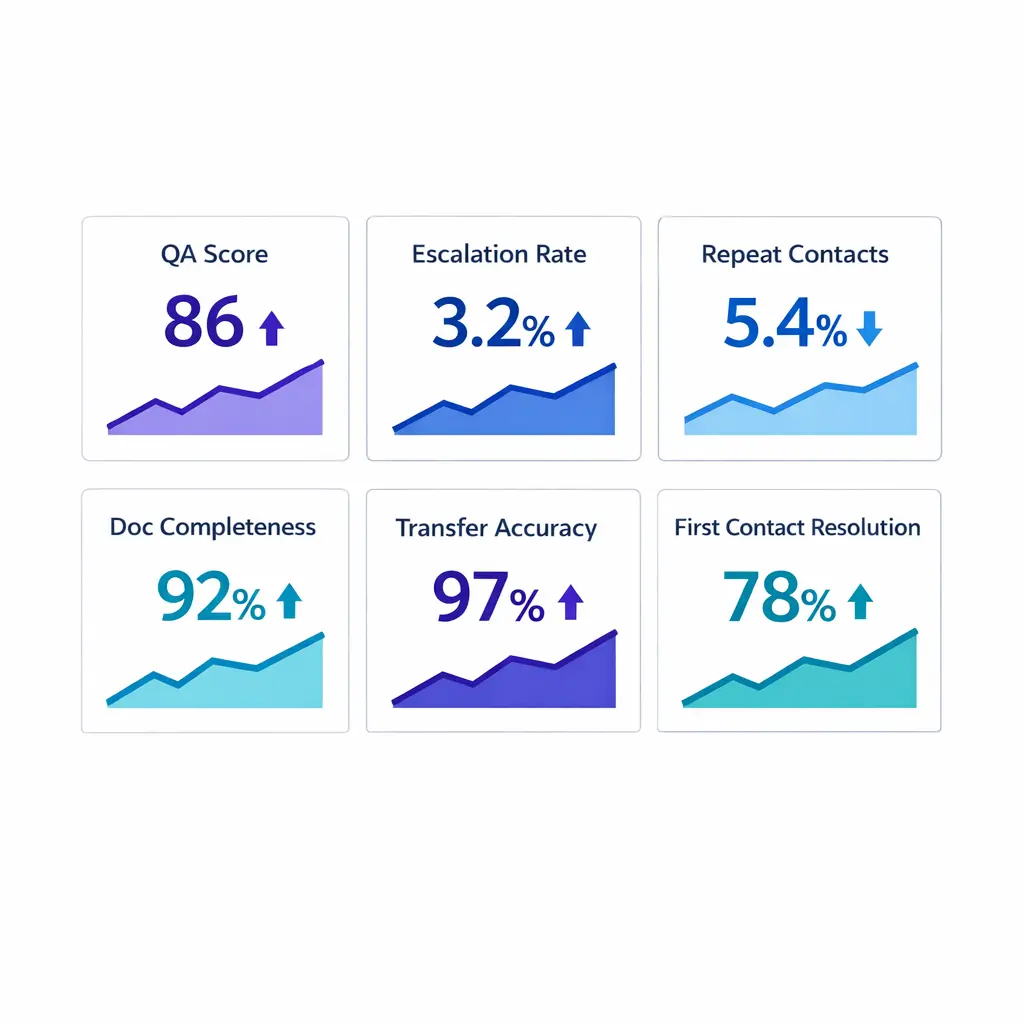
Track only the few measures tied to the behavior you coached — QA section score, escalation rate, repeat contacts, documentation completeness — long enough to see whether behavior actually changed.
Do not let the meeting notes become a transcript nobody uses. Convert them into a few operational decisions: what behavior matters, what good sounds like, who is coaching it, where it will be observed, and when you will review the result.
A simple Plan-Do-Check-Act cycle helps keep coaching experiments small, measurable, and repeatable. That is how customer experience training turns into service quality improvement instead of disappearing into general discussion.
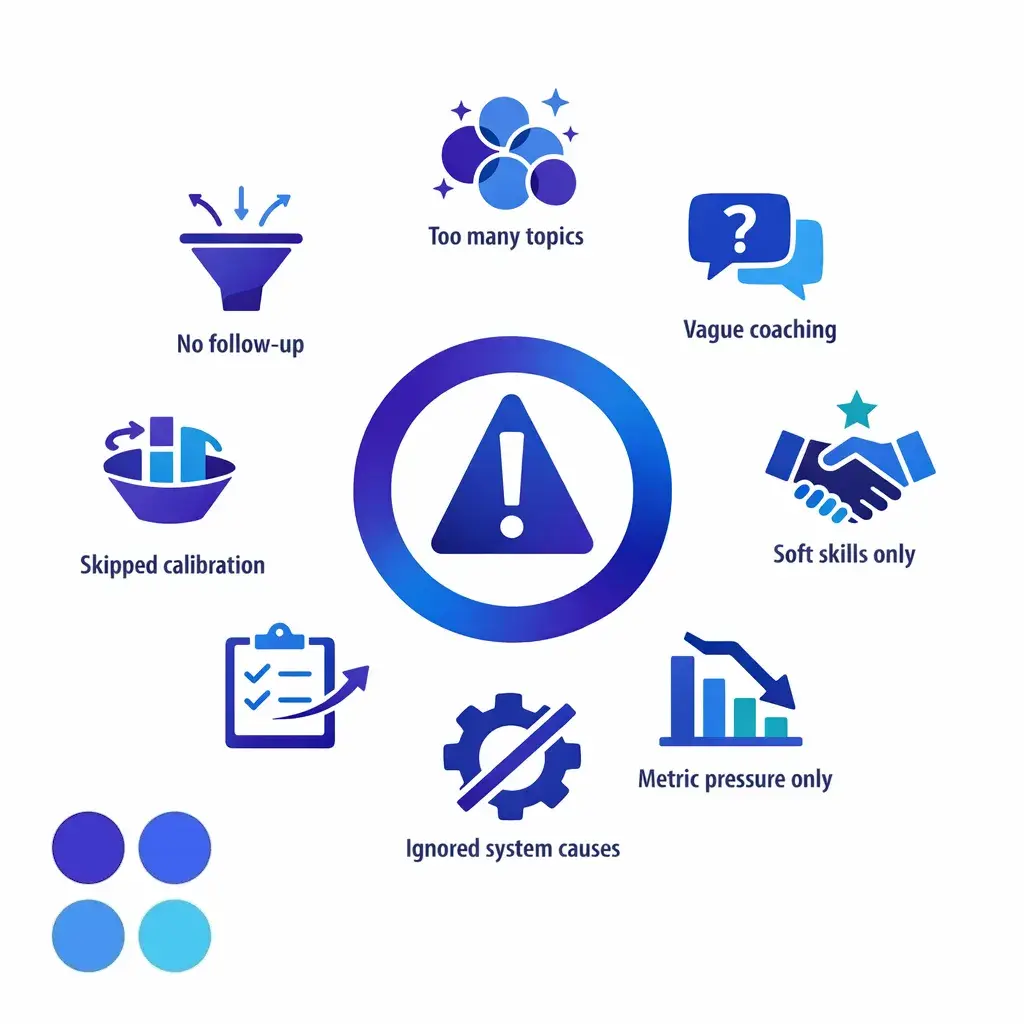
Avoid the common meeting mistakes: too many topics at once, vague generalities, coaching only soft skills, skipping calibration, using meetings only for metric pressure, and no follow-up.
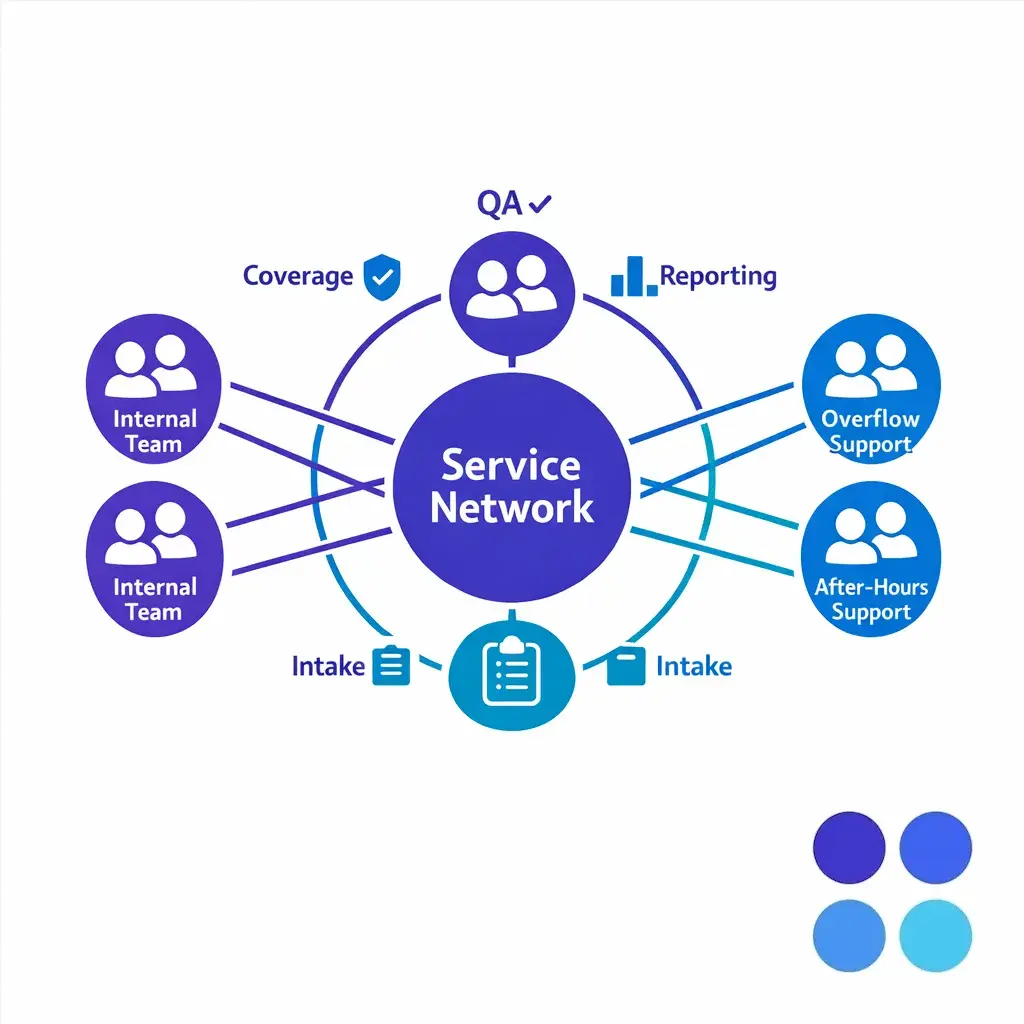
Extend the same standards you coach internally with dependable overflow, after-hours support, and consistent intake — one service network aligned around QA and coverage, whoever answers.
A practical five-part model is listening, empathy, accuracy, ownership, and follow-through. If a team does those five things well, most other customer service skills become easier to coach.
Five common problems are incomplete discovery, inconsistent answers, poor documentation, weak follow-up, and avoidable escalations. These are strong team meeting topics because they usually affect both customer experience and operational efficiency.
Start with active listening, clear communication, problem solving, emotional control, and process discipline. Together, those skills improve both customer trust and QA performance.
Customer service training should cover communication basics, product and policy knowledge, documentation standards, escalation paths, channel-specific handling, de-escalation, and QA expectations. For intake-heavy teams, it should also include workflow accuracy and handoff quality.
QA calibration is a recurring review where leaders score the same interaction and align on how the rubric should be interpreted. Its purpose is scoring consistency, fair coaching, and clearer frontline standards.
Good topics are the ones tied to current risk: active listening, note quality, handoff quality, difficult customers, complaint resolution, policy accuracy, and repeat issue patterns. The best topic is usually the one most connected to recent QA misses or escalations.
If your operation needs more reliable overflow coverage, after-hours support, or stronger intake consistency across locations, Go Answer can help you extend the same standards you coach internally. That is especially useful when your job-to-be-done is better coverage, cleaner QA, and fewer missed opportunities.
Use this framework in your next team meeting, then compare it against your live workflow, scorecard, and escalation path. When you are ready, Request Pricing, Book a Discovery Call, or Talk to a Specialist about service design, QA expectations, and coverage goals.

Learn why thousands of companies rely on Go Answer.
Try us risk-free for 14 days!
Enjoy our risk-free trial for 14 days or 200 minutes, whichever comes first.
Have more questions? Call us at 888-462-6793
Learn why thousands of companies rely on Go Answer.
Have more questions? Call us at 888-462-6793
If you would like to get in contact with a Go Answer representative please give us a call, chat or email.

Thanks for your interest!
A representative will be reaching out to you shortly.
Have more questions? call us on 888-462-6793
