
CSAT vs NPS: Which Customer Satisfaction Metric Should Your Support Team Track?
By Rick AlovisLast modified: December 1, 2026
Voted Top Call Center for 2024 by Forbes
Virtual Receptionists
Save time and money with our virtual receptionists.
AI Receptionist
AI-powered receptionist that answers, routes, and qualifies calls 24/7.
Enterprise Solutions
Solutions designed to scale with your organization’s needs.
Legal Services
Our virtual legal receptionists are experts in legal intake.
Last modified: December 1, 2026
Support leaders are often asked to reduce escalations, improve service quality, and prove that support contributes to retention. The problem is that many teams choose a customer metric before they decide what decision the metric is supposed to improve. That creates dashboards that look busy but do not help supervisors coach faster, vendors perform better, or executives see risk earlier.
This guide is for support and operations leaders at enterprise and multi-location service businesses, legal intake-heavy firms, healthcare practices, and other high-volume inbound teams. You will learn what CSAT and NPS actually measure, where CES fits, which metric to start with, and how to build a lightweight scorecard that works for both in-house and outsourced customer service environments.
The difference between CSAT and NPS is scope. CSAT measures short-term satisfaction with a specific support interaction, while NPS measures longer-term loyalty and willingness to recommend your company. For most support teams, that means CSAT is the better first metric for daily management, and NPS is the better companion metric for relationship health.
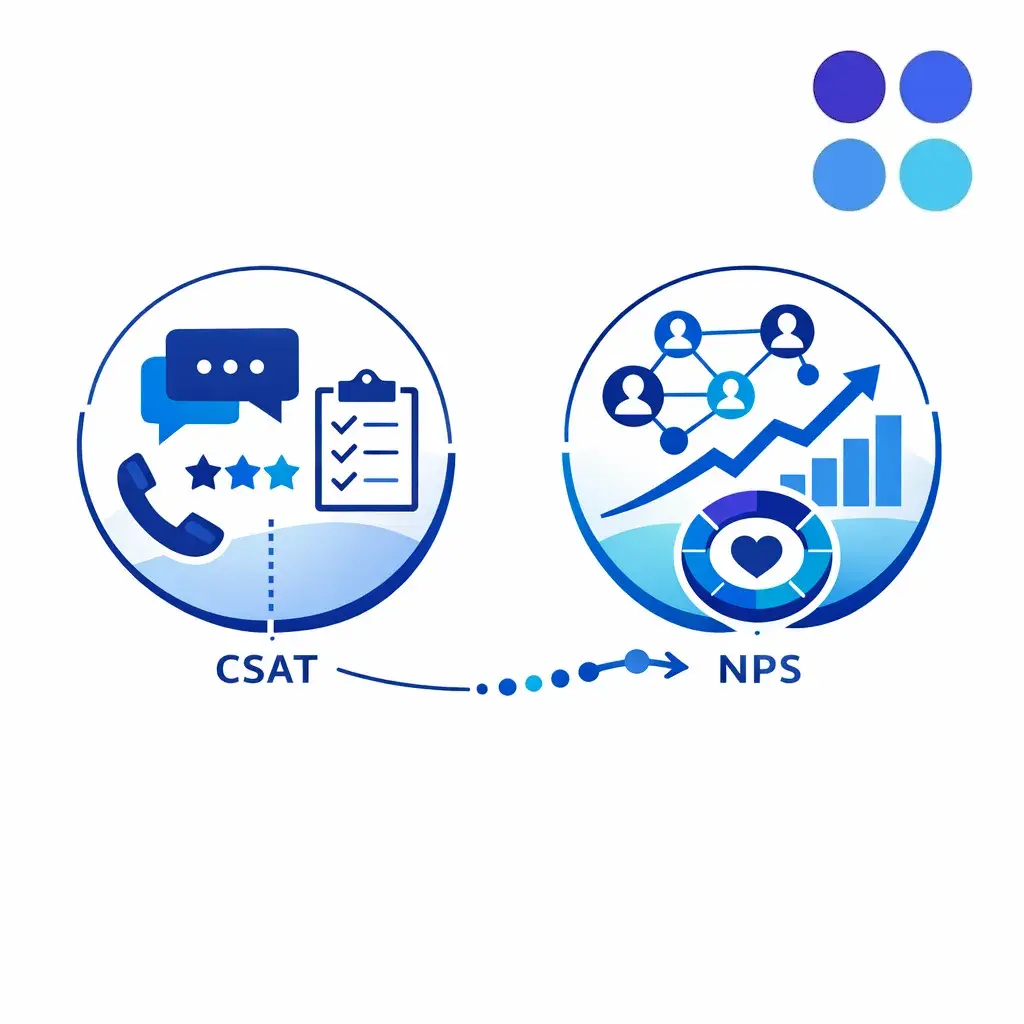
CSAT looks at one support interaction and how satisfied the customer was with it, while NPS looks at longer-term loyalty and willingness to recommend the company. That difference in scope is why CSAT suits daily management and NPS suits relationship health.
CSAT is usually the best starting point when your job is to improve call handling, chat quality, ticket resolution, intake consistency, or after-hours coverage. It is close to the interaction, which makes it easier to connect feedback to a queue, a shift, a script, or a coaching opportunity.
That matters in operational settings where speed and accuracy both count. If you run a contact center, an overflow team, a legal intake desk, or a clinic scheduling line, you need a metric that tells you whether a specific service moment worked.
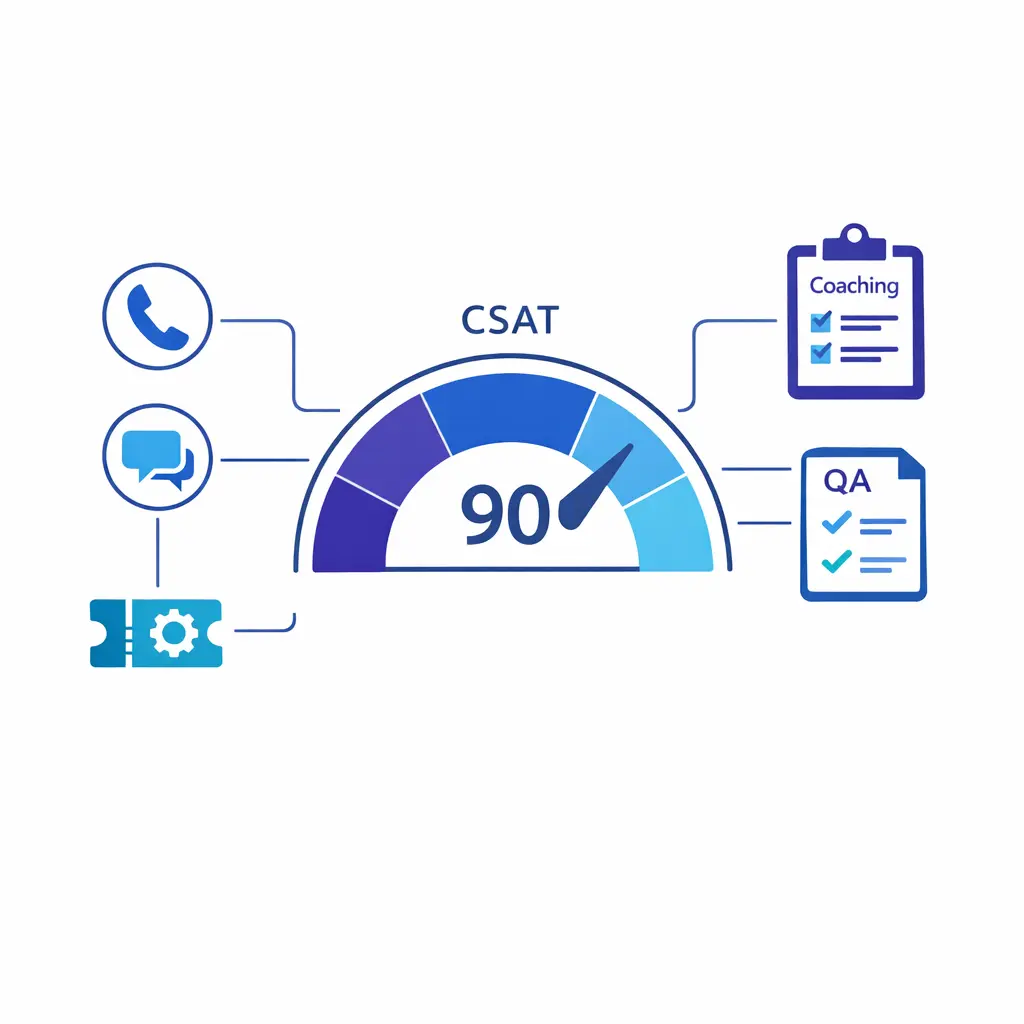
CSAT works best as the starting point for day-to-day support quality. Because it sits close to the interaction, supervisors can tie feedback to a queue, a shift, a script, or a coaching opportunity and act on it quickly.
NPS is more useful when leadership wants a broader read on customer loyalty, brand sentiment, and churn risk. It helps answer a different question: not “Was that support interaction good?” but “How healthy is the overall customer relationship?”
That makes NPS more useful for executive reporting, quarterly reviews, and account health discussions. It can show whether support quality is contributing to loyalty, but it should not replace a touchpoint-level metric.
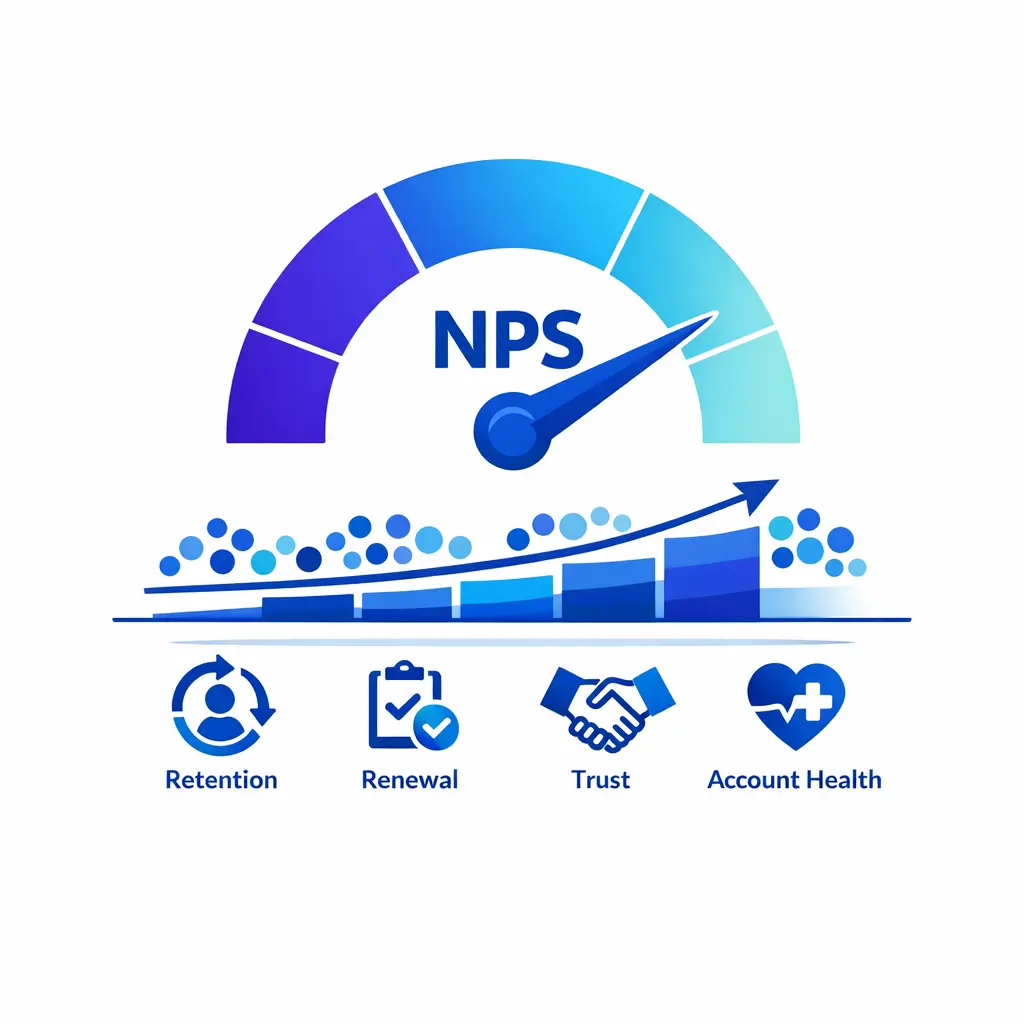
NPS gives leadership a broader read on customer loyalty, brand sentiment, and churn risk. It suits executive reporting, quarterly reviews, and account health discussions, but it should not replace a touchpoint-level metric.
For many organizations, CSAT and NPS belong at different levels of the same scorecard. CSAT tells supervisors what to fix this week. NPS helps leadership see whether the full customer experience is moving in the right direction over time.
The practical model is simple: use CSAT to manage the work, and use NPS to understand the relationship around the work. If resources are limited, start with CSAT and add NPS once your survey process and follow-up discipline are stable.
In practice, CSAT is usually asked immediately after a support interaction, often on a 5-point or 7-point scale, and commonly calculated as the percentage of customers who choose satisfied responses. The wording is direct, which is one reason CSAT remains one of the most useful customer satisfaction metrics for frontline support.
For support teams, that makes CSAT a clean feedback loop. You can tie the score back to an agent, a workflow, a transfer pattern, a hold experience, or an intake quality issue and decide what to improve next.
The formula is straightforward: count the number of satisfied responses, divide by total responses, and convert the result to a percentage. If 42 out of 50 customers select a satisfied option, the CSAT score is 84%.
Because the math is simple, CSAT is easy to explain across operations, QA, and vendor management. That simplicity is especially helpful when you need one standard measure across multiple channels or locations.

CSAT is simple to calculate: divide satisfied responses by total responses and convert the result to a percentage. If 42 of 50 customers choose a satisfied option, the score is 84%, which is easy to explain across operations, QA, and vendor management.
CSAT is strongest when you need actionable feedback on a discrete support event. It works well for post-call surveys, post-chat surveys, resolved-ticket surveys, and intake follow-up where the goal is to improve service quality measurement at the touchpoint level.
It is also useful when outsourced support is part of the model. If one team handles daytime calls and another handles overflow or after-hours coverage, CSAT helps you compare customer experience at the interaction level instead of relying on broad impressions.
NPS uses a 0-to-10 recommendation question, classifies respondents as promoters, passives, and detractors, and is calculated by subtracting the percentage of detractors from the percentage of promoters. That design makes NPS a relationship metric, not a narrow post-ticket grade.
For support leaders, the value is not in replacing CSAT. The value is in seeing whether service quality, policy friction, product issues, and responsiveness are combining to strengthen or weaken customer loyalty.
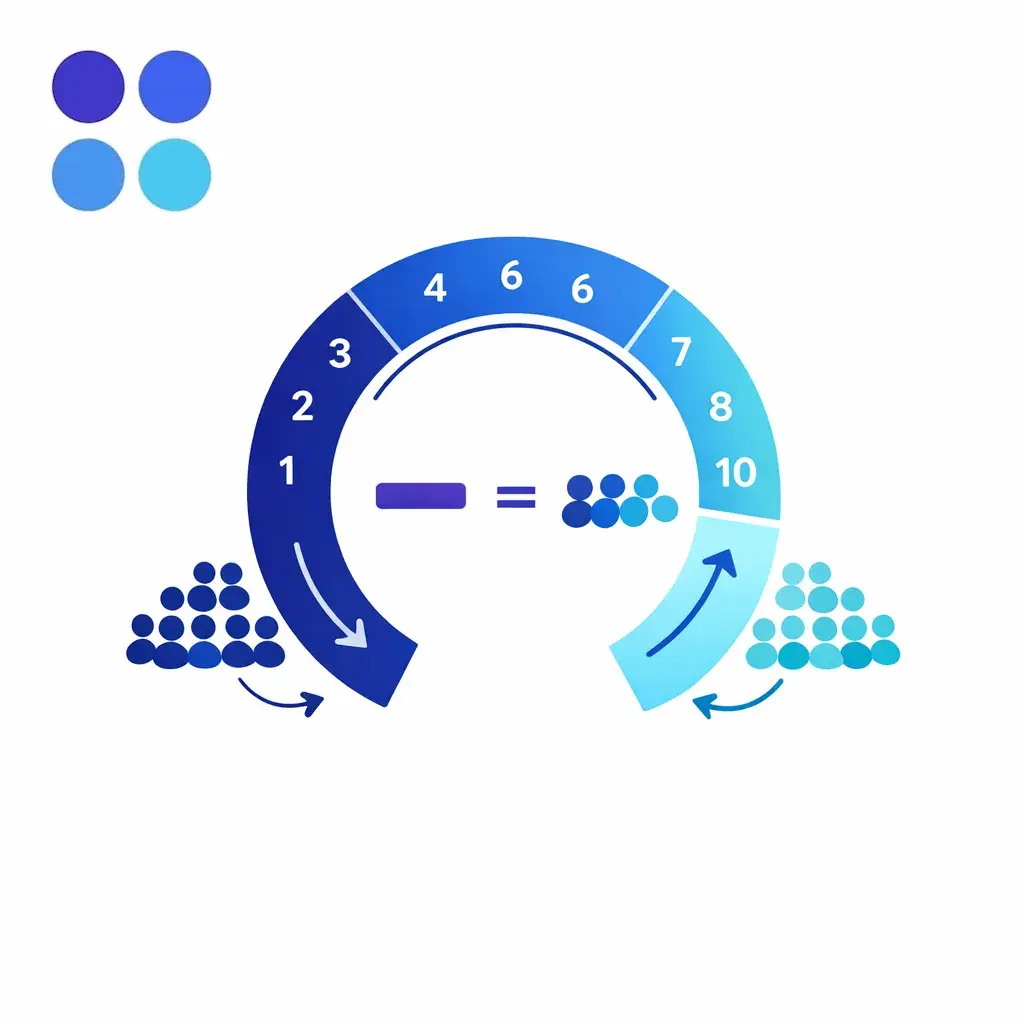
NPS asks a 0-to-10 recommendation question and sorts respondents into promoters, passives, and detractors. The score is promoters minus detractors, which makes it a relationship metric rather than a grade for a single ticket.
NPS is best used when support is expected to influence retention, renewal, expansion, or overall brand trust. It is useful in quarterly business reviews, account health reporting, and cross-functional conversations where support is one part of a larger customer experience story.
If your executive team wants one number that is easy to discuss across departments, NPS often fills that role better than CSAT. It is less precise for coaching, but stronger for strategic pattern recognition.
The simplest way to frame net promoter score vs CSAT is this: CSAT is transactional, and NPS is relational. One evaluates a moment. The other reflects the broader customer relationship that surrounds many moments.
That distinction matters because support teams often need both views. A customer can be satisfied with today’s call and still feel lukewarm about the overall brand, or frustrated with one interaction while remaining loyal to the company.

CSAT works best when the survey is tied closely to the interaction you want to evaluate. That makes the feedback easier to attribute and easier to coach.
NPS usually works better on a separate cadence, such as monthly or quarterly, with stable sampling rules. When teams mix those cadences together, they often end up misreading what each score is telling them.
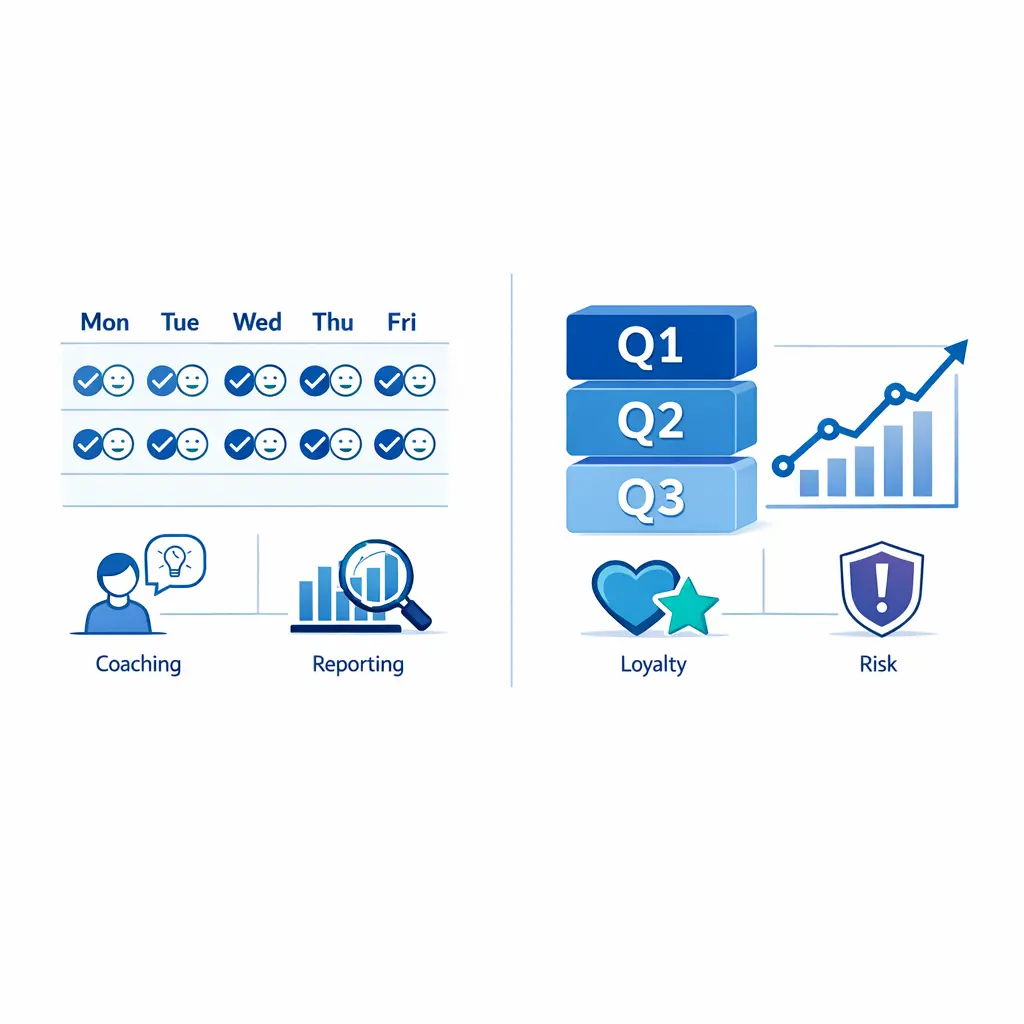
If your question is, “What should the team do differently on the next 100 calls?” CSAT is usually more useful. Supervisors can connect low scores to hold times, empathy, intake errors, missed expectations, or weak follow-up.
NPS is still valuable, but its actionability is broader. It points you toward themes, not always toward a single agent behavior to coach tomorrow morning.
NPS often travels well in executive conversations because it summarizes loyalty in one number. It can be useful when leadership wants a common lens across support, product, operations, and account management.
CSAT is usually better for internal performance management. It gives support leaders a more direct way to monitor service quality, compare channels, and hold internal or outsourced teams to the same operational standard.
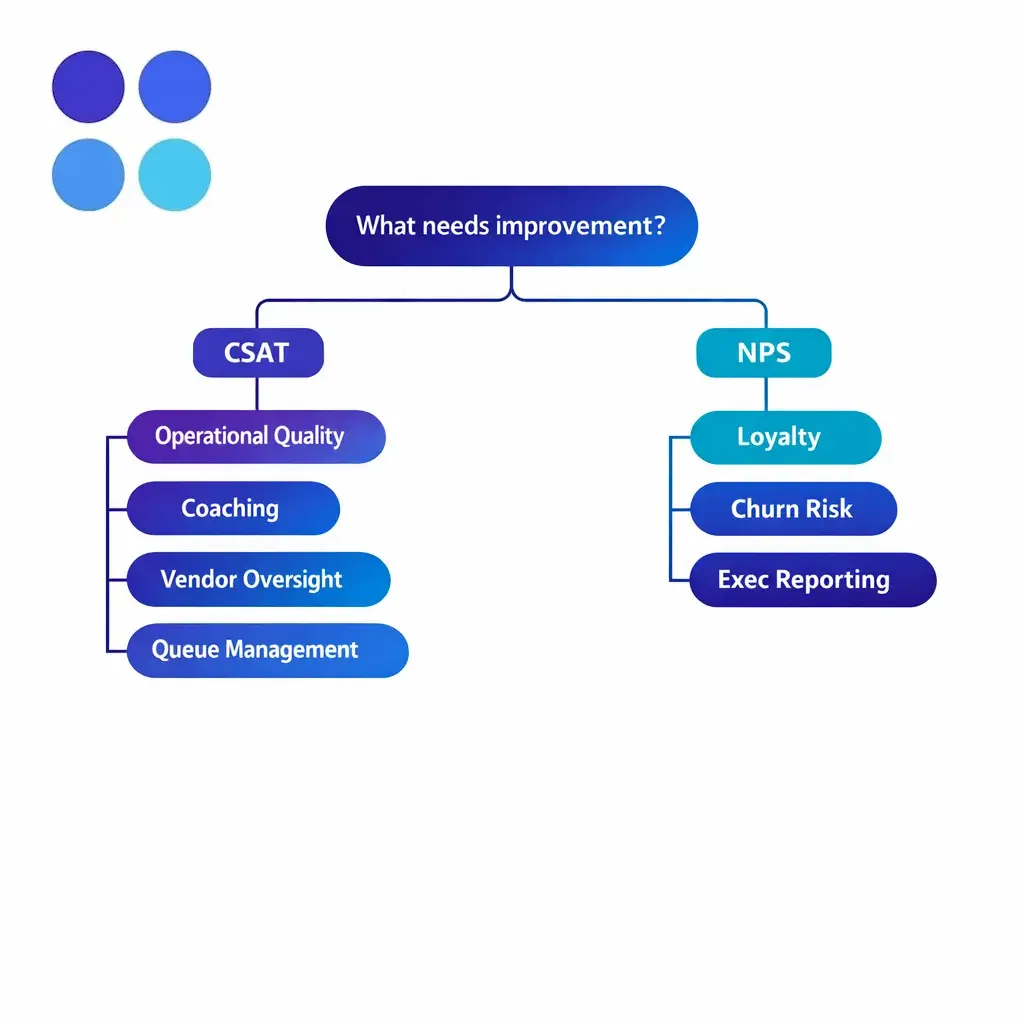
Choose CSAT first when your goal is to improve support team performance. It is the better fit for post-interaction review, QA calibration, coaching, staffing analysis, and vendor oversight.
This is especially true when every contact has operational weight. In legal intake, healthcare scheduling, emergency service routing, or high-volume customer care, you need visibility into whether the last interaction felt clear, efficient, and trustworthy.
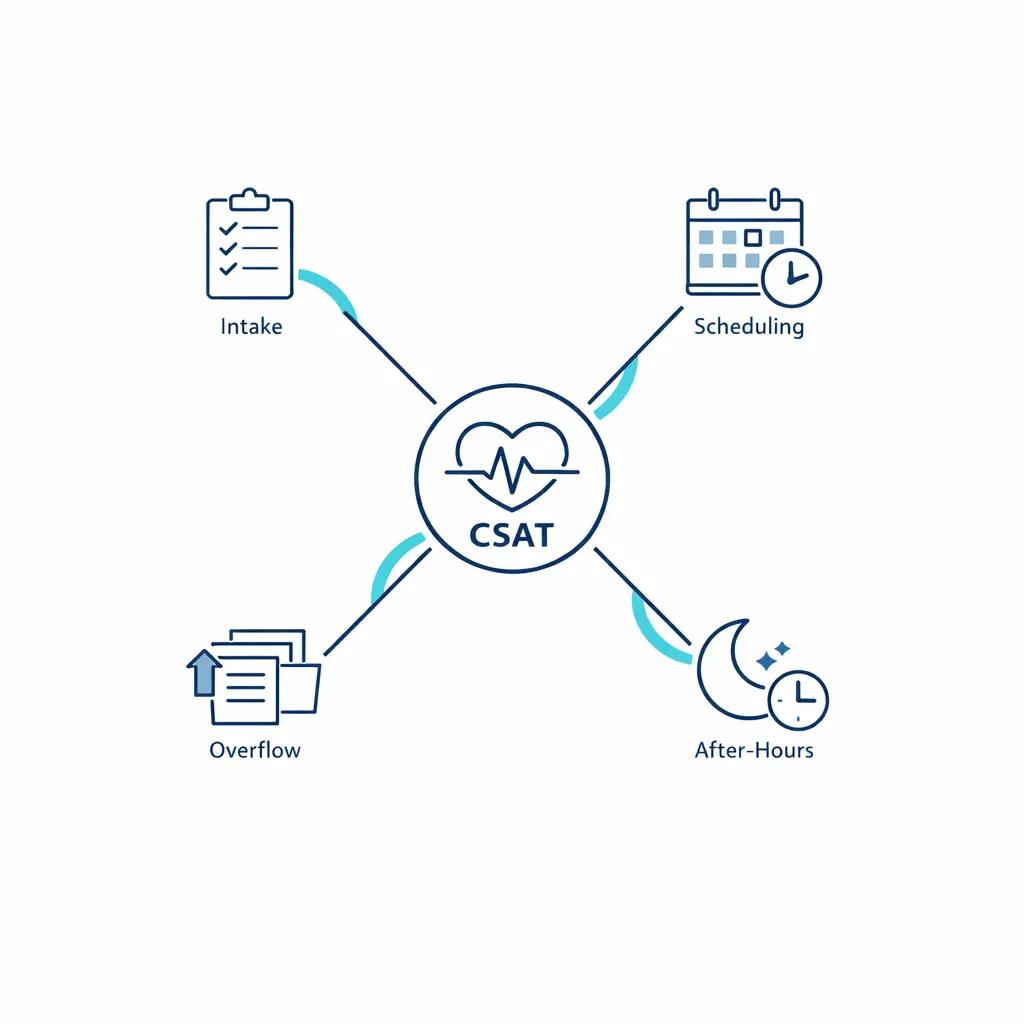
High-volume support teams handle calls, chats, intake, and scheduling where every contact carries operational weight. CSAT gives touchpoint-level feedback on whether the last interaction felt clear, efficient, and trustworthy, so problems surface quickly.
Choose NPS when leadership needs a broader voice of the customer signal. It is useful for understanding whether customers are becoming stronger advocates or showing signs of relationship drift.
If your support organization is one piece of a larger retention strategy, NPS can help show whether service changes are influencing loyalty. It is not a substitute for operational metrics, but it is a valuable companion.

Support is one piece of a larger retention strategy. Better interaction quality can strengthen loyalty, and NPS helps show whether service changes are influencing retention, though it remains a companion to operational metrics rather than a substitute.
Many enterprise teams should not pick only one. If support affects renewal, account growth, or cross-sell outcomes, it makes sense to pair a transactional metric with a relational one.
A simple scorecard can do the job. Use CSAT to manage support execution each week, then review NPS on a separate cadence to see whether better service is translating into stronger relationship outcomes.
When teams ask about csat vs nps vs ces, the missing piece is usually effort. CES asks customers how easy it was to get help or complete a task, which makes it useful for workflows with handoffs, repeat contact, or confusing process steps.
In support terms, CSAT captures how the interaction felt, NPS reflects how the company is regarded, and CES reveals whether the process itself created friction. That distinction is useful when service quality is good but customers still feel the experience took too much work.
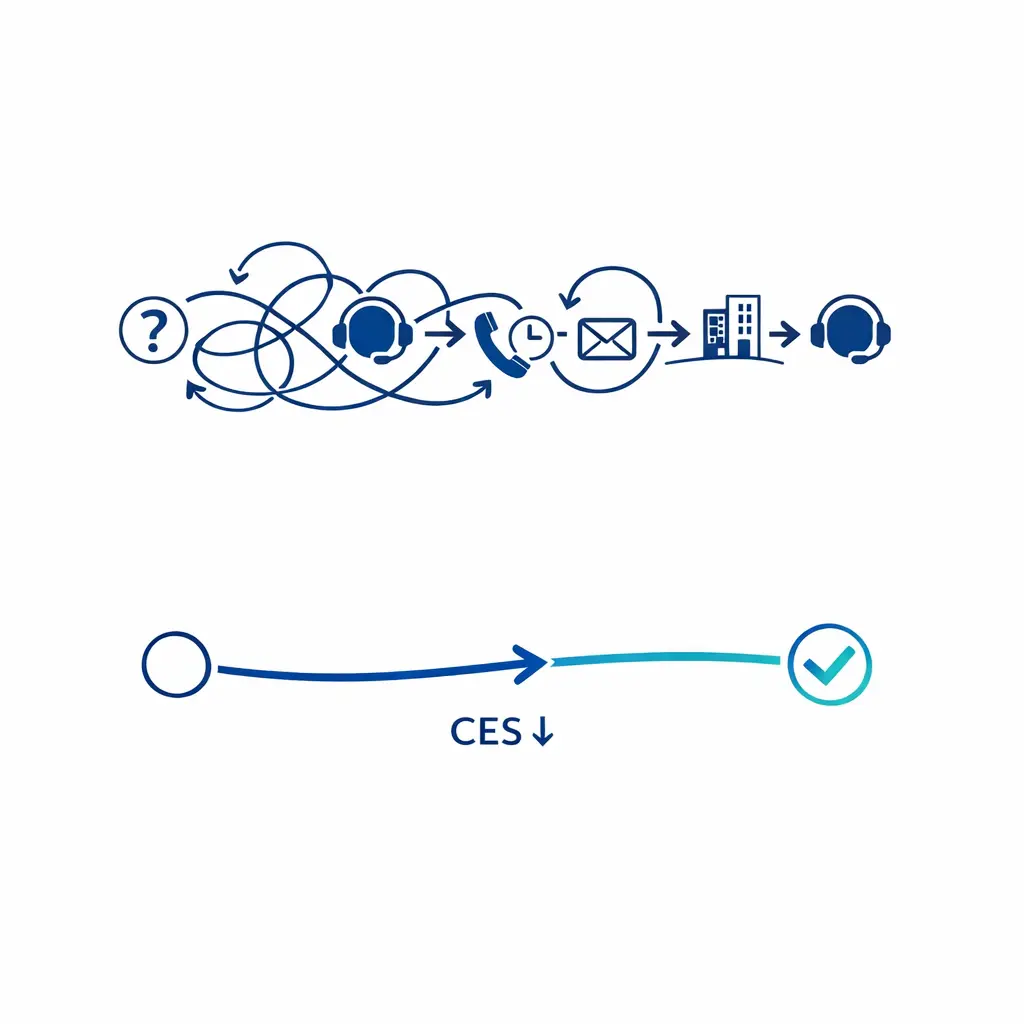
CES asks how easy it was to get help, which reveals friction that satisfaction scores can miss. It is most useful in workflows with handoffs, repeat contact, or confusing steps, where service may feel good but still take too much effort.
For complex journeys, research in Harvard Business Review on reducing customer effort is a useful reminder that loyalty often improves when customers can solve issues with less friction. That makes CES valuable for password resets, claims follow-up, appointment changes, multi-step onboarding, and other process-heavy journeys.
Most support teams do not need CES everywhere. Use it selectively where customers must repeat information, switch channels, wait for callbacks, or navigate multiple teams before the issue is resolved.
Avoid turning NPS into an agent scorecard. The standard NPS question is about recommending the company, not rating a single representative.
That means product quality, pricing, policies, billing, brand reputation, and prior experiences can all shape the response. Use NPS for relationship insight, not as a direct replacement for agent QA or post-contact CSAT.
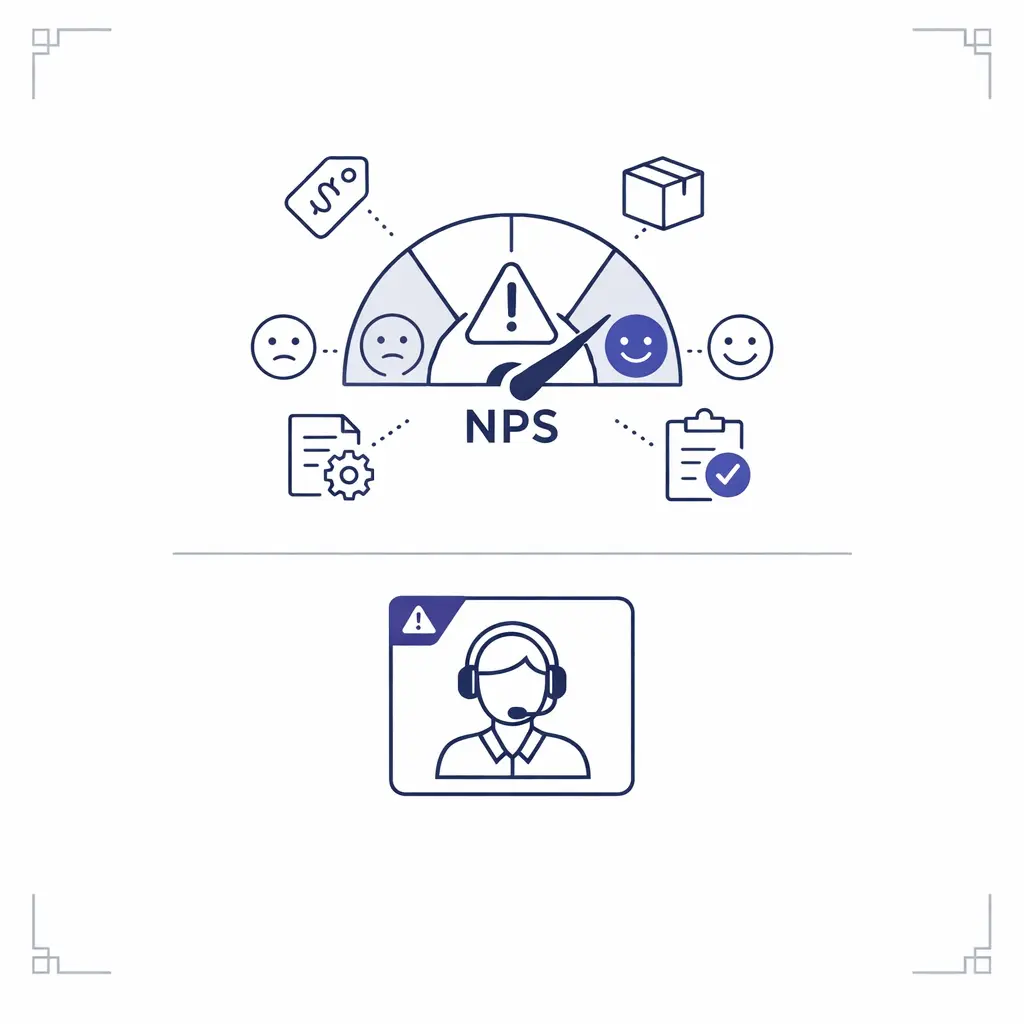
If the survey arrives long after the interaction, the feedback becomes harder to attribute and harder to coach. Teams lose the connection between the score and the actual service behavior that created it.
Keep the timing tight. The closer the survey is to the support event, the more useful the result is for service recovery and coaching.
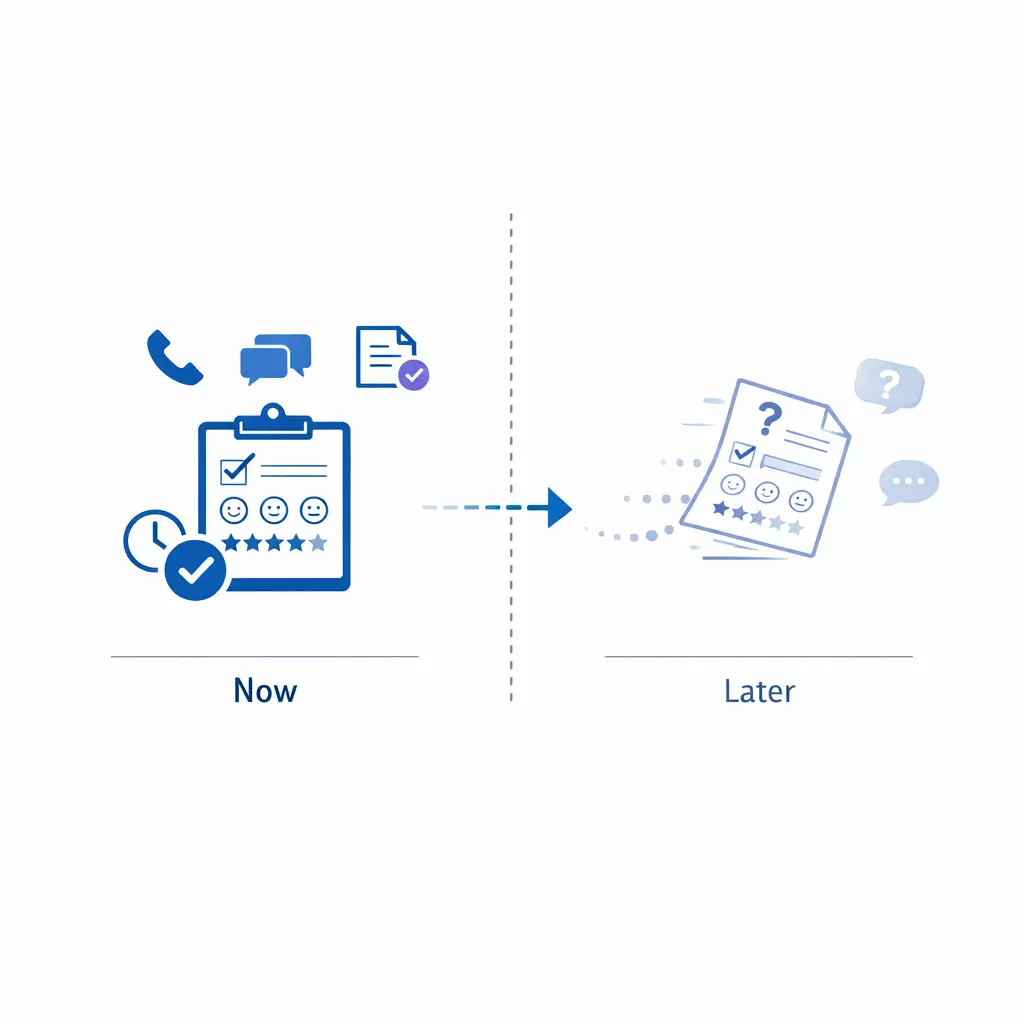
Survey timing matters. When a CSAT survey arrives long after the interaction, feedback is harder to attribute and coach. Keeping the survey close to the support event makes results more useful for service recovery and coaching.
A score alone tells you that something happened. A comment tells you why it happened.
Even one short follow-up question can make customer satisfaction metrics much more useful. It helps supervisors separate agent behavior, policy issues, staffing strain, and process friction instead of guessing from the number alone.
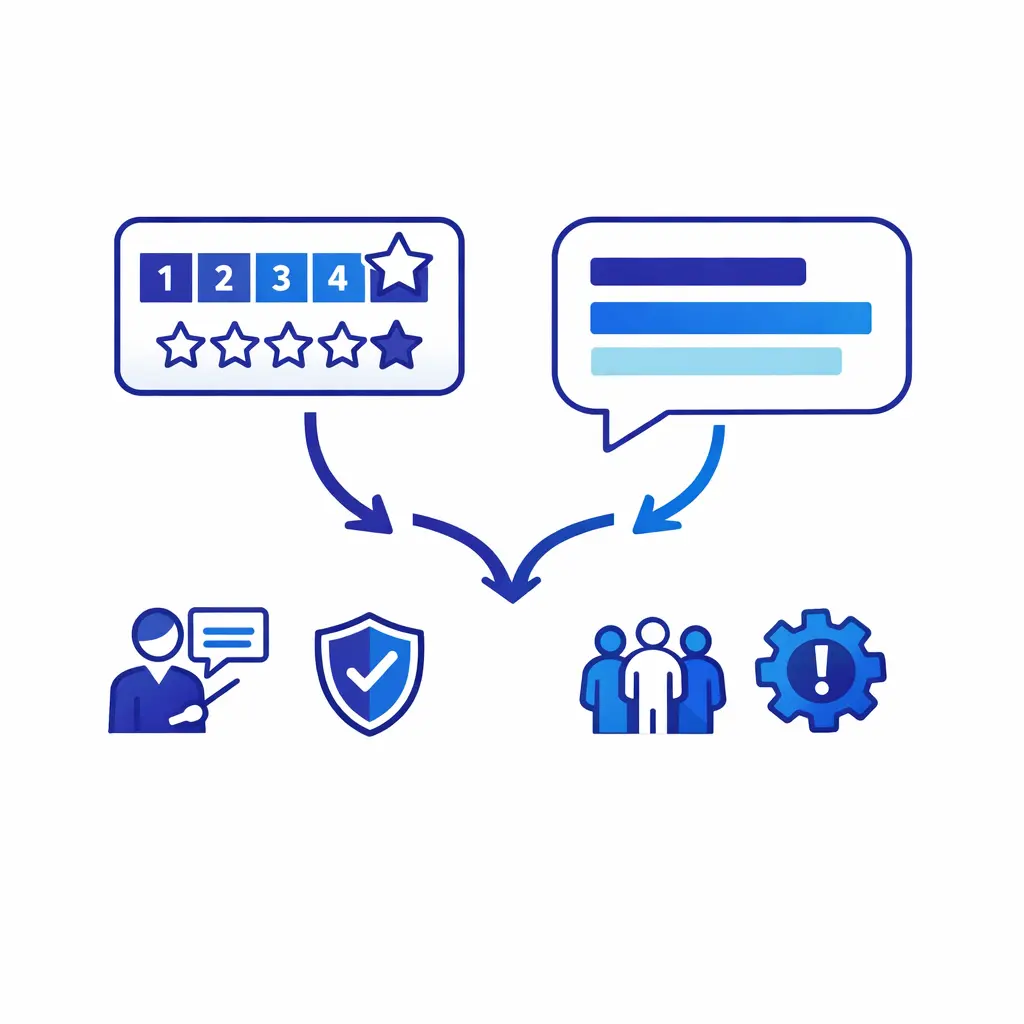
A score alone shows that something happened, while a comment explains why. Even one short open-text follow-up helps supervisors separate agent behavior, policy issues, staffing strain, and process friction instead of guessing from the number.
A blended score can hide real problems. Phone, chat, email, text, intake, billing support, and after-hours coverage often perform differently even when they sit under the same support umbrella.
Segment by channel, queue, location, issue type, and team structure before acting on the number. That is how customer service CSAT becomes a management tool instead of a vanity metric.
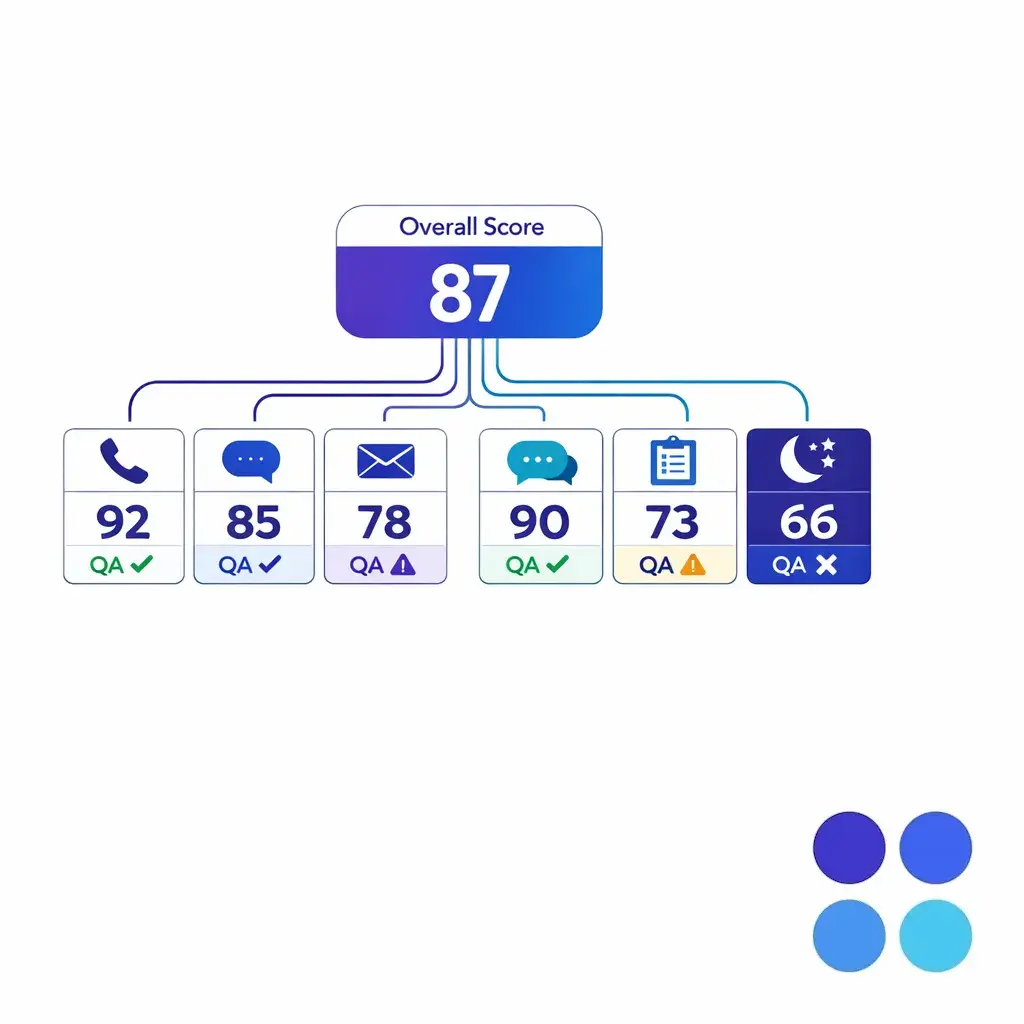
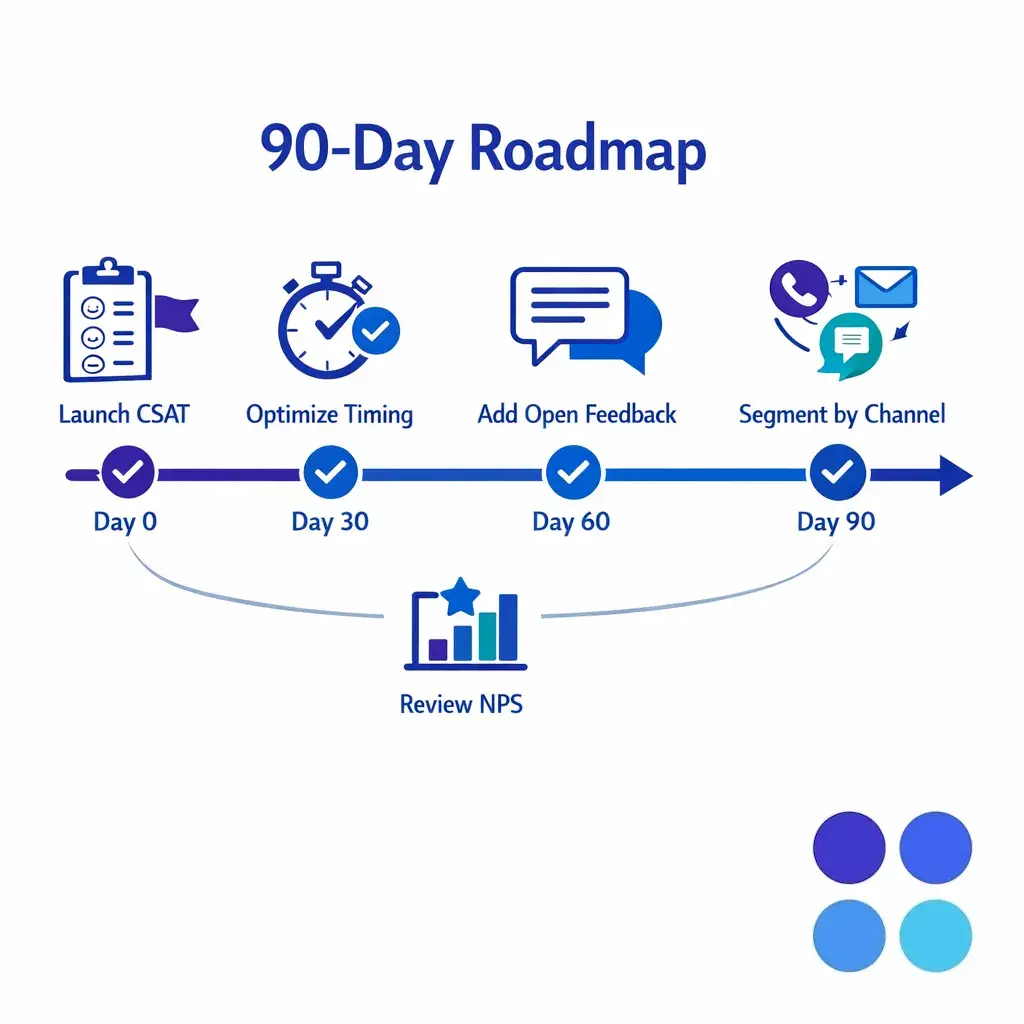
Use one simple CSAT question after resolved calls, chats, and tickets. Review results weekly with QA findings, handling patterns, and open-text comments so supervisors can coach what customers actually felt.
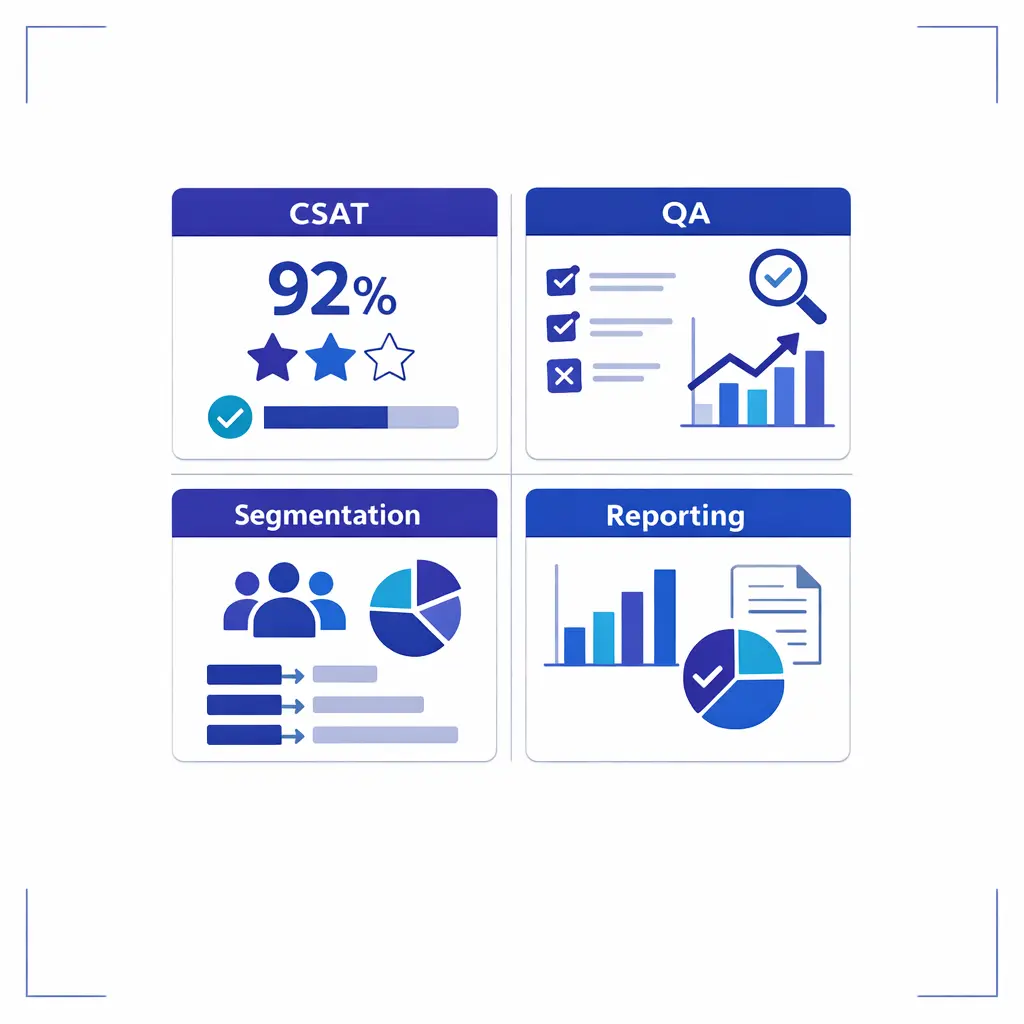
A simple CSAT question after resolved calls, chats, and tickets, reviewed weekly alongside QA findings, handling patterns, and open-text comments, gives supervisors a practical scorecard for coaching what customers actually felt.
If you have both in-house and outsourced coverage, keep the survey wording and trigger rules identical. If Go Answer handles overflow or after-hours traffic, the same metric design makes comparison much cleaner.
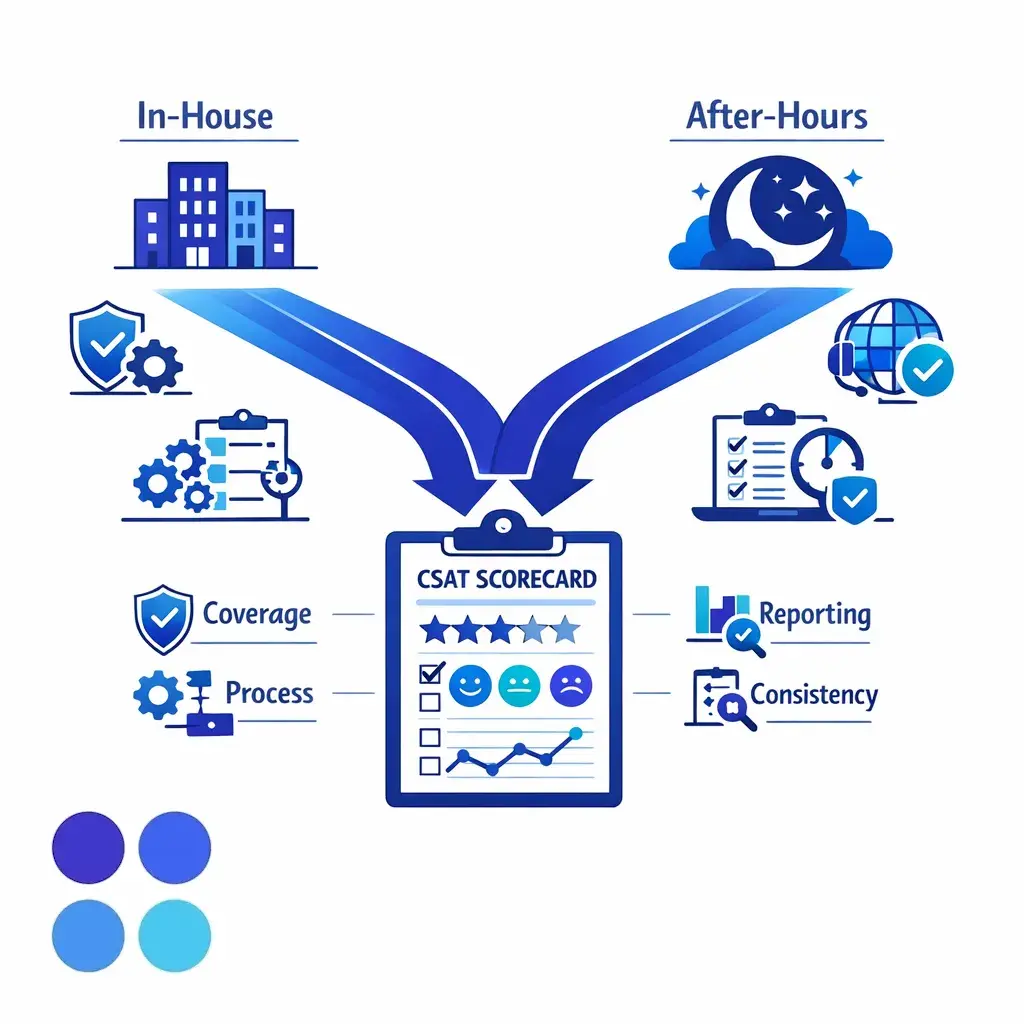
Run NPS on a separate relationship cadence, not after every interaction. Use it for executive reviews, service-line comparisons, and retention discussions where support is one contributor to customer loyalty.
Keep the audience and timing consistent. Trend quality matters more than chasing a number from a different channel mix or a one-off sample.
Add CES only where effort is likely to be the real issue. Good candidates include claims intake, benefits verification, appointment changes, multi-step troubleshooting, and any workflow that forces the customer through several handoffs.
This lightweight model gives teams a practical hierarchy: CSAT for interaction quality, NPS for relationship health, and CES for friction-heavy workflows.
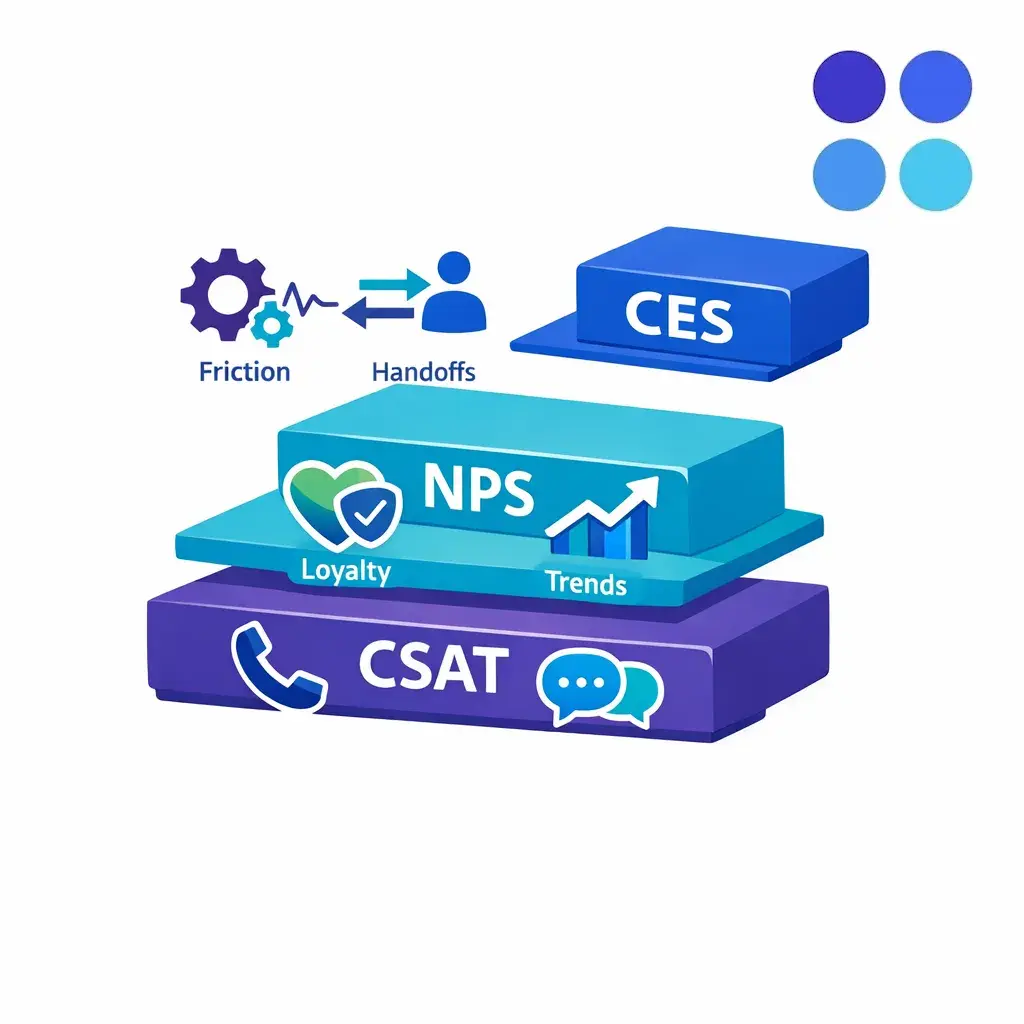
This lightweight model gives teams a practical hierarchy. CSAT measures interaction quality, NPS tracks relationship health, and CES highlights friction-heavy workflows, so each metric answers a different question without adding unnecessary complexity.
No. They answer different management questions. CSAT helps you evaluate a specific service interaction, while NPS helps you understand how customers feel about the broader relationship.
For most support teams, CSAT is the better first metric because it is easier to act on. NPS becomes more valuable when leadership needs a loyalty signal tied to retention, brand sentiment, or account health.
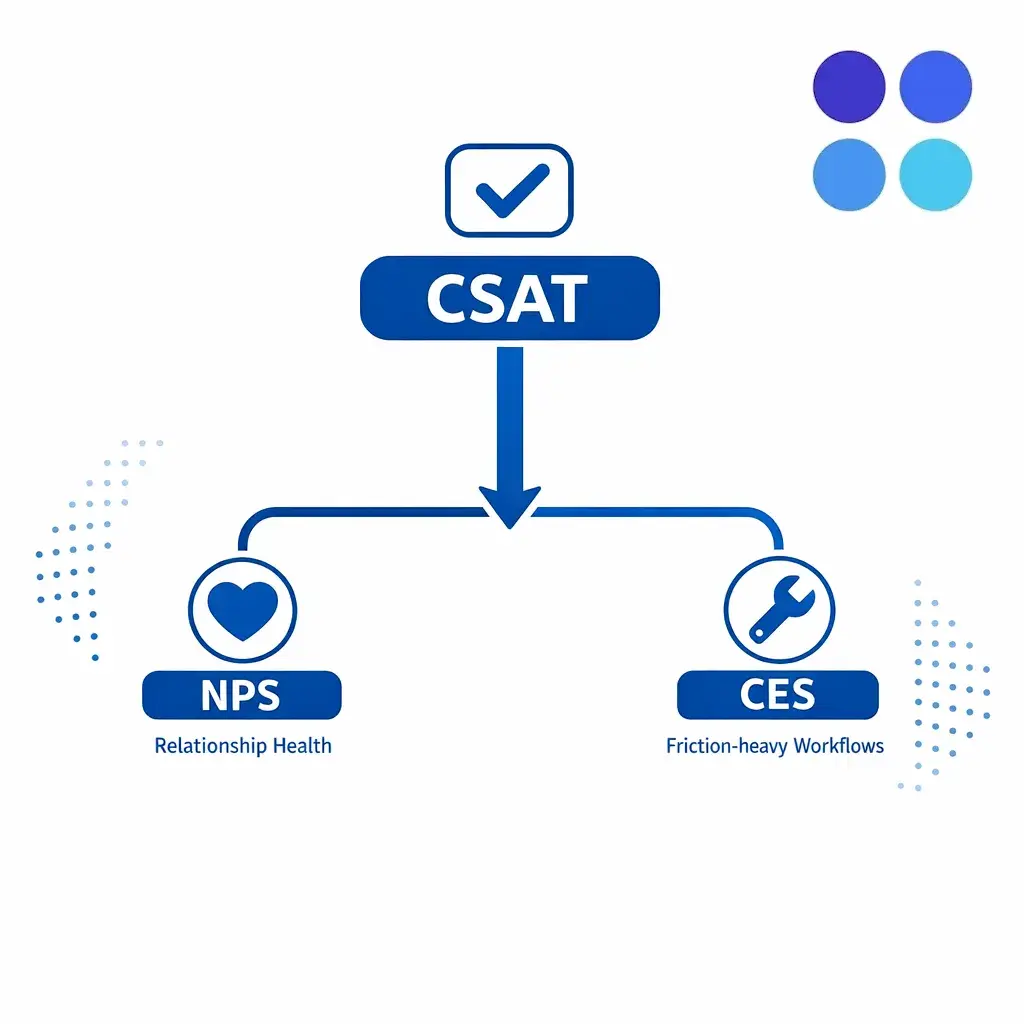
For most support teams, CSAT is the right first metric because it is easier to act on. NPS becomes more valuable once leadership needs a loyalty signal tied to retention, brand sentiment, or account health.
A good score is one you can trust and improve. Use stable question wording, consistent timing, clear segmentation, and internal trend lines before comparing yourself to broad outside benchmarks.
Yes, and many teams should. Use CSAT for weekly support management, NPS for relationship tracking, and CES only where effort is likely to explain repeat contact or customer frustration.
If you are redesigning support coverage, comparing vendors, or trying to align live answering, intake, and after-hours service under one scorecard, Go Answer can help you build a cleaner measurement model. When you are ready to map the workflow and decide what to measure first, Book a Discovery Call.

Learn why thousands of companies rely on Go Answer.
Try us risk-free for 14 days!
Enjoy our risk-free trial for 14 days or 200 minutes, whichever comes first.
Have more questions? Call us at 888-462-6793
Learn why thousands of companies rely on Go Answer.
Have more questions? Call us at 888-462-6793
If you would like to get in contact with a Go Answer representative please give us a call, chat or email.

Thanks for your interest!
A representative will be reaching out to you shortly.
Have more questions? call us on 888-462-6793
